Higher Reservoir Levels Change the Tariff Calculation
Sri Lanka's National System Operator (NSO) has withdrawn its request for a 2.88% electricity tariff increase for October to December 2026, saying improved reservoir storage and forecasts of rainfall above normal levels have removed the need for a rise. The request had been linked to an expected revenue shortfall of about Rs. 4.4 billion.
Contents
- Higher Reservoir Levels Change the Tariff Calculation
- How the Proposal Reached Public Consultation
- Why More Water Can Reduce Electricity Costs
- The Cost Forecast Had Already Fallen
- What PUCSL Changed in Its Preliminary Review
- Coal Costs Still Need Careful Accounting
- Battery Plans Add Another Cost Question
- Who Makes the Final Decision?
- What the Change Means for Customers
- Key Points
The change emerged at a stakeholder consultation on November 5 and was confirmed in an NSO statement issued afterward. It leaves the Public Utilities Commission of Sri Lanka (PUCSL), which sets electricity tariffs, to make the final decision for the quarter.
The regulator had already reduced the proposed increase to 1.46% in its preliminary assessment. NSO's withdrawal goes further, replacing its request for higher charges with a position that existing tariffs are sufficient under its revised expectations for water availability and electricity production.
For households and businesses, the immediate development is the withdrawal of a proposed increase, while the official tariff determination remains with PUCSL. Communications Director Jayanath Herath said before the consultation that the commission expected to announce its decision within six days.
How the Proposal Reached Public Consultation
PUCSL's official consultation notice confirms that NSO submitted its Bulk Supply Cost proposal on October 7, 2026. This proposal estimates the cost of supplying electricity to the distribution system, which delivers power to customers.
The notice identifies the exercise as the tariff review for the fourth quarter of 2026 and sets November 5 as the deadline for written stakeholder comments. Comments could be submitted by email, fax or post. The notice said details of oral consultation sessions would follow.
The oral consultation took place on Thursday, November 5, at the Bandaranaike Memorial International Conference Hall in Colombo, with proceedings scheduled to begin at 9 a.m. An initial description placed the consultation on Wednesday, November 4; the dated consultation coverage identifies November 5 as the meeting day and November 4 as the day PUCSL disclosed the earlier increase request.
The sequence shows that the review was already underway when NSO changed its position:
- September 4, 2026: NSO made an initial cost submission used in the subsequent comparison of forecasts.
- October 7, 2026: NSO submitted the revised Bulk Supply Cost proposal identified in PUCSL's official notice.
- November 4, 2026: PUCSL disclosed the earlier request for a 2.88% tariff increase.
- November 5, 2026: The written comment deadline and oral consultation took place, and NSO announced that it no longer sought an increase.
Why More Water Can Reduce Electricity Costs
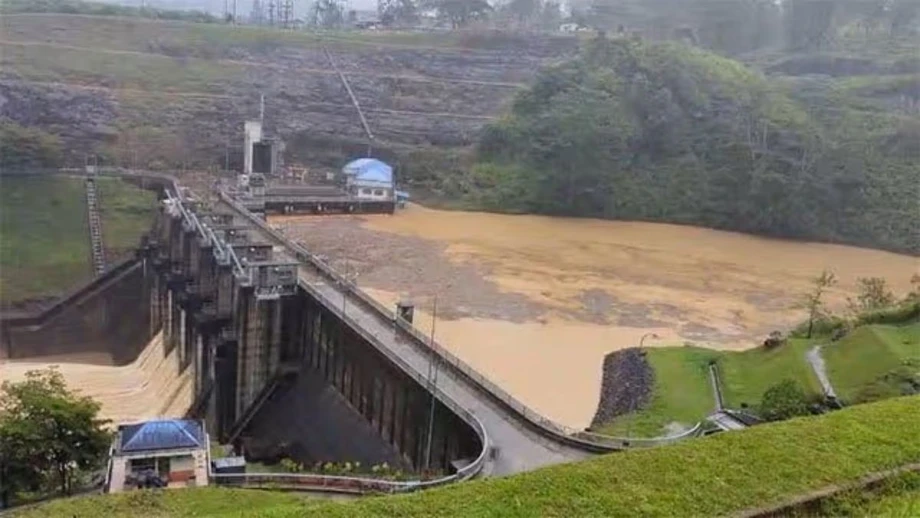
NSO attributed its reversal to water already stored in the main reservoirs and forecasts of rainfall above normal levels during the quarter. More water can allow hydroelectric stations to generate more electricity, reducing the amount needed from more expensive thermal generation.
Hydroelectric stations use moving water to turn turbines. Thermal stations generate electricity using fuels such as coal, diesel or furnace oil. When reservoirs can supply more generation, the system can reduce fuel purchases, depending on demand and how the different plants are operated.
NSO's forecast put major hydro generation at 1,551 gigawatt hours, or 32.34% of expected electricity production during the quarter. A gigawatt hour is a measure of electricity produced or consumed over time. Other renewable sources were expected to supply 28.81%, while coal would account for 25.68%.
Major hydro and the other renewable sources together therefore represented 61.15% of forecast generation. That planned share helps explain why changes in rainfall and reservoir storage carry so much weight in the tariff calculation.
NSO referred to rainfall forecasts under El Niño conditions. The planning forecast used the Department of Meteorology's seasonal outlook for rainfall in hydro catchment areas, the areas where rain feeds rivers and reservoirs. PUCSL said the hydro assumptions needed checking against actual generation and water inflows.
The Cost Forecast Had Already Fallen
NSO's revised bulk supply cost forecast was Rs. 125.94 billion, compared with Rs. 134.16 billion in its September submission. The reduction of Rs. 8.22 billion amounts to about 6.1% of the earlier estimate.
Most of that change came from forecast generation energy costs, which fell from Rs. 105.58 billion to Rs. 98.31 billion. These are costs associated with producing electricity, including the fuel needed to run generating plants.
Forecast generation capacity costs also declined, from Rs. 19.94 billion to Rs. 18.98 billion. Capacity payments generally cover the availability of generating equipment, rather than simply paying for every unit of electricity it produces.
The detailed tariff calculation put the original requested increase at 2.88%; the earlier request was also described as 2.46% in another published account. The 2.88% figure is the one attached to the initial shortfall calculation and the subsequent reduction to 1.46%.
What PUCSL Changed in Its Preliminary Review
PUCSL initially calculated a quarterly revenue shortfall of Rs. 4.44 billion, the more precise figure behind the approximately Rs. 4.4 billion cited for the original request. Its preliminary assessment reduced that shortfall to Rs. 2.25 billion, a reduction of Rs. 2.19 billion, or about 49%.
The commission removed Rs. 669 million from Electricity Generation Lanka's generation capacity costs. It identified the increase as arising outside the Power Purchase Agreement framework, the contracts governing electricity purchases from generators.
PUCSL also excluded Rs. 1.07 billion submitted by Electricity Distribution Lanka for loan repayments connected with the Supporting Electricity Supply Reliability Improvement Project. The commission's stated reason was that the expenditure related to capital work still in progress.
Under the treatment described in the review, such expenditure becomes recoverable through tariffs after the assets are completed and capitalised. Capitalisation means recording completed infrastructure as an asset in the company's accounts. For customers, this affects when infrastructure spending can enter the electricity bill.
The preliminary figures also listed total electricity supply costs of Rs. 156.66 billion against revenue of Rs. 154.03 billion at existing tariffs. Those two totals produce a gap of Rs. 2.63 billion, whereas the stated tariff calculation used Rs. 2.25 billion. A reconciliation between those figures was not given in the published description of the assessment.
Coal Costs Still Need Careful Accounting
PUCSL's assessment included a different estimate from NSO for additional costs associated with substandard coal used during the second quarter of 2026. NSO estimated the amount at Rs. 2.86 billion; the regulator put it at Rs. 4.38 billion, a difference of Rs. 1.52 billion.
Coal prices in the fourth quarter forecast were also rising. The projected price increased from Rs. 61.42 per kilogram in October to Rs. 67.44 in December, about 9.8%. Diesel was estimated at Rs. 382 per litre and furnace oil at Rs. 210 per litre throughout the quarter.
These figures explain why the withdrawal of the increase request depends heavily on the expected generation mix. Higher hydro production can reduce spending on fuel, while the price of electricity generated from coal or oil continues to affect the remaining supply costs.
PUCSL identified the fuel prices used in the estimates as an area for further examination, alongside the adequacy of the hydro forecast. Its final assessment must bring those assumptions together with the costs it allows companies to recover.
Battery Plans Add Another Cost Question
NSO's forecast included the connection of 160 megawatts of battery energy storage capacity during the quarter, with Rs. 703 million allocated for capacity costs. Batteries store electricity generated at one time and release it later, potentially reducing the need to use expensive generators when demand is high.
The submission did not include monthly estimates of how much electricity the batteries would take in or release. Those operating figures matter because the financial benefit depends on when batteries charge, what electricity they use and which generation they replace.
A capacity rating of 160 megawatts describes how much power the batteries can deliver at a moment. It does not state how long they can sustain that output. PUCSL said the cost effective use of battery storage would receive further examination.
Who Makes the Final Decision?
PUCSL's official notice places the review under sections 29(2) and 29(3) of the Sri Lanka Electricity Act No. 36 of 2024, as amended. It cites section 29(10) of that law and section 17(b) of the Public Utilities Commission of Sri Lanka Act No. 35 of 2002 as the basis for consulting stakeholders.
NSO supplies the operating and cost forecasts. PUCSL reviews them, considers stakeholder comments and determines the tariff. The difference between those roles explains why an operator's withdrawal of its request is followed by a separate regulatory decision.
The consultation gave consumers and other interested parties a chance to comment on both the proposed charges and the underlying cost estimates. By the end of the process, the regulator had NSO's revised position as well as its own earlier adjustments to consider.
What the Change Means for Customers
Households and businesses now face a tariff review in which the system operator says no increase is necessary. The regulator's earlier 1.46% estimate was a preliminary proposal, and the final announcement will determine the charges that apply.
The published percentages describe the proposed tariff adjustment across the review. The information accompanying the withdrawal gives no revised schedule of charges for individual customer categories, so it provides no basis for calculating an exact change to a particular household or business bill.
The central change is concrete: NSO has moved from seeking more revenue through higher tariffs to expecting that reservoir storage and rainfall will allow it to manage the quarter without that increase. PUCSL's decision will settle the tariff after examining those expectations alongside fuel costs, company expenses and public comments.
Key Points
- NSO withdrew its request for a 2.88% electricity tariff increase for October to December 2026.
- The operator cited improved reservoir storage and forecasts of rainfall above normal levels.
- PUCSL had earlier reduced the proposed increase to 1.46% in its preliminary review.
- The revised bulk supply cost forecast fell by Rs. 8.22 billion to Rs. 125.94 billion.
- Major hydro and other renewables together accounted for 61.15% of forecast generation.
- The public consultation took place on November 5. PUCSL retains responsibility for the final tariff decision.