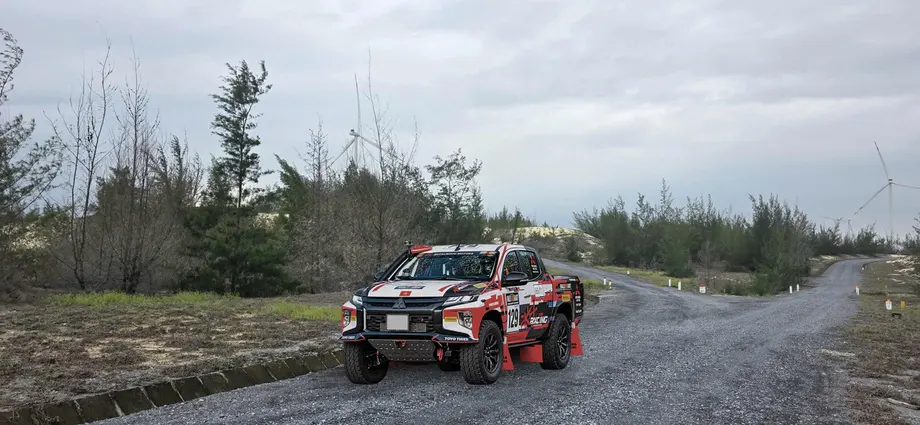
A New Rally Benchmark for Quang Tri
Quang Tri will become the first place in Vietnam to host an international standard Rally Sprint when the Petrolimex XCR Sprint Cup Vietnam 2026, Truong Son Rally, runs from December 2 to 6. Organisers disclosed the plan at a Hanoi press conference on November 26, 2026, saying the event will bring timed off road stages, 16 car teams and 50 motorcycle entries to the province. Lien Minh Production and Media Investment Joint Stock Company, known as LienminhLME, is organising it with support from Vietnam National Petroleum Group, or Petrolimex.
Contents
- A New Rally Benchmark for Quang Tri
- What a Rally Sprint Actually Is
- Cars Face Nine Short Stages Over Two Days
- Motorcycles Race the Clock, Not the Pack
- Safety Rules Are Built Into Every Entry
- The Schedule From Arrival to Awards
- Who Is Coming and What Remains Open
- Spectators, Screens and the East West Corridor
- Visut Sukosi on Vietnam's Motorsport Future
- Where Rally Sprint Fits Among Rally Formats
- Key Points
The event belongs to the XCR series, a rally format founded in Japan in 2022. It is being presented as Vietnam's entry onto the Asian rally map. Two disciplines will share the programme: cars on nine Special Stages and motorcycles on separate timed off road sections. The first two competition days will decide the winners, after three days of arrival, checks and route study.
What a Rally Sprint Actually Is
A Rally Sprint is a shortened form of rally racing. Instead of cars driving side by side on a closed circuit, vehicles start one after another and race a point to point route against the clock. The timed pieces are called Special Stages, and the winner is usually the crew or rider with the lowest combined time after all stages, plus any penalties.
Special Stages can run over dirt, gravel, tarmac or mixed surfaces. In Vietnam, the format has been adjusted to local conditions, and the motorcycle section will not use a Route Book. A Route Book is the instruction notebook used in longer rally raids to guide crews through unfamiliar terrain. Here, riders follow the prepared course and chase time.
The car side still depends heavily on a driver and co-driver. The driver steers; the co-driver reads the route and helps with navigation. That partnership matters because a few seconds lost at a junction, a wrong turn or a cautious section can change the final order.
XCR itself grew out of the Cross Country Rally format in Japan. It compresses a long rally into shorter stages, which lowers the amount of equipment, road closure and logistics a host needs. Organisers say the Vietnam event can also build a path toward bigger competitions such as the Asia Cross Country Rally.
Cars Face Nine Short Stages Over Two Days
Car crews will use 4x4 SUVs and pickup trucks. The field is split into XC1 (Open) and XC2 (Production). XC1 is the more open class, while Production is intended for vehicles closer to standard specification. Each crew has one driver and one co-driver, and results come from cumulative stage times.
Nine Special Stages cover nearly 60km, split into three sections. That works out to a little over six km per stage, short by rally standards but technically demanding. Six stages, SS1 to SS6, will run on December 5 in the BT Wind Power Project Cluster in the Le Thuy Flood Bypass area. The final three, SS7 to SS9, are set for December 6.
Organisers put the current car entry list at 16 teams: five from Vietnam and 11 from overseas. The overseas count was also described as at least 11. At the Hanoi briefing, the named countries were Thailand, Japan and Indonesia. Other event materials named Malaysia and the Philippines, and another briefing by organisers named India. The final list can still change before the start.
The foreign share is large: 11 of 16 teams, about 69 percent, come from outside Vietnam. That gives local crews a direct test against drivers used to rally systems in countries with longer motorsport histories.
Motorcycles Race the Clock, Not the Pack
Motorcycle riders will compete one at a time. They will leave the start two to five minutes apart, which keeps the course clear and makes the clock the main opponent. There will be no mass start pack, the format many viewers associate with motocross.
Two classes are planned. Big Adv covers motorcycles of 900cc and above, while Mid Adv covers 450cc to 800cc. Each class is capped at 25 entries, giving a maximum of 50 riders. Organisers said 50 professional motorcycle riders had confirmed by the time of the briefing, so the two wheel field is more than three times the size of the 16 car teams registered so far.
Riders will tackle off road stages adapted to Vietnam's conditions. Their results will be decided by total completion time and ranked in the general standings, with top places identified in each class. Because motorcycles reach high speeds on rough ground, the start interval and entry cap are part of the safety design as well as the competition format.
Safety Rules Are Built Into Every Entry
The Fédération Internationale de l'Automobile (FIA) and Japan Automobile Federation (JAF) standards shape the event. Organisers said the routes were surveyed and approved under those technical and safety requirements. FIA representative Nghiem Anh Quan presented a certificate to organising committee head Doan Nhat Linh. The Vietnam Motor Sports Association, an FIA member, was also named in the certification process.
All drivers and co-drivers need a valid FIA competition licence of at least D-R grade. Helmets, racing suits, gloves and racing footwear must carry valid FIA homologation labels. Roll cages, racing seats and harnesses with six attachment points must carry FIA certification labels that remain inside their validity periods. In simple terms, a driver cannot use old or unlabelled safety gear just because it looks sound.
Technology will support the safety plan. GPS tracking will follow every competition vehicle in real time, and a video call function can link officials with vehicles. Speed monitoring devices will record vehicles that go beyond limits, with penalties applied under the competition rules. The route is designed to avoid residential areas, and organisers are coordinating with local police for track security.
A representative of the organising committee said competitors will race from 8:30 AM to 6:00 PM each day and receive central accommodation and meals. The committee said administration, logistics and operations are being arranged to international standards.
The Schedule From Arrival to Awards
The event begins with movement of people and machines rather than racing. International teams arrive and clear customs at border checkpoints on December 2. Vehicles, logistics crews and specialist equipment gather at the designated base on December 3. That matters because rally teams bring service trucks, spare parts and heavy equipment, not just race vehicles.
- December 2: international teams arrive and complete customs clearance.
- December 3: race vehicles, logistics teams and equipment assemble at the accommodation venue.
- December 4: administrative checks, vehicle scrutineering, route reconnaissance, safety briefing and Ceremonial Start.
- December 5: SS1 to SS6 in the BT Wind Power Project Cluster and Le Thuy Flood Bypass area.
- December 6: SS7 to SS9, then the Gala Dinner and awards ceremony.
Route reconnaissance, known as Recce, is a practice look at the course. Teams will use vehicles supplied by the organiser rather than their race cars, and they must observe speed limits. Scrutineering is the technical check that confirms a vehicle meets the rules before it is allowed to race.
Spectators planning to attend were told to arrive before road closures, because closed roads are part of how a rally keeps drivers and viewers apart.
Who Is Coming and What Remains Open
Doan Nhat Linh, the organising committee head, said 16 car teams had registered at the briefing. He described rally as a good fit for Vietnam because the country has long, narrow routes and varied terrain, including the historic Truong Son road corridor. He also stressed that rally is not a mass participation sport because entry costs and technical requirements are high.
Visut Sukosi, a Thai motorsport expert who has worked as a rally navigator, chief operating officer and organiser in Southeast Asia, is helping guide the operation. A support team of 30 people from Thailand, led by Visut, is expected to travel to Vietnam to assist with race control and operations. Thai motorsport specialists also briefed participants on rally safety regulations.
The entry numbers are not final. Organisers said more teams can complete registration if they meet the rules on people, vehicles and equipment. No date was given for a final entry list. Updates on regulations, teams and changes are expected on the organiser's official Facebook page and website.
The motorcycle field already fills the stated maximum of 50 places if all confirmed entries attend, but the final attendance list has not been published. For readers, the practical point is simple: the event has enough entries to be competitive now, and the official roster may still grow or shift before December 2.
Spectators, Screens and the East West Corridor
Quang Tri is not only a backdrop for the race. Organisers said the event will bring heavy equipment, specialised service trucks and hundreds of logistics personnel to the area, showing the transport role of the East West Economic Corridor. That corridor links Vietnam with Laos and Thailand through the region, so moving race equipment through Quang Tri is also a practical test of cross border logistics.
A general grandstand will hold about 2,500 spectators. A VIP viewing area will take roughly 150 to 180 guests. Tickets will not be sold for this first edition. LED screens will show real time timings, and a technical service area will let fans see the work around the cars. Organisers also plan activities where spectators can meet drivers and teams.
The official stages will be broadcast live on television and social media platforms. For people at home, that means the race can be followed without travelling to the forested and wind power areas where stages are set. For people in Quang Tri, the event adds a sports crowd to a province already promoting historical and cultural sites.
The rally has been planned alongside the Festival for Peace and the Cave Festival. Organisers hope the three events will create a tourism and cultural corridor, with visitors staying in local hotels, eating in local restaurants and visiting heritage sites. That benefit depends on attendance and on how well the events are connected, but the plan links engines and history in a province known for both.
Visut Sukosi on Vietnam's Motorsport Future
Visut Sukosi knows both sides of rally organisation. He has served as a navigator in rally races, a chief operating officer and an organiser of events in Southeast Asia. At the Hanoi briefing, he spoke about what Vietnam can gain if it invests over several years rather than treating one race as a finish line.
His assessment was direct. He said Vietnam has natural terrain, infrastructure and organising potential, while also needing money, time and trained people to reach a higher level. He spoke about facilities, specialist training and experience for officials, technicians and race controllers, so local teams can learn by working beside foreign crews.
"Vietnam has a great opportunity to develop motorsport (including off-road racing) and integrate into the global arena. Although it requires a lot of money and time for motorsport to reach a higher level, Vietnam has the necessary qualities, in terms of terrain, infrastructure, and organizational potential," Visut Sukosi said.
The comment explains why the first edition is being watched beyond the result sheet. Vietnamese drivers, officials and service crews get a close view of international practice. If the event becomes annual, that learning can repeat and widen.
Where Rally Sprint Fits Among Rally Formats
Rally covers several different contests. Stage rally, the family represented by the World Rally Championship, uses short closed special stages and combined times. The World Rally Championship began in 1973 and includes famous events such as Rally Monte-Carlo, Rally Finland and Safari Rally Kenya. Crews usually have a driver and co-driver, with the co-driver calling notes about corners, surfaces and hazards.
Rally raid is the endurance version. The Dakar Rally is the best known example, with long stages across desert and remote terrain. Crews use a roadbook to navigate, and going fast in the wrong direction can cost more time than driving carefully. The World Rally Raid Championship includes events such as Rallye du Maroc, Abu Dhabi Desert Challenge and Desafío Ruta 40. Baja events are shorter desert contests.
Rallycross is different again. Several vehicles start together on a short mixed surface circuit, often with tarmac and gravel, and fight for position lap by lap. The FIA World Rallycross Championship is the best known series. Rally Sprint sits between these models. It keeps the timed special stage and navigation challenge of rally, while reducing distance and logistics so a new market can host an international event.
Rally events can also support car development and local economies. Suspension, tyres, brakes, engines and cooling systems face rough use, and the lessons can inform road cars such as SUVs. Host regions gain visitor spending, media attention and service work. The same events need careful safety control, limits on environmental damage and respect for people living near the route.
Key Points
- The Petrolimex XCR Sprint Cup Vietnam 2026 will run from December 2 to 6 in Quang Tri.
- It is the first international standard Rally Sprint held in Vietnam and part of the XCR series founded in Japan.
- Sixteen car teams and 50 motorcycle entries had been confirmed at the briefing, with final lists still open.
- Car crews will contest nine Special Stages over nearly 60km on December 5 and 6.
- Motorcycles will start two to five minutes apart in Big Adv and Mid Adv classes.
- FIA rules cover licences, protective equipment, vehicle safety parts, route approval and speed monitoring.
- Spectators can use a grandstand with 2,500 seats and a VIP area for 150 to 180 guests, while stages are broadcast live.