A familiar coach inherits a team in transition
The Football Association of Malaysia (FAM) appointed Bojan Hodak as head coach of the men's national team on Tuesday, November 24, 2026, turning to a Croatian coach whose career has already crossed several levels of the Malaysian game. Hodak, 55, becomes the 45th coach of Harimau Malaya since the national side was formed in 1956 and its 20th foreign coach. He inherits a squad led on an interim basis by Tan Cheng Hoe, with the Asian qualifiers for the 2030 FIFA World Cup standing as the next major assignment on the calendar.
Contents
- A familiar coach inherits a team in transition
- Why did FAM choose regional experience?
- The trophies behind FAM's decision
- What did Paulo Josue see inside Kuala Lumpur City?
- The hardest test may happen away from the pitch
- Persib titles explain the Indonesian sendoff
- Why Safee Sali supports him while some supporters object
- What changes now for Hodak and Tan Cheng Hoe?
- Key Points
The vacancy opened when Peter Cklamovski left by mutual consent, effective June 16, 2026, after accepting a job with Salford City in England's League Two. FAM appointed Tan on June 25 to steady the team. Hodak had declined to discuss the growing speculation when contacted on Monday, one day before his appointment was announced.
Hodak made clear that he did not regard the position simply as another coaching job. Speaking after his appointment, the new Malaysia coach set out his ambition in a short message.
I am very enthusiastic about this new challenge. Let's work hard and try to achieve something special together.
Tuesday's announcement did not disclose the length of his contract, and no date was given for his first match. With no prominent tournament immediately ahead, the Asian World Cup qualifiers, currently scheduled to begin in September 2027, give him time to assess players, establish his methods and build relationships with clubs.
Why did FAM choose regional experience?
FAM president Datuk Ab Ghani Hassan said the decision followed consideration of Hodak's experience, capabilities and record. Born in Zagreb, Hodak has coached in Malaysia, Cambodia and Indonesia, giving FAM a candidate who would not need to learn the region's football culture from the beginning.
Explaining the appointment in FAM's official statement, Ab Ghani said that background was central to the federation's decision.
FAM believes that Bojan Hodak's extensive experience in Malaysian football and the Southeast Asian region serves as a significant advantage in understanding the environment, character, and potential of local players. His successful track record with various clubs in Malaysia and Indonesia further highlights his ability to build competitive teams capable of contending for success.
Ab Ghani also expressed hope that the appointment would give Harimau Malaya a new direction while strengthening preparations for international challenges. FAM did not attach a particular trophy or qualifying target to that statement.
The list of Hodak's previous employers shows how familiar he is with the landscape. In Malaysia, he has coached UPB-MyTeam, Kelantan, Johor Darul Ta'zim and Kuala Lumpur City, handled the national U19 team from 2017 to 2019 and held an administrative role at Penang. Beyond Malaysia, his career includes Phnom Penh Crown in Cambodia, PSM Makassar in Indonesia and, most recently, Persib Bandung.
The trophies behind FAM's decision
Kelantan supplied Hodak's most spectacular Malaysian season in 2012. He guided the club to the Super League, FA Cup and Malaysia Cup, a sweep known as a treble because it brings three major trophies in one season. His Kelantan record also includes another FA Cup in 2013 and a second place finish in the 2013 Malaysia Charity Shield.
Johor Darul Ta'zim, widely known as JDT, won its first Super League title under Hodak in 2014. He remained with the club into 2015 and added the Malaysia Charity Shield that year. Those achievements gave him experience at two clubs with very different resources and expectations.
Kuala Lumpur City later provided the clearest example of his ability to improve a team without the largest budget. Hodak ended the club's wait of 32 years for the Malaysia Cup in 2021, beating JDT in the final. KL City then reached the 2022 AFC Cup final and finished second, adding a continental run to its domestic success. Hodak coached the club from 2021 to 2023.
His experience with younger players is equally relevant to a national team that may need renewal. From 2017 to 2019 he led Malaysia's U19 side, which won its first AFF U19 Championship in 2018 in Surabaya, Indonesia. That tournament gave him direct experience of preparing a Malaysian squad for a international competition rather than managing a club through a league season.
What did Paulo Josue see inside Kuala Lumpur City?
Paulo Josue, a Malaysia forward who played under Hodak at Kuala Lumpur City, described two sides of the coach's work. The first was personal: convincing players to believe in his ideas. The second was tactical: organising a disciplined defence, pressing opponents and preparing restarts in unusual detail.
Recalling Hodak's arrival at a club that did not consider itself among the country's giants, Paulo explained the demands placed on the squad.
When I was part of the Kuala Lumpur squad while he was coach, he wanted us to follow his ideas and believe that we could keep moving forward, which we did. Kuala Lumpur were not the biggest club when he took over, so he always demanded that we improve our defence, defend as a team, press well and live by the saying that defence wins you titles.
Pressing means putting immediate pressure on opponents when they have the ball, with the aim of forcing a mistake or winning possession quickly. Paulo said Hodak expected particularly hard work because KL City had a small budget and was trying to establish itself in the league, in Malaysia and then internationally. For Malaysia's players, that account suggests a coach who will judge commitment and collective organisation alongside natural ability.
Paulo also identified set pieces as a possible weapon. Set pieces are restarts such as corner kicks and free kicks, when a team can rehearse exactly where players will stand and move. They can be especially valuable in close matches because a single well planned routine can produce a goal without requiring long periods of attacking pressure.
He is also someone who likes to come up with strategies for set pieces. It is very rare to see a coach work so diligently. After you work very well on that, it can be a game changer. We, in Kuala Lumpur, worked well on that, and I hope to see the same thing happen with Harimau Malaya.
The hardest test may happen away from the pitch
Dr Zulakbal Abdul Karim, a Malaysian football observer, believes Hodak's biggest challenge could be securing the players he needs. Clubs employ the players and have increasingly cited congested schedules when refusing to release them for national duty. A national coach can design a training plan, but that plan depends on clubs making their leading players available.
Zulakbal argued that Hodak's combination of local knowledge and a European coaching background could help him manage those negotiations. He also pointed to the coach's stature and diplomacy as tools for dealing with the politics around selection.
He looks like he can settle a lot of issues. He's familiar with the local scene but he has a European style. He can handle the politics in the national team, especially the non-release of players. A coach needs the best players and I hope his stature and diplomacy can solve this issue.
Zulakbal had initially wanted an established coach with greater international fame. He still called Hodak's appointment a good decision, saying he had no concerns about his coaching because of his experience and success. He also said Hodak commands considerable respect and should have no difficulty handling players. That assessment shifts the immediate question from whether he understands football to whether he can make the different parts of Malaysia's football system work together.
Persib titles explain the Indonesian sendoff
Persib Bandung supplied Hodak's most recent championship record. He guided the Indonesian club to three consecutive league titles across the 2023/24, 2024/25 and 2025/26 seasons. In May 2026, he stepped aside from daily coaching so that his assistant, Igor Tolic, could take over, while Hodak moved into a technical advisory position.
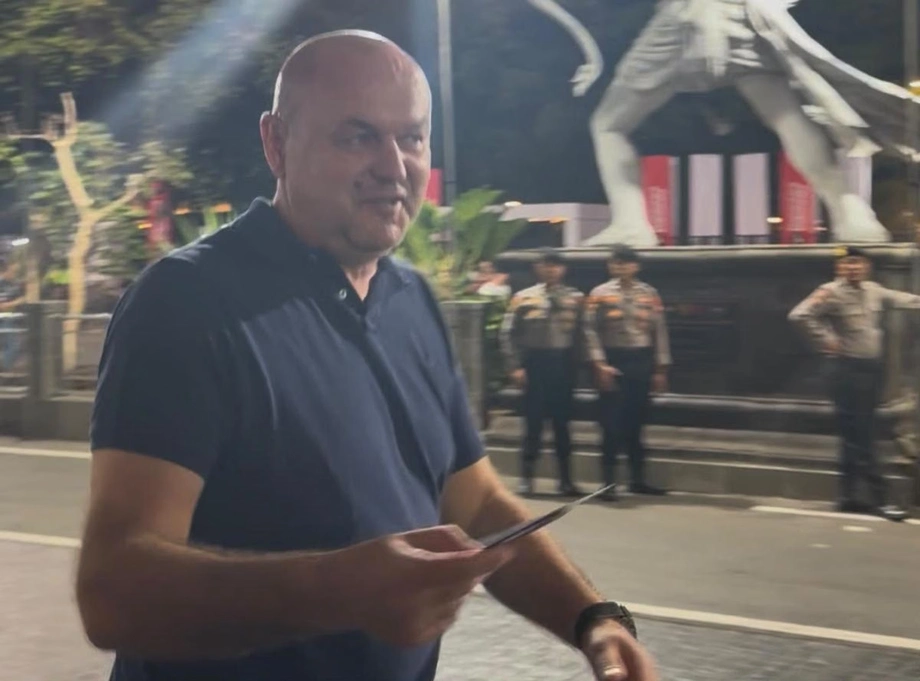
His popularity in Indonesia produced an unusual tribute: a statue of Hodak standing 217 centimetres tall was made in the country. He had also attended Jakarta's Gelora Bung Karno stadium to watch Indonesia play Malaysia, underlining how closely his recent career has remained connected to football in both countries.
That Persib spell matters to Malaysia because it is current evidence, rather than a memory of Kelantan in 2012. Hodak arrives after winning league championships in three successive seasons, while his earlier Malaysian jobs demonstrate that he can operate with both powerful clubs and smaller budgets.
Why Safee Sali supports him while some supporters object
Safee Sali, the former Malaysia striker who won the 2010 AFF Cup and scored 23 goals in 76 international appearances, offered an endorsement based on personal experience. Safee played under Hodak at JDT in 2014 and later worked with him at KL City.
He is very suitable to be head coach of the Malaysian national team. I support this appointment and see it as a good development to strengthen Harimau Malaya. I experienced his coaching when I was with JDT and KL City. So, I believe the experience and ability Hodak has can help improve the strength of the national team.
Safee said he hoped Hodak would take Malaysia to a better level and make the national team more competitive. His support carries a different perspective from FAM's statement because he has experienced the training demands and dressing room methods himself.
Persib's supporters, known as Bobotoh, also filled FAM's official Instagram comments with congratulations and messages of support. Many thanked Hodak for the trophies he brought to their club, while others affectionately described him as a father figure and wished him success with Malaysia.
The reaction among Malaysian supporters was more divided. Some called the appointment a step backwards and questioned why FAM had not pursued a coach with a larger international reputation. One supporter complained that the federation had considerable money but was wasting it, while another said the decision had left people confused about the new management's direction.
Playing style formed another part of the criticism. Some fans feared a return to long balls, meaning frequent passes played directly towards advanced attackers instead of building attacks through shorter passes. They said Tan's team had become enjoyable to watch and worried that Hodak's emphasis on defensive organisation would change that experience.
Other critics focused on ambition rather than style. They argued that success in Southeast Asia would not be enough for a country seeking experience at Asian and global tournaments, identifying the 2030 World Cup and the 2031 Asian Cup as targets. Alongside those objections were simpler messages wishing Hodak good luck, leaving him to begin with both goodwill and visible scepticism.
What changes now for Hodak and Tan Cheng Hoe?
Tan leaves the interim position after leading Malaysia at two regional tournaments. An inexperienced squad reached the ASEAN Championship semifinals, while Malaysia also competed in the FIFA ASEAN Cup and finished third in 2026 by beating Vietnam 1-0 at Jakarta's Gelora Bung Karno stadium on October 5.
Tan will remain as Harimau Malaya team director. Ab Ghani thanked him for accepting the interim responsibility and for his commitment and service, saying his experience would continue to strengthen the management and development of Malaysia's national teams. The arrangement keeps his recent tournament knowledge inside the setup while giving Hodak control of coaching.
The transition can be followed through a short sequence of dates:
- May 2026: Hodak left Persib's coaching bench, Igor Tolic was promoted and Hodak became a technical adviser.
- June 16, 2026: Cklamovski's departure from Malaysia by mutual agreement took effect.
- June 25, 2026: Tan was appointed interim head coach.
- November 24, 2026: FAM announced Hodak as permanent head coach and confirmed Tan's move to team director.
- September 2027: Asian qualifying for the 2030 World Cup is currently scheduled to begin.
For players, Hodak's arrival means working under a coach whom Paulo describes as demanding about effort, defensive unity and rehearsed restarts. For clubs, it means negotiating with a national coach who already understands their schedules and pressures. FAM has combined that appointment with administrative continuity from Tan, giving Malaysia several months to prepare before qualifying places a competitive measure on their work.
Key Points
- FAM appointed Bojan Hodak as Malaysia's head coach on November 24, 2026, making him the team's 45th coach and 20th foreign appointment.
- Hodak won the 2012 domestic treble with Kelantan, the 2014 Super League with JDT and the 2021 Malaysia Cup with KL City.
- He also led Malaysia's U19 team to the 2018 AFF U19 Championship and won three consecutive Indonesian league titles with Persib Bandung.
- Paulo Josue highlighted Hodak's motivational skills, defensive demands and detailed preparation of set pieces.
- Dr Zulakbal Abdul Karim identified negotiations over clubs releasing players as a major test of Hodak's diplomacy.
- Safee Sali endorsed the appointment, while some Malaysian supporters criticised FAM's choice and expressed concern about a more direct playing style.
- Tan Cheng Hoe remains as team director, Hodak's contract length was not disclosed and World Cup qualifying is scheduled to start in September 2027.