International Watchdog Highlights North Korean Facility Growth
International concern over nuclear proliferation intensified following disclosures by the International Atomic Energy Agency regarding activities in East Asia. Rafael Grossi, Director General of the International Atomic Energy Agency, told the agency board of governors on November 18, 2026, that North Korea has expanded its primary uranium enrichment site at the Yongbyon nuclear complex. A centrifuge is a machine that spins at high speeds to concentrate specific uranium isotopes, and a cascade is a group of these machines connected in sequence to increase the concentration further. The ongoing work involved building an extension to the existing uranium enrichment facility, with exterior construction completed by late October 2026 after starting in mid-September. The expansion marks another step in a production network that has grown through several stages over recent years.
Contents
- International Watchdog Highlights North Korean Facility Growth
- Diplomatic Stalemate and Regional Reactions to Nuclear Programs
- South Korea Advances Nuclear Submarine Safeguards With Watchdog
- Naval Propulsion Consultations and Future Verification Steps
- Global Energy Projections and Nuclear Infrastructure Challenges
- Key Points
Satellite imagery and open-source data have allowed outside specialists to track the physical changes at Yongbyon despite North Korea barring inspectors from the country since 2009. Sam Lehle, a researcher at the Foreign Policy Research Institute, analyzed satellite images taken on November 6, 2026, and estimated that installing new centrifuges in the newly constructed building could add an annual production capacity of 35 kilograms or more of highly enriched uranium. Meanwhile, the British non-profit organization Vertic previously estimated that a separate enrichment facility at Yongbyon possesses a production capacity of 160 kilograms annually, bringing North Korea's total estimated highly enriched uranium production capacity to as much as 375 kilograms per year. North Korea also continues to operate its 5-megawatt reactor at Yongbyon, which Grossi assessed as currently running through its seventh fuel irradiation cycle. An irradiation cycle is the period during which nuclear fuel remains inside an operating reactor exposed to neutrons. Once this cycle concludes, spent fuel can be reprocessed to extract weapons-grade plutonium, providing Pyongyang with a second pathway to produce fissile material for nuclear weapons alongside enriched uranium.
Diplomatic Stalemate and Regional Reactions to Nuclear Programs
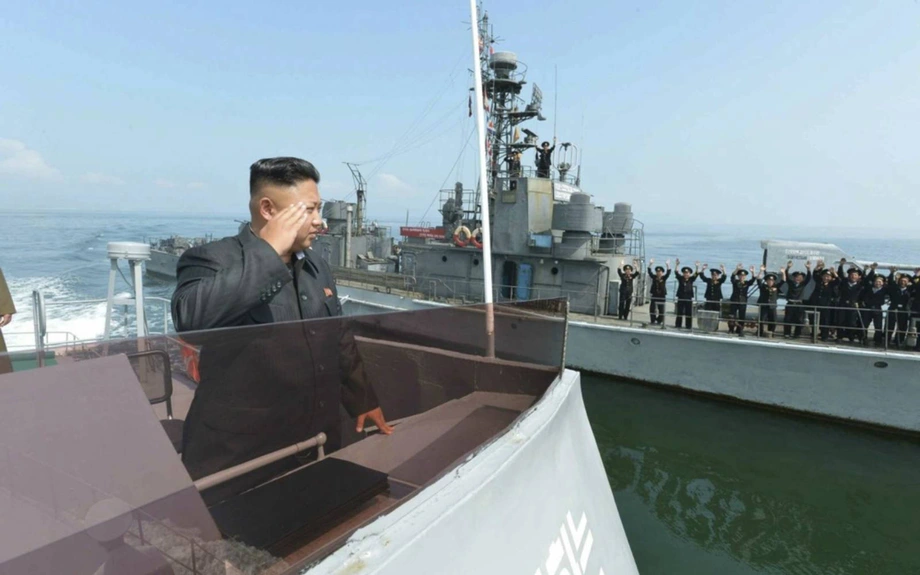
Diplomatic efforts to curb North Korea's nuclear ambitions remain deadlocked while major powers clash over security requirements and disarmament goals. North Korean Foreign Minister Choe Son Hui recently defended the country's nuclear arsenal as the strongest guarantee of national sovereignty, explicitly rejecting demands for complete denuclearization issued by the Group of Seven economic powers during talks in Paris. At the same time, political signals from Washington have brought the prospect of future negotiations back into discussion. U.S. President Donald Trump expressed a willingness to meet with North Korean leader Kim Jong Un, though U.S. Secretary of State Marco Rubio clarified that no formal meeting schedule has been established. Analysts note that as North Korea expands its uranium enrichment infrastructure and plutonium production capabilities, any future talks centering on a nuclear freeze rather than complete disarmament could leave the country's existing military stockpile intact while offering sanctions relief in exchange for a halt to new production.
The European Union strongly condemned North Korea's ongoing nuclear activities during the International Atomic Energy Agency board meetings in Vienna, which ran from November 16 to 20, 2026. Representatives from the European Union pointed out that North Korea has continued to violate multiple United Nations Security Council resolutions by operating enrichment facilities at Yongbyon and Kangson, maintaining its radiochemical laboratory, and conducting multiple ballistic missile tests in October 2026. Ten countries, including Albania, Norway, and Ukraine, supported the European Union statement, which also criticized Russia for dismissing North Korea's denuclearization as a settled issue and rebuked Moscow for illegal military cooperation with Pyongyang. International monitors emphasize that the expansion of these production sites gives North Korea greater flexibility to increase its nuclear warhead inventory while complicating efforts by outside governments to monitor or restrain the program.
South Korea Advances Nuclear Submarine Safeguards With Watchdog
In a separate development concerning regional security and nuclear oversight, the International Atomic Energy Agency released its first report dedicated to South Korea's project to build nuclear-powered submarines. The report, titled Naval Nuclear Propulsion: Republic of Korea, was published on November 19, 2026, under the direction of Rafael Grossi. The publication follows a pattern established with Australia and Brazil, which have been the subject of similar annual reports since 2022 and 2023 respectively as they navigate naval propulsion programs. The international agency expressed satisfaction over the transparency and cooperation shown by Seoul during the initial phases of the project.
South Korea's foreign ministry confirmed that the government has faithfully implemented its reporting obligations under the Comprehensive Safeguards Agreement and the Additional Protocol. A comprehensive safeguards agreement is a legal pact between a non-nuclear-weapon state and the International Atomic Energy Agency designed to verify that nuclear materials are not diverted to weapons programs, while an additional protocol grants inspectors broader access to verify undeclared nuclear activities. South Korea has maintained an IAEA broad conclusion since 2007, certifying that all nuclear material in the country remains dedicated solely to peaceful activities. The government in Seoul shared its nuclear submarine plans with the agency on May 26, 2025, just five days before announcing its basic acquisition plan, and later submitted preliminary design information and future project schedules in September 2026.
Naval Propulsion Consultations and Future Verification Steps
The pursuit of nuclear-powered submarines requires South Korea to navigate complex international legal frameworks, particularly Article 14 of the Comprehensive Safeguards Agreement. This specific article permits non-nuclear-weapon states to use nuclear material for non-proscribed military activities, which include naval propulsion, provided that special arrangements are negotiated with the International Atomic Energy Agency. Government officials and agency representatives held their first technical consultations on October 9, 2026, and plan to begin formal negotiations for a special safeguards arrangement next year. While securing low-enriched uranium fuel for the submarines will also require separate agreements with the United States, smooth communication with the global nuclear watchdog provides a strong foundation for the project as South Korea aims to launch its first lead ship by the mid-2030s.
Foreign ministry officials emphasized that early and transparent engagement helps address international proliferation concerns and demonstrates adherence to global non-proliferation standards. Unlike nations that face censure for clandestine nuclear weapons development, Seoul's cooperative approach aims to establish a clear precedent for utilizing nuclear technology for authorized military purposes under strict international oversight. The ongoing talks underscore the delicate balance required as nations develop advanced maritime defense capabilities while maintaining compliance with international verification regimes.
Global Energy Projections and Nuclear Infrastructure Challenges
The broader landscape of atomic energy was highlighted when Rafael Grossi presented ambitious long-term projections for global nuclear power capacity at the Vienna board meeting. The International Atomic Energy Agency projected that global nuclear generating capacity could grow up to 3.4 times by 2060 under high-growth economic and policy scenarios. Specifically, the agency estimated capacity could reach 1,045 gigawatts by 2050 and 1,284 gigawatts by 2060, compared to baseline figures from 2025. Even under more conservative low-growth models, total nuclear capacity is expected to expand to 696 gigawatts by 2060. Currently, 419 nuclear reactors operate across 31 countries, with another 76 reactors under construction in 16 nations, though these figures depend heavily on sustained financial investment, robust supply chains, and supportive government policies.
Ensuring the safe expansion of nuclear energy worldwide requires addressing critical challenges beyond simple reactor construction. Recent events at the Zaporizhzhia nuclear power plant in Ukraine highlight the fragility of electricity infrastructure during armed conflict. The facility lost all external power for more than 12 hours on November 8, 2026, marking the 27th time the plant has suffered a complete loss of off-site power since the war began. Although all six reactors remain in a cold shutdown state, external electricity is vital to power cooling systems for spent fuel storage and essential safety equipment. Emergency diesel generators activated automatically during the outage, with operators later reducing the active generators to two units to conserve fuel. With only a single remaining 330-kilovolt transmission line supplying power compared to ten lines before the conflict, experts stress that global nuclear expansion must be matched by rigorous attention to grid security, nuclear material verification, and the training of skilled personnel.
Key Points
- North Korea expanded its primary uranium enrichment facility at Yongbyon between mid-September and late October 2026, raising international concern over its growing nuclear materials production capacity.
- The International Atomic Energy Agency published its first report on South Korea's nuclear-powered submarine project, expressing satisfaction with Seoul's adherence to reporting obligations and non-proliferation commitments.
- Global nuclear power capacity could increase up to 3.4 times by 2060, reaching 1,284 gigawatts under high-growth scenarios according to international agency projections.
- The Zaporizhzhia nuclear power plant in Ukraine experienced its 27th total loss of external power since the war began, forcing operators to rely on emergency diesel generators to maintain vital cooling functions.