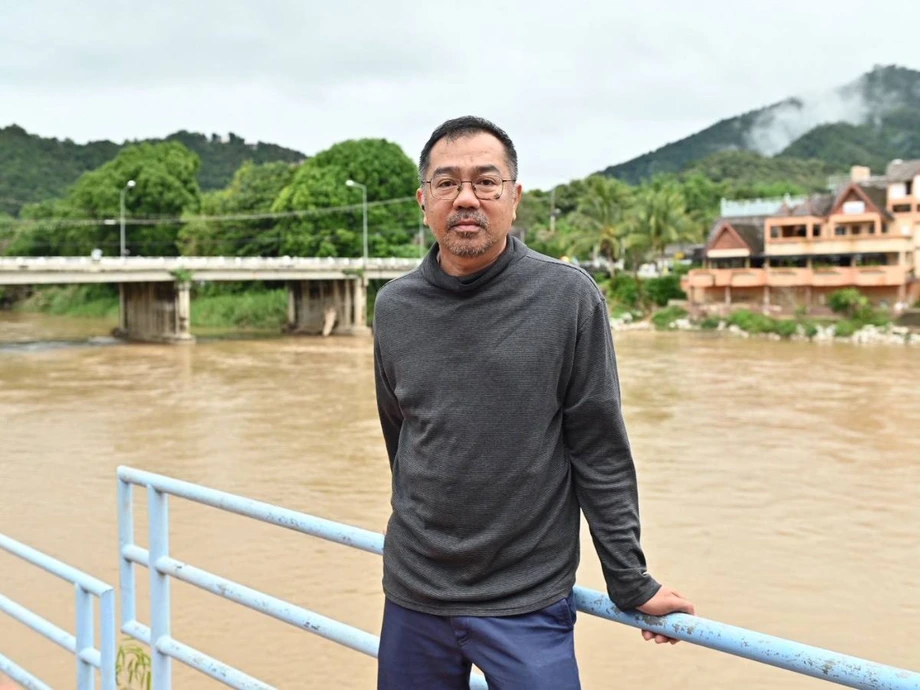
Unprecedented Cross-Border Pollution Threatens Northern Rivers
Millions of people living across northern Thailand face a severe environmental crisis as dangerous levels of arsenic and heavy metals contaminate the region's main waterways. Dr. Suebsakul Kitnukorn, a researcher from Mae Fah Luang University, warned that the widespread toxic contamination will take up to a century to fully recover from the ongoing ecological damage. The pollution originates from large-scale mining operations located across the border in Myanmar, where thousands of unmonitored sites extract rare earth minerals and gold.
Contents
- Unprecedented Cross-Border Pollution Threatens Northern Rivers
- Tracing the Roots of Myanmar Mining Expansion
- The Trade Supply Chain and Thai Business Connections
- Government Response and Multi-Agency Task Forces
- Public Health Monitoring and Consumer Protection
- Agricultural Impacts and Economic Fallout
- Chronology of Key Developments
- At a Glance
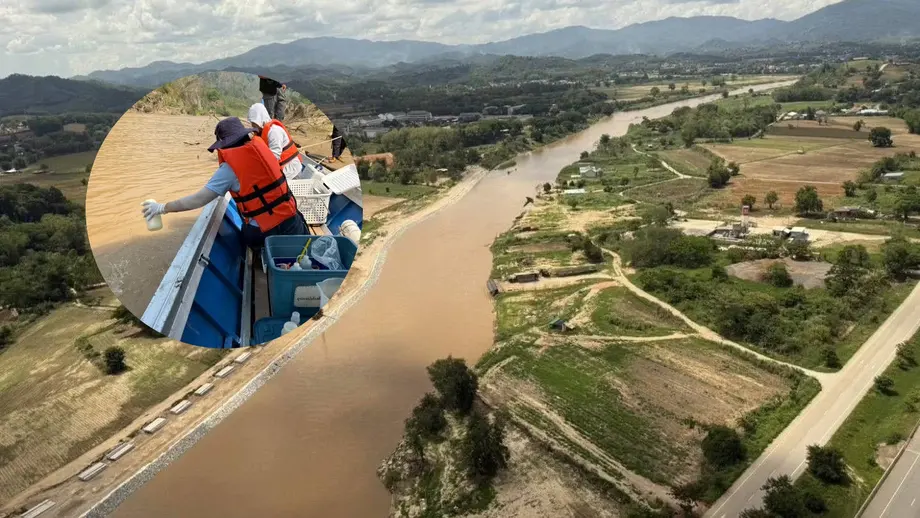
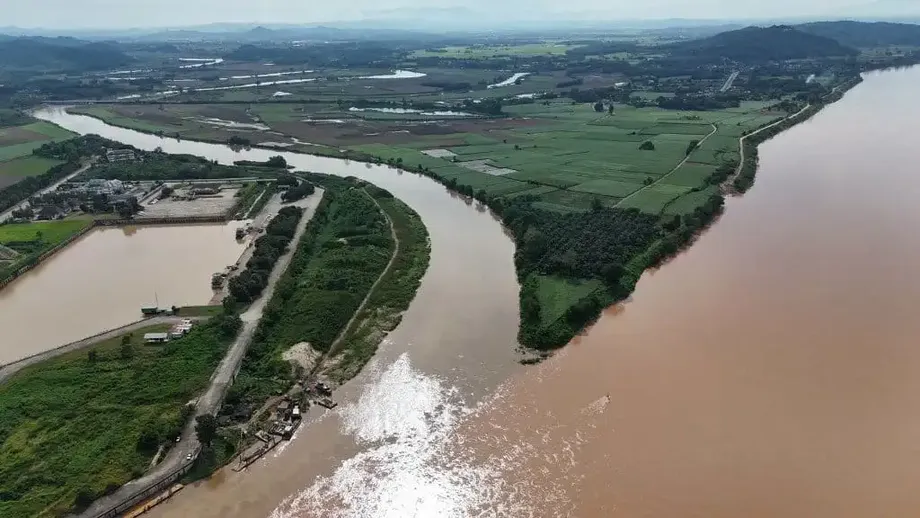
Government officials, academic researchers, and local residents are scrambling to contain the fallout as toxic sediment flows downstream through the Sai, Kok, Ruak, and Mekong rivers. The water turbidity in the Sai River recently surpassed 14,000 NTU, a massive jump from normal historical levels of 1,000 to 2,000 NTU. Experts point out that inorganic arsenic does not evaporate or dissolve over time, meaning toxic sediment settles permanently at the bottom of riverbeds and stirs up during every heavy rainy season.
The crisis has severely disrupted local agriculture and fishing communities in Chiang Rai and surrounding provinces. Rice farmers and local fishermen report plummeting sales and growing fears over food safety as public health authorities monitor the affected populations. While government agencies rush to deploy water treatment units and distribute testing kits, communities along the border are demanding immediate, systemic action to cut off the pollution at its source.
Tracing the Roots of Myanmar Mining Expansion
Satellite data reveals that at least 2,839 mining operations now operate across mainland Southeast Asia, with 91 new sites emerging in recent months. Peeraporn ดีเทศน์, executive director of the Rivers and Rights Foundation, highlighted that many of these mines sit on high mountains near Mong Puok in Myanmar's Shan State. These operations release untreated chemical waste directly into the river basins that feed into Thailand.
The rush for rare earth minerals intensified after China implemented strict export controls on critical metals in 2024 and 2026. Global industrial demand for antimony, rare earth elements, and other raw materials for electronic batteries drove foreign investors into lawless border regions. Mining operators use heavy machinery and chemical injections to strip mountain slopes, releasing massive amounts of toxic runoff into shared waterways.
Asst. Prof. Dr. Wan Wiriya, a chemistry lecturer at Chiang Mai University, explained that closing the mines today would still leave arsenic trapped in the river sediment for generations. The concentration levels in the Sai River remain the most severe because the mining sites sit directly adjacent to the Thai border, leaving no natural buffer zone to dilute the toxic discharge.
The Trade Supply Chain and Thai Business Connections
Investigations into the cross-border trade network show that Thailand plays an unexpected role in supplying the very chemicals that fuel these foreign mines. Customs data indicates that Thailand serves as Myanmar's top export market for nitric acid, accounting for 40 percent of total exports since 2027. Thai businesses also export significant quantities of sodium cyanide and industrial acids used for ore extraction and mineral processing.
At the same time, Thai companies imported over 13,900 million baht worth of mineral ores from Myanmar during the first nine months of the year. Dr. Sonthi Kotchawat, an environmental scholar, noted that more than 50 Thai firms act as middlemen, purchasing raw minerals from border mines and shipping them through Laem Chabang port to international markets. Environmental advocates argue that stopping the flow of chemical reagents and blocking the import of unverified minerals is the only way to halt the destruction.
Assoc. Prof. Dr. Sitang Pilailar from Kasetsart University criticized current government measures, comparing them to wiping up a spill while the tap remains fully open. Building sediment traps downstream cannot stop the continuous toxic discharge from upstream sources, making strict trade controls and diplomatic pressure essential tools for long-term resolution.
Government Response and Multi-Agency Task Forces
Prime Minister Anutin Charnvirakul and Deputy Prime Minister Yotsanan Wongsuwan have mobilized emergency response committees to manage the escalating crisis. The National Disaster Prevention and Operations Command convened extended strategy meetings to deploy rapid testing equipment and establish clear containment zones. Government representatives confirmed plans to declare formal pollution control areas along the affected river basins starting in early December.
Ministry of Natural Resources and Environment officials are coordinating with international partners through the Joint Working Group to establish bilateral water quality monitoring protocols. Meanwhile, the National Security Council is utilizing internal security mechanisms to restrict the transport of hazardous mining precursors across border checkpoints. Authorities are also rolling out comprehensive digital dashboards to provide real-time updates on water safety and agricultural testing results.
Parliamentary committees have held urgent hearings involving multiple political parties to address public concerns and review regulatory loopholes. Lawmakers from the Democrat Party and Senate members have called for stricter enforcement of environmental laws, asset seizures for corporate polluters, and enhanced oversight on industrial waste imports to prevent Thailand from becoming a dumping ground for foreign hazardous materials.
Public Health Monitoring and Consumer Protection
Ministry of Public Health officials confirmed that active health surveillance programs are underway for residents living near the contaminated rivers. Dr. Somruk Jitsaman, permanent secretary for public health, stated that medical teams have not yet detected any acute or chronic arsenic poisoning cases among vulnerable populations. Public health authorities will continue health screenings and water testing programs for at least five years.
To help residents evaluate water safety, the Department of Health introduced the Arsenic Health Risk Scale, which categorizes water contamination into four distinct color-coded levels. Green indicates safe water below 10 micrograms per liter, yellow advises against drinking water containing up to 100 micrograms per liter, orange requires stopping all food use for levels up to 500 micrograms per liter, and red mandates complete avoidance of all water contact for readings exceeding 500 micrograms per liter. Officials emphasize that boiling contaminated water does not remove heavy metals.
Researchers from the Science, Research and Innovation Promotion Fund have deployed digital tools to protect consumers and farmers. The Open Science mobile application tracks fish safety across regional markets, helping restore consumer confidence and local fish sales by over 80 percent. Advanced sensor networks developed in partnership with the Danish Hydraulic Institute now provide automated real-time warnings when heavy metal levels fluctuate.
Agricultural Impacts and Economic Fallout
Farmers across Chiang Rai face severe disruptions as agricultural supply chains react to the contamination crisis. Pramote Charoensilp, president of the Thai Rice Farmers Association, noted that local rice mills in Mae Sai temporarily delayed purchases while awaiting official safety verification. Although northern main-crop rice harvesting is nearly complete and market prices for jasmine rice range between 13,000 and 14,700 baht per ton, farmers worry about long-term market acceptance and rising production costs.
Phakphum Phonphisit, president of the Chiang Rai Chamber of Commerce, expressed deep concern over the regional economy, particularly the tourism sector and the province's goal of becoming a wellness destination. Local vendors and fishermen along the Mekong River in Chiang Saen report steep drops in daily income, with fish sales plunging from tens of thousands of baht down to less than 3,000 baht per day due to widespread public anxiety.
Mae Fah Luang University researchers continue to collect soil, crop, and water samples across agricultural plots to establish precise zoning maps. These risk maps differentiate safe farming areas from vulnerable plots, allowing unaffected farmers to continue harvesting and selling their produce with certified quality guarantees while ensuring financial compensation for anyone whose land is impacted.
Chronology of Key Developments
- August 2026: Northern customs offices brief parliamentary committees on cross-border mineral trade statistics.
- November 12, 2026: Foreign Minister Sihasak Phuangketkeow visits Naypyidaw to negotiate water quality cooperation with Myanmar officials.
- November 13, 2026: Environmental scholar Dr. Sonthi Kotchawat publishes data on Thai chemical exports and mineral imports linked to border mines.
- November 16, 2026: Academic researchers warn that arsenic sediment in the Sai River will persist for a century.
- November 18, 2026: Lawmakers submit formal petitions to three parliamentary committees demanding immediate action against cross-border pollution.
- November 19, 2026: Cabinet ministers participate in Mekong-Lancang cooperation meetings in Hanoi to push for joint basin management.
- November 20, 2026: University researchers collect soil and water samples along the Mekong River in Chiang Saen to assess agricultural safety.
- November 22, 2026: Local residents and civic networks organize a major public demonstration at the Mae Sai border checkpoint to protest toxic pollution.
At a Glance
- Arsenic contamination exceeding standard limits by up to 28 times has been detected in northern rivers due to upstream mining activities in Myanmar.
- The Ministry of Public Health confirms no acute or chronic arsenic poisoning cases have been diagnosed among residents after extensive health screenings.
- Government agencies are deploying digital tracking dashboards, mobile water treatment units, and risk-mapping tools to protect agricultural communities.
- Trade data shows Thai companies imported over 13,900 million baht in mineral ores while exporting essential mining chemicals across the border.
- Bilateral talks between Thailand, Myanmar, and China are underway to establish long-term monitoring and restrict the supply of chemical precursors.