All Sai River sampling sites exceed the arsenic standard
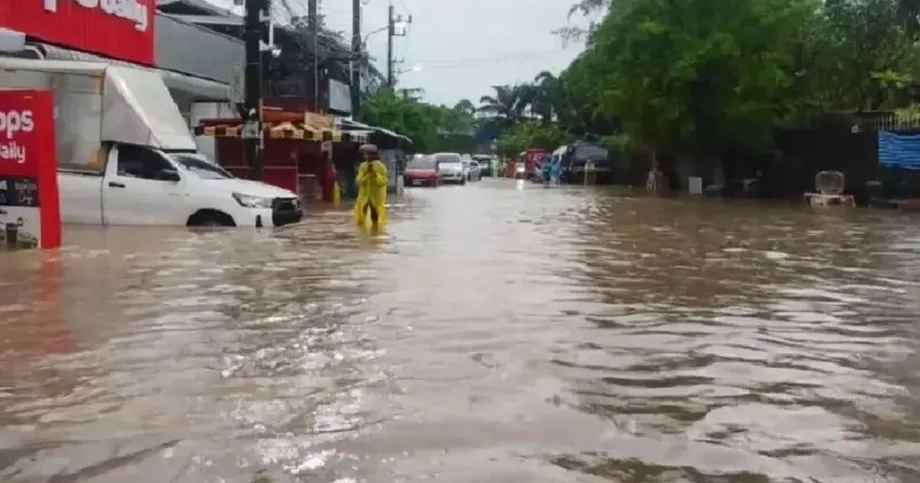
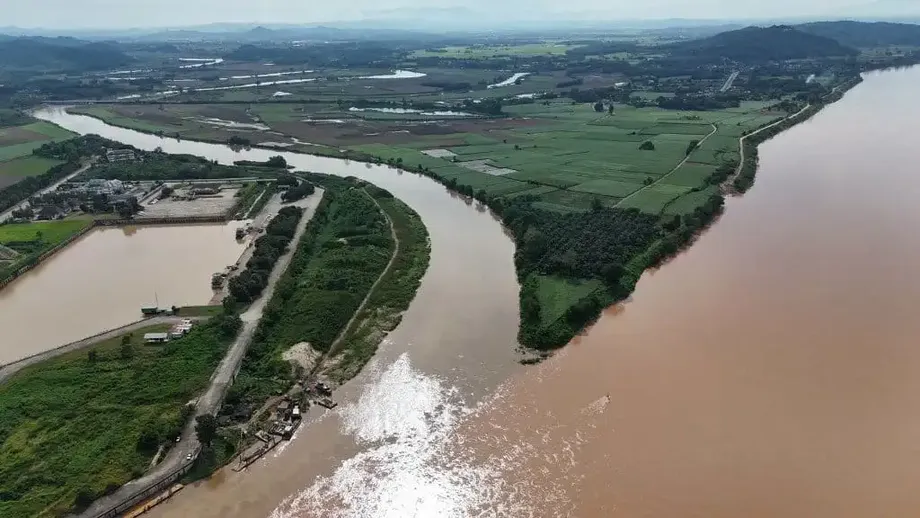
Thailand's Pollution Control Department found arsenic above the national surface water standard at every site it tested along the Sai River during its 23rd monitoring round in late September 2026. The survey covered 23 locations across the Kok, Ruak, Mekong and Sai rivers, putting renewed pressure on authorities to protect water supplies and address pollution crossing Thailand's northern borders.
Contents
- All Sai River sampling sites exceed the arsenic standard
- Why the latest river results need careful tracking
- Earlier measurements show the scale of concern
- Health checks and household costs
- Drinking water, fish and rice require different checks
- Mining allegations reach beyond one river
- How the crisis and response developed
- What Thailand wants from its neighbours
- Sediment treatment and financial help remain separate tasks
- Key Points
The department said results from the other three rivers were within the standard during that round, although arsenic concentrations in the Mekong were rising. It linked that trend to floodwater arriving from neighbouring countries. Provincial authorities and the Provincial Waterworks Authority were notified to strengthen checks on both untreated water entering supply systems and treated water reaching households.
The findings come ahead of a Thai and Myanmar working group meeting planned for late November 2026 and proposed joint monitoring with Laos during the same month. Investigations in northern Thailand have so far found no domestic pollution source, according to the department.
For riverside communities, the immediate concerns extend from drinking water to food, household spending and the safety of farming. Researchers have identified health indicators requiring further monitoring, while households surveyed in Chiang Mai and Chiang Rai are spending more to obtain clean water.
Why the latest river results need careful tracking
The department's 23rd round followed a September 19 release on its 22nd round, which described arsenic above national limits at 22 monitoring points along the Kok and Sai rivers. The late September findings put the latest recorded exceedances on the Sai, while the Kok was within the standard during that survey.
Water conditions can change between sampling dates. Environment Minister Suchart Chomklin told parliament on October 29 that contamination in the Kok fluctuated with the seasons and with sediment stirred up during periods of high water. Sediment is the mud, sand and other material that settles on a riverbed and can be carried downstream again when currents strengthen.
The minister also said water releases from dams in Laos could stir sediment in the Mekong, helping explain why contaminants were detected in some tests and absent in others. The department's concern about rising Mekong arsenic concentrations makes repeated sampling important even where the latest measurements remained within the standard.
The late September results concern water sampled directly from rivers. Whether treated tap water meets drinking water requirements depends on testing after treatment and through the supply network. Authorities have asked water suppliers to monitor both stages closely; detailed concentrations for individual sites in the 23rd round and current household tap results were not disclosed in the announcement.
Earlier measurements show the scale of concern
The Business & Human Rights Resource Centre's river pollution briefing records earlier tests in Mae Ai district showing arsenic at 0.026 milligrams per litre against a cited limit of 0.01 milligrams per litre. Mercury measured 0.076 milligrams per litre against a cited limit of 0.05.
Those arsenic measurements were 2.6 times the cited limit, while mercury was 1.52 times its limit. These figures provide a numerical picture of the earlier contamination in Mae Ai; the department's latest announcement covers a different monitoring round.
The institution's briefing says pollution threatens the health and livelihoods of 1.2 million people. It also records the Mekong River Commission's classification of contamination crossing borders as a moderately serious environmental issue in early July 2025, when the commission confirmed arsenic above international safety standards in sections of the Mekong and Kok.
Arsenic is a toxic element that can harm health through prolonged exposure. Its presence alongside mercury and concerns about lead means testing programmes need to examine several contaminants, rather than focus on a single result.
Health checks and household costs
Chiang Mai University's Faculty of Public Health and the Department of Disease Control surveyed residents along the Kok River in Mae Ai district. Preliminary findings identified abnormal liver enzyme and thyroid hormone levels. These measurements help doctors assess how organs and hormone systems are functioning.
Health authorities have yet to determine whether the abnormalities are linked to river contaminants. Continued medical monitoring is therefore part of the response, alongside environmental testing.
Associate Professor Warangkana Naksen, vice dean of Chiang Mai University's Faculty of Public Health, said arsenic was not the only concern. The Pollution Control Department has warned that lead accumulating in the body over time can affect the nervous system and brain development.
Water purchases are already adding a measurable burden. Findings drawn from 400 samples in Chiang Mai and Chiang Rai showed that almost all surveyed households had to buy water for consumption, with additional spending reported at 1,800 baht per month. At that monthly rate, a household would spend 21,600 baht over a year.
Senator Maneerat Khemawong, an adviser to the Kok River Health Impact Assessment Project, said residents were concerned about prolonged exposure and disruption to their way of life. For families dependent on the rivers, buying water is one recurring expense within a wider problem affecting food and income.
Drinking water, fish and rice require different checks
Residents have been warned against drinking untreated river water or using it for cooking. Boiling kills many germs, but it does not remove arsenic. Water intended for drinking therefore needs a supply whose treatment and quality checks address chemical contamination.
The Department of Health has also advised residents to avoid fish, shrimp and other aquatic animals caught in some sections of the Kok and Sai rivers where arsenic and other metals exceeded standards. The advice concerns affected river sections, making local notices important for people who fish for food or sell their catch.
The Pollution Control Department is coordinating checks on agricultural produce, including rice. In parliament, Chiang Mai MP Phattharaphong Leelaphat of the People's Party raised concerns about arsenic and lead in rice plants. The department said it was still gathering information on agricultural contamination.
River sampling, testing edible crops and checking treated drinking water answer different practical questions. Farmers need information about irrigation and produce, fishing households need guidance on catches, and water suppliers need measurements showing what enters and leaves their treatment systems.
Mining allegations reach beyond one river
More than 20 mines in Myanmar's Tachileik province have been blamed for discharging untreated wastewater into the Kok and Sai rivers. The Resource Centre's briefing also describes allegations that four Chinese companies intensified mining activity in Myanmar from 2023, alongside concerns about gold mining, deforestation and expanding rare earth extraction in Shan State.
A November 2025 dataset cited in the briefing identified more than 2,400 unregulated mining sites across Myanmar, Laos and Cambodia. That regional inventory covers a much broader area than the mines blamed for pollution in the Kok and Sai. Together, the accounts show why Thailand is pursuing cooperation beyond its own territory.
The Chinese Embassy in Bangkok responded to allegations concerning Chinese companies on June 8, 2025, saying:
Chinese companies operating abroad are required to abide by local laws and regulations
The embassy called for resolution through friendly dialogue. In June 2026, it again called for consultation and said the Chinese government required companies operating overseas to give importance to environmental protection and compliance with environmental rules.
Thailand has sought help from Japan and Australia to support negotiations involving Myanmar's military authorities and ethnic forces. The involvement of different authorities in mining areas adds complexity to efforts to secure access, investigate discharges and stop pollution upstream.
How the crisis and response developed
Flooding, public protests and successive monitoring rounds have shaped the response over more than two years. The main developments include:
- September 2024: Floods carried muddy water into communities including Peng Kham in Myanmar and Thaton in Chiang Mai.
- March 14, 2025: More than 700 Thaton residents rallied for protection of the Kok River on the International Day of Action for Rivers.
- Early July 2025: The Mekong River Commission classified the contamination crossing borders as a moderately serious environmental issue.
- November 2025: A regional dataset identified more than 2,400 unregulated mining sites across Myanmar, Laos and Cambodia.
- Late May to early June 2026: Residents and civic groups held a pilgrimage calling for government action.
- September 2026: Thailand released its 22nd monitoring results and conducted its 23rd round across four rivers.
- October 29, 2026: Ministers and MPs debated the response in parliament as preliminary health findings drew attention.
- November 2026: Joint monitoring with Laos and a working group meeting with Myanmar were planned.
The next scheduled diplomatic steps concern both investigating upstream conditions and agreeing how neighbouring countries measure pollution.
What Thailand wants from its neighbours
The Pollution Control Department plans to use the Thai and Myanmar working group meeting in late November to seek causes and agree responses. It is also coordinating through the Mekong River Commission for joint water quality measurements near the border with Laos during November.
Suchart told parliament that Thailand had requested cooperation from Laos to establish monitoring stations aligned on both sides of the river. Matching locations and sampling arrangements would help both countries assess pollution under comparable conditions.
Phattharaphong challenged the government's progress during the October 29 debate, arguing that existing arrangements with Myanmar had failed to solve the problem and alleging that new mines continued to open. He also disputed the minister's account of conditions in the Kok. Suchart said he would have the Pollution Control Department's director general coordinate with the MP over the findings.
The exchange highlights a concrete task for the November discussions: turning repeated measurements and complaints into coordinated action upstream, while keeping downstream communities informed about changing conditions.
Sediment treatment and financial help remain separate tasks
The department is working with the United Nations Industrial Development Organization, Japan, SCG and the Massachusetts Institute of Technology to study management of contaminated sediment and develop tools for detecting heavy metals.
Riverbed sediment needs particular care because pollutants can settle into it and move again when disturbed. Environmental specialists cited in the Resource Centre's briefing have warned that proposed dredging of the Kok could worsen contamination by stirring up polluted material. Research into sediment management therefore has a direct bearing on how restoration work is carried out.
Financial support is another point of dispute. The department said the Environmental Fund, established under Section 23 of the Enhancement and Conservation of National Environmental Quality Act of 1992, provides support or loans to agencies and private organisations for environmental projects, but has no mechanism for paying compensation directly to individuals.
Phattharaphong pointed to Section 23(4) during the parliamentary debate, arguing that its provisions could support activities connected with environmental protection. The department's stated position leaves households facing extra water costs without a direct individual compensation route through that fund.
Key Points
- Every Sai River site tested in the late September 2026 monitoring round exceeded Thailand's arsenic standard for surface water.
- The survey covered 23 sites across four rivers. The Kok, Ruak and Mekong were within the standard during that round, although Mekong arsenic concentrations were rising.
- Water suppliers were told to strengthen checks on untreated source water and treated tap water.
- Preliminary health research found abnormal liver enzyme and thyroid hormone levels among surveyed residents, with the cause still under investigation.
- Survey findings put additional household spending on clean water at 1,800 baht per month.
- Talks with Myanmar and joint monitoring with Laos were planned for November 2026.
- Research is examining contaminated sediment, while the Environmental Fund has no mechanism for direct compensation payments to individuals.