India Considers Export Duties to Lower Rice Prices
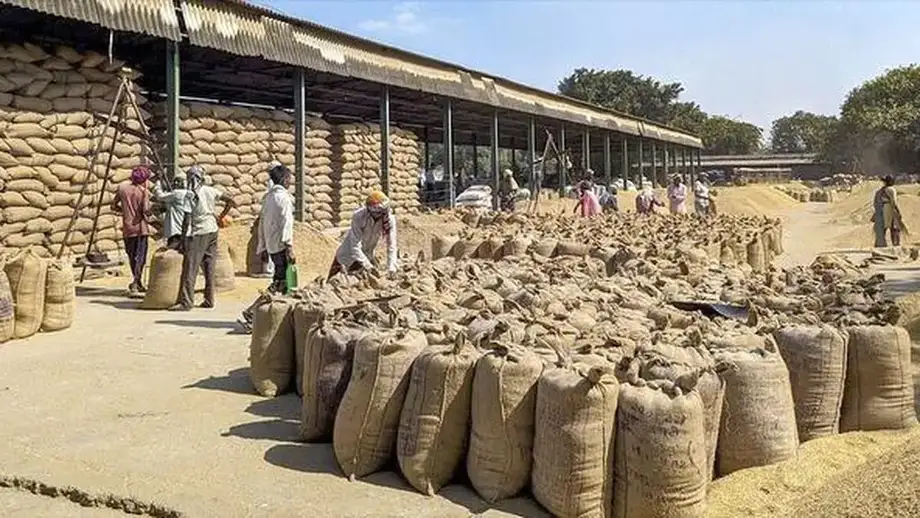
India is planning to ban non-Basmati rice exports as a last resort to help cool domestic prices while preparing to impose an export duty with a minimum export price next month. Government officials stated that any export curb will be temporary, unlike the previous ban imposed in 2023 which continued for 14 months. Considering current international rice prices and export rates, the government is considering a 30 per cent export duty to reduce India's global competitiveness in non-Basmati white rice. If the duty is set at 20 per cent, India will still be able to export because rates offered by Thailand and Vietnam remain higher, with only Pakistani rice prices lower. During the first week of November, when the plan was put before an interministerial panel, the Indian free on board price of white rice was $384 to $389 per tonne, compared to Pakistan at about $415 per tonne, Thailand at $495 per tonne, and Vietnam at $480 per tonne.
Contents
- India Considers Export Duties to Lower Rice Prices
- Andhra Pradesh Imposes Retail Price Caps and Stock Limits
- Global Export Prices Reach Multi-Month Highs
- Bharat Rice Sales Plunge Following Subsidy Withdrawal
- Household Budgets Squeezed by High Food Inflation
- El Niño Weather Patterns and Central Buffer Stocks
- Timeline of Key Rice Policy and Market Developments
- At a Glance
Food inflation spiked to 8.94 per cent in October 2026 from 7.74 per cent in September, continuing a trend that brings national inflation close to the Reserve Bank of India ceiling, as detailed in India's retail inflation accelerated to 5.54 per cent in September 2026. Within the cereal category, rice inflation has been steadily rising, reaching 12.51 per cent in October after standing at 8.27 per cent in September, 5.89 per cent in August, 3.30 per cent in July, and 1.72 per cent in June. During October, inflation in rice in most southern states was much higher, hitting 43.2 per cent in Karnataka, 25.7 per cent in Andhra Pradesh, 24.6 per cent in Telangana, 17.4 per cent in Tamil Nadu, and 9.4 per cent in Kerala. Total non-Basmati rice exports during April to October of the current fiscal year jumped 7 per cent to 8.84 million tonnes from 8.28 million tonnes a year ago. Shipments of parboiled rice dropped 5 per cent to 4.87 million tonnes, whereas white rice surged more than 18 per cent to 2.82 million tonnes and broken rice jumped 74 per cent to 0.98 million tonnes. In the 2025-26 fiscal year, India exported 15.04 million tonnes of non-Basmati rice worth $5.87 billion.
Andhra Pradesh Imposes Retail Price Caps and Stock Limits
Andhra Pradesh has capped retail rice prices between 47 rupees and 82 rupees per kg and imposed stock limits on rice millers, wholesalers, and retailers to curb hoarding and check a nearly 30 per cent surge in prices over recent months. The restrictions, introduced amid prevailing El Niño conditions and concerns over supplies, will remain in force until January 31, 2027. Common MTU varieties cannot be sold above 47 rupees per kg under the Andhra Pradesh Paddy and Rice (Stock Limits and Mandatory Stock Disclosure) Control Order, 2026. The maximum retail price for BPT-3291 (Sona), BPT-5204 (Samba), and KNM varieties has been fixed at 66 rupees per kg, while HMT and RNR varieties are capped at 76 rupees per kg and Jai Sriram rice has a maximum price of 82 rupees per kg.
The order prescribes category-wise stock limits for different businesses, allowing trading rice mills to hold up to 4,000 quintals of non-Basmati premium rice or stocks equivalent to seven days of milling capacity. Wholesale dealers can stock up to 1,000 quintals in municipal corporation areas, 500 quintals in other district headquarters, and 250 quintals in other locations, while retailers are permitted to hold up to 100 quintals in urban areas and 50 quintals in rural areas. Exporters with valid export orders are exempted from the stock limits, though those transporting rice through ports in Andhra Pradesh must inform the concerned district collector about the source of procurement and obtain a release certificate before moving consignments to prevent export-bound rice from being diverted into the domestic market.
Commissioner of Civil Supplies and ex-officio government secretary K Kanna Babu explained the purpose behind the state intervention. He stated:
The measures were intended to prevent hoarding, ensure adequate market supplies and protect consumers from excessive prices.
Global Export Prices Reach Multi-Month Highs
Indian rice export prices climbed to their highest in more than 19 months in late November 2026, buoyed by a stronger rupee and robust demand from Africa. India's 5 per cent broken parboiled variety was quoted at $394 to $398 per ton, up from $385 to $390 previously, while the 5 per cent broken white rice was priced at $395 to $400 per ton. Niraj Kumar, head of India rice business at Aditya Birla Global Trading, described the market drivers by stating:
Higher domestic paddy prices, sustained African demand and rupee appreciation have played a vital role in supporting Indian rice export prices over the last three-four weeks. Concerns over below-normal monsoon rainfall and adverse weather conditions have further contributed to market firmness.
Meanwhile, Thailand's 5 per cent broken rice rose to $505 to $510 per ton, marking the highest level since December 2024, driven by additional purchases by regular buyers in the Philippines and Indonesia alongside sporadic buying from Japan. Vietnam's 5 per cent broken rice was offered at $475 to $485 per metric ton, falling from $490 to $495 a week earlier due to a lack of buyers at higher prices. Vietnam exported 268,397 metric tons of rice in the first half of November, bringing total shipments for the year to November 15 to 7.18 million tons valued at $3.48 billion.
Bharat Rice Sales Plunge Following Subsidy Withdrawal
Sales of subsidized Bharat Rice plunged sharply after the central government withdrew financial support under the scheme, falling from around 14.6 lakh tonnes in its first phase in 2024 to just 82,088 tonnes in the third phase covering July 2025 to June 2026. The subsidy, which was initially 5.4 rupees per kg, was reduced to 2 rupees per kg in the second phase before being completely withdrawn from July 2025, with no further support provided from the Price Stabilisation Fund. The information was disclosed by the food department in response to an RTI application filed by Kerala-based RTI activist K Govindan Nampoothiry. Launched on February 6, 2024, Bharat Rice was aimed at providing rice to consumers at subsidized rates under the Open Market Sale Scheme, where the Food Corporation of India sells excess stocks from the central pool through cooperative organizations including NAFED, NCCF, and Kendriya Bhandar.
According to the official response, against an allocation of 17.5 lakh tonnes in the first phase between February and June 2024, 14.6 lakh tonnes were sold. Sales fell to 2.7 lakh tonnes in the second phase against an allocation of 2.9 lakh tonnes, and dropped further to 82,088 tonnes against 1.6 lakh tonnes allocated in the third phase. The decline continued into the fourth phase, where only 5,886 tonnes were sold against an allocation of three lakh tonnes for July 2026 to June 2027. Nampoothiry noted that the sharp fall in sales and withdrawal of subsidy raised questions about government efforts to make affordable food available during a period of rising prices.
Household Budgets Squeezed by High Food Inflation
A routine grocery shopping trip became an expensive endeavor for families across major urban centers as Karnataka food inflation reached 12.16 per cent in October 2026, substantially higher than the national average of 8.94 per cent. Consumer Price Index data released by the Ministry of Statistics and Programme Implementation on November 12 placed Karnataka third among states with the highest food inflation, behind Andhra Pradesh at 13.23 per cent and Tamil Nadu at 12.37 per cent, followed by Telangana at 11.66 per cent and Kerala at 10.92 per cent. Karnataka's overall retail inflation stood at 7.07 per cent compared to the national average of 6.09 per cent. In Bengaluru, rice prices increased by around 25 rupees per kg in three months, with a 25-kg bag rising from 1,800 to 1,900 rupees to approximately 2,450 rupees, while good-quality rice crossed 100 rupees per kg in metropolitan markets.
The price pressure extended across multiple household essentials, including milk, curd, butter, pulses, and 20-litre drinking water cans. Homemaker Durga Venkatesh described the daily financial impact by stating:
We are spending much more on groceries than we did a few months ago, but the quantity we bring home is almost the same. Vegetables, pulses and cooking oil together make a big difference to the bill. By the time we finish buying the essentials, there is very little left in the monthly budget.
National commodity inflation figures showed onion prices rising by 116.22 per cent year-on-year in October, garlic by 60.74 per cent, ginger by 48.32 per cent, and lemons by 47.30 per cent. In Mumbai, Maharashtra's overall retail inflation stood at 5.85 per cent, while Crisil's monthly Roti Rice Rate report showed the cost of preparing a vegetarian thali increased 12 per cent year-on-year to 31.20 rupees and a non-vegetarian thali rose 9 per cent to 59.20 rupees.
El Niño Weather Patterns and Central Buffer Stocks
India experienced high food inflation between July 2023 and December 2024, averaging over 8.5 per cent year-on-year due to a strong El Niño event. The current El Niño, officially confirmed from June 2026, developed into a very strong event and is projected to persist through January to March 2027 before weakening towards April and May. Rainfall during the southwest monsoon season from June to September was 12.6 per cent below its normal long period average, while the northeast monsoon registered 33.6 per cent below-normal precipitation as of November 16. Southern states, Maharashtra, Gujarat, Rajasthan, western Madhya Pradesh, Bihar, and the Northeast bore the brunt of the dry weather, pushing the annual increase in the consumer food price index to a 23-month high of 8.9 per cent in October.
Despite weather-induced crop stress, government agencies held cereal stocks in godowns at 3.3 times the required minimum buffer levels. Rice stocks alone stood at an all-time high of 55.5 million tonnes on October 1, while wheat reached 46.3 million tonnes, alongside 3.8 million tonnes of pulses. This comfortable buffer stock position was achieved through back-to-back bumper harvests in 2024-25 and 2025-26. However, sowing for winter rabi crops declined as of November 13, dropping 15.3 per cent for wheat, 21.6 per cent for chana, and 8.4 per cent for rapeseed-mustard due to a lack of soil moisture and low reservoir water levels.
Timeline of Key Rice Policy and Market Developments
- September 2022: India bans broken rice exports and imposes a 20 per cent export duty on paddy, husked rice, and non-Basmati white milled rice.
- July 2023: Shipment of non-Basmati white rice is prohibited.
- August 2023: A 20 per cent export duty on parboiled rice and a minimum export price on Basmati rice are introduced.
- February 6, 2024: Bharat Rice is launched to provide subsidized grain under the Open Market Sale Scheme.
- September to October 2024: All export curbs and minimum export prices on rice are lifted, though the broken rice ban continues.
- March 2025: The export ban on broken rice is officially lifted.
- July 2025: The central government completely withdraws the subsidy on Bharat Rice.
- June 2026: A new El Niño weather pattern is officially confirmed by meteorological agencies.
- November 6, 2026: The Centre doubles the target for rice sold through e-auction under the Open Market Sale Scheme for 2026-27 to 50 lakh tonnes and grants concurrence for southern states to impose stock limits.
- November 12, 2026: Ministry of Statistics and Programme Implementation releases Consumer Price Index data showing national food inflation at 8.94 per cent and rice inflation at 12.51 per cent.
- November 20, 2026: Indian rice export prices hit a 19-month high amid a stronger rupee and African demand.
- January 31, 2027: Expiry date for the Andhra Pradesh Paddy and Rice Control Order unless extended with central approval.
At a Glance
- India is considering a 30 per cent export duty and temporary non-Basmati export curbs to rein in domestic rice prices.
- October 2026 food inflation reached 8.94 per cent, driven by a 12.51 per cent surge in rice prices and extreme weather from El Niño.
- Andhra Pradesh capped retail rice prices between 47 and 82 rupees per kg and imposed strict stock limits until January 31, 2027.
- Bharat Rice sales dropped sharply from 14.6 lakh tonnes in its first phase to just 82,088 tonnes after subsidies were withdrawn in July 2025.
- Government godowns hold a record 55.5 million tonnes of rice, providing a buffer against production declines despite poor winter crop sowing.