Understanding the 8th Pay Commission and What It Means for Workers
Millions of central government workers and retirees across the country are watching closely as discussions unfold regarding their future earnings. The central government set up the 8th Central Pay Commission through an official notification or terms of reference text dated November 3, 2025, giving it a timeframe of 18 months to study salaries, pensions, and working conditions. This panel is chaired by former Supreme Court judge Justice Ranjana Prakash Desai, with Prof Pulak Ghosh serving as a part-time member and Pankaj Jain as the member-secretary. Operating out of the Chanderlok Building on Janpath in New Delhi, the commission has spent much of its term listening to the people whose livelihoods depend on its decisions.
Contents
- Understanding the 8th Pay Commission and What It Means for Workers
- The Central Demand for a Higher Fitment Factor and Minimum Pay
- Timeline of Consultations Across the Country
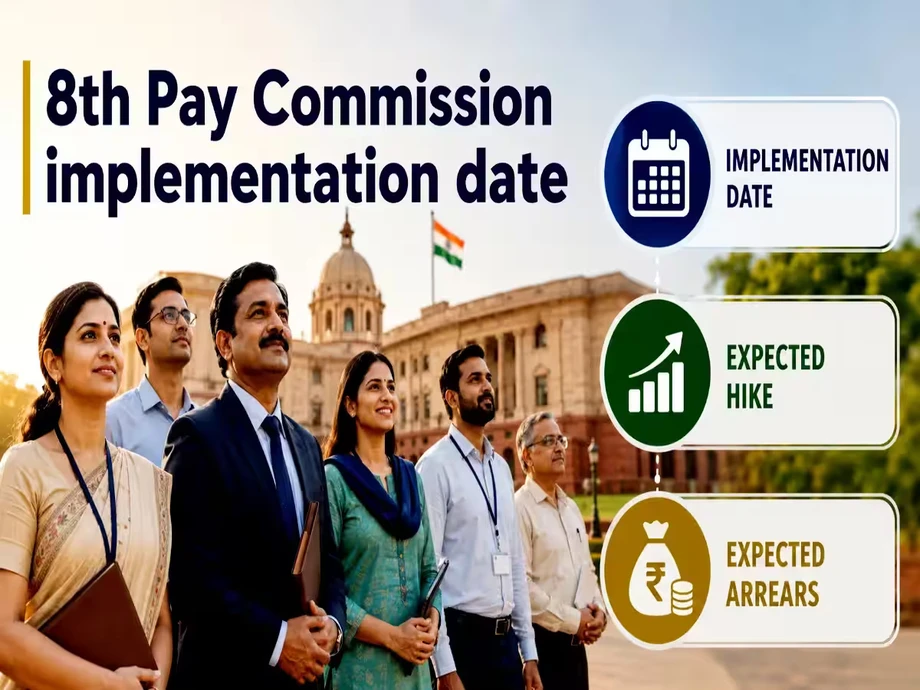
- Expectations Around Arrears and the Effective Implementation Date
- Pensioner Demands and Retirement Benefits
- What Changes for Workers and What Remains Unknown
- The Bottom Line
A pay commission is a special group formed roughly once every decade to review and update the financial compensation of government employees. The previous panel, the 7th Pay Commission, concluded its active operational term on December 31, 2025. Workers and pensioners now look to the ongoing proceedings to shape their household budgets for the years ahead. With an estimated 7.5 million central government employees and 69 lakh pensioners awaiting updates, the stakes are high for households trying to keep up with the rising cost of everyday goods.
The Central Demand for a Higher Fitment Factor and Minimum Pay
Employee unions have put forward ambitious proposals regarding how much baseline salaries should increase when the new pay structure takes effect. The National Council of the Joint Consultative Machinery, known as the NC-JCM, acts as the main negotiating body representing central government staff. The staff side of this organization submitted a detailed complete text or exact memorandum proposing a uniform fitment factor of 3.833. A fitment factor is a mathematical multiplier applied to existing basic pay and pensions to calculate revised figures under a new pay commission. Applying a 3.833 multiplier would push the minimum basic monthly pay from the current Rs 18,000 up to about Rs 69,000. Other groups have made similar requests, with the All India Defence Employees Federation demanding a fitment factor of 3.83, while various railway associations have suggested multipliers ranging from 2.92 to as high as 4.38 depending on the pay level.
To justify these higher figures, employee representatives based their calculations on the nutritional and living requirements of a modern household. The drafting committee used daily dietary guidelines from the Indian Council of Medical Research, which recommends 3,490 kilocalories for physically demanding work. Organizers calculated the monthly cost of a food basket containing proteins, dairy, fresh fruit, and vegetables for a family of five. Beyond food, the budget factored in housing, utility bills, and everyday household necessities. Speaking about the collaborative submission process, Shiv Gopal Mishra, the secretary of the staff side of the National Council, described the engagement with panel members.
The 8th Pay Commission heard our demands patiently. We submitted our suggestions, they took note of the same.
Despite presenting these detailed calculations, leadership remains realistic about the uncertainty surrounding the final decision. Shiv Gopal Mishra noted that while the group made a reasoned case backed by data, predicting the outcome remains difficult.
We can't say what the future holds.
Timeline of Consultations Across the Country
To gather grassroots input, the commission launched an online portal for memoranda that accepted submissions until mid-2025 and 2026, alongside an 18-question questionnaire on MyGov. Members traveled extensively to meet with regional employee associations, state representatives, and unions. The travel schedule spanned locations such as Dehradun, New Delhi, Pune, Hyderabad, Srinagar for Jammu and Kashmir, Leh for Ladakh, Lucknow, Bhubaneswar, Kolkata, Jaipur, Chennai, Puducherry, Chandigarh, Bengaluru, and Mumbai. These regional meetings gave workers from railways, defense departments, postal services, and civil offices a platform to voice their specific local concerns.
- April 24, 2026: Initial stakeholder meetings conducted in Dehradun, Uttarakhand.
- June 2026: Regional delegations consulted in Srinagar for Jammu and Kashmir, and Leh for Ladakh.
- July 2026: Further hearings held in eastern hubs including Bhubaneswar and Kolkata.
- October 22 to 23, 2026: Final scheduled listening sessions concluded in Mumbai.
Worker representatives utilized these meetings to push for broader structural reforms alongside pay increases. The All India Railwaymen Federation requested additional discussion time to ensure smaller technical and ministerial departments could present their unique workplace challenges. Meanwhile, defense employee representatives pressed for better workplace safety measures alongside their salary revisions.
Expectations Around Arrears and the Effective Implementation Date
A primary concern among workers is the exact date when revised paychecks will begin and how past months will be handled. The formal term of the 7th Pay Commission ended on December 31, 2025, leading employees to view January 1, 2026, as the natural starting point for the new adjustments. The government has maintained that official decisions on pay scales and fitment factors will only occur after reviewing the final commission report. However, union leaders express strong confidence that past administrative patterns will repeat themselves. Shiv Gopal Mishra voiced absolute certainty regarding retroactive payments.
We are 100% sure of arrears being rolled out from January 2026. Let there be no doubt about it. If anyone else is saying otherwise, then I won't agree.
Historical precedent supports this expectation, as the Union Cabinet approved the previous pay commission recommendations in mid-2016 while applying them retrospectively from January 1 of that year, paying employees lump sum arrears for the intervening months. Current estimates suggest the panel will complete its 18-month mandate by early May 2027. Following that submission, the report will go to a group of ministers for review before final cabinet approval, making the second half of 2027 the projected window for operational rollout.
Pensioner Demands and Retirement Benefits
Retirees face similar financial pressures, with pensioner associations submitting substantial demands of their own to the panel. The Bharat Pensioners Samaj, an organization representing roughly 10 lakh retired central government personnel, asked for a minimum monthly pension of Rs 45,000. This proposal represents a fivefold increase from the baseline Rs 9,000 pension established under the previous pay structure. Other groups, including the National Council of the Joint Consultative Machinery and the All India Defence Employees Federation, recommended that regular pensions should equal 67 percent of the last drawn basic pay, with family pensions set at 50 percent.
Several groups also renewed calls for the expansion of the One Rank One Pension scheme to cover civilian retirees. Originally implemented for armed forces personnel in 2014, this system ensures that personnel who retired from the exact same designation receive identical pension payouts regardless of their retirement year. Fulfilling these pension enhancements presents a significant financial consideration for the national budget, particularly because the country currently counts 69 lakh central government pensioners compared to 58 lakh active employees. Financial analysts point out that while unions advocate for high multipliers, actual implementation figures historically land closer to moderate economic projections.
What Changes for Workers and What Remains Unknown
The ongoing commission review touches nearly every aspect of daily life for government employees, from annual salary increments to risk allowances and insurance coverage. Defense civilian unions have requested specialized additions, such as a monthly risk allowance of Rs 10,000 for hazardous duties, death compensation coverage of Rs 2 crore, and expanded compassionate appointment rules. Other employee groups have proposed doubling the annual salary increment rate from the current 3 percent up to 6 percent to help compound earnings over a career.
Uncertainty remains regarding what the final report will contain because the commission has not yet issued an interim evaluation. The official website serves as the primary bulletin board for updates as the panel finalizes its review. Once the 18-month study period concludes, the resulting document will dictate the financial health of millions of households for the upcoming decade.
The Bottom Line
- The 8th Central Pay Commission was established on November 3, 2025, under the leadership of Justice Ranjana Prakash Desai.
- Central employee unions have requested a uniform fitment factor of 3.833, which would lift the minimum basic pay to roughly Rs 69,000.
- Retiree associations are pushing for a minimum pension of Rs 45,000 alongside pension revisions pegged at 67 percent of last drawn pay.
- Employee representatives express total confidence that financial adjustments will be backdated to take effect from January 1, 2026.
- The final recommendations are scheduled for submission by early May 2027, with implementation expected in the second half of that year.