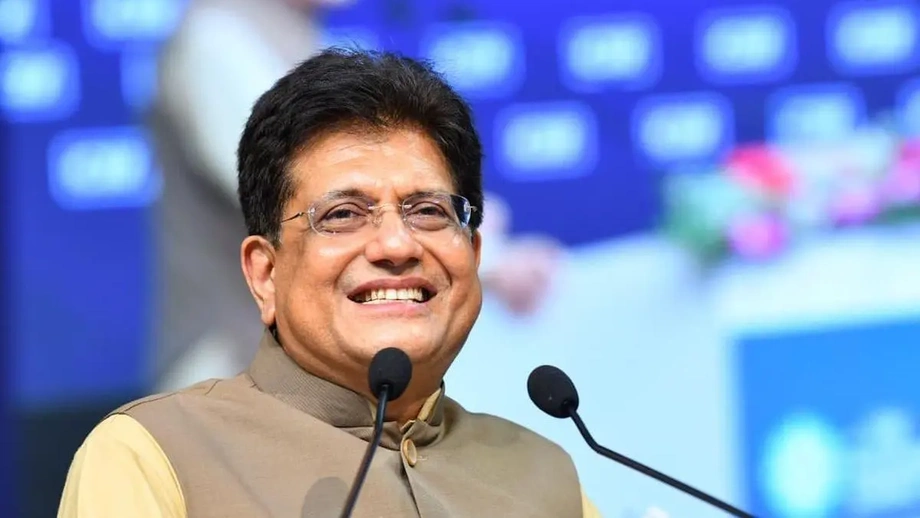
A promise of better access, with final duties still unsettled
India is seeking to complete the first phase of its trade agreement with the United States by March 31, 2027, after securing an assurance that Indian goods will receive more favourable tariff treatment than competing countries. Commerce and Industry Minister Piyush Goyal said the understanding came from Prime Minister Narendra Modi and US President Donald Trump, although the final rates still depend on Washington's changing tariff structure.
Contents
- A promise of better access, with final duties still unsettled
- Why India wants an advantage over specific competitors
- How the talks reached this point
- What the February framework offered each side
- Why the Supreme Court ruling changed the negotiations
- Two US investigations shape the remaining tariff decisions
- Customs talks advance, with protection against future tariff changes
- Agriculture and dairy remain politically sensitive
- Trade grows while ministers describe the last stretch
- Key Points
Speaking to reporters during a visit to Egypt lasting two days, Goyal said preferential access was already part of the broad framework announced in February 2026. His comments put a public ministerial statement behind assurances that Indian trade officials had described during the latest negotiations.
Goyal, who was in Egypt to discuss trade and investment, explained the leaders' understanding:
This was already agreed between the leaders - President (Donald) Trump and Prime Minister Narendra Modi when they announced that we have both come to a broad framework agreement a few months ago and it has been acknowledged that India will get preferential trade access in the US with lower duties than our competitor countries,
The immediate task is to turn that promise into a legal agreement covering goods. Services are reserved for a later phase, while negotiations on the broader bilateral trade agreement continue alongside the first package.
For Indian exporters, the central issue is the gap between their duties and those paid by suppliers from countries such as Vietnam and Bangladesh. A tariff is a tax charged when goods enter a country. Lower duties can make an Indian product cheaper for an American buyer to import, helping the exporter compete for orders.
The first phase remains unsigned. March 31, 2027, is the negotiating target identified by an Indian official, rather than an announced signing date. The final product coverage, tariff advantage and outcome of a pending US investigation have yet to be settled.
Why India wants an advantage over specific competitors
India has made comparative tariff treatment a condition for moving ahead. Goyal said in September that India would finalise the agreement once it received a preferential rate compared with competitors including Vietnam and Bangladesh. Indian officials have since said Washington has assured them of that advantage once its tariff structure is complete.
The current figures help explain why the final comparison matters. India faces an additional 10% duty on covered goods under one Section 301 measure, while Vietnam reportedly faces 12.5% and Bangladesh 10% under that measure. India's rate is therefore 2.5 percentage points below Vietnam's, but equal to Bangladesh's.
Those figures concern one additional levy. The amount an importer pays also depends on ordinary customs duties, the product involved and applicable exemptions. Negotiators therefore need to compare the treatment of matching products, rather than rely on a single national headline rate.
American buyers would have a financial reason to consider Indian suppliers if comparable goods attracted lower duties. Exporters would still need to meet requirements on price, quality, production capacity and delivery. The agreement's practical value will depend on which products receive the preference and how large the difference becomes.
How the talks reached this point
Modi and Trump launched negotiations on February 13, 2025, with an initial aim of completing the first package by autumn that year. They also set a goal of expanding bilateral trade to $500 billion by 2030. Successive tariff changes and disagreements over market access pushed the talks beyond that timetable.
The main developments show how the negotiations shifted from bargaining over market access to rebuilding the legal basis for US tariffs:
- February 13, 2025: The leaders launched negotiations and announced the $500 billion trade target for 2030.
- April 2, 2025: Trump announced a 26% reciprocal tariff on Indian goods. A subsequent pause retained a 10% baseline duty.
- August 7 and 27, 2025: Two additional duties of 25% took effect on covered Indian goods, bringing the combined additional burden to 50%. The second levy was linked to India's Russian oil purchases.
- February 6 US time, February 7 in India, 2026: The countries announced an interim framework proposing an 18% reciprocal tariff on originating Indian goods.
- February 20, 2026: The US Supreme Court ruled that the emergency powers law used for the reciprocal tariffs did not authorise them.
- November 2 and 3, 2026: A small US delegation visited New Delhi to discuss customs procedures and the movement of goods across borders.
- March 31, 2027: India aims to conclude the first phase by the end of its financial year.
What the February framework offered each side
The February framework proposed cutting the US reciprocal tariff on Indian goods from 25% to 18%, a reduction of seven percentage points. It also provided for removing reciprocal tariffs on certain products after successful completion of the interim agreement.
Washington separately removed the additional 25% tariff linked to Russian oil purchases, effective February 7. The US administration attributed that decision to an Indian commitment to stop buying Russian oil. That removal took effect through a separate executive order while the trade agreement itself remained under negotiation.
India agreed in the framework to eliminate or reduce duties on US industrial goods and a range of agricultural and food products. The list included tree nuts, fresh and processed fruit, soybean oil, wine, spirits, red sorghum for animal feed and dried distillers' grains. The last product is a residue from ethanol production commonly used as animal feed.
The framework also addressed rules of origin, medical devices, technology products and barriers other than tariffs. Rules of origin determine whether a product qualifies as coming from a particular country. They matter because a preferential rate usually depends on where goods were made and how much processing took place there.
India also indicated an intention to purchase $500 billion in US products over five years, including energy, aircraft and aircraft parts, precious metals, technology products and coking coal. This purchasing intention and the leaders' $500 billion bilateral trade target have different scopes and time periods: the former concerns Indian purchases of specified US products, while the latter concerns trade between both countries by 2030.
Why the Supreme Court ruling changed the negotiations
The US Supreme Court's February 20 ruling removed the legal foundation for the reciprocal tariffs around which the February framework had been negotiated. The court held that the International Emergency Economic Powers Act, known as IEEPA, did not authorise the president to impose tariffs.
Washington then turned to other laws. A temporary import surcharge of 10% under Section 122 of the Trade Act of 1974 took effect on February 24, subject to exclusions. The administration also pursued investigations under Section 301 of the same act.
Section 301 allows the Office of the United States Trade Representative to investigate foreign policies or practices considered harmful to US commerce and take action, including imposing duties. For negotiators, moving between these legal routes means revisiting which duties apply, which products are covered and how a promised Indian advantage can be delivered.
Two US investigations shape the remaining tariff decisions
The United States launched two Section 301 investigations in March 2026. One examined trading partners' policies on preventing imports made with forced labour. The other concerns structural excess capacity in manufacturing, meaning the ability to produce more goods than markets can absorb.
The first investigation led to an additional 10% duty on covered Indian imports. The detailed tariff chronology places the announcement on July 23 and implementation on July 24; another description of the negotiations dates the imposition to June. India's Commerce Ministry said on July 25 that about 45% of Indian exports to the US would remain outside the additional duty and about 55% would attract it, subject to exemptions and exclusions.
The investigation focused on governments' controls against imports produced using forced labour. Its policy requirements included restrictions and enforcement measures intended to keep such goods out of supply chains. India had announced a prohibition on imports produced using forced labour through its Directorate General of Foreign Trade.
The 45% share outside this additional levy would still be subject to whatever other customs duties applied to the goods concerned. The ministry also said a separate mechanism relating to textiles had yet to be established.
The second investigation, into industrial overcapacity, remains central to the unfinished agreement. Indian officials say the promised comparative advantage will take shape once Washington completes that process and sets the resulting rates. India is among 14 trading partners, including Australia, Japan and the European Union, that have acknowledged the challenges posed by excess capacity and committed to action.
Customs talks advance, with protection against future tariff changes
A US delegation of two members visited New Delhi on November 2 and 3 to work on customs and trade facilitation. This chapter concerns the procedures used to declare, inspect and release goods at the border. Simpler and more predictable procedures can reduce delays for businesses moving products between the two countries.
Commerce Secretary Rajesh Agrawal confirmed the visit and said the chief negotiators remained in contact online. Indian officials said several portions of the chapter's wording had been resolved. Goyal described the visit as discussions on aligning customs procedures, rather than a formal negotiating round.
The proposed agreement is expected to consist of a legal text, annexures and a dedicated customs chapter. Services will be taken up in the broader agreement's second phase. At the time of the latest briefing, officials had no further meetings in person scheduled.
India also wants protection if Washington imposes new tariffs beyond the agreed commitments. An Indian official said the February joint statement already provided for India to modify its concessions in that situation. In practical terms, India wants the right to adjust benefits granted to US goods if the US changes the bargain through extra duties.
Such a provision matters because the negotiations involve different types of concessions. India has been discussing reductions in its regular import duties, often called most favoured nation duties, while the US framework concentrated on additional reciprocal tariffs. Most favoured nation duties are the ordinary rates a country generally applies to trading partners without a special preference.
Agriculture and dairy remain politically sensitive
Agriculture and dairy were major obstacles during the 2025 negotiations. Washington sought greater access for products including corn, soybeans, wheat, ethanol and dairy, while India sought to protect farmers and producers in sensitive sectors.
The February framework's proposed reductions on animal feed and other farm products prompted objections from farmer organisations and opposition parties. Their concerns included competition from cheaper imports and whether feed products could bring genetically modified material into India.
Goyal said on November 3 that India would maintain restrictions on genetically modified products and dairy products involving calf meat or rennet. Rennet is a substance used to help milk form curds when making cheese. He also stressed certification requirements linked to India's religious sensitivities.
The US has challenged Indian dairy requirements as barriers to trade. These include certification that dairy products come from animals whose feed contained no specified organs, blood meal or tissues from cattle, other ruminants or pigs. The disagreement reaches beyond tariff rates to the standards a product must meet before it can enter the market.
For Indian farmers, the eventual product lists will determine where competition from US imports increases. For American suppliers, access will depend on both any duty reductions and compliance with Indian import requirements.
Trade grows while ministers describe the last stretch
India's merchandise exports to the US reached $59.52 billion in April through October 2026, up from $51.99 billion in the same seven months a year earlier, according to Commerce Ministry figures. That represents an increase of $7.53 billion, or 14.48%, while the agreement was still being negotiated.
Figures for April through September show exports rising 11.1% to $50.81 billion and imports from the US increasing nearly 26% to $32.33 billion. For that six month period, merchandise trade totalled $83.14 billion, with an Indian surplus of $18.48 billion. These figures cover goods, while the leaders' broader trade ambitions also extend to services.
External Affairs Minister S Jaishankar said most issues, including work on individual tariff lines, had been sorted out. A tariff line is a product category with its own customs classification and rate. He attributed many remaining concerns to changes on the American side.
Jaishankar described India's objective during a public discussion:
For us the key is that we want a trade deal which is beneficial, it is balanced and which would give us a comparative advantage over groups of comparable economies,
Goyal had said on October 26 that most negotiations were complete and the agreement was being refined. US Secretary of State Marco Rubio also said during a visit to Mumbai that the sides were close to finalising it. Those statements followed an October slowdown, when Finance Minister Nirmala Sitharaman described the talks as a "plateau".
The next scheduled leaders' gathering mentioned in connection with the talks is the G20 Summit in Miami on December 14 and 15. Modi and Trump may discuss the agreement there. Goyal has declined to connect the trade negotiations to the outcome of the US midterm elections, keeping the public focus on the commercial terms.
Key Points
- Goyal says Modi and Trump agreed that Indian goods should receive lower US duties than competing countries.
- The first agreement will cover goods, with services reserved for a later phase.
- India is targeting completion by March 31, 2027; a signing date has not been announced.
- The February framework proposed an 18% reciprocal tariff, before a Supreme Court ruling forced changes to the US tariff structure.
- A pending US investigation into industrial overcapacity will help determine the final tariff arrangements.
- India wants the right to modify concessions if future US duties exceed the agreement's commitments.
- Indian goods exports to the US rose 14.48% to $59.52 billion in April through October 2026.