Arshdeep leads a recovery at Bay Oval
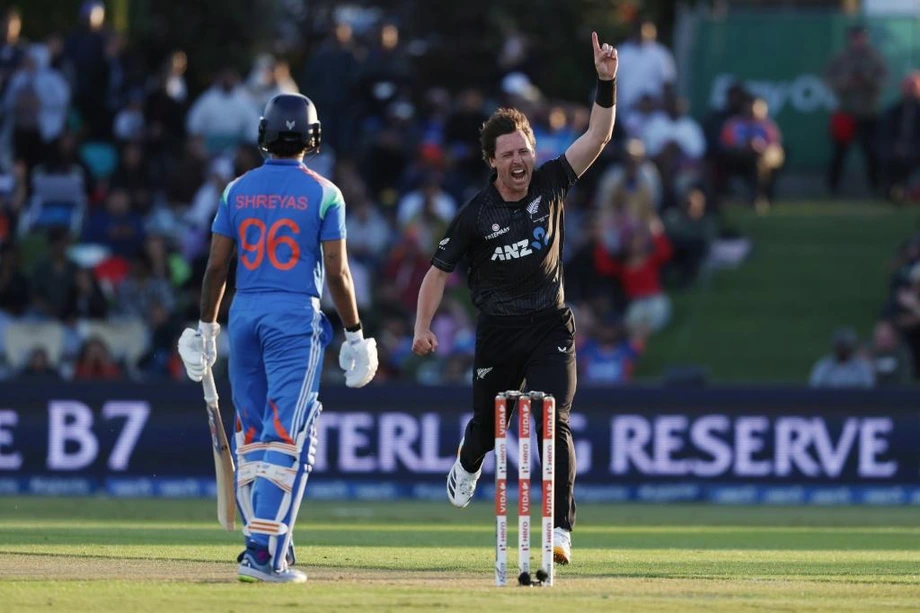
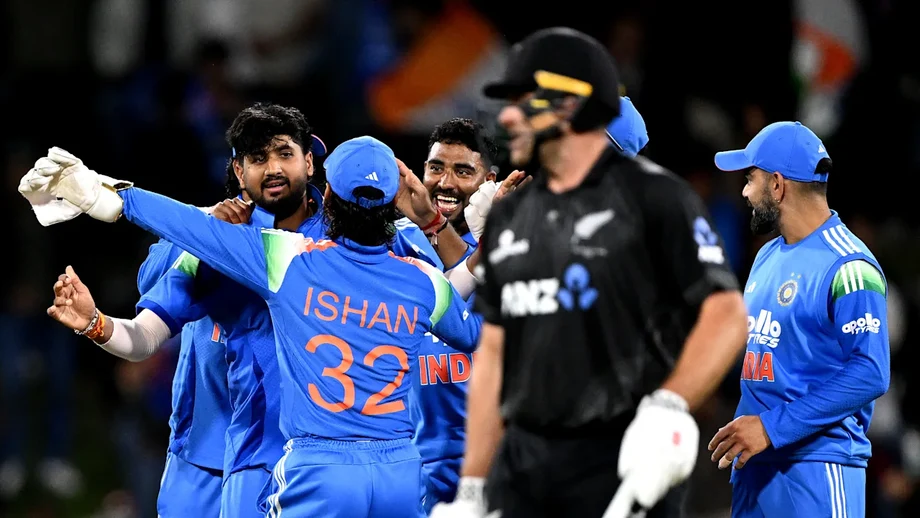
India defended 209 to beat New Zealand by 22 runs at Bay Oval in Mount Maunganui on November 15, 2026, securing the ODI series 3-1 and ending the hosts' run of 11 consecutive bilateral ODI series victories at home. Arshdeep Singh led the defence with three wickets for 30 runs from 10 overs as New Zealand were dismissed for 187 in 48.1 overs.
Contents
- Arshdeep leads a recovery at Bay Oval
- India's experienced batters fall early again
- Axar and Kishan build a defendable total
- Arshdeep and Siraj break the chase open
- Two partnerships keep New Zealand in contention
- Why Iyer waited so long to use spin
- How India secured the series
- Awards, batting concerns and Santner's injury
- Key Points
The result came just two days after India had been bowled out for 89 at the same ground in a defeat by 244 runs. This time, Axar Patel and Ishan Kishan each scored 46 before India's bowlers turned another difficult batting performance into a series victory.
Mohammed Siraj took two wickets on his return to the ODI side, while debutant Yash Thakur, Auqib Nabi and Naman Dhir each contributed a wicket. Axar completed his contribution with two wickets, including the final dismissal, as India added the ODI trophy to their earlier 3-2 victory in the T20I series.
Stand-in captain Shreyas Iyer kept faith with his fast bowlers, waiting until the 36th over to introduce spin. The approach used the movement and uneven bounce available under lights, forcing New Zealand to work for runs even when the target remained within reach.
India's victory was their first ODI series success overseas under head coach Gautam Gambhir and their third bilateral ODI series win in New Zealand, following victories in 2009 and 2018-19. Their next assignment is a series of two Tests beginning in Wellington on November 19.
India's experienced batters fall early again
New Zealand captain Mitchell Santner won the toss for the first time in the ODI series and chose to bowl. His attack quickly exposed India's batting problems, reducing the visitors to 34 for three in the ninth over.
Rohit Sharma made seven before a flick against Matthew Fisher went to Dean Foxcroft at short midwicket. Virat Kohli followed for five, edging an attempted cut against Fisher to wicketkeeper Tim Seifert, who completed a diving catch. Ruturaj Gaikwad scored 18 before an inside edge against Jacob Duffy gave Seifert another catch.
Rohit's dismissal completed a difficult tour in which he scored 30 runs across four innings, including two ducks. Kohli remained India's only batter to make a half century in the ODI series, through his 74 in the opening Auckland victory.
India promoted Axar to help repair the innings. He survived early catching chances, then added 52 with Iyer for the fourth wicket. Their partnership took India from immediate danger towards a platform, but Blair Tickner dismissed Iyer for 22 with a short delivery, leaving the visitors at 86 for four.
Axar and Kishan build a defendable total
Axar made 46 from 55 balls, giving India their first substantial contribution. He and Kishan added 35 before Michael Bracewell induced a catch from Axar, leaving India at 121 for five halfway through the allotted 50 overs.
Kishan then put on 39 with Naman Dhir, who contributed 22. The pair kept the innings moving with singles and occasional boundaries, but Santner broke the partnership when Dhir's attempt to attack ended in a catch at deep cover.
Santner finished with three wickets for 47 runs. His changes of pace made aggressive strokes difficult on a surface where the ball sometimes arrived more slowly than batters expected. Bracewell also helped contain India, taking one wicket for 35.
Kishan struck Duffy for two sixes in the 39th over, trying to raise the total as partners ran out. He eventually fell for 46, caught at third man. Late boundaries from Arshdeep and Siraj then carried India beyond 200 before Duffy ended the innings.
India were bowled out for 209 in 42.1 overs, an increase of 120 runs from their fourth ODI total. The late contribution mattered especially in a match ultimately decided by 22 runs: the bowlers entered the chase with enough room to attack rather than simply hope New Zealand made mistakes.
Arshdeep and Siraj break the chase open
New Zealand needed 210 to draw the series 2-2. Seifert and Will Young initially resisted the new ball, but Siraj made the first breakthrough when Seifert, on 14, hit a catch to Thakur with the score at 26.
Arshdeep then removed Young for 22 with a short delivery that drew a mistimed pull. Gaikwad slid forward to complete the catch. Nick Kelly, who scored 24, subsequently dragged another Arshdeep delivery onto his stumps.
Siraj produced one of the decisive balls of the evening to dismiss Finn Allen for 15. The delivery moved back towards the batter after pitching and struck the stumps. Such movement is called seam movement: the raised seam on the ball helps it change direction when it lands, making a straight defensive stroke harder to judge.
New Zealand slipped to 83 for four. Iyer kept catchers close and rotated his fast bowlers, looking for wickets while denying easy singles. Arshdeep's accuracy was central to that pressure: his 30 runs conceded across 10 overs meant New Zealand scored only three runs per over against him.
Foxcroft and Bracewell offered resistance, but both received chances. Kohli dropped Foxcroft at second slip, while Thakur failed to hold a return catch from Bracewell when he was on nine. Those missed opportunities allowed New Zealand to keep the chase alive.
Two partnerships keep New Zealand in contention
Foxcroft and Bracewell added 36 for the fifth wicket before India's supporting fast bowlers struck in successive overs. Bracewell top edged a short ball from Nabi to Dhir in the deep. Thakur then claimed his first ODI wicket when Foxcroft dragged a pull onto his stumps for 31.
New Zealand were 119 for six after 31.1 overs. From 64 for one, they had lost five wickets for 55 runs, leaving the lower order to complete a chase that had once looked manageable.
Santner and Kristian Clarke rebuilt with a partnership of 39, the highest of New Zealand's innings. Santner batted despite pain in his right hand after being struck by a short ball from Arshdeep, and attacked the spin when Iyer finally introduced Axar.
Dhir delivered another turning point by dismissing Santner for 24, with Arshdeep taking the catch in the deep. Arshdeep then returned for his final over and removed Clarke for 16, completing his three wickets and leaving New Zealand dependent on their remaining bowlers.
New Zealand still needed 37 from the final 30 balls. Siraj and Thakur helped keep the closing overs under control, with Thakur conceding just five in the 48th. Axar dismissed Duffy before Kishan completed Tickner's stumping from the first ball of the 49th over, ending the innings at 187.
Why Iyer waited so long to use spin
Iyer's decision to delay spin until the 36th over reflected the conditions. India's fast bowlers continued to find movement after sunset, while short deliveries also produced wickets. Introducing slower bowling earlier would have taken overs away from the attack causing New Zealand the most trouble.
The captain had to balance immediate pressure against the need to retain experienced bowlers for later. Arshdeep and Siraj were used heavily before the closing stages, leaving Thakur, Nabi, Axar and Dhir with substantial responsibility.
Iyer explained his approach after the match, describing how one bowler's accuracy could help another take a wicket.
"I stuck with the plan of seamers and wickets kept coming. When bowlers bowled in partnerships, you bowl tight from one end and pick wicket from the other," he said.
Santner, New Zealand's captain, credited both the bowling and Iyer's management of the attack.
Shreyas did a great job rotating his seamers and holding Axar back. If we took each partnership a little longer, we would've won the game. It was a great bowling performance from India.
Thakur's debut figures of one wicket for 38 runs from 10 overs showed the value of that supporting work. Alongside his first wicket, his final over helped leave Axar with 23 runs to defend from the last 12 deliveries.
How India secured the series
India's 3-1 result combined two victories in matches affected by rain with the successful defence at Bay Oval. The abandoned third ODI meant New Zealand entered the final match able to draw the series, while India needed a win to finish with an outright victory.
- November 4, Auckland: India won the first ODI by five wickets under the Duckworth-Lewis-Stern method.
- November 7, Wellington: India secured a four run DLS victory to lead 2-0.
- Third ODI, Hamilton: Rain prevented a result.
- November 13, Mount Maunganui: New Zealand won by 244 runs after Matt Henry's six wickets helped dismiss India for 89.
- November 15, Mount Maunganui: India defended 209 to win by 22 runs and finish the series 3-1.
The Duckworth-Lewis-Stern method, usually shortened to DLS, adjusts targets and par scores when rain cuts playing time. Both of India's opening victories came under those rules; the final ODI was decided by a completed chase.
New Zealand's sequence of 11 consecutive home bilateral ODI series wins began after their previous home series defeat, also against India, in 2019. South Africa's record of 17 consecutive home series victories between 2002 and 2009 remains higher.
Awards, batting concerns and Santner's injury
Arshdeep was named Player of the Match and finished the series with eight wickets. Gurnoor Brar received the Player of the Series award. After accepting the trophy from Board of Control for Cricket in India vice president Rajeev Shukla, Iyer handed it to Thakur and Kumar Kushagra, who had not played in the series.
India leave the ODI leg with a trophy but persistent batting concerns. None of their batters accumulated 100 runs across the series, and the final match again required a recovery after three early wickets. Axar and Kishan supplied that recovery, while the bowling attack completed the job.
The full scorecard records India's innings as 209 all out in 42.1 overs and Foxcroft's score as 31, with his dismissal leaving New Zealand at 119 for six after 31.1 overs. New Zealand were all out for 187 in 48.1 overs, a victory for India by 22 runs.
Santner described his hand as "pretty sore" and said he would undergo an X-ray on his right hand on Monday, November 16. His availability for the Test series had not been confirmed. The first Test is scheduled to begin in Wellington on Thursday, November 19, four days after the ODI finale.
Key Points
- India won the fifth ODI by 22 runs and secured the series 3-1.
- Axar Patel and Ishan Kishan each scored 46 as India were bowled out for 209 in 42.1 overs.
- Arshdeep Singh took three wickets for 30 runs and was Player of the Match.
- New Zealand were dismissed for 187 in 48.1 overs; Foxcroft scored 31.
- The defeat ended New Zealand's run of 11 consecutive bilateral ODI series wins at home.
- Gurnoor Brar was named Player of the Series.
- Santner was scheduled for a hand X-ray before the first Test in Wellington on November 19; his Test availability remained unconfirmed.