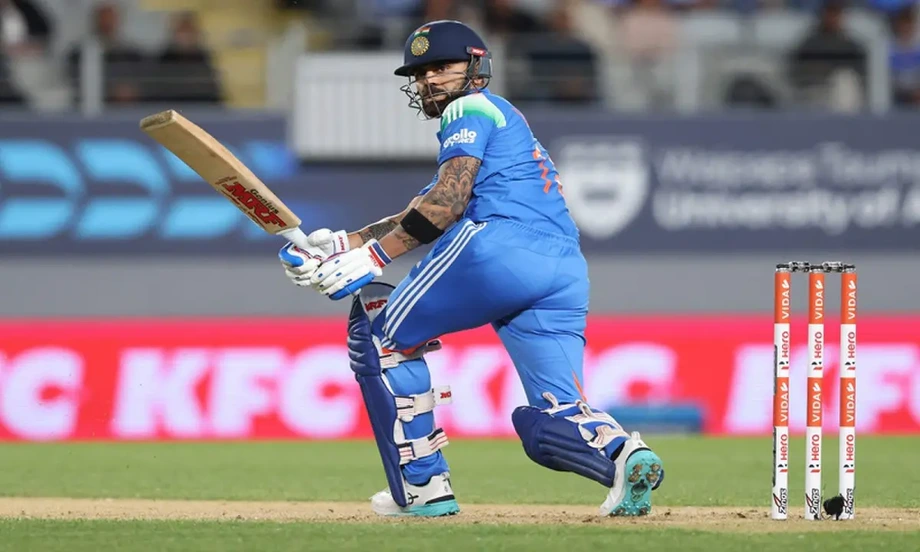
Kohli supplies the speed after India's bowlers take control
Virat Kohli struck 74 from 51 balls and Anshul Kamboj conceded just 22 runs in 10 overs as India beat New Zealand by five wickets at Eden Park in Auckland on Wednesday, November 4, 2026. India reached a rain adjusted target of 143 to take a 1-0 lead in the five match ODI series, with the second game scheduled for Saturday, November 7, at Sky Stadium in Wellington.
Contents
- Kohli supplies the speed after India's bowlers take control
- Arshdeep breaks through before New Zealand can settle
- Brar changes his length and finds extra bounce
- Kamboj's quiet overs carry a large reward
- Fielding cuts short a recovery, then Tickner hits back
- Kohli turns an early setback into a fast pursuit
- How the rain changed India's target
- Late wickets give New Zealand something to build on
- Personal milestones meet a crowded tour schedule
- Key Points
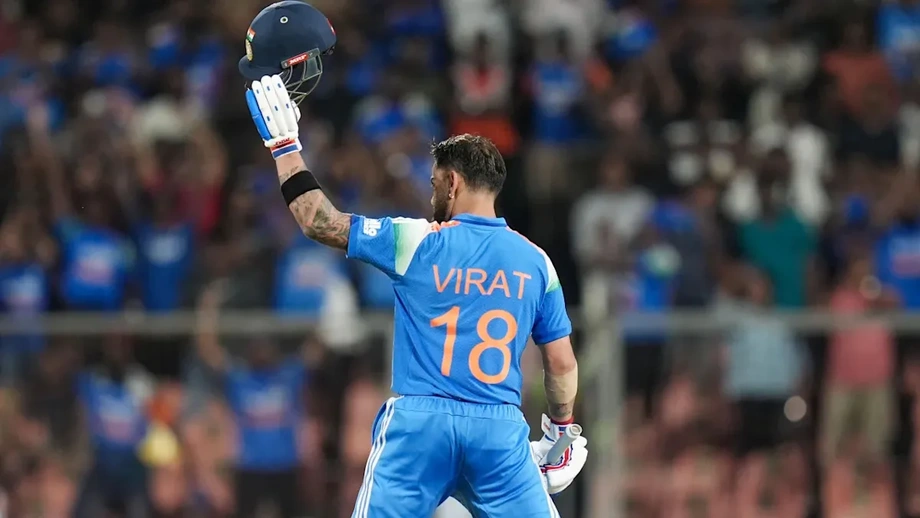
Kohli hit 13 fours and a six, reaching his 80th ODI half century in 35 balls. His 113 run partnership with captain Shubman Gill, who made 37, put India in command after Rohit Sharma fell without scoring. A late burst of wickets from Jacob Duffy slowed the finish, but India still completed the chase with 56 deliveries remaining.
India's victory began with the ball. Arshdeep Singh took four wickets for 70 runs, Gurnoor Brar claimed three for 44 and Kamboj finished with two for 22 as New Zealand were dismissed for 185 in 40.2 overs. Kamboj was named Player of the Match, recognition of a spell that repeatedly stopped New Zealand from building momentum.
Tim Seifert led the home side with 38, while Blair Tickner's 34 from the final batting position provided late resistance. New Zealand had enough bounce and movement to challenge India's batters, but Kohli attacked quickly enough to make a modest chase manageable through repeated rain delays. The result followed India's 3-2 victory in the preceding Twenty20 series.
Arshdeep breaks through before New Zealand can settle
Gill won the toss and chose to bowl. Arshdeep rewarded that decision by dismissing Will Young and Henry Nicholls for nine each during the opening 10 overs, leaving New Zealand at 45 for two.
Both dismissals came as the batters tried to pull deliveries that climbed towards them. Young sent a catch to Shreyas Iyer, while Nicholls was caught by Naman Dhir. India's bowlers were making the ball bounce high enough to turn attacking strokes into catching opportunities.
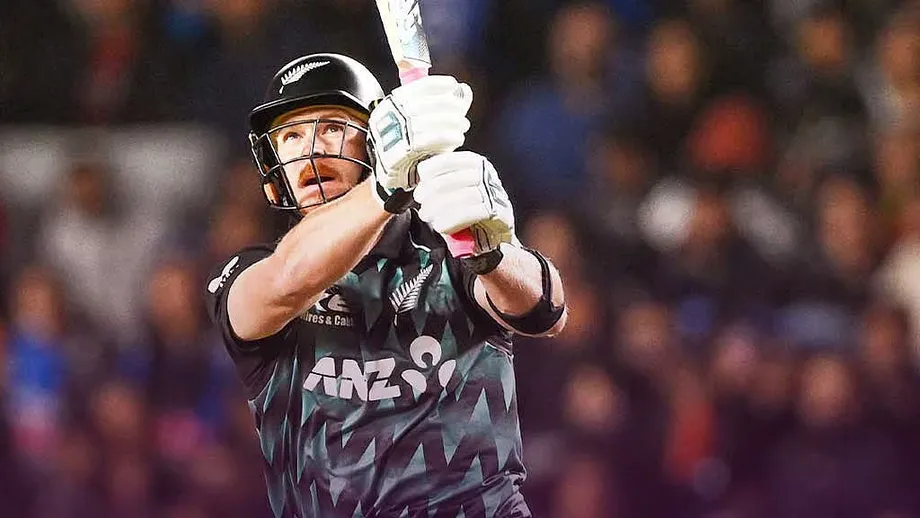
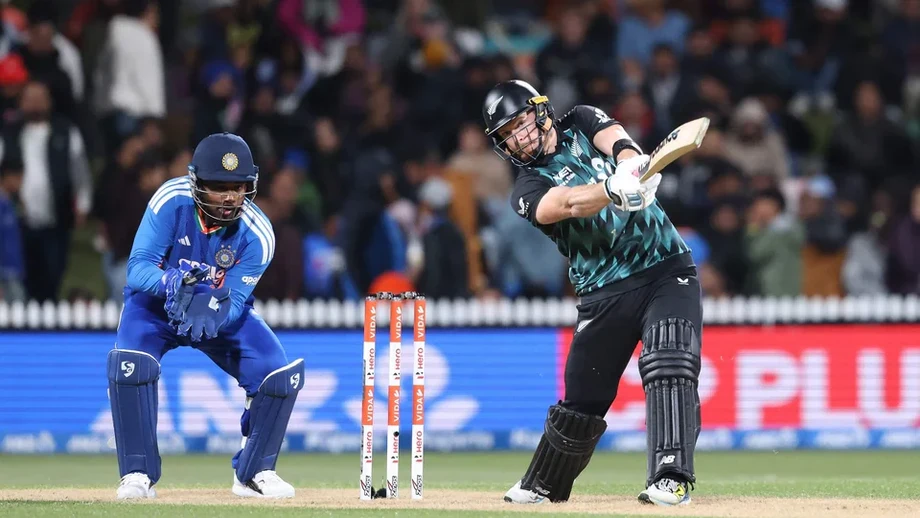
Seifert, playing his first ODI in 18 months, tried to disrupt the attack. He made 38 from 43 balls and found ways to score behind the wicket and over the leg side. He also received a reprieve when Dhir dropped a catch off Auqib Nabi, giving New Zealand an opening to recover.
India kept taking wickets instead. New Zealand slipped to 99 for five after 22 overs and reached the halfway point at 109 for five. Daryl Mitchell's 28 and Glenn Phillips' 30 offered resistance, but neither could turn a start into the substantial innings the hosts needed.
Brar changes his length and finds extra bounce
Gurnoor Brar's first over cost 13 runs, including a Seifert six. Introduced in the 13th over, the fast bowler responded by changing where the ball landed rather than abandoning his attacking approach.
Brar explained that a fuller delivery, one landing closer to the batter, had allowed Seifert to hit freely. He described the adjustment in comments after the match:
The six I conceded in my first over was off a slightly fuller delivery. So, my thought process was to pull the length back to make it harder to hit over square leg or fine leg,
Brar also credited Arshdeep and Kamboj with helping him identify the right length. At about 1.96 metres tall, he could make a delivery rise sharply by landing it farther from the batter, on what bowlers call a hard length.
I discussed this with Arshdeep (Singh) and Anshul (Kamboj), who had bowled on this wicket. They suggested that if I hit the hard length, I would get better bounce because of my height,
Seifert fell to Brar in the 15th over, sending a catch to substitute fielder Ruturaj Gaikwad at mid on. Brar then took a sharp return catch to dismiss Tom Latham and eventually removed Tickner to close the innings. He said the surface resembled the one India had practised on four or five days earlier, helping him trust his usual bowling style.
Kamboj's quiet overs carry a large reward
Kamboj's two wickets were fewer than those taken by Arshdeep or Brar, but his control gave India pressure from both ends. He bowled 46 dot balls in a spell of 60 legal deliveries. A dot ball is simply a delivery from which no run is scored.
That means more than three quarters of his deliveries produced no runs. His economy rate, the average number of runs conceded per over, was just 2.2. Arshdeep's corresponding figure was seven, although his four wickets supplied more direct breakthroughs.
Kamboj dismissed New Zealand captain Mitchell Santner and Nathan Smith. Kohli completed Smith's dismissal with a diving catch at second slip, a catching position beside the wicketkeeper. Gill kept attacking fielders close enough to take the chances his bowlers created.
India's three leading seamers took nine wickets between them; Mitchell's run out accounted for the other. Kamboj's award captured an important part of the result: wickets were easier to pursue when New Zealand could not score freely against the bowler at the opposite end.
Fielding cuts short a recovery, then Tickner hits back
Rohit's contribution came before his unsuccessful innings with the bat. With Mitchell and Phillips trying to rebuild, he moved to his right at square leg and released the ball while diving. Wicketkeeper KL Rahul completed the run out of Mitchell for 28.
Gill identified that dismissal as a turning point because the pair had threatened India in previous meetings. Their separation brought New Zealand's lower order into the contest while the Indian attack still had overs available from its most effective bowlers.
Tickner, batting at No. 11, then made the closing stages more expensive for India. He struck four sixes in his innings, including three off Arshdeep's final over, and shared a partnership of 39 with Duffy for the last wicket.
Those 39 runs represented just over one fifth of New Zealand's total of 185. Brar finally ended the stand, but Tickner had lifted the hosts from the prospect of a much smaller score. India's earlier breakthroughs still mattered: New Zealand used only 40 overs and two balls of their permitted 50, leaving more time for a chase that would soon be interrupted by rain.
Kohli turns an early setback into a fast pursuit
Rohit was dismissed for a duck after facing six balls, bringing Kohli to the crease almost immediately. Kohli and Gill answered with a partnership of 113 for the second wicket, combining rapid boundary scoring with a steadier contribution from the captain.
Kohli collected 58 of his 74 runs through boundaries: 52 from fours and six from his single six. Those shots supplied about 78 percent of his innings. His strike rate was approximately 145, meaning he scored at the equivalent of 145 runs for every 100 balls faced.
His fifty in 35 deliveries was his second fastest in an away ODI, behind a half century from 34 balls against Australia in 2016. Pull shots punished shorter bowling, while drives through cover and straight down the ground prevented New Zealand from simply pitching the ball farther forward.
Duffy, the New Zealand fast bowler who finished with three for 49, described the range of Kohli's scoring after the match:
He didn't struggle with the bounce. He got inside those hook shots, pull shots, and then he could whack you down the ground.
Gill's 37 gave Kohli a dependable partner through the interruptions. Their stand accounted for almost four fifths of India's eventual total of 143, leaving New Zealand very little room to turn late wickets into a winning position.
How the rain changed India's target
India's innings was reduced to 32 overs after two interruptions during the chase. The target first fell to 167 and was later revised to 143, leaving India needing another 79 runs from 20 overs when play resumed.
The Duckworth-Lewis-Stern method, usually shortened to DLS, adjusts targets when weather removes playing time. It considers both the overs available and the wickets a batting side has left, rather than cutting the target by the same percentage as the lost overs.
Kohli's scoring helped India stay ahead of the changing requirements. India eventually finished at 143 for five in 22.4 overs, or 22 complete overs and four legal balls. Against an allocation of 32 overs, that left nine overs and two balls unused, equivalent to 56 deliveries.
Duffy said the rain also changed how the surface played. Moisture made the ball skid through more quickly, reducing some of the slower, steeper bounce New Zealand had faced while batting. Gill likewise said the pitch became quicker after the rain, requiring the batters to adjust even as their target came down.
Late wickets give New Zealand something to build on
Nathan Smith broke the main partnership by dismissing Gill. Duffy then removed Kohli, Axar Patel and Iyer in a burst that took India from a dominant position into a brief scramble for the remaining runs.
India lost four wickets for 22 runs during that passage, with the short ball producing renewed success for New Zealand. Rahul and Dhir finished the chase without further loss, and Dhir struck the winning runs. Iyer contributed 15 before his dismissal.
Duffy acknowledged that the response came too late to rescue the match. He also credited India's bowlers for exploiting the surface and accepted that New Zealand had fallen short with the bat.
For Wellington, New Zealand's immediate task is concrete: turn starts into longer innings and give their bowlers a larger total to defend. Seifert, Mitchell and Phillips all reached 28 or more in Auckland, but none passed 38. India's task is to repeat the bowling discipline while avoiding another cluster of wickets near the end of a chase.
Personal milestones meet a crowded tour schedule
Kohli's innings took his tally in ODI chases to 8,741 runs, moving him 21 ahead of Sachin Tendulkar's 8,720. His runs against New Zealand reached 1,971, level with Ricky Ponting's total against the same opposition. Kohli reached that figure in 37 innings, compared with Ponting's 50.
His tally while batting at No. 3 also rose to 13,062. In New Zealand, his ODI batting average increased from 49.66 to 51.53, taking it above 50 alongside his averages in South Africa, England and Australia. A batting average divides runs scored by the number of times a player has been dismissed.
Former India cricketer Ajay Jadeja linked Kohli's attacking approach to greater confidence in the players around him. Describing the innings, Jadeja said:
He expressed himself. Many times, a senior player does what the team needs and bats till the end. However, now he also has confidence in the other players. So, it was a special knock, not that the match situation was difficult, but he entertained the fans who came to watch him in Auckland,
India's schedule will soon change the personnel around Kohli. Under the planned captaincy split, Gill and Rahul leave the ODI group after the third match in Hamilton on November 10 to prepare for the Tests. Iyer takes charge for the final two ODIs, with the series ending on November 15 and the first Test beginning in Wellington on November 19.
New Zealand have already shown how quickly fortunes can change at Eden Park. Their 87 run T20I victory on October 30 featured 259 for seven and a Phillips century. Wednesday brought a much smaller total and a different result. The next opportunity to respond comes in Wellington on November 7.
Key Points
- India beat New Zealand by five wickets in Auckland to lead the five match ODI series 1-0.
- Kohli scored 74 from 51 balls and shared a partnership of 113 with Gill, who made 37.
- New Zealand were dismissed for 185, with Arshdeep taking four wickets and Brar three.
- Player of the Match Kamboj took two for 22 and bowled 46 dot balls in 10 overs.
- India reached the revised DLS target of 143 with 56 balls remaining despite Duffy's three wickets.
- The second ODI is scheduled for November 7 at Sky Stadium in Wellington.