A landmark innings helps India take the series lead
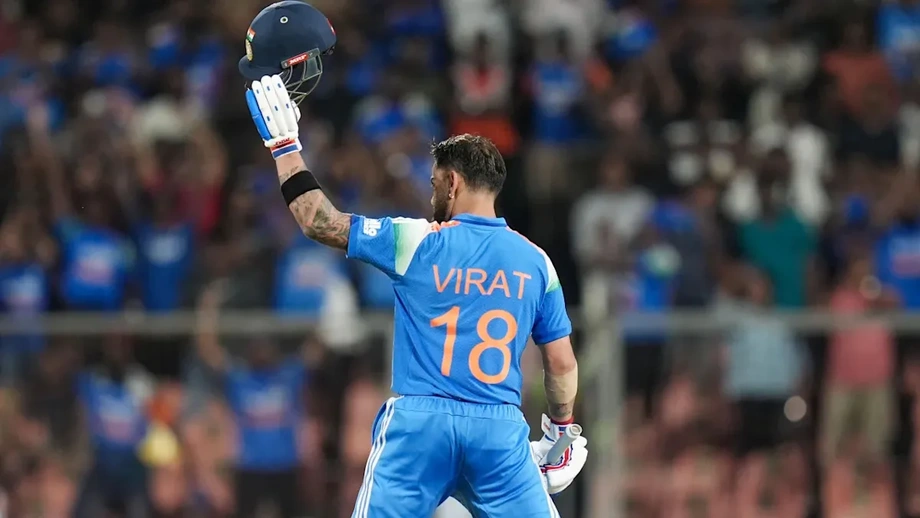
Virat Kohli became the first batter to reach 13,000 runs at No. 3 in one day international cricket during India's five wicket victory over New Zealand at Eden Park in Auckland on November 4, 2026. He reached the milestone with his 12th run, off the 13th ball he faced, in the seventh over of India's chase.
Contents
- A landmark innings helps India take the series lead
- What the No. 3 record measures
- How Kohli compares with the leading No. 3 batters
- A fast innings built around boundaries
- Another record in ODI run chases
- India's bowlers created the opening
- The New Zealand totals need clarification
- How the opener unfolded, and what comes next
- Key Points
Kohli went on to score 74 from 51 balls, sharing a partnership of 113 with Shubman Gill after India lost Rohit Sharma in the opening over. His innings included 13 fours and one six and brought him his 80th ODI half century, a day before his 38th birthday.
India had bowled New Zealand out for 185 in 40.2 overs, leaving an initial target of 186. Rain brought a revised target of 143 from 32 overs under the Duckworth-Lewis-Stern method. India reached it with five wickets down in 22.4 overs to take the opening match of the five match series.
The milestone put Kohli beyond another threshold in a position he has made his own. Ricky Ponting, the former Australia captain, remains second among batters at No. 3 with 12,662 runs from 330 innings. Kohli reached 13,000 in his 251st innings at that position.
What the No. 3 record measures
No. 3 is the batting position immediately after the two openers. The batter usually comes in when the first wicket falls, which can mean facing almost a full innings after an early dismissal or building on a strong opening partnership.
Kohli needed 12 runs before the Auckland match because his total at that position stood at 12,988. His innings of 74 lifted it to 13,062, making him the first player to pass 13,000 while occupying that exact place in an ODI batting order.
Kohli and Ponting are the only batters on the listed No. 3 leaderboard with more than 10,000 runs. Kumar Sangakkara follows with 9,747, leaving a substantial gap between the leading pair and the rest.
Kohli's milestone also sits alongside Sachin Tendulkar's record of 13,685 runs at No. 2. Tendulkar's larger total of 15,310 as an opener combines appearances in both opening positions. The separate figures describe different categories: one exact place in the order and the opening role across two places.
How Kohli compares with the leading No. 3 batters
Kohli had scored 338 more runs than Ponting when he reached 13,000, despite having played 79 fewer innings at No. 3. By the end of his innings in Auckland, his advantage over Ponting's career total at the position had grown to 400 runs.
The leading totals at No. 3 show the scale of that achievement:
- Virat Kohli: 13,062 runs after his innings in Auckland.
- Ricky Ponting: 12,662 runs.
- Kumar Sangakkara: 9,747 runs.
- Jacques Kallis: 7,774 runs.
- Kane Williamson: 6,504 runs.
- Babar Azam: 6,054 runs.
- Joe Root: 5,525 runs.
Kohli's batting average at the landmark was about 61.6, compared with Ponting's 42.48 and Sangakkara's 44.71. A batting average divides a player's runs by the number of times he has been dismissed, so unbeaten innings affect it differently from a simple calculation of runs per appearance.
His record at No. 3 also included 48 centuries and 69 half centuries, with a strike rate of 95.4. Strike rate measures runs scored per 100 balls. Together, those figures show both how often he has built a substantial innings and the pace at which he has scored.
A fast innings built around boundaries
Kohli's 74 contained 58 runs in boundaries: 52 from his 13 fours and six from his single six. That amounts to roughly 78% of his runs, helping India make rapid progress toward a target that had been reduced by rain.
His scoring rate for the innings was about 145 runs per 100 balls, calculated from 74 runs off 51 deliveries. Gill contributed 37 in their partnership of 113 for the second wicket, giving India a strong recovery after Sharma's early departure.
Kohli's innings ended in the 20th over when he attempted to pull a short delivery from Jacob Duffy. Tim Seifert took the catch at deep backward square leg. India then lost wickets in quick succession, although fewer than 30 runs remained when Kohli departed.
Duffy finished with three wickets for New Zealand. India completed the chase in 22 overs and four balls, leaving nine overs and two balls unused from its revised allocation. In cricket notation, 22.4 means 22 completed overs plus four deliveries, rather than a decimal fraction of an over.
Another record in ODI run chases
Kohli's innings also took his tally when batting second in ODIs to a reported 8,741 runs, moving him 21 ahead of Tendulkar's 8,720. The category includes runs in both successful and unsuccessful chases.
The final figures give Kohli a chasing average of 66.21 and a strike rate of 95.03. Tendulkar finished with a chasing average of 42.33 and a strike rate of 88.44, having made his 8,720 runs in 232 appearances batting second.
A discrepancy remains in the running totals. Kohli was also listed before the match with 8,679 chase runs, which would become 8,753 after an innings of 74, rather than 8,741. Both calculations put him ahead of Tendulkar, but confirmation of the precise total requires the completed statistical record.
Kohli's broader ODI tally was given as 15,183 runs from 306 innings in 318 matches after Auckland. His career in the format began against Sri Lanka in Dambulla on August 18, 2008.
India's bowlers created the opening
Arshdeep Singh led India's attack with four wickets for 70 runs as New Zealand were dismissed for 185. Gurnoor Brar took three for 44, while Anshul Kamboj claimed two for 22. Between them, the three bowlers accounted for nine wickets.
Kohli contributed in the field before beginning his record innings, taking a catch with one hand to dismiss Nathan Smith off Kamboj's bowling. He returned to India's ODI playing XI for the opener alongside Sharma and KL Rahul.
Seifert scored 38 for New Zealand and Glenn Phillips made 30. Blair Tickner supplied late resistance with 34 from 23 balls, including four sixes. His sixes alone produced 24 runs, helping New Zealand reach 185 despite the wickets falling around him.
Rain then changed the calculation for India's reply. The Duckworth-Lewis-Stern method, usually shortened to DLS, adjusts targets after interruptions by accounting for the batting resources available, including overs and wickets. India's revised requirement became 143 from 32 overs, rather than the original 186.
The New Zealand totals need clarification
Kohli was credited after the match with 1,971 ODI runs against New Zealand, level with Ponting's listed total. An earlier figure, however, put him on 1,909 before the game. Adding his 74 would produce 1,983, placing him 12 runs ahead rather than level.
The Auckland innings also carried him beyond another threshold identified before play. He needed 47 runs to reach 1,000 international runs in New Zealand, a total combining formats rather than counting only ODIs. His 74 took him past that requirement.
Tendulkar, Rahul Dravid and Mohammad Azharuddin were the three Indian batters already listed as having reached that mark in New Zealand. Kohli's innings therefore added a milestone tied to the country where he was playing, alongside the record tied to his batting position.
How the opener unfolded, and what comes next
November 4 brought several changes to the match situation, from New Zealand's dismissal to the rain adjustment and India's eventual victory. The main developments were:
- New Zealand were bowled out for 185 in 40.2 overs, with Arshdeep taking four wickets.
- India began with a target of 186 and lost Sharma in the opening over.
- Kohli reached 13,000 ODI runs at No. 3 with his 12th run in the seventh over.
- Rain reduced India's target to 143 from 32 overs.
- Kohli and Gill added 113 before India completed a five wicket victory in 22.4 overs.
- The second ODI was scheduled for November 7 in Wellington.
India leave Auckland with a series lead earned through both disciplines. The bowlers kept New Zealand below 200, while Kohli and Gill supplied most of the work in the chase. The late wickets gave New Zealand some reward, but India still finished with more than nine overs available.
Kohli's 74 was the central contribution with the bat. It carried him past 13,000 runs in a single batting position, extended his lead over Ponting at No. 3 and supplied the runs India needed after an early wicket and a rain interruption.
Key Points
- Kohli became the first batter to reach 13,000 ODI runs at No. 3, achieving the milestone in his 251st innings at that position.
- He scored 74 from 51 balls, with 13 fours and one six, taking his No. 3 total to 13,062.
- India beat New Zealand by five wickets after reaching a DLS target of 143 in 22.4 overs.
- Arshdeep Singh took four wickets, Gurnoor Brar three and Anshul Kamboj two as New Zealand made 185.
- Kohli passed Tendulkar's ODI chase total, although conflicting running figures leave his exact tally needing confirmation.
- The second match of the five match series was scheduled for November 7 in Wellington.