A second chance after four years in uniform
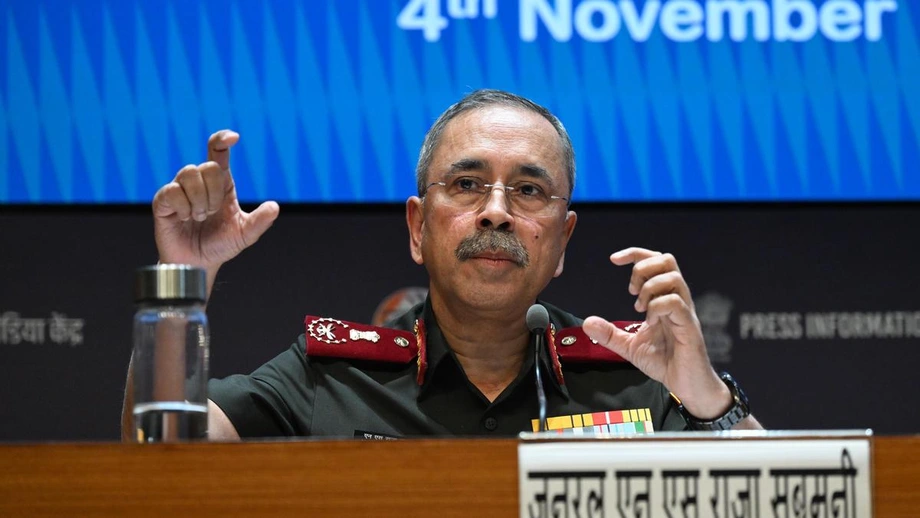
India's Union Cabinet has approved an additional two years of service for the 75% of Agniveers who are not selected for regular military positions after their initial four years, Chief of Defence Staff General N.S. Raja Subramani announced on November 4, 2026. The decision gives those recruits another opportunity to seek a continuing career in the armed forces after six years in uniform.
Contents
- A second chance after four years in uniform
- What changes, and what stays in place?
- How the new service sequence works
- Regular service depends on performance
- Higher pay, with conflicting year labels
- Why commanders want to retain experience
- What happens to recruits who leave?
- Congress challenges the government's reasoning
- The decision changes the next two years
- Key Points
The first selection stage stays in place: 25% of Agniveers will enter the regular forces after four years, based on merit. The remaining 75%, who previously faced departure at that point, will be offered a second engagement lasting two years. Selection for regular service after that extension will depend on their willingness to stay and whether they meet objective assessment criteria.
Around 300,000 Agniveers currently serve in India's defence forces. The announcement comes as the first recruits under the Agnipath scheme approach the end of their original service period, making the decision immediately relevant to young personnel planning their military careers and their families.
The Cabinet approved the extension on Wednesday, November 4, ahead of the first batch of about 18,000 Agniveers completing their initial tenure in December 2026.
Defence Minister Rajnath Singh said the decision gives willing Agniveers an opportunity to become regular soldiers if they satisfy the selection requirements. He placed it within the government's longer programme to build a younger, fitter military with the skills and equipment needed for future operations.
What changes, and what stays in place?
General Subramani said the Agnipath scheme would continue and its existing four years of initial service would remain unchanged. The additional period, described as a Second Tour of Duty, comes after that first term for personnel who are not selected in the initial round.
For recruits, the practical change is substantial. Instead of leaving after four years, those offered the extension can spend another two years earning military pay, gaining experience and preparing for a further selection assessment.
The arrangement has two decision points. At the end of year four, the first group enters regular service. At the end of year six, personnel completing the additional engagement can seek regular positions through another assessment. A permanent position remains dependent on selection.
Consider a group of 100 recruits. Under the announced proportions, 25 would enter regular service after four years, while the other 75 would be offered the additional term. The eventual number selected from those 75 would depend on the later process. The supplied accounts do not specify a final retention percentage or an implementation timetable for that second selection.
How the new service sequence works
The Agnipath scheme was introduced in June 2022 to recruit young people into the Army, Navy and Air Force for an initial period of four years. Personnel recruited through it are known as Agniveers.
The announcement adds another stage to the original arrangement, under which 25% were eligible for regular service on merit and the remaining 75% would return to civilian life. The sequence is now:
- June 2022: The Union Cabinet introduced Agnipath with an initial service period of four years.
- November 4, 2026: General Subramani announced Cabinet approval for an additional engagement of two years for the 75% not initially retained.
- December 2026: The first batch of about 18,000 Agniveers is due to complete its initial four-year tenure.
- After four years of service: The first 25% enter the regular forces through merit selection, while the remaining personnel are offered the extension.
- After six years of service: Personnel completing the additional term can seek regular service, depending on their preference and selection results.
The dates at which individual Agniveers reach those stages will depend on when their service began. The extension therefore changes the career sequence for eligible personnel rather than giving every serving Agniveer the same immediate departure date.
Regular service depends on performance
General Subramani described the additional term as an opportunity for Agniveers to build experience, qualifications and skills. He also said that missing selection after the first four years did not mean a recruit was less capable. The first assessment takes place within a system that initially retains only a quarter of the group.
The second term gives those personnel more time to demonstrate their abilities while continuing to serve. Their eventual entry into the regular forces will depend on their performance and the applicable selection criteria, alongside their own decision about whether they want to remain.
The CDS said performance is assessed annually using objective criteria and a centralised database maintained by all three services. Assessments cover physical fitness, adaptability, motivation, morale, discipline and technical proficiency. Selection also takes account of operational and organisational requirements, as well as efficiency and achievements during service.
Air Vice Marshal Shekhar Yadav, Senior Officer In-charge Administration at the Indian Air Force's Eastern Air Command headquarters, said all willing Agniveers completing the second term would have an opportunity to enrol in the regular cadre, subject to meeting the prescribed objective selection criteria.
Personnel selected after six years will have seniority below the 25% selected after four years, according to the CDS. Seniority is a person's relative place within the service hierarchy. The first group will therefore keep its earlier position when the later group enters regular service.
"Those selected as regular soldiers in the first phase will hold higher seniority, while those selected later will be placed immediately after them," he added.
Agniveers completing the second term will also be able to leave voluntarily. For those considering a longer military career, the additional assessment creates another opportunity. For those choosing civilian life, it moves the point of transition from four years to six if they take up the extension.
Higher pay, with conflicting year labels
Agniveers taking the additional engagement will receive higher remuneration. Monthly pay figures attributed to the CDS put the first year of the extension at Rs 43,500 and the second at Rs 47,500. Another account of his remarks labels those same amounts as applying in the second and third years, although the announced extension lasts two years.
Yadav clarified on Thursday that the fixed monthly package would be Rs 43,500 in the first extension year and Rs 47,500 in the second, plus applicable allowances. These are the fifth and sixth years of service, respectively.
Using the first and second year schedule, the monthly amount rises by Rs 4,000 between the two extension years. General Subramani also cited Rs 30,000 a month as the starting pay in an Agniveer's first year of initial service.
The financial arrangements described alongside the announcement include a continued government contribution equal to 70% of the Agniveer's contribution. A total financial package of about Rs 10.92 lakh, or Rs 1,092,000, was cited for completion of the additional two years.
Yadav gave a different contribution breakdown for the fresh Seva Nidhi package: Agniveers would contribute Rs 3.28 lakh over the additional two years and the government Rs 7.64 lakh, making Rs 10.92 lakh excluding interest. In that breakdown, the government provides about 70% of the combined contribution, rather than 70% of the amount contributed by Agniveers. The supplied accounts do not reconcile the two descriptions.
For personnel and families planning their finances, the monthly pay and the cited financial package are separate figures to consider. The higher remuneration provides additional income during service, while the eventual transition to civilian employment will depend on whether the recruit is selected for a regular position or chooses to leave.
Why commanders want to retain experience
Positive feedback from military commanders and field units preceded the extension decision. The government's stated purpose is to keep trained personnel serving longer while giving them more time to develop their capabilities.
General Subramani said the scheme had been under review for several months and would continue to be reviewed periodically. The armed forces recommended the additional engagement after assessing Agniveers' performance and operational requirements. He said the changing character of warfare required a combination of youth, technology and maturity.
General Subramani said 25% to 30% of Agniveers are deployed in operational areas. That amounts to roughly one in four to three in ten recruits, showing that a substantial share are already serving in areas connected to active military duties.
The additional engagement allows the armed forces to retain that experience for another two years among personnel who would otherwise leave after the initial term. For the recruits, it means more time applying their training in military units before the next career decision.
Other outcomes cited alongside the announcement include recruitment reaching more districts, a more standardised recruitment process, opportunities for women in different branches, and improvements in technical adaptability and educational qualifications. These were presented as reasons to continue developing the scheme while keeping its initial service structure.
What happens to recruits who leave?
Agniveers who are not retained after six years will not receive reservation in government jobs under the announced arrangement. Reservation means setting aside a share of positions for a specified group. The additional military term therefore comes without that form of employment guarantee for those who leave at its end.
Addressing paramilitary reservation specifically, the CDS said it had been announced when 75% of recruits were expected to leave after four years. With an opportunity for retention through the additional engagement now available, he said there would be no reservation under this arrangement.
The decision extends the period in which an Agniveer can earn military pay and compete for regular service. It also postpones the move into civilian employment for those who accept the second term. Personnel who are ultimately not selected will still need to plan for work outside the armed forces.
Qualifications and skills gained during the extra service are part of the government's case for the extension. The concrete benefit during those two years is continued employment in uniform. The next career step will differ between recruits selected for regular service, those who choose to leave and those who finish without being retained.
Congress challenges the government's reasoning
Congress politician Pawan Khera criticised the extension in Jaipur on November 4. He said his party and Rahul Gandhi had opposed Agnipath from the beginning, arguing that its short service period created uncertainty for young recruits.
Khera questioned what would happen to personnel who remained outside the regular forces after the additional term:
"They say they'll absorb 25 per cent into the army and give the rest a two-year extension. You'll absorb 25 per cent. What will happen to the other 75 per cent? After two years, will they be out on the streets again, or will you take another U-turn? When you bring in a scheme without thinking, it meets this fate," he said.
Khera also alleged that the government acted because Assembly elections were approaching in Uttar Pradesh, Punjab and Uttarakhand, states where many young people seek military careers. His claim of electoral motivation is the opposition's explanation for the timing. The government's stated explanation centres on personnel development, military requirements and positive feedback about serving Agniveers.
The decision changes the next two years
The Cabinet's decision gives the 75% not initially retained a longer period of military employment and another selection opportunity. The first 25% keep their route into regular service after four years and their seniority ahead of personnel selected later.
The central disagreement concerns what happens after the extension. The government presents the additional term as a chance to gain experience and qualify for a continuing military career. Congress argues that personnel who are still not selected will face the same employment concern two years later.
For Agniveers approaching the end of their first term, the immediate consequence is more specific: an offer of two further years in uniform, higher remuneration and another assessment, followed by either regular service or a transition out of the forces.
Key Points
- The Cabinet approved an additional two years for the 75% of Agniveers not selected for regular service after four years.
- The initial service period remains four years, with 25% selected for regular positions on merit.
- Selection after six years will depend on performance, objective criteria, operational and organisational requirements and the recruit's willingness to remain; annual assessments cover fitness, adaptability, motivation, morale, discipline and technical proficiency.
- Personnel selected later will rank below the first 25% in seniority.
- Yadav specified monthly extension pay of Rs 43,500 in the fifth year of service and Rs 47,500 in the sixth, plus applicable allowances.
- Yadav gave fresh Seva Nidhi contributions of Rs 3.28 lakh from Agniveers and Rs 7.64 lakh from the government, totalling Rs 10.92 lakh excluding interest; this differs from the description of government contributions as 70% of Agniveers' contributions.
- Agniveers not retained after six years will not receive government job reservation under the announced arrangement.
- Congress criticised the decision, questioning employment prospects after the extension and alleging an electoral motive.