Disability pension coverage set to more than triple
India's Union Cabinet approved Rs 53,428 crore on Wednesday, October 14, 2026, to continue its national social assistance programme from 2026-27 to 2030-31, while widening disability pension eligibility and increasing monthly payments by 25 per cent. The revised disability scheme is expected to reach 27 lakh people, compared with 8.33 lakh beneficiaries under the existing arrangements.
Contents
- Disability pension coverage set to more than triple
- What the five years of funding cover
- Who becomes eligible under the disability changes?
- How much will monthly payments rise?
- What reaching 27 lakh people would mean
- Why the government is aligning the rules with the 2016 law
- Which schemes receive new names?
- When will the revised rules take effect?
- A programme rooted in assistance for poor households
- Key Points
The Cabinet, chaired by Prime Minister Narendra Modi, approved a proposal from the Department of Rural Development that lowers the required disability level from 80 per cent to 40 per cent and removes the minimum age of 18. Eligible children will therefore be able to receive assistance from birth, subject to the programme's other conditions.
Monthly disability assistance will rise from Rs 300 to Rs 375 for beneficiaries aged up to 79, and from Rs 500 to Rs 625 for those aged 80 and above. The government expects the wider social assistance programme to benefit approximately 3.20 crore people, or 32 million, across all 36 states and Union territories.
The National Social Assistance Programme (NSAP) will also become the Pradhan Mantri Samajik Sahayata Yojana. Its pension and family benefit schemes will receive new names, although the Cabinet said assistance for older people, widows and eligible bereaved households would continue under the existing arrangements.
What the five years of funding cover
The Rs 53,428 crore allocation covers the programme as a whole over five financial years. A crore equals 10 million, making the approved amount Rs 534.28 billion. India's financial year runs from April to March, so the approved period extends through March 2031.
The programme combines support for several groups: eligible older people, widows, people with disabilities and families affected by the death of their primary earner. The funding approval continues that shared framework while concentrating changes to eligibility and payment rates on disability pensions.
The Centre provides 100 per cent central assistance under the programme. The government says this funding arrangement is intended to make assistance uniformly available to eligible beneficiaries across the country. Pensions are transferred directly into beneficiaries' bank accounts.
State governments may provide additional assistance of their own. The announced Rs 375 and Rs 625 disability payments are the central scheme's assistance rates; a beneficiary's total payment can vary where a state adds support.
Who becomes eligible under the disability changes?
The disability threshold will fall from 80 per cent to 40 per cent. This opens the scheme to otherwise eligible people whose assessed disability falls between those levels, extending access beyond the group covered by the previous threshold.
A disability percentage is a measure used in the assessment and certification process. The term benchmark disability refers to the legal threshold used to determine eligibility for specified protections and support. Under the revised pension rules, that threshold will be 40 per cent.
The minimum age requirement will also disappear. Previously, the lower age limit was 18; the new rules allow eligibility from birth. A child who meets the disability requirement and the remaining scheme conditions can therefore come within the pension programme before adulthood.
The pension continues to serve eligible people from households classified as below the poverty line. Lowering the disability threshold and removing the age floor broaden access within that assistance framework, while household eligibility remains part of the scheme.
How much will monthly payments rise?
Beneficiaries aged up to 79 will receive Rs 375 a month, an increase of Rs 75 from the previous Rs 300 rate. For an existing adult beneficiary receiving payments throughout a full year, central assistance would rise from Rs 3,600 to Rs 4,500, an increase of Rs 900.
Beneficiaries aged 80 and above will receive Rs 625 a month, up by Rs 125 from Rs 500. Over 12 months, that changes central assistance from Rs 6,000 to Rs 7,500, an increase of Rs 1,500.
Both monthly rates rise by exactly 25 per cent. The younger age category also expands: the previous Rs 300 rate covered eligible people aged 18 to 79, while the new Rs 375 rate applies from birth through age 79.
The decision therefore changes both the amount paid and the point at which an eligible person can begin receiving support. Existing beneficiaries gain a higher monthly rate, while newly eligible children and people meeting the lower disability threshold can enter the programme.
What reaching 27 lakh people would mean
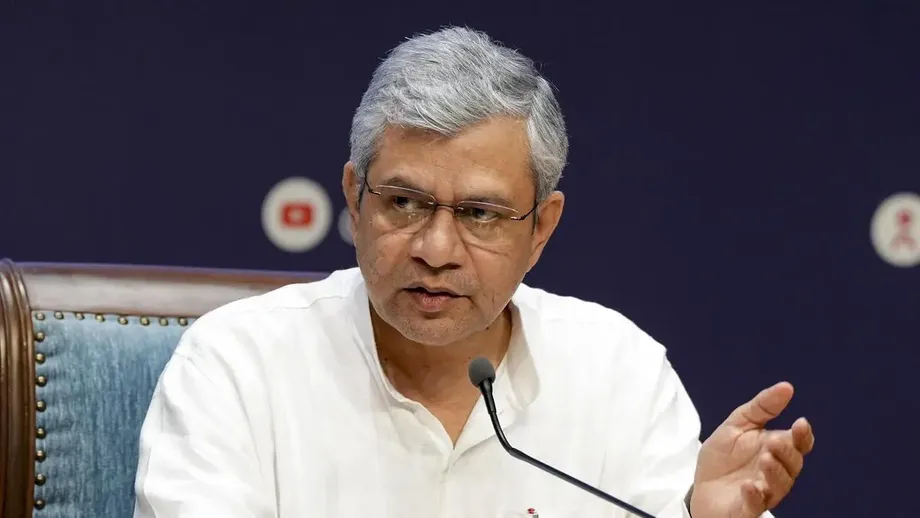
Information and Broadcasting Minister Ashwini Vaishnaw, briefing the media after the Cabinet meeting, said the revised criteria would allow disability pension coverage to reach as many as 27 lakh people. A lakh equals 100,000, so the projected coverage is 2.7 million people.
The increase from 8.33 lakh to 27 lakh amounts to 18.67 lakh additional beneficiaries, or approximately 1.867 million people. The projected total is about 3.24 times the existing coverage, representing an increase of roughly 224 per cent.
The 27 lakh figure concerns the disability pension component. The government's 3.20 crore figure covers beneficiaries across the broader social assistance programme, including its other pension and family benefit components.
The much larger increase in projected coverage, compared with the 25 per cent increase in payment rates, shows the scale of the eligibility changes. More people would receive assistance, and the amount payable to each eligible disability pension beneficiary would also rise.
Why the government is aligning the rules with the 2016 law
The government cited the Rights of Persons with Disabilities Act, 2016, as the reason for bringing disability pension eligibility into line with the 40 per cent benchmark. The Act recognises benchmark disability at that level.
The government's explanation also points to a requirement for disability related assistance to be at least 25 per cent higher than assistance under comparable schemes for other categories. This concerns the relationship between support for people with disabilities and comparable assistance elsewhere in the welfare system.
The arithmetic of the announced pension increase is straightforward: Rs 375 is 25 per cent above the previous Rs 300 disability rate, and Rs 625 is 25 per cent above Rs 500. The legal requirement described by the government concerns comparison with other categories, while those calculations describe the increase from the previous disability pension rates.
The Cabinet's decision brings the pension's entry threshold closer to the law's benchmark and extends eligibility to children. Together, those changes address who can receive support as well as how much the central scheme pays.
Which schemes receive new names?
The Cabinet approved new names for the umbrella programme and four constituent schemes. Three pension schemes currently bearing former Prime Minister Indira Gandhi's name will move to Pradhan Mantri names.
- National Social Assistance Programme becomes Pradhan Mantri Samajik Sahayata Yojana.
- Indira Gandhi National Old Age Pension Scheme becomes Pradhan Mantri Vridhavastha Pension Yojana.
- Indira Gandhi National Widow Pension Scheme becomes Pradhan Mantri Vidhawa Pension Yojana.
- Indira Gandhi National Disability Pension Scheme becomes Pradhan Mantri Divyangjan Pension Yojana.
- National Family Benefit Scheme becomes Pradhan Mantri Parivar Labh Yojana.
The old age scheme provides monthly assistance to eligible older people from households below the poverty line. The widow pension scheme supports eligible widows from such households, while the disability scheme provides monthly assistance to eligible people with disabilities.
The family benefit scheme serves a different purpose: it supports eligible households following the death of their primary breadwinner, meaning the person responsible for the family's main income. The Cabinet approved its continuation in its existing form, alongside the old age and widow pension schemes.
When will the revised rules take effect?
The Department of Rural Development is responsible for the proposal approved by the Cabinet. Revised guidelines are to set out the disability pension eligibility rules, beneficiary coverage and assistance rates, turning the approval into the detailed arrangements needed for implementation.
The Cabinet statement describes guidelines being issued and implemented within three months. The account of the minister's briefing describes implementation within three months of the guidelines being issued. A specific date for issuance or for the first payments at the revised rates has not been given.
The programme's key dates show how the new decision fits into its longer history:
- August 15, 1995: The National Social Assistance Programme was launched.
- 2016: The Rights of Persons with Disabilities Act established the legal framework cited for the revised disability eligibility rules.
- October 14, 2026: The Cabinet approved the funding, new names and disability pension changes.
- 2026-27 to 2030-31: The five financial years covered by the Rs 53,428 crore approval.
For households newly eligible under the disability changes, the guidelines will be the next practical step. They are expected to specify how the expanded coverage and revised rates are put into operation.
A programme rooted in assistance for poor households
NSAP began on August 15, 1995, to provide assistance to poor households and fulfil the Centre's responsibility under Article 41 of the Constitution's Directive Principles of State Policy. Article 41 concerns public assistance in circumstances including old age, sickness and disability.
The Directive Principles guide government policy and lawmaking. In this programme, that responsibility takes the form of financial assistance for eligible people and households facing age, disability, widowhood or the loss of a primary earner.
The October 2026 approval combines continuity for the wider programme with a substantial expansion of disability pension access. Its main practical changes are the lower disability threshold, eligibility from birth and higher monthly central payments, backed by funding through 2030-31.
Key Points
- The Cabinet approved Rs 53,428 crore for social assistance from 2026-27 to 2030-31.
- Disability pension coverage is projected to rise from 8.33 lakh to 27 lakh people.
- The disability threshold falls from 80 per cent to 40 per cent, and the minimum age of 18 is removed.
- Monthly disability assistance rises to Rs 375 through age 79 and Rs 625 from age 80.
- NSAP and four constituent schemes receive new names.
- Old age pensions, widow pensions and family benefits continue under existing arrangements.
- Revised guidelines will set out implementation of the disability pension changes.