Decades of Acquisition Proceedings Undone
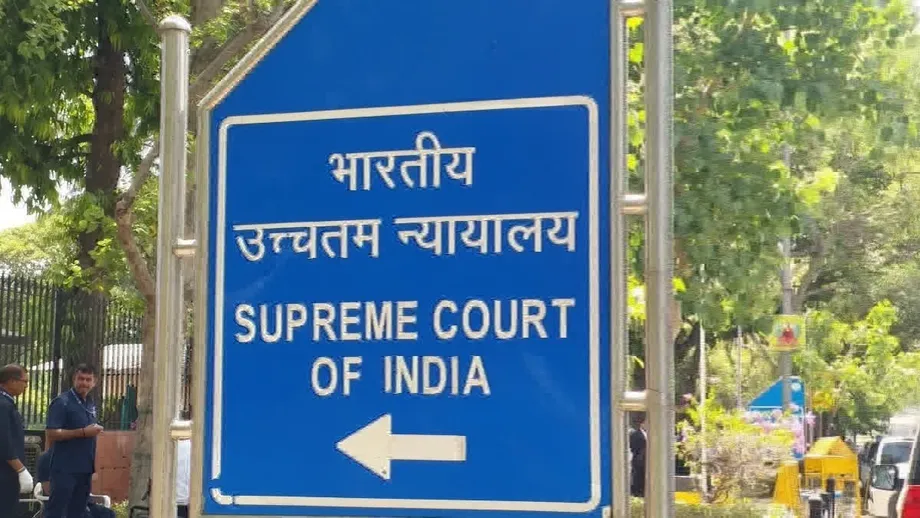
The Supreme Court has quashed the acquisition of about 59 acres in Bengaluru's Nelakadiranahalli village after finding fraud, inadequate government scrutiny and the absence of an approved housing scheme. The ruling orders the land returned to its owners, including those who never challenged the acquisition in court.
Contents
- Decades of Acquisition Proceedings Undone
- Why Approval of an Area Was Not Enough
- A Private Agreement at the Centre of the Case
- How the Dispute Reached the Supreme Court
- Why Earlier Litigation Did Not End the Challenge
- Committees Failed to Examine a Complete Scheme
- Compensation Records and Allegations of Bribes
- What Landowners Must Do to Recover Their Land
- Higher Costs, but No Contempt Proceedings
- Key Points
A bench of Justices J.B. Pardiwala and K. Vinod Chandran delivered the judgment on October 26, 2026, in N. Arasappa v. State of Karnataka and Others. Justice Chandran wrote the decision, which overturned a Karnataka High Court Division Bench ruling and restored an earlier order cancelling the acquisition.
The dispute concerns land sought for a cooperative housing society based in Peenya. Acquisition notifications were issued in 1988 and 1989, but the Supreme Court found that officials had proceeded without the housing scheme and layout required by law. A private agreement to secure the acquisition through government machinery was central to the finding of fraud.
Landowners must return compensation received from the government, without interest. Money received through private transactions is excluded from that repayment requirement. Owners who cannot or will not return government compensation face a different outcome: their land is to be auctioned under judicial supervision, with proceeds directed toward victim compensation.
Why Approval of an Area Was Not Enough
The Land Acquisition Act, 1894 allowed the state to acquire private property for specified public purposes. Following an amendment that came into force on September 24, 1984, those purposes included certain housing schemes sponsored by cooperative societies, subject to the legal conditions governing approval.
Section 3(f)(vi) was central to this case. The Supreme Court held that approving a proposed extent of land was insufficient. The government needed a properly prepared housing scheme and layout showing how the land would be used, including sites demarcated for allotment to landless members.
A layout is a plan showing how a larger piece of land will be divided and developed. Here, the court found that no final layout or blueprint had been placed before the relevant committees or the government for approval before the acquisition.
The missing plan mattered because the state was using its compulsory acquisition powers for a stated housing purpose. Officials needed to examine a concrete scheme serving eligible members, rather than simply agree that a society could obtain a particular amount of land.
A Private Agreement at the Centre of the Case
The housing society entered into an agreement with Bhagya Enterprises in September 1984. The arrangement envisaged the intermediary helping secure private land through the government's acquisition machinery, with payments linked to progress in obtaining the necessary notifications.
The court found that this agreement preceded the commencement of the relevant amendment on September 24, 1984. It treated the arrangement as evidence of an intended fraud and held that paying commission to private entities to secure government notifications was illegal and contrary to public policy.
Landowners argued that the acquisition served private interests rather than a genuine housing scheme for bona fide members. In simple terms, they alleged that the government was being used to obtain land for a private arrangement under the appearance of a public purpose.
Justice Chandran, writing for the bench, described the use of acquisition powers in these terms:
it is a clear case of colourable exercise of power
A colourable exercise of power means using legal authority for a purpose different from the one for which that authority was granted. The court's conclusion connected the private payment arrangement with the missing scheme, weak scrutiny and problems in the society's records.
How the Dispute Reached the Supreme Court
The proceedings stretched across several decades. N. Arasappa was among the appellants who challenged the legal basis, public purpose and integrity of the acquisition.
- September 1984: The society entered into its agreement with Bhagya Enterprises.
- September 24, 1984: The relevant amendment to the Land Acquisition Act came into force.
- November 22, 1988: A preliminary acquisition notification was issued under Section 4(1).
- December 4, 1989: A declaration followed under Section 6.
- 2002: The Karithimmaiah decision upheld the same acquisition and later became part of the argument against reopening the dispute.
- 2007: Landowners brought the challenge that included Writ Petition No. 9412 of 2007 before the Karnataka High Court.
- October 26, 2026: The Supreme Court allowed the appeals and ordered the land restored to its owners.
A preliminary notification under Section 4 begins the statutory acquisition process. A Section 6 declaration is a later formal step stating that the land is required for the stated public purpose. The Supreme Court's decision cancels the proceedings founded on those notifications.
A Single Judge of the Karnataka High Court had already quashed the acquisition, finding fraud, a colourable exercise of power and an absence of public purpose. The judge also recorded that possession had not been taken. A Division Bench subsequently reversed that decision, relying on delay, the earlier litigation and other procedural grounds.
Why Earlier Litigation Did Not End the Challenge
The Division Bench relied on the principle of res judicata, which generally prevents a dispute already decided by a court from being litigated again. It also considered the length of time the landowners had taken to bring their challenge.
The Supreme Court held that those grounds could not sustain this acquisition in the face of established fraud and defects in the exercise of state power. It rejected reliance on the earlier Karithimmaiah decision as a basis for barring the landowners' petitions.
The bench applied the principle that fraud undermines legal acts, including proceedings that might otherwise appear settled. Its reasoning also drew on earlier Supreme Court decisions involving comparable allegations concerning cooperative housing societies.
For the owners, the practical result was substantial. The passage of decades and the existence of an earlier ruling did not prevent the court from examining whether the government had lawfully used its acquisition powers in this case.
Committees Failed to Examine a Complete Scheme
The Three-Men Committee and the State-Level Coordination Committee were expected to scrutinise the society's proposal. The Supreme Court found that they had applied little scrutiny and had failed to properly consider and recommend a housing scheme supported by a layout.
A committee report also recorded that complete membership details had not been submitted, making membership verification impossible. That failure put the society's formation and continuation under doubt and weakened the factual basis for acquiring land to house its members.
Membership records were essential to the stated purpose. If land was being acquired to provide housing sites for eligible members, officials needed to know who those members were and whether the proposed scheme genuinely served them.
The court also found a defect in the form of government approval: it had not been expressed in the Governor's name as required by the Transaction of Business Rules. Those rules govern how state government decisions are formally made and recorded. Taken together, the findings showed failures in both the substance of the proposal and the process used to approve it.
Compensation Records and Allegations of Bribes
Government file notings showed that the society had not deposited the amounts needed to meet compensation awards for payment to landowners. The court also found that unsubstantiated private payments had been relied upon to excuse the shortfall.
The judgment recorded payments of about Rs 32 lakh, including some made privately. The financial record therefore involved more than one route for money, a point reflected in the final directions separating government compensation from payments made through private transactions.
Society office bearers made statements alleging that bribes had been paid to government officials. The Supreme Court considered those statements alongside irregularities in management and the acquisition process; its ruling did not make findings against individual officials.
Justice Chandran explained why compensation alone could not justify the state's action:
However just the compensation be, if the authority of law is lacking or the public purpose is absent, there can be no eminent domain exercised. The appellants herein allege lack of authority in law; complete absence of public purpose and fraud having vitiated the instant acquisition,
Eminent domain is the government's power to take private property compulsorily for a lawful public purpose. The judgment places lawful authority, public purpose and compensation together as requirements governing the use of that power.
What Landowners Must Do to Recover Their Land
The Supreme Court ordered possession restored to the respective owners whether or not each had challenged the acquisition. The housing society has no claim over the land under the cancelled proceedings. The directions extend relief beyond the individuals who pursued the appeals.
Owners who received compensation from the government must repay that amount without interest. They do not have to refund money received in private transactions. For each owner, the source of any payment therefore determines the repayment obligation attached to restoration.
Where an owner cannot or will not repay government compensation, revenue authorities must auction the land under the supervision of a judicial officer holding at least the rank of District Judge (Selection Grade).
The auction proceeds are to be applied toward victim compensation as directed by the Chief Justice of the Karnataka High Court, in consultation with the Karnataka State Legal Services Authority. No deadline for completing restoration was specified in the reported directions.
Higher Costs, but No Contempt Proceedings
The Supreme Court increased the costs awarded to each petitioner from Rs 10,000 to Rs 50,000, five times the earlier amount. The award also applies to each group of legal representatives of an original petitioner who were appellants in the civil appeals.
The court deleted the direction to initiate contempt proceedings against government officers because of the time that had passed. The Single Judge had directed contempt notice to an Under Secretary over a false affidavit.
The final order therefore preserves the cancellation of the acquisition and increases the costs awarded, while removing that contempt direction. Its most immediate consequences concern possession of the land, repayment of public compensation and the supervised auction process where repayment does not happen.
The decision also sets out a concrete requirement for the acquisition at issue: a cooperative society's request for land needed an approved housing scheme, a layout and meaningful scrutiny of the intended beneficiaries before the government used its compulsory powers.
Key Points
- The Supreme Court cancelled the acquisition of about 59 acres in Nelakadiranahalli village, Bengaluru.
- The bench found fraud, inadequate scrutiny and no approved housing scheme or final layout before acquisition.
- The ruling restores land to owners, including those who did not challenge the proceedings.
- Owners must return government compensation without interest, but may retain payments received through private transactions.
- Land belonging to owners who cannot or will not repay government compensation is to be auctioned under judicial supervision.
- Costs rose from Rs 10,000 to Rs 50,000 per petitioner or qualifying group of legal representatives.
- The court removed the direction for contempt proceedings against government officers because of the passage of time.