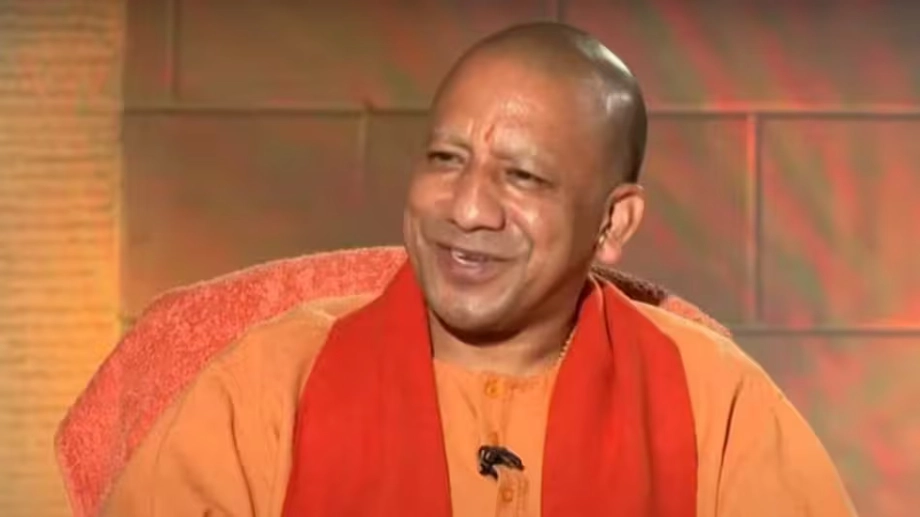
Festival relief reaches kitchens across Uttar Pradesh
Uttar Pradesh has announced Rs 1,500 crore in Diwali cooking gas assistance for more than 1.89 crore eligible families under the Pradhan Mantri Ujjwala Yojana. Chief Minister Yogi Adityanath launched the subsidy distribution at Lok Bhavan in Lucknow, where selected women received symbolic cheques marking the support for cylinder refills.
Contents
- Festival relief reaches kitchens across Uttar Pradesh
- What happened at the Lucknow programme?
- How much assistance does a refill receive?
- Does a family pay first or collect a free cylinder?
- Who qualifies, and what verification is needed?
- When do the Diwali and Holi phases run?
- What do the district figures reveal?
- Why the government is focusing on refills
- Farm support and low cost meals were also announced
- Key Points
The programme targets a recurring household expense: replacing an empty LPG cylinder. Ujjwala provides eligible women from poor households with gas connections, while the festival assistance helps them pay for the fuel needed to keep using those connections. Uttar Pradesh provides this refill benefit twice a year, around Diwali and Holi.
The announced allocation is equivalent to Rs 15 billion, and the intended reach exceeds 18.9 million families. Payments are described as being made through Direct Benefit Transfer, or DBT, which sends assistance electronically to the registered beneficiary's bank account.
For families deciding between buying cooking fuel and meeting other festival expenses, the practical benefit is a reduction in the cost of a refill. Adityanath said the government's aim was to prevent financial pressure from forcing poor households back to cooking with wood and smoky stoves.
What happened at the Lucknow programme?
The main event was scheduled for 3:30 p.m. on Tuesday, November 3, at the Lok Bhavan auditorium. Deputy Chief Minister Brajesh Pathak, Food and Civil Supplies Minister Manoj Kumar Pandey and Minister of State Satish Chandra Sharma were among the senior figures named for the programme.
Adityanath activated the subsidy distribution electronically and presented demonstration cheques to selected beneficiaries. Women named among those receiving cheques included Shanti, Swati Sharma, Tabassum Zaidi, Asha Gupta and Rabia Bano. District gatherings watched the Lucknow proceedings through live broadcasts.
The statewide allocation was presented as Rs 1,500 crore, with some descriptions putting it above that figure. The announced coverage of more than 1.89 crore families refers to eligible households across Uttar Pradesh; individual receipt also depends on the refill transaction and completion of the required verification.
The symbolic cheques were part of the ceremony. The payment system described for the wider programme uses electronic transfers rather than requiring every beneficiary to collect a cheque at a government event.
How much assistance does a refill receive?
Adityanath described the state contribution as Rs 648.55 per cylinder, alongside central assistance of Rs 335.40. He put the price of a filled cylinder at approximately Rs 983.45 and said the state was covering the amount that women would otherwise pay themselves.
District figures give a more detailed picture of the amounts being communicated locally. In Muzaffarnagar, assistance was stated as Rs 957 per refill, comprising Rs 304.60 from the central government and Rs 652.40 from Uttar Pradesh. In Varanasi, the stated total was Rs 1,005.50, split between Rs 359.52 from the Centre and Rs 645.98 from the state.
Ambedkar Nagar district supply officer Shivakant Pandey gave a different breakdown: Rs 1,013 in total, consisting of Rs 656.83 from the Centre and Rs 356.17 from the state. That central and state split differs substantially from the figures announced for the other districts.
These local amounts range from Rs 957 to Rs 1,013, a difference of Rs 56. No explanation was given for the different subsidy breakdowns. A beneficiary seeking the amount applicable to her refill therefore needs the details attached to her own gas connection and transaction, rather than a single figure assumed to apply everywhere.
Does a family pay first or collect a free cylinder?
Adityanath described the festival arrangement as one in which Uttar Pradesh had paid the remaining cost directly to gas companies. In his speech, he said women could take an empty cylinder to their gas agency and receive a refill without an additional payment.
Ambedkar Nagar's district supply officer described a reimbursement process instead. Pandey said a beneficiary should book a refill through the gas agency, obtain the cylinder at the prescribed price and receive the combined subsidy in her bank account after electronic identity verification was completed.
The difference matters for a household with little cash available. Under reimbursement, the family must find the purchase money before assistance arrives. Under the arrangement described by the chief minister, the state covers the remaining charge before collection. Beneficiaries should confirm the payment arrangement with their LPG distributor before travelling to collect a refill.
The bank account registered to the woman receiving Ujjwala benefits is central to the DBT process. An announcement launching transfers across the state does not give each household an individual bank credit time.
Who qualifies, and what verification is needed?
The Diwali assistance is intended for eligible Ujjwala households. The eligibility conditions described for entry into Ujjwala include a woman aged at least 18 and membership of specified categories of poor households.
Those categories include Scheduled Caste and Scheduled Tribe families, households below the poverty line, specified backward communities, beneficiaries of Pradhan Mantri Awas Yojana–Gramin and families receiving food assistance under Antyodaya Anna Yojana. Poor households covered by the scheme's prescribed declaration criteria are also included.
Electronic Know Your Customer verification, usually called e-KYC, checks that the beneficiary's identity matches the connection records. The deadline cited for completing that process was June 30, 2026, with incomplete verification potentially delaying or withholding assistance.
Varanasi district supply officer K.B. Singh also urged beneficiaries to check their bank accounts and complete Aadhaar linking and verification where necessary. Aadhaar is India's identity number system, used here to connect a verified recipient with the account receiving the payment. Singh advised women with incomplete bank verification to contact their banks.
For an existing beneficiary, the practical checks are the status of the LPG connection, completion of e-KYC, the registered bank account and its Aadhaar verification. These are separate steps in making sure a refill subsidy reaches the intended woman.
When do the Diwali and Holi phases run?
The festival benefit is organised into two periods. District descriptions place the Diwali phase between October and December 2026, followed by the Holi phase between January and March 2027. Each phase provides for one eligible refill.
The main dates connecting the original scheme with this round of assistance are:
- May 1, 2016: Prime Minister Narendra Modi launched Ujjwala in Ballia, Uttar Pradesh.
- June 30, 2026: The cited deadline for beneficiaries to complete e-KYC.
- October to December 2026: The stated period for the Diwali refill benefit.
- November 3: The Lucknow distribution programme was scheduled for 3:30 p.m.
- January to March 2027: The stated period for the Holi refill benefit.
The benefit is tied to these festival phases rather than a promise that every cylinder purchased throughout the year will be free. The next specified period after Diwali is the January to March 2027 window for Holi.
What do the district figures reveal?
Varanasi plans to cover 269,923 Ujjwala beneficiaries, compared with 165,855 who received free refills during the previous Diwali. That is an increase of 104,068 families, or approximately 62.7 percent. The new target is therefore about 1.63 times the number served during the earlier festival.
The Varanasi figures compare a current target with the number who actually received the benefit previously. Reaching the larger target will require eligible households to complete the refill and verification steps described by the district supply officer.
Muzaffarnagar listed 256,386 Ujjwala connections across Indian Oil, Hindustan Petroleum and Bharat Petroleum. At the district panchayat auditorium, officials and beneficiaries watched the state programme, and 10 women received symbolic cheques. Those present included Budhana legislator Rajpal Singh Baliyan, district panchayat administrator Dr Veerpal Nirwal and municipal chairperson Meenakshi Swaroop.
Ambedkar Nagar listed 177,840 beneficiaries. District Magistrate Isha Priya attended the local broadcast at the collectorate auditorium and distributed demonstration cheques and certificates alongside Additional District Magistrate Jyotsna Bandhu and the district development officer.
Together, the listed beneficiary or connection counts for Varanasi, Muzaffarnagar and Ambedkar Nagar total 704,149. That is roughly 3.7 percent of the statewide figure of 18.9 million families, illustrating how many district distribution systems are involved in a programme of this size.
Why the government is focusing on refills
Ujjwala began in Ballia on May 1, 2016, with the aim of making cooking gas available to women in poor households. The assistance described under the scheme includes a connection and equipment such as a cylinder, regulator, pipe and stove.
A connection and a refill solve different problems. The connection gives a household access to LPG; a refill supplies the next cylinder of fuel after the previous one runs out. A family can have the equipment and still struggle to afford continued use.
Adityanath said poor families had faced difficulty obtaining gas connections before 2014, including demands for extra payments. He credited Ujjwala with expanding access and reducing the time women spent cooking amid smoke. His stated purpose for the festival subsidy was to help households keep using gas when money was tight.
The focus on the woman registered as beneficiary also shapes how the support reaches the household. Rather than simply reducing a general government bill, the DBT arrangement directs the assistance to her registered account, linking the benefit to the person named on the connection.
Farm support and low cost meals were also announced
Adityanath used the Lucknow programme to announce plans for a separate economic package for three crore farmer families, equivalent to 30 million households. He cited crop damage associated with excessive rain, drought, hail and other weather problems, and said immediate compensation was already being provided.
The chief minister also said the government was preparing a package to help women become financially independent. No budget, detailed eligibility rules or launch dates were given for either proposed package.
Annapurna Bhojanalaya meal facilities were another announcement. Adityanath said they would open at agricultural market committees and places where labourers gather, providing meals for a small token payment. The intended users include farmers travelling to sell produce and construction workers needing affordable food.
He also referred to higher honoraria for anganwadi workers, cooks, village watchmen and PRD personnel, along with efforts to develop ration shops as Annapurna Bhawan model outlets. These announcements placed the gas subsidy within a wider presentation of government support for household income, food and basic services.
Key Points
- Uttar Pradesh announced Rs 1,500 crore in Diwali LPG refill assistance for more than 1.89 crore eligible Ujjwala families.
- The programme was launched at Lok Bhavan in Lucknow, with symbolic cheques presented to selected women.
- The stated benefit periods are October to December 2026 for Diwali and January to March 2027 for Holi.
- Local refill assistance was listed as Rs 957 in Muzaffarnagar, Rs 1,005.50 in Varanasi and Rs 1,013 in Ambedkar Nagar.
- Beneficiaries need completed identity verification and the required bank account and Aadhaar details for electronic payments.
- Payment instructions differ between the chief minister's description and Ambedkar Nagar's reimbursement process, making confirmation with the distributor important.
- Varanasi's target increased by 104,068 families compared with the previous Diwali's recipients.
- Separate packages for farmers and women were announced without detailed budgets or launch dates.