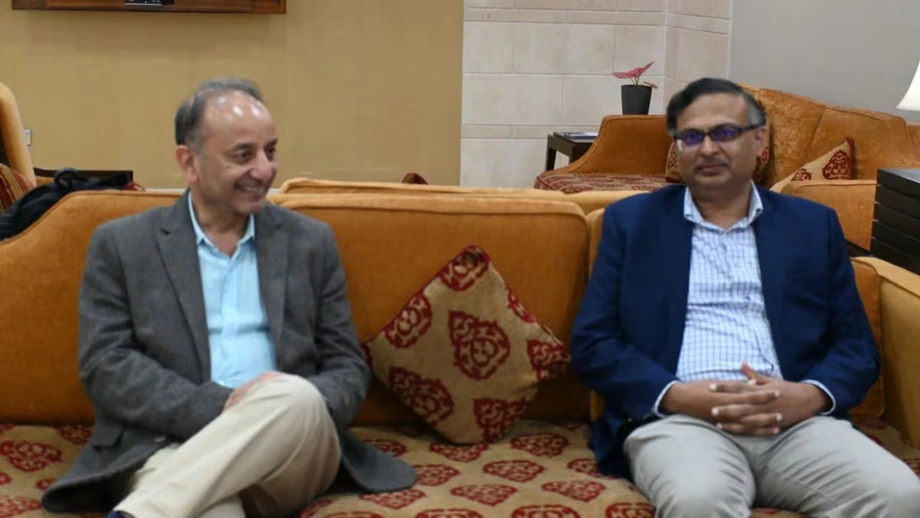
A Rare Ministerial Visit Takes Center Stage in New Delhi
Political tensions between the Bharatiya Janata Party (BJP) and the Congress party have surfaced following the arrival of a high ranking Pakistani official in India. Musadik Masood Malik, Pakistan Federal Minister for Climate Change and Environmental Coordination, travelled to New Delhi to participate in an international cultural gathering. Prime Minister Narendra Modi inaugurated the inaugural Shanghai Cooperation Organisation (SCO) Civilisational Dialogue Forum at the historic Purana Quila. The event, held from November 20 to 22, brought together representatives from member states to discuss shared heritage, art, and literature.
Contents
- A Rare Ministerial Visit Takes Center Stage in New Delhi
- Official Itinerary and Security Clearance Decisions
- Political Backlash and Domestic Debate in India
- Debate Over Civilisational Identity and Regional Stability
- Proposals for Cultural Cooperation and Digital Initiatives
- Timeline of Key Developments
- What Remains Unresolved in India and Pakistan Relations
- The Bottom Line
The visit marked the first trip to India by a Pakistani federal minister in three years. The previous ministerial visit occurred in May 2023, when then Foreign Minister Bilawal Bhutto Zardari attended an SCO meeting in Goa. The arrival of the Pakistani delegation also marked the first such diplomatic trip since Operation Sindoor, India military response following the Pahalgam terror attack in May 2025. Upon landing at the airport, Musadik Malik was welcomed by Saad Warraich, Chargé d'Affaires at the Pakistan High Commission in India.
Official Itinerary and Security Clearance Decisions
Indian security agencies and government officials reviewed requests made by the visiting delegation regarding sightseeing in the national capital and surrounding areas. The Ministry of External Affairs confirmed that permission was granted for the Pakistani ministers and accompanying officials to visit the Taj Mahal in Agra. Security clearance was also issued for other designated locations within Delhi, including Humayun Tomb and Dilli Haat. However, a requested trip to the prominent Hazrat Nizamuddin shrine was denied by authorities citing logistical and security concerns. Regarding the security clearance denials, the Ministry of External Affairs provided no official itinerary details or statements.
During the three day gathering, the visiting Pakistani minister engaged in diplomatic sideline meetings with international counterparts. Musadik Malik met with Tajikistan Minister of Culture Storiyun Amunzoda to discuss regional cultural cooperation. He also held discussions with Indian Minister of Culture and Tourism Gajendra Singh Shekhawat and Indian Culture Secretary Vivek Agarwal. Furthermore, Malik met with the President of Iran Islamic Culture and Relations Organization to converse about bilateral matters within the region.
Political Backlash and Domestic Debate in India
The decision to host the Pakistani delegation and extend hospitality drew swift criticism from opposition politicians in India. Leaders from the Congress party questioned the federal government regarding the invitation, asking why such diplomatic engagement was permitted given ongoing bilateral friction. Critics specifically pointed to Musadik Malik remarks concerning the Indus Waters Treaty, noting that the visiting official had previously expressed aggressive positions regarding India suspension of the water distribution pact.
Opposition members also demanded to know what fundamental changes had occurred since the Pahalgam terror incident to warrant a shift in India approach toward Islamabad. Despite the political controversy, the Ministry of External Affairs maintained that India position on the Indus Waters Treaty remained entirely unchanged. The diplomatic exchanges occurred against the backdrop of ongoing discussions surrounding regional security, which built upon the complexities highlighted after last year attacks involving cross border infiltration claims.
Debate Over Civilisational Identity and Regional Stability
Former Minister of State for External Affairs MJ Akbar described Pakistan participation in the cultural forum as an anomaly, arguing that the neighbouring country cultural identity remains inherently unstable. Speaking about the visit, Akbar asserted that Pakistan has distanced itself from the legacy of the Indus Valley Civilisation, specifically Harappa and Mohenjo Daro. He characterized Pakistan as an artificial state that adopted Urdu, a language rooted historically in the Ganga, Yamuna, and Deccan regions, rather than native provincial tongues like Pashto, Punjabi, Balochi, and Sindhi.
Akbar contrasted this perspective with India model of cultural diversity, stating that the host nation functions as a genuine civilisational state where all religions and languages enjoy equal standing. He referenced remarks made by Prime Minister Modi regarding how civilisational dialogue changes the world by fostering mutual trust and understanding. Akbar also cited statements attributed to Pakistani military leadership regarding state ideology to support his argument concerning regional governance dynamics.
Proposals for Cultural Cooperation and Digital Initiatives
Addressing the delegates during the multilateral sessions, Musadik Malik emphasised the importance of maintaining open channels of communication across borders. The Pakistan government issued a formal statement affirming its commitment to promoting dialogue among civilisations and encouraging people to people contacts, with the exact text stating that Dar reaffirmed that Pakistan, as the current chair of the SCO Council of Heads of State, remained committed to advancing cooperation among member states, promoting cultural exchanges and strengthening people-to-people contacts. Speaking to reporters on the sidelines of the forum, Malik expressed optimism about the future of diplomatic and social relations within the region.
Musadik Malik stated:
I think all of our relationships will improve. The region is in flux, as you know. The plates underneath geopolitics are shifting very fast. I am very hopeful that we will take a macro view, and in that macro view, we will be looking at all of the political issues, all of the social issues, all of the issues of conversation, and we will be pushing the agenda of the region.
In addition to political remarks, Malik put forward concrete proposals aimed at tackling shared ecological challenges through cultural frameworks. During his meeting with the Tajik culture minister, the Pakistani climate minister suggested establishing a virtual green university. This proposed institution would facilitate joint research, academic cooperation, and educational programs focused on mitigating the impacts of climate change across Central and South Asia.
Timeline of Key Developments
- May 2023: Bilawal Bhutto Zardari attends an SCO meeting in Goa, marking the previous ministerial visit.
- May 2025: India conducts Operation Sindoor following a terror attack in Pahalgam.
- October 28, 2025: India announces that formal invitations for the SCO forum have been sent to all member states, including Pakistan.
- November 20, 2026: Musadik Malik arrives in New Delhi, is received by diplomat Saad Warraich, and addresses reporters at Purana Quila.
- November 21, 2026: Indian authorities clarify that Taj Mahal and Humayun Tomb visits are approved while Nizamuddin Dargah access is denied.
- November 20 to 22, 2026: The inaugural Shanghai Cooperation Organisation Civilisational Dialogue Forum takes place in New Delhi.
What Remains Unresolved in India and Pakistan Relations
Despite the resumption of high level ministerial travel for multilateral cultural events, formal bilateral peace talks between New Delhi and Islamabad have not been officially restored. Officials from both nations did not announce any bilateral agreements or the creation of a joint investigative mechanism concerning terrorism during the three day summit. Furthermore, government authorities did not disclose the precise dates for any future ministerial exchanges or follow up diplomatic meetings between the two countries. The long term diplomatic outcomes of the cultural dialogue forum remain to be determined as geopolitical positions persist.
The Bottom Line
- Musadik Malik led the Pakistani delegation to the inaugural SCO Civilisational Dialogue Forum in New Delhi.
- Indian authorities granted security clearance for the delegation to visit the Taj Mahal, Humayun Tomb, and Dilli Haat, but denied access to the Hazrat Nizamuddin shrine, with no official itinerary details or statements provided by the Ministry of External Affairs regarding these denials.
- The visit drew political criticism from the Congress party regarding Pakistan stance on the Indus Waters Treaty and past security incidents.
- During the event, Malik proposed creating a virtual green university to foster research and cooperation on climate change.