A power plan with a household price tag
Thailand is weighing electricity requests from data centres totalling 35,000 megawatts while planning around a much smaller figure of 8,800 megawatts. That gap captures the central challenge facing its Power Development Plan 2026: build enough electricity supply for new industries without making households pay for power plants that may never be needed.
Contents
- A power plan with a household price tag
- What the ministry has put on the table
- How much data centre demand will arrive?
- Who benefits from the digital investment?
- Direct electricity deals depend on the grid fee
- Why the time of day matters
- Rooftops and farms could supply more power
- The argument over gas and expensive technology
- Climate targets put the choices under pressure
- Key Points
The draft plan, known as PDP 2026, covers the period through 2050. Energy Minister Akanat Promphan has outlined a rise in renewable energy from below 20% today to 50% within the first decade, followed by 65% and potentially as much as 89% during the following 15 years. Alongside those ambitions sit proposals for more gas generation, wider access to private electricity contracts and major investment in the grid.
At an October 21, 2026 roundtable organised by Vriens & Partners with the Energy Ministry, officials and industry representatives focused on how those changes would work in practice. Their concerns ranged from electricity demand created by artificial intelligence to the cost of batteries and the hours when electric vehicles should charge.
For households, the outcome could determine whether rooftop panels become a source of income and whether industrial expansion adds to their bills. For factories, semiconductor producers and data centre investors, it could decide whether Thailand can provide reliable clean electricity at a competitive price.
The decisions are still being developed. Officials described PDP 2026 as unfinished in late October, while its introduction was expected in November 2026. Final approval, electricity trading rules and network charges will determine how much of the proposed change reaches consumers.
What the ministry has put on the table
The Energy Ministry's September 9 statement sets out three priorities: cleaner electricity, security of supply and a fairer distribution of benefits. It proposes a purchasing quota of 10,000 megawatts for electricity from household rooftops, direct contracts between electricity producers and buyers, and investment by the Electricity Generating Authority of Thailand (EGAT) in smarter networks and energy storage.
The ministry also proposes considering small modular nuclear reactors, carbon capture, utilisation and storage, and geothermal energy. These technologies serve different purposes: nuclear and geothermal plants can provide steady generation, while carbon capture aims to collect carbon dioxide from industrial processes or power generation for use or underground storage.
Several decisions and discussions have shaped the plan:
- July 2026: A National Energy Policy Council resolution expanded the proposed Direct PPA scheme beyond a pilot restricted to data centres and capped at 2,000 megawatts.
- September 9: Akanat outlined the draft's renewable energy targets and said the final public consultation period had one week remaining.
- October 21: The Bangkok roundtable examined data centre demand, rooftop solar, electricity pricing and network reform.
- October 27: Environment ministry adviser Darika Sarunyagate said PDP 2026 remained under development during Singapore International Energy Week.
- Early November: Officials discussed network access charges and a separate electricity customer category for data centres, with the plan expected to take effect that month.
The ministry's 10,000 megawatt rooftop purchasing proposal sits alongside a broader government rooftop solar target of 24.3 gigawatts cited in the debate over the draft. One gigawatt equals 1,000 megawatts. The purchasing quota concerns electricity bought from rooftops, while the larger figure concerns proposed installed capacity.
How much data centre demand will arrive?
The 35,000 megawatts in data centre electricity requests discussed at the October roundtable is almost four times the 8,800 megawatts used for planning. Screening those requests matters because developers may seek connections before their investment, construction or customer commitments are settled.
The Board of Investment approved 42 data centre projects between 2024 and 2026, representing about 750 billion baht of investment and a combined information technology load of 3,400 megawatts. IT load refers to power used by computing equipment; cooling and other building systems require electricity too. Planners therefore have to assess both the maturity of projects and their total electricity needs.
EGAT has added 550 megawatts of supply capacity in the Eastern Economic Corridor and is aiming for close to 1,000 megawatts. Further transmission investment is being considered on a scale of hundreds of billions of baht, potentially financed through EGAT capital, an infrastructure fund and bonds tied to sustainability goals.
The Energy Ministry plans a separate Category 9 electricity customer group for data centres. Its purpose is to assign them the cost of imported liquefied natural gas needed to serve their demand, rather than spreading that fuel cost through the existing gas pool used by households and general industry. The final treatment of volatile fuel prices and shared network costs has not been settled.
Who benefits from the digital investment?
Thailand's industrial representatives want electricity that meets three conditions at once: continuous supply, competitive prices and access to clean generation. Electronics, hard disk drive, semiconductor and AI operations need stable power, while suppliers increasingly face customer requirements to cut emissions.
At the October roundtable, industry participants described pressure from European and US customers to move supply chains towards clean energy within three to five years. They also highlighted carbon footprints, the European Union's Carbon Border Adjustment Mechanism and Digital Product Passports. These involve different requirements, but each increases the commercial value of knowing how products are made and how much carbon their production releases.
Somkiat Tangkitvanich, president of the Thailand Development Research Institute, argued during the November energy debate that Thailand should prioritise using AI to improve productivity and attracting hardware supply chains that create skilled jobs. GULF chief financial officer Smith Banomyong argued for treating data centres as enabling infrastructure, comparable to roads or refineries.
Smith said Thailand pays around US$1 billion, or more than 33 billion baht, each month for digital services from abroad. B.Grimm Power executive Nopadej Karnasuta proposed a minimum local content requirement of 30%, intended to bring more domestic equipment, materials and skills into data centre investment. That proposal would make the benefits to Thai businesses and workers part of the investment discussion alongside electricity demand.
Direct electricity deals depend on the grid fee
Direct Power Purchase Agreements, or Direct PPAs, would let an industrial customer contract with an electricity producer rather than rely entirely on the usual utility purchasing route. Third Party Access, or TPA, means allowing that electricity to travel through a network owned by another organisation.
The grid still needs maintenance, reserve supply and constant balancing. A wheeling charge is the fee for carrying electricity over that network. The Energy Regulatory Commission is reviewing a preliminary charge of about 1.40 baht per unit, alongside an imbalance charge when actual electricity use departs from the agreed schedule. A unit is one kilowatt hour.
Nopadej Karnasuta, president for Thailand, Malaysia and Energy & Industrial Solutions at B.Grimm Power, argued that historical costs should not be counted twice when calculating the fee. He said the wheeling charge:
should not exceed 1 baht per unit.
The difference between 1 baht and 1.40 baht is a 40% increase in the network fee alone. For a large electricity buyer, that can materially change the price of a direct clean power contract. Somkiat also called for charges based on efficient network costs rather than the accumulation of every historical expense.
Industry representatives want clearer Utility Green Tariff rates as well. That arrangement provides access to green electricity through a utility. Direct contracts and utility tariffs give buyers different routes to clean energy, but both depend on transparent pricing and dependable delivery.
Why the time of day matters
Electric vehicles and data centres are changing when Thailand needs electricity. The October discussion identified growing demand late at night, including vehicle charging, while solar panels produce most during daylight. Building more solar capacity therefore has to be accompanied by ways to match consumption with production.
Songwut Khandee, an assistant governor of the Provincial Electricity Authority (PEA), proposed adjusting time of use tariffs and prices during periods of exceptional demand. His aim is to encourage vehicle charging and other heavy electricity use between 9 a.m. and 3 p.m., when solar output is high.
A time of use tariff charges different prices at different hours. If daytime electricity becomes more attractive, some drivers and businesses can move flexible consumption into sunny hours. That uses available solar generation directly and can reduce the amount of electricity that must be stored in batteries for later.
PEA is preparing smarter grid systems, changes to technical connection rules for household inverters, and trials of direct electricity trading with network charges calculated at a local level. Inverters convert the electricity produced by solar panels into the form used by homes and the grid.
EGAT assistant governor Supachai Khoonset described complementary work: adapting existing power plants to raise or lower output more quickly, improving transmission and using AI with weather models to forecast renewable generation. Those forecasts would support the national control centre, which balances supply and demand. EGAT is also examining battery storage, reuse of retired vehicle batteries and recycling.
Rooftops and farms could supply more power
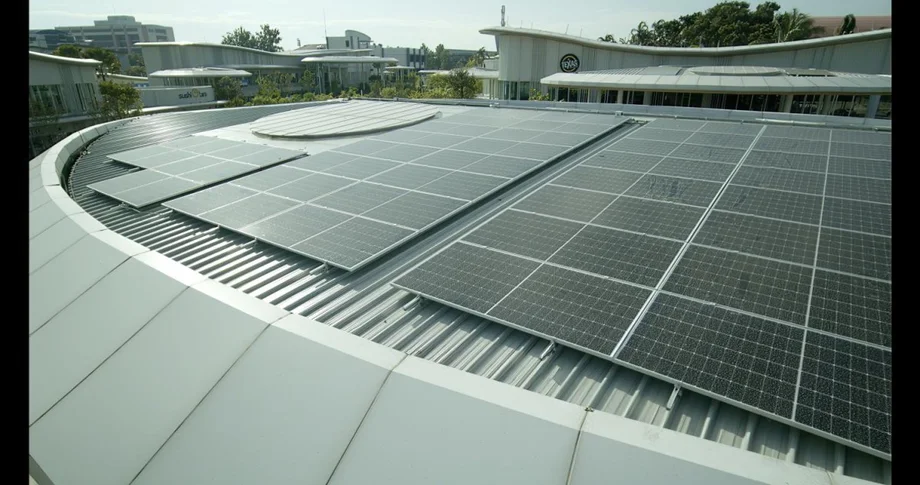
The October roundtable discussed a programme covering one million household rooftops, alongside proposals to buy surplus solar electricity from businesses and small and medium sized enterprises. The ministry's separate 10,000 megawatt purchasing quota gives a capacity target for rooftop electricity procurement.
For a household or small company, the practical change would be the ability to sell electricity left over after meeting its own needs. Connection rules, purchase prices and network capacity will determine who can participate and how much income a solar installation can earn.
Agricultural energy is another part of the government's approach. Energy Ministry spokesman Pongpol Yodmuangcharoen highlighted ethanol from sugar cane and cassava, biodiesel from palm oil, and greater use of domestic resources. Roundtable participants proposed generating electricity from sugar cane leaves and bagasse, the fibrous material left after juice is extracted.
Biomass plants and solar installations could share transmission infrastructure, with biomass helping supply electricity outside sunny hours. The ministry also sees a potential reduction in agricultural burning and fine particle pollution if residues gain value as fuel. Such projects still require reliable collection, transport and power generation arrangements.
Network investment remains central. Participants warned that an additional 10,000 megawatts of renewable capacity could not simply be connected immediately without improvements. Coordinating customer solar panels, batteries and flexible electricity use, described as Customer Energy Resources, is one proposed way to make better use of existing infrastructure.
The argument over gas and expensive technology
Thailand's exposure to imported fuel runs through the entire debate. Pongpol said the country imports about 90% of its crude oil and faces price risks from conflict around the Strait of Hormuz. Oil supply affects transport costs and the Oil Fuel Fund, while imported LNG is a major concern for electricity generation.
The Energy Ministry wants to reduce reliance on LNG bought at short notice, known as spot LNG, by drawing more on Gulf of Thailand gas, pipeline supplies from Myanmar and biomass. Darika also identified dependence on Myanmar pipeline gas as a supply risk, making diversification relevant across several fuel routes.
Darika Sarunyagate, adviser to Natural Resources and Environment Minister Suchart Chomklin, defended a continuing role for LNG at the Singapore energy forum:
For Thailand, LNG can support the energy transition, but it has not delayed the transition to cleaner energy.
Chalie Charoenlarpnopparut of the Sirindhorn International Institute of Technology takes a different approach. Working with Thammasat University's SDG Move and Agora Energiewende, he developed an alternative Resilient PDP that would cancel new gas plants, expand rooftop solar to as much as 60 gigawatts and deploy batteries capable of supplying electricity for six or eight hours.
The 60 gigawatt proposal is about 2.47 times the government's 24.3 gigawatt rooftop target. Chalie argues that the government draft's proposed 9,100 megawatts of new combined cycle gas plants between 2026 and 2037 could leave gas generation largely unchanged through 2050. Combined cycle plants improve efficiency by using heat from a gas turbine to run a steam turbine, but still release carbon dioxide.
Chalie estimates that a carbon capture target of 19 million tonnes annually could add about 1.20 baht per electricity unit, while small modular nuclear generation could cost as much as 13 baht per unit. Those are his cost estimates. The competing approaches put different costs at the centre of the decision: gas and carbon capture on one side, faster renewable deployment and substantial storage on the other.
Climate targets put the choices under pressure
Thailand's 2050 net zero ambition gives the electricity plan a deadline beyond the immediate investment cycle. Its nearer climate commitment is presented differently by the participants: Darika described NDC 3.0 as a 47% reduction in net greenhouse gas emissions from 2019 levels by 2035, conditional on international support; Chalie cited a target of 152 million tonnes of carbon dioxide equivalent, down from 379 million tonnes in 2019, which works out to about a 60% reduction.
NDC means Nationally Determined Contribution, a country's climate commitment under the Paris Agreement. Carbon dioxide equivalent expresses the warming effect of different greenhouse gases using a common measure. The differing presentations of the 2035 target make the final emissions assumptions used in PDP 2026 especially consequential.
Carbon storage is moving towards an initial project at the Arthit gas field in the Gulf of Thailand. The project is designed to store up to one million tonnes of carbon dioxide annually, with PTTEP expecting operations to begin in 2028. Another initiative is planned for an industrial area in Rayong, where field inspections were scheduled for the fourth quarter of 2026.
Darika also highlighted US$2.4 million, or 80.94 million baht, in World Bank grants for two climate initiatives. At the Singapore forum, energy executives advocated more flexible fuel contracts and financing that allows gas plants to remain available even when they are not generating. Those arrangements would give backup supply an explicit price as renewable production grows.
Thailand's immediate task is to turn the draft into rules that connect generation targets with credible demand, affordable network access and a clear allocation of costs. Households need protection from unnecessary investment, while businesses need electricity contracts and connection capacity they can plan around.
Key Points
- PDP 2026 covers the period through 2050 and proposes renewable energy reaching 50% within its first decade.
- Planners are using about 8,800 megawatts of data centre demand, compared with connection requests totalling 35,000 megawatts.
- A proposed rooftop electricity purchasing quota would cover 10,000 megawatts.
- Direct electricity contracts depend on network access rules, with a preliminary wheeling charge of about 1.40 baht per unit under review.
- A separate data centre customer category is intended to assign associated imported LNG costs to those operators.
- An alternative Resilient PDP proposes up to 60 gigawatts of rooftop solar, longer battery storage and no new gas plants.
- The Arthit carbon storage project is expected to begin operating in 2028, with capacity of up to one million tonnes annually.