An 89-run escape with one wicket left
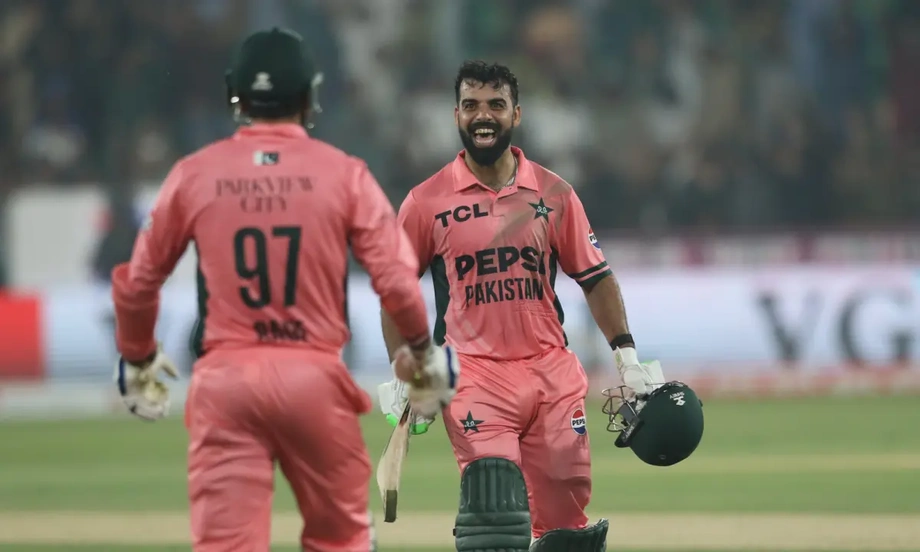
Pakistan needed 88 runs with their last two batters at the crease. England needed just one wicket. From that position at Gaddafi Stadium in Lahore on Sunday, October 25, Shadab Khan and Haris Rauf produced an unbeaten partnership of 89 to secure a one-wicket victory and send Pakistan into the ODI tri-series final.
Contents
- An 89-run escape with one wicket left
- How Pakistan lost control of the chase
- Shadab attacked while Rauf held on
- The review that kept Pakistan alive
- A record stretching back to 1975
- Duckett's century gave England something to defend
- Both captains pointed to batting problems
- Family tributes and memories of Abdul Razzaq
- England's route to the final narrows
- Key Points
Shadab finished with 113 not out from 96 balls, his first international century, as Pakistan reached 243-9 in 47.1 overs in reply to England's 241. Rauf, unbeaten on seven from 19 deliveries, struck the winning boundary off England debutant Henry Crocombe with 17 balls remaining.
The result gave Pakistan their third consecutive victory in the tournament and left England without a win after three matches. Pakistan received two points for the win, while England received none. Pakistan had beaten England earlier in the competition, making this their second victory over the same opponents.
Shadab's innings brought him the player of the match award and a record for the highest ODI score by a batter at number eight. His partnership with Rauf also surpassed a record for successful ODI chases that had stood since the 1975 World Cup.
How Pakistan lost control of the chase
England's total required Pakistan to score 242 from 50 overs, a manageable target until wickets began falling. Gus Atkinson dismissed Fakhar Zaman for 10 and bowled Babar Azam for 10, while Crocombe removed Saim Ayub for six. Pakistan were 31-3 after 6.5 overs.
Saad Baig briefly changed the pace, hitting seven fours in his 32 from 22 balls. His partnership of 43 with Salman Ali Agha took Pakistan to 74 before Jamie Overton dismissed him. From 74-3, Pakistan lost six wickets for 80 runs.
Liam Dawson and Overton then restricted the scoring while taking wickets. Hasan Nawaz fell for 15, Arafat Minhas for one and Salman for 26. Dawson bowled 42 deliveries without conceding a run in his ten overs, preventing Pakistan from making steady progress even when wickets stayed intact.
Shadab was on 19 from 28 balls at one stage, still building an innings rather than dominating the attack. When Will Jacks dismissed Razaullah for eight, Pakistan were 154-9. England had removed almost everyone standing between them and their first win of the series.
Shadab attacked while Rauf held on
Shadab finished with 13 fours and five sixes, collecting 82 of his 113 runs from boundaries. That meant nearly three quarters of his runs came without the need to complete a run between the wickets.
Rauf's job was different. As the final batter in the order, he had to survive while allowing Shadab to face most of the bowling. Their partnership lasted about 70 minutes, although Rauf faced only 19 deliveries.
Shadab managed the strike by finding boundaries and choosing when to take singles. In cricket, managing the strike means controlling which batter faces the next delivery. With no replacement batter left, keeping Shadab involved while protecting Rauf was central to Pakistan's recovery.
Rauf also made the decisive contribution to the finish. He later said he had told Shadab that he would complete the victory himself. With Pakistan needing three at the start of the 48th over, he drove Crocombe straight down the ground for four.
The review that kept Pakistan alive
Shadab was on 97 when Atkinson won a leg-before-wicket decision against him in the 45th over. Pakistan still needed 21 runs. England began celebrating, and Shadab had already started exchanging handshakes with opponents.
Rauf urged his partner to ask for a review. Shadab later explained that he had not realised the ball had touched his bat and was deeply disappointed when the umpire gave him out.
The Decision Review System allows players to challenge an umpire's ruling using television technology. UltraEdge, which helps detect contact between bat and ball, showed an inside edge before the ball struck Shadab's pad. The decision was overturned, allowing him to continue.
Shadab subsequently completed his century with a late cut against Atkinson. He then hit the fast bowler for six over long off, helping reduce the requirement to three runs from the final three overs. Rauf's intervention had preserved both the innings and Pakistan's chance of victory.
A record stretching back to 1975
Shadab and Rauf's unbeaten 89 surpassed the previous highest partnership for the tenth wicket in a successful ODI chase: the unbeaten 64 shared by West Indies pair Deryck Murray and Andy Roberts against Pakistan at Birmingham in the 1975 World Cup.
The new partnership exceeded that mark by 25 runs. Both matches ended in victories by one wicket, meaning the winning side reached its target with its final pair still together. This time Pakistan were the beneficiaries rather than the team denied at the finish.
Shadab also passed 1,000 ODI runs during his 74th appearance. The century was his first in any international format, turning a personal milestone into the innings that confirmed Pakistan's place in the final.
The main stages of the match show how sharply control changed:
- England lost three early wickets, then recovered through Ben Duckett and Sam Curran.
- England were dismissed for 241 in 46.4 overs.
- Pakistan recovered from 31-3 to 74-3 before falling to 154-9.
- Shadab survived a review on 97 with 21 runs still needed.
- Rauf struck the winning boundary at 47.1 overs, completing the unbeaten partnership of 89.
Duckett's century gave England something to defend
Ben Duckett had earlier held England's innings together with 105 from 111 balls, his fifth ODI century and his first against Pakistan. His ten fours and two sixes helped England recover after four of their first five batters were dismissed for single figures.
Tom Banton made four, Joe Root five and captain Harry Brook one. Brook was run out by a direct contribution from debutant Razaullah while attempting a second run. Jordan Cox later fell for six, leaving England 52-4.
Duckett found sustained support from Curran, who scored 42 from 52 balls. Their partnership of 93 for the fifth wicket carried England to 145 before Shaheen Shah Afridi returned and dismissed Curran with a short delivery.
Pakistan then broke through England's middle and lower order. Duckett fell attempting a sweep against Minhas, while Razaullah removed Jacks and Dawson. Atkinson supplied a late recovery, hitting three sixes in an unbeaten 36 from 28 balls and sharing a partnership of 40 with Crocombe for the final wicket.
England were bowled out with 20 deliveries unused. Shaheen took 4-46, with the full scorecard confirming four wickets rather than the three credited in another published tally. Minhas took 2-26 and Razaullah 2-38. Banton's dismissal brought Shaheen his 150th ODI wicket, making him the fastest Pakistan fast bowler to that milestone.
Both captains pointed to batting problems
England captain Harry Brook praised his bowlers and fielders after they brought the side within one wicket of victory. Overton finished with 3-43, Dawson with 2-19 and Atkinson with 2-40.
Brook said England's batting had left too much work for the attack:
We probably didn't quite get enough runs on the board, but the effort the boys put in with the ball and in the field was phenomenal.
Pakistan captain Shaheen was delighted by the rescue but also called for a stronger contribution from the top of the order. Pakistan's first three batters had contributed only 26 runs between them.
Shaheen described his reaction to the final partnership at the presentation:
The way Shadab Khan and Haris Rauf finished the game with the bat - I have never seen in my life an innings like that.
Former Pakistan opener Ahmad Shahzad also praised Shadab's composure and Rauf's support while warning that Pakistan's batting remained a concern. Victory secured qualification, but Pakistan's next match would give their leading batters another opportunity to provide a more stable start.
Family tributes and memories of Abdul Razzaq
Shadab dedicated the victory to his mother and wife in a statement on X. He thanked the whole team and praised Rauf, saying their partnership demonstrated that Pakistan won together.
Shadab also said he was pleased to repay the confidence shown by the selectors and team management. His stated aim remained to contribute with both bat and ball. Asked about comparisons with Glenn Maxwell's World Cup innings, he pointed to the different settings: Maxwell's performance came in a World Cup, while his own came in a series.
Journalist and former Pakistan Cricket Board director Umar Farooq Kalson compared Shadab's innings with Abdul Razzaq's unbeaten 109 against South Africa in Abu Dhabi on October 31, 2010. Razzaq also carried Pakistan to a victory by one wicket.
Prime Minister Shehbaz Sharif praised Pakistan's resilience and Shadab's contribution. Information Minister Attaullah Tarar described the match in a short social media message:
A thriller beyond imagination
England's route to the final narrows
Pakistan's place in the final was secured, but England's hopes depended on the remaining matches. Pakistan were scheduled to face Sri Lanka on Tuesday, October 27, before England played Sri Lanka on Thursday, October 29.
A Sri Lanka victory on Tuesday would eliminate England. To retain a chance, England needed Pakistan to win that match and then needed to beat Sri Lanka themselves. The precise qualification margin was not specified.
England entered this defeat after failing to defend 429 against Sri Lanka in their previous match. In Lahore, the challenge was very different: they had a smaller total but had taken nine wickets with Pakistan still 88 short. Shadab and Rauf found a way through, leaving England facing elimination and Pakistan preparing for a final.
Key Points
- Pakistan beat England by one wicket in Lahore, reaching 243-9 in 47.1 overs while chasing 242.
- Shadab Khan made his first international century, finishing unbeaten on 113 from 96 balls.
- Shadab and Haris Rauf added an unbeaten 89, a record for the tenth wicket in a successful ODI chase.
- Rauf urged Shadab to review an LBW decision on 97, then struck the winning boundary.
- Ben Duckett scored 105 in England's total of 241; Shaheen Shah Afridi took 4-46.
- Pakistan qualified for the tri-series final; England needed help from Pakistan and a victory over Sri Lanka to retain a chance.