A landmark victory rescued with one ball remaining
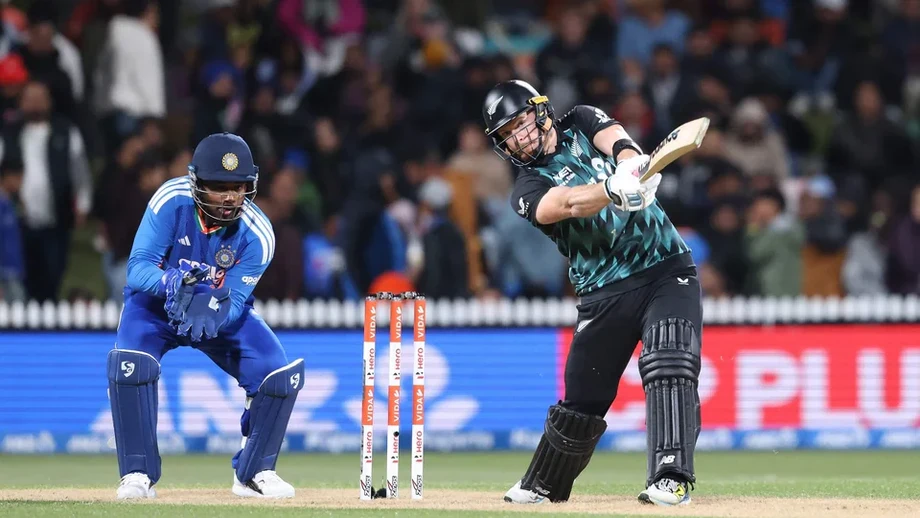
India recorded their 200th victory in men's Twenty20 internationals in their 300th match, beating New Zealand by four wickets at Hagley Oval in Christchurch on October 24, 2026. An unbeaten partnership of 69 between Tilak Varma and Nitish Kumar Reddy turned a chase in danger of collapse into a 2-0 lead in the series of five matches.
Contents
- A landmark victory rescued with one ball remaining
- Two partnerships rebuilt India's chase
- How the final two overs changed the result
- Santner's four wickets nearly settled the match
- Phillips and Jacobs rebuilt New Zealand's innings
- A different route from the opening victory
- What India's 200th victory represents
- Wellington gives New Zealand a chance to respond
- Key Points
New Zealand made 180 for five, then reduced India to 70 for five and later 112 for six. With 68 runs still needed from the final 30 balls, the visitors faced a steep task against an attack whose captain, Mitchell Santner, had taken four wickets for 21 runs.
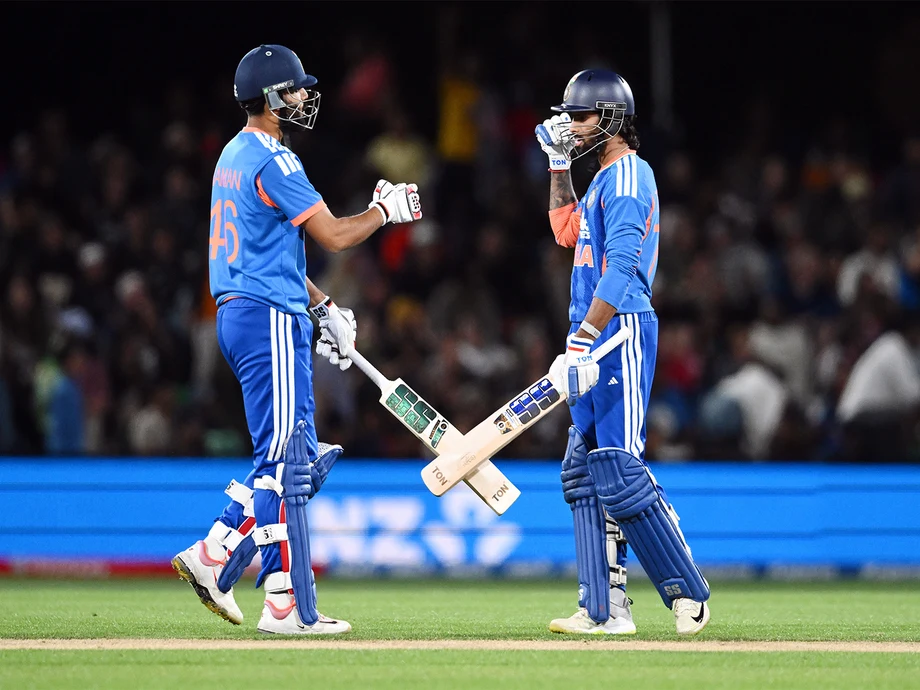
Varma and Reddy completed the chase at 181 for six after 19.5 overs, meaning 19 completed overs and five legal deliveries. Reddy struck the winning two runs off Jacob Duffy, leaving one ball unused.
The completed scorecard confirms Varma finished unbeaten on 51 from 26 balls. Reddy finished on 26 from 13 deliveries. Their stand came from 30 balls and set an Indian record for the seventh wicket in men's T20Is.
India became the first men's team to reach 200 victories in the format. The manner of the win gave the milestone its drama: New Zealand controlled much of the chase, only for India's remaining specialist batters to take the game away in its closing stages.
Two partnerships rebuilt India's chase
Naman Dhir supplied the first stage of the recovery. Arriving with India five wickets down, he scored 31 from 17 balls and added 42 from 24 deliveries with Varma for the sixth wicket.
Dhir's contribution changed the task for the players who followed. India still needed rapid scoring when he fell to Santner at 112 for six, but his attacking innings had prevented the chase from stalling completely.
Varma then found another partner in Reddy. Their unbeaten 69 surpassed India's previous seventh wicket record of 63, set by Dinesh Karthik and Krunal Pandya against New Zealand in 2019. The new mark was six runs higher, achieved while pursuing a target rather than simply building a total.
Varma, who was named Player of the Match, explained afterward that he wanted to keep the contest alive until the closing overs. He credited a conversation with the coaching staff for helping him remain calm and said he and Dhir had discussed running well between the wickets on a surface that played more slowly than in the opening match.
Reddy's 26 from 13 balls supplied scoring at two runs per delivery. Together, he and Varma gave India both the boundary shots and the running needed to finish a chase that had become increasingly demanding.
How the final two overs changed the result
India needed 29 runs from 12 balls before Nathan Smith delivered the 19th over. Varma struck three fours and a six, taking 18 from the over despite two deliveries producing no runs.
The six off the final ball was especially valuable. It left India needing 11 from the last over instead of 17, placing the chase within reach without requiring a boundary from every remaining delivery.
New Zealand also received a penalty for their slow over rate. They were allowed only four fielders outside the circle marking the inner field for the final over, reducing the number available to protect the boundary.
Duffy began with a single to Reddy. Varma followed with a four, then ran two to complete his half century. Another single left India needing three from two balls. A wide reduced the requirement to two, and Reddy flicked the next delivery into the leg side and returned for the winning second run.
The closing sequence showed how several small events combined with Varma's boundary hitting. A second run, a change of strike and an extra delivery from a wide all helped India finish before the last ball.
Santner's four wickets nearly settled the match
New Zealand's bowling had given them a strong chance of levelling the series. Matt Henry started with a maiden over to Sanju Samson, sending down six deliveries without conceding a run.
Samson and Abhishek Sharma nevertheless built an opening partnership of 40 before Duffy dismissed Samson. Nathan Smith then removed Vaibhav Sooryavanshi for four, leaving India at 44 for two.
Santner took charge through the middle of the innings. The New Zealand captain dismissed Abhishek for 27 and Shreyas Iyer for seven, then removed Axar Patel for 11. Finn Allen and Daryl Mitchell combined near the boundary to complete Axar's catch, with Allen passing the ball to Mitchell before crossing the rope.
Santner later dismissed Dhir to finish with four for 21 from four overs. His economy rate was 5.25 runs an over, far below the rate India needed across the chase.
Iyer said afterward that India's difficulty finding boundaries and the number of deliveries without a run had increased the pressure. He also credited New Zealand's spinners for their control. India eventually escaped that pressure by attacking the pace bowling in the closing overs, after Santner had completed his allocation.
In his post-match interview, Iyer said of India's recovery:
Yes, absolutely. I feel that every individual in our game is a match winner, and today we saw the example of that. Like, honestly speaking, when we lost wickets, consecutive wickets especially, we thought that the game was going away from us. But Tilak and Reddy, they showed immense character, and also a great cameo by Naman Dhir.
On Dhir's all-round contribution, he said:
We saw him in a couple of games back home against West Indies. He's a phenomenal bowler as well, and once you get both the parts covered in terms of batting and bowling, I think he brings in a lot of character, and also when you see him move around in the field, he basically, he's a comprehensive player.
Explaining the challenge posed by New Zealand's spinners, Iyer said:
I think we played a lot of dot balls initially, and that basically piled up the run rate as well, and also when we went in, we wanted to actually cruise, but they bowled amazing, especially Bracewell and Santner, the way they controlled the game in the middle. It wasn't easy to strike the ball, but I think if we would have picked up the gaps and tried to find boundaries, we could have easily cruised. But unfortunate. You know, it happens. Just another day, and I'm sure that we'll bounce back pretty strong.
On India's fielding and preventing second runs, he added:
I think that was the message passed on to each and every player in the team, that you got to anticipate every ball that is coming to you, and just believe that you're going to give singles, and just see to it that you're running into the ball so that, you know, the opponents, they think twice about running twos.
Looking ahead in the series, he concluded:
Thank you so much. Job is still half done.
Phillips and Jacobs rebuilt New Zealand's innings
New Zealand had needed a substantial recovery of their own after Iyer won the toss and chose to bowl. Arshdeep Singh dismissed Tim Seifert in the second over, Bhuvneshwar Kumar removed Daryl Mitchell, and Prince Yadav bowled Finn Allen for 16.
The hosts were 41 for three after the six over powerplay, the opening period when fielding restrictions leave fewer players available near the boundary. Glenn Phillips and Bevon Jacobs then added 116 for the fourth wicket.
Phillips made 70 from 43 balls, as confirmed by the completed scorecard, while Jacobs scored 58 from 46 deliveries. Their partnership supplied almost two thirds of New Zealand's final 180 runs and carried the innings from an early setback into a competitive position.
Jacobs received a reprieve when Iyer dropped him on 20. He added another 38 runs before being caught off Reddy, making the missed chance costly for India.
Arshdeep removed Phillips in the 18th over and finished with two for 33. Prince conceded 30 from his four overs, while Bhuvneshwar's spell cost 50. Michael Bracewell supplied a late burst, hitting a four and a six from the only two deliveries he faced to help New Zealand reach 180 for five.
A different route from the opening victory
India had won the first match at the same ground on October 22 through a much faster start. In their opening match chase, Samson and Abhishek added 93 from 35 balls, helping India pursue a target of 226 with two deliveries remaining.
The second match offered a different challenge. New Zealand's total was 45 runs lower than their 225 for four in the opener, yet their improved bowling left India in greater trouble during the chase.
India's opening partnership fell from 93 in the first match to 40 in the second, a reduction of 53 runs. Dhir remained central to both finishes: he had made an unbeaten 42 from 15 balls in the opener before contributing 31 from 17 in the second game.
The decisive moments across the two matches were:
- October 22: India chased 226 at Hagley Oval to win the opening T20I by four wickets.
- October 24, New Zealand innings: Phillips and Jacobs added 116 after the hosts slipped to 41 for three.
- October 24, India innings: Santner's four wickets left the visitors relying on their lower batting order.
- October 24, final over: Reddy completed the winning two runs as India reached their target with one ball remaining.
- October 27: The series moves to Wellington for the third T20I.
What India's 200th victory represents
India's record now stands at 200 wins and 83 defeats from 300 men's T20Is since their debut in 2006. The remaining 17 matches ended in ties or without a result. On those totals, India have won exactly two thirds of all their appearances in the format.
Two individual achievements accompanied the team milestone. Arshdeep reached 38 T20I wickets in 2026, setting an Indian record for wickets in a calendar year. Varma was also credited with a calendar year record for catches in men's T20Is, alongside his Player of the Match performance.
India head coach Gautam Gambhir celebrated the batting recovery on X on October 24, posting pictures of Dhir, Varma and Reddy with a brief assessment of their composure:
Boys becoming Men
Iyer, India's captain, also marked the victory on X while keeping attention on the unfinished series:
Job half done!
Wellington gives New Zealand a chance to respond
New Zealand must win the third T20I in Wellington on October 27 to keep the series alive. The first ball is scheduled for 7 am GMT, or 12:30 pm Indian Standard Time. India need one victory from the remaining three matches to secure the series.
Santner said his side had started well with the ball but lost control against Dhir, Varma and Reddy. He also pointed to a couple of no balls as costly errors and praised the power Phillips and Jacobs brought to New Zealand's recovery.
In his post-match interview, Santner said of India's finish:
I mean, you play a very good team. It's always going to be like that, I think. Tilak and Naman and then obviously Reddy at the end, really played pretty well. I think if we got one more wicket there, it was kind of game over. So the way they controlled that chase and, I guess, made us make some errors at the end.
On his bowling options and the errors that proved costly, he said:
There's plenty going through my mind. I think obviously the way the guys started with the ball, outstanding, I think. A score like 180, if they get off to a flyer with the power play, it's pretty tough from there. So I thought we did pretty well to claw them back, and then obviously through the middle, Beast (Bracewell) is bowling extremely well, and it was nice to get a few poles. I think, you know, a couple of no-balls, obviously no-ball wicket and stuff like that along the way, that obviously hurts you. And I think that from a skills point of view, it's been very good the last two games. It's just kind of those little moments where whether it's in the field or kind of those little sloppy stuff that's going to hurt us a little bit.
On Phillips and Jacobs rebuilding the innings, he added:
Obviously GP's done it for a long time now, and I think even Bev, they played the situation beautifully. We lost three early and then they kind of built. I think we were only 60-odd after 10, but then I think it's one of those surfaces where if you give yourself a chance, give yourself some balls, you can kind of cash in with the power of those two. I thought they played very well. And then, I mean, I blocked a couple of them, but Beast (Bracewell), you know, even 10 off two there to get us up to 180.
Fitness and player workloads may affect selection. Santner described Henry's departure from the field as a precaution and said Lockie Ferguson had also gone off. He indicated that New Zealand would consider further rotation, without confirming the next bowling combination.
Santner's full response on the fitness concerns and possible rotation was:
I think it's precautionary, and I think Lockie went off as well. So hopefully those guys scrub up okay. But I think with the quick turnarounds throughout the series and in the one-days, there could be a bit of rotation. I think that's just what it's going to have to be.
India had brought Sooryavanshi and Prince into the second match for the injured Ishan Kishan and Mayank Yadav. New Zealand selected Duffy in place of Adam Milne as part of workload management around the Test series.
Christchurch left both teams with concrete lessons for Wellington. New Zealand found a way to restrict India's top order, but their late bowling errors proved expensive. India escaped through Dhir's counterattack and the unbeaten finish from Varma and Reddy, giving them a second victory and a chance to settle the series in the next match.
Key Points
- India beat New Zealand by four wickets at Hagley Oval on October 24, reaching 181 for six with one ball remaining.
- The victory was India's 200th in men's T20Is and came in their 300th appearance.
- Tilak Varma finished unbeaten on 51 from 26 balls, while Nitish Kumar Reddy made 26 from 13.
- Their unbeaten stand of 69 set an Indian seventh wicket record in the format.
- Mitchell Santner took four for 21 after Glenn Phillips made 70 from 43 balls and Bevon Jacobs helped New Zealand make 180 for five.
- India lead the series 2-0, with the third match scheduled for October 27 in Wellington.