A new spacecraft to carry Nuri's payloads farther
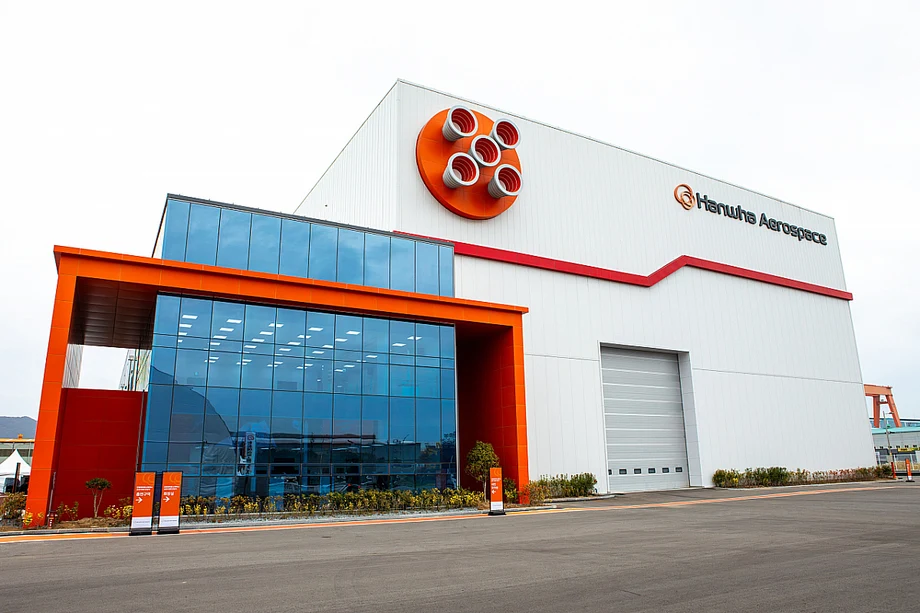
Hanwha Aerospace is preparing to develop South Korea's first orbital transfer vehicle, with a demonstration planned for 2029 that would deliver one small satellite into low Earth orbit and carry a communications satellite toward the Moon. The mission is scheduled to ride on the eighth launch of the domestically developed Nuri rocket.
Contents
- A new spacecraft to carry Nuri's payloads farther
- What happens after the rocket arrives?
- Two deliveries on the 2029 mission
- Two funding figures need clarification
- The milestones leading to launch
- Hanwha's growing role in Nuri
- Why satellite operators want a more precise delivery
- A complementary service for launch companies
- What the demonstration must deliver
- Key Points
Nuri would place the vehicle into an orbit about 300 kilometers above Earth. From there, the spacecraft would release a CubeSat, a small satellite built from standardized units, before using its own propulsion to travel onto a lunar transfer trajectory and deploy the communications satellite at its intended release point.
The Korea AeroSpace Administration, known as KASA, selected Hanwha Aerospace to lead development of the flight model, the version of the vehicle intended to operate in space. The company signed its development agreement with the agency in August, and KASA announced the agreement on October 22. Design work is scheduled to begin in 2026.
The mission would bring together a Korean rocket, a Korean orbital transfer vehicle and a Korean communications satellite intended for lunar orbit. Its practical purpose is to extend the journey that South Korea's launch system can provide, taking a payload beyond the initial orbit reached by Nuri.
What happens after the rocket arrives?
Nuri and the transfer vehicle have different jobs. The rocket supplies the power needed to climb from Earth into space and place its payload into orbit. The transfer vehicle then changes that orbit, carrying satellites toward destinations that the initial launch does not directly reach.
Kang Hyunwoo, head of KASA's Space Science Exploration Mission Design Program, explained the division of work:
If the Nuri rocket is about sending satellites into space, OTV is about transporting them to their final destination in space,
An orbital transfer vehicle, or OTV, is therefore a spacecraft with a transport role. KASA's project calls for developing and demonstrating a flight model capable of deploying satellites into multiple orbits and carrying out a lunar transfer mission. The wider uses described for the technology include repositioning satellites and supporting exploration.
Two deliveries on the 2029 mission
The planned demonstration gives the vehicle two distinct delivery tasks. First, it would deploy one CubeSat in low Earth orbit, the region relatively close to the planet where many observation and research satellites operate. It would then continue toward the Moon with the communications payload.
A lunar transfer trajectory is a route from Earth's vicinity toward the Moon. Reaching that route and entering a stable orbit around the Moon are different stages of a journey. The stated demonstration sequence takes the vehicle from its initial Earth orbit to a lunar transfer orbit, where it would release the communications satellite at the target location.
The distinction matters for understanding the mission: Nuri provides the initial launch, while the transfer vehicle supplies the next stage of transportation. The communications satellite is intended for lunar orbit, but the announcement does not detail the propulsion or operating sequence for its final arrival there.
Successfully releasing payloads at two different stages would demonstrate a service beyond carrying several satellites to the same general destination. The vehicle would need to manage its own flight after separation from Nuri, deploy the first satellite and then continue with the second.
Two funding figures need clarification
The development plan puts government funding for the flight model at 70 billion won over 2026 to 2029. KASA's July 20 description of the project, however, gave an investment figure of 40 billion won through 2029. The difference is 30 billion won, large enough to matter when assessing the scale of the program.
The selection chronology also contains a discrepancy. Hanwha's selection is dated to June in the project announcement, while KASA's July 20 description said the selection of a research and development institution was still underway. The August agreement and October 22 announcement provide the subsequent contractual milestones.
The reason for the different funding totals and the overlapping selection accounts has not been explained. Both descriptions place the project within a development effort ending in 2029, when the vehicle is expected to demonstrate its capabilities aboard Nuri's eighth flight.
KASA's request for proposals identifies the central technical objectives: deployment into multiple orbits, a lunar transfer mission, and development and demonstration of the actual flight vehicle. Those objectives connect the spending to a specific mission rather than a research study alone.
The milestones leading to launch
Hanwha's agreement moves the project toward design and construction of hardware intended for flight. The schedule links that work to Nuri's launch program, making progress on both the rocket and the transfer vehicle relevant to the planned demonstration.
- June: Hanwha Aerospace was identified as the selected lead developer.
- July 20: KASA described the project objectives, a 40 billion won investment plan and an ongoing selection process.
- August: Hanwha signed the flight model development agreement with KASA.
- October 22: KASA announced the agreement.
- 2026: Design work is scheduled to begin.
- 2029: Nuri's eighth launch is planned to carry the vehicle for its deployment and lunar transfer mission.
The 2029 flight is a demonstration target. The task is to turn the transport concept into a working spacecraft and show that it can complete the planned sequence in space.
Hanwha's growing role in Nuri
Hanwha already has a substantial role in the launch system that would carry the new vehicle. On Nuri's fourth launch, the company led the rocket's manufacturing and assembly, coordinating more than 300 partner companies. That mission placed a science satellite weighing 516 kilograms and 12 CubeSats into an orbit roughly 600 kilometers above Earth.
The fourth flight demonstrated the release of multiple payloads into a similar orbit. The planned transfer vehicle mission would add a different capability: taking payloads from the initial delivery orbit toward separate destinations. Its starting altitude of about 300 kilometers is also different from the roughly 600 kilometers used on the fourth flight.
South Korea's division of responsibilities is changing alongside the hardware. For the fourth launch, industry led production and assembly while the government retained final launch authorization and mission management. Hanwha's transfer vehicle agreement gives the company another development role within the national space program.
The Nuri schedule previously set out fifth and sixth flights for 2026 and 2027, with officials preparing a budget request for a seventh flight in 2028. The transfer mission's place on the eighth launch connects it to that continuing effort to establish regular access to space.
Why satellite operators want a more precise delivery
Satellite companies often share a rocket with other customers to reach space. Such services carry several payloads on one launch, but the rocket generally delivers them to a predetermined orbit. A satellite may then need its own propulsion to reach the orbit its operator wants.
An orbital transfer service could take over part of that journey. Instead of accepting only the rocket's common delivery orbit, a customer could pay for transportation closer to the satellite's intended working location.
Lee Jeongkyu, a director at satellite company Nara Space, described the attraction and the commercial condition attached to it:
Shared launches are like taking an intercity bus since you can only go as far as the set orbit, but with OTV, you can travel directly to the customer's desired orbit,
Lee said domestic services could attract users if their prices were competitive. For satellite operators, that places cost alongside orbital accuracy as a practical consideration. A transport system must meet a customer's delivery needs at a price the mission can afford.
A complementary service for launch companies
Launch company Innospace views rockets and orbital transfer vehicles as complementary systems. A company official described the rocket as the means of reaching space and the OTV as the means of completing the journey to the final destination.
The commercial opportunity comes from separating those tasks. A launcher could deliver payloads into a standard initial orbit, while a transfer vehicle handles subsequent changes. The Innospace official identified deployment of multiple satellites into different orbits, lunar missions and missions farther into space as possible services.
Private companies overseas are also investing in orbital transport research. South Korea's project aims to build a domestic capability in the same field, with a defined demonstration combining an Earth orbit delivery and a lunar transfer.
KASA describes the effort as an expansion of Nuri's use. For customers, the meaningful change would be a broader choice of destinations after launch. For Korean space companies, it would create another part of the transport service to develop and potentially sell.
What the demonstration must deliver
Hanwha's immediate assignment is development of the flight model, starting with the design phase in 2026. The planned mission gives that work a concrete test: separate from Nuri, release the CubeSat, continue toward a lunar transfer orbit and deploy the communications satellite.
South Korea would gain experience operating a transport spacecraft beyond the rocket's initial delivery point. The mission would also bring the country's launch manufacturing and spacecraft development efforts into one sequence aimed at a lunar destination.
Commercial demand will depend on whether the service can deliver satellites where customers need them at a competitive price. The first scheduled step is the 2029 demonstration, when the planned combination of Nuri and the transfer vehicle is due to be tested in flight.
Key Points
- Hanwha Aerospace will lead development of South Korea's first orbital transfer vehicle, with design work scheduled for 2026.
- The vehicle is planned to fly on Nuri's eighth launch in 2029, starting in an orbit about 300 kilometers above Earth.
- The mission would release one CubeSat in low Earth orbit before carrying a communications satellite toward a lunar transfer destination.
- The development plan gives funding of 70 billion won for 2026 to 2029; KASA's July description gave 40 billion won through 2029.
- The project would extend Nuri's transport capability, while commercial use would depend partly on competitive pricing.