A river crisis reaches farms, homes and hospitals
Residents in Thailand's Prachin Buri river basin are seeking more than 30,000 signatures to demand a pollution control zone after mass fish deaths, abnormal metal test results and concerns over industrial waste carried by floodwater. More than 100 affected residents, fish farmers and members of the Rak Prachin Buri Network gathered at Wat Hat Sakae in Mueang district on October 31 to organise the campaign.
Contents
- A river crisis reaches farms, homes and hospitals
- Fish farmers lose a season's income
- What the corrected water tests show
- A landfill shutdown and competing findings
- Health monitoring extends for at least two years
- Why boiling suspect water is not enough
- Food supplies and waste tracking face scrutiny
- Factory inspections widen across five provinces
- The next decisions residents are waiting for
- Key Points
The network plans to submit its complaint on November 4 to the permanent secretary of the Ministry of Natural Resources and Environment and the chair of the National Environment Board. It wants authorities to invoke Section 59 of the Enhancement and Conservation of National Environmental Quality Act B.E. 2535 (1992) to designate the river basin and its tributaries as a pollution control zone.
Farmers describe losses reaching hundreds of millions of baht across Si Maha Phot, Mueang and Ban Sang districts after flooding and receding water in late September. Network representatives also cite abnormal heavy metal findings in 73 residents of Khok Pip, in Si Mahosot district, where some people reported chest tightness and difficulty breathing.
Government investigations now cover river water, canals, industrial facilities and household water supplies. The Department of Disease Control has established an emergency operations centre and promised at least two years of health monitoring for people at risk.
The central scientific question remains unresolved: which contaminants came from which locations, and what caused the fish deaths. Deputy government spokesperson Lalida Periswiwatana said on October 25, 2026, that investigators were still examining the source of aluminium in the river and its possible connection to the deaths.
Fish farmers lose a season's income
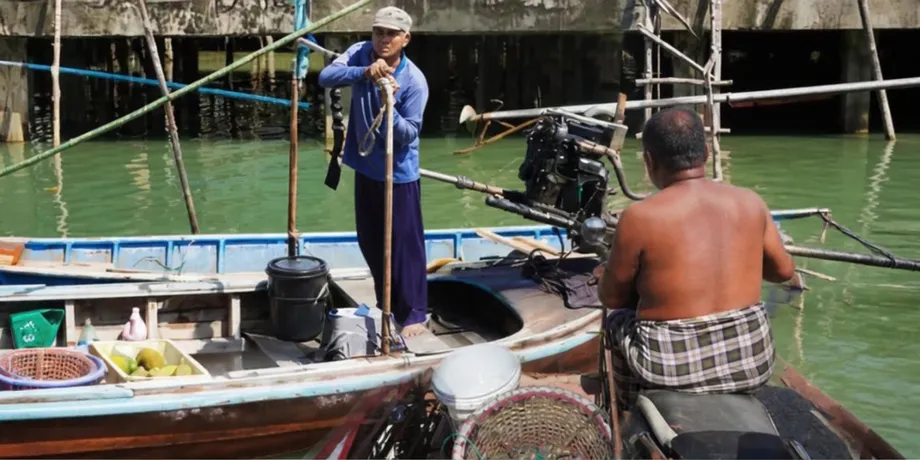
Pharadon Phasit, a Mueang district farmer known as Beer Pla Krachang, said red tilapia and Nile tilapia in four cages died before their planned sale at New Year. He put his losses at more than 500,000 baht. For a farmer relying on that harvest, the damage removes the income expected to repay feed bills and other production costs.
Farmer representative Montee Khamrot said affected producers already carried heavy debts and had received disaster compensation of only 390 baht per square metre. Actual losses, he said, could reach hundreds of thousands of baht for a single fish cage.
The compensation rate measures the area affected, while farmers describe losses in terms of fish, equipment and money invested before sale. Without the dimensions of each cage and the details of individual awards, a precise compensation shortfall cannot be calculated. Their complaint is that the payments leave much of their investment uncovered.
Pharadon blamed inadequate inspections of upstream factories in Kabin Buri and Si Maha Phot. Network representative Busabong Chawankanha said the crisis had grown beyond what local authorities could manage and required action across the basin. The petition is collecting signatures online and in person from affected people in five districts.
What the corrected water tests show
The Pollution Control Department corrected its published results on October 24 after ammonia and aluminium figures were mistakenly interchanged. The correct concentrations were 0.22 to 0.48 milligrams per litre for ammonia and 0.559 to 3.547 milligrams per litre for aluminium. The department apologised and said it would tighten checks against original laboratory records before releasing future results.
Two of five sampling sites were selected for further investigation. Aluminium measured 3.547 milligrams per litre at Pak Nam Ban Nong Hoi bridge and 0.874 milligrams per litre at the bridge over the Prachin Buri River in Kabin Buri subdistrict.
Aluminium occurs naturally in soil and rocks, and runoff can carry it into waterways. Industrial wastewater can also introduce it. Investigators therefore need to examine the movement of water, nearby activities and the chemical conditions at each sampling location to identify its source.
Fish respond differently to aluminium depending on the water's acidity, hardness, dissolved organic material and the chemical form of the metal. Exposure time also matters. Acidity is commonly expressed as pH, while hardness describes dissolved minerals in the water. Those conditions help determine how readily a substance can affect aquatic animals.
The department plans to collect sediment from the river and tributaries after flood conditions return to normal, including around the two bridge locations. Sediment is material settled on the riverbed, where pollutants can accumulate. Testing it will help investigators examine contamination that a sample of flowing water may miss.
A landfill shutdown and competing findings
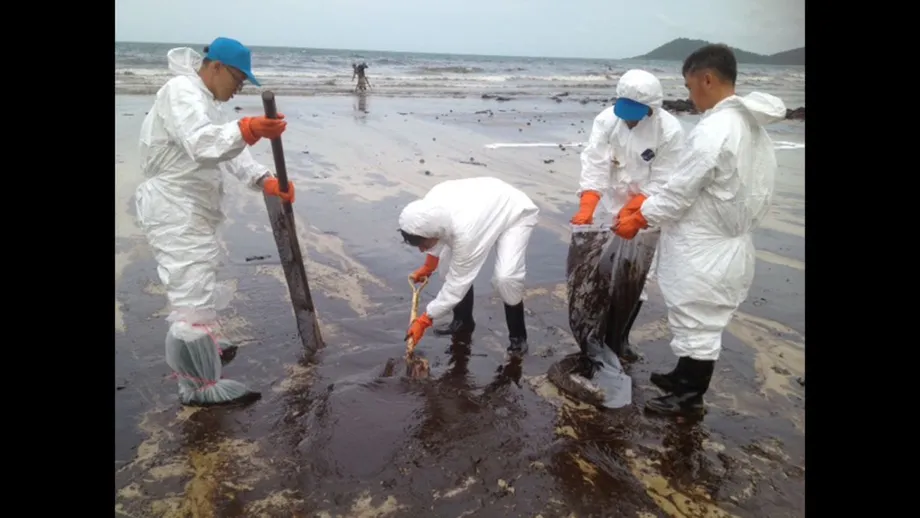
The Department of Industrial Works temporarily suspended Green Environment Technology Co., Ltd.'s operations under a Section 39 order after floodwater overflowed its industrial waste landfill in Hua Wa, Si Maha Phot district. The overflow produced an oil like sheen on the water.
The Rak Prachin Buri Network cited a petroleum hydrocarbon measurement of 114,860 milligrams per litre associated with the Hua Wa landfill incident. Industry Minister Varawut Silpa-archa, however, said initial inspections found an oil slick but detected no toxic substances. Detailed sampling dates, locations and laboratory methods for those findings were not given, leaving their relationship unresolved.
Petroleum hydrocarbons are a broad group of substances associated with oil and fuel. Investigators need the composition of a sample, as well as its concentration, to assess the risks and trace where it originated.
Regional Environment Office 7 also examined water upstream of the Khlong Phet Oem sluice gate. Inspectors found brownish black water with a slight smell and measured volatile organic compounds at 0.8 parts per million at one of five sampling points. These are chemicals that can readily enter the air. The Pollution Control Department assessed the measured level as posing no significant health risk.
The sluice gate had not yet been opened to release that canal water into the Prachin Buri River when it was inspected. Mapping such connections is part of determining how contamination could move between industrial sites, canals, village water supplies and the main river.
Health monitoring extends for at least two years
Department of Disease Control director general Dr Montien Kanasawat announced on October 27 that an emergency operations centre had been established for the flooding and seepage from the industrial waste landfill. Its work includes medical readiness, diagnosis, hospital referrals and continued monitoring with local health services.
Teams screened people living between two and seven kilometres from suspected contamination sources from October 6 to 16, collecting blood and urine samples. Of 613 people screened, 497 reported no symptoms and 116 reported symptoms, mostly skin problems such as itching, red rashes and blisters. That is approximately 19% with symptoms, calculated from the department's figures.
The network's figure of 73 residents with abnormal heavy metal findings refers to urine testing in Khok Pip. An October 28 government response also described elevated blood metal levels among residents in the area. The identities of the metals, individual concentrations and overlap between those groups were not disclosed.
Health teams will follow people at risk for at least two years through primary care services and Si Mahosot, Si Maha Phot and Chao Phraya Abhaibhubejhr hospitals. Continued follow up gives doctors a way to track symptoms and test results after the immediate flooding has ended.
Natural Resources and Environment Minister Suchart Chomklin ordered further environmental checks on October 28. Pollution Control Department director general Surin Worakijthamrong assigned Regional Environment Office 7 in Saraburi to sample canals in Khok Pip and Khu Lam Phan, including untreated water used to produce village tap water.
Why boiling suspect water is not enough
The Department of Medical Services and Nopparat Rajathanee Hospital warned residents that boiling water does not remove dissolved aluminium or other heavy metals. Heating can kill many germs, but dissolved metals remain in the water.
Medical Services director general Dr Weerawut Imsamran advised people to avoid using water suspected of contamination for drinking, cooking, washing fruit and vegetables, or brushing teeth until local authorities confirm it is safe. Residents have already described discoloured, foul smelling tap water and the added expense of buying drinking water.
Nopparat Rajathanee Hospital director Dr Piyawat Laohathai explained that the body absorbs only a small proportion of ingested aluminium and removes absorbed aluminium through the kidneys. People with kidney disease need particular care because their ability to remove it may be reduced. Sustained exposure to high amounts can affect the nervous system, bones and muscles.
Health authorities advised residents to avoid suspect water and sediment, wear boots and suitable protection when contact is unavoidable, cover wounds, and wash with clean water afterward. People with nausea, vomiting, stomach pain, diarrhoea or skin irritation should seek medical assessment and describe their exposure. Breathing difficulty, seizures or confusion require urgent hospital care.
Environmental specialist Sonthi Kotchawat called for clean water distribution, checks on both untreated source water and finished tap water, mobile medical teams and publication of laboratory results. He also urged restrictions on using affected canal water and aquatic animals while investigations continue. Those restrictions were his recommendations.
Food supplies and waste tracking face scrutiny
The Prachin Buri Provincial Fisheries Office released results on October 21 from nine aquatic animal samples collected in four districts. Mercury, cadmium and lead were within the standards used for assessment in all nine samples. Aluminium was outside the scope of those tests.
The Department of Disease Control advised people to avoid eating aquatic animals and agricultural produce from potentially contaminated areas until relevant agencies confirm safety. The network also raised concerns about contamination reaching the food chain and crops such as Prachin Buri durian. No crop test results were announced in the accounts of the investigation.
Sumet Rianphongnam, an environmental community rights defender with the Khon Rak Krok Sombun group, described discarded solvent containers, electronics and bottles on land in Krok Sombun. He said runoff from dumping sites could reach village water supplies, rice fields, irrigation canals and rivers.
Sumet called for closer tracking of industrial waste from its origin to its final disposal:
Every batch of waste should be traceable,
His demand connects the immediate cleanup to a wider enforcement problem: officials need to identify who produced the waste, who transported it and where it was supposed to go. The network also alleged that industrial waste power plant projects in Lat Takhian had been divided into smaller projects to avoid environmental impact assessment requirements.
Factory inspections widen across five provinces
Varawut said the Industry Ministry would begin an inspection operation on November 1 targeting factories in categories 105 and 106, which cover waste treatment, disposal and recycling activities. Thailand has 3,049 such factories, with more than 1,500 in Chon Buri, Rayong, Chachoengsao, Prachin Buri and Samut Prakan, close to half the national total.
Inspection teams will include the Department of Industrial Works, provincial industry and environment offices, local administrative officials, soldiers and police. Priority will go to locations considered at high risk, facilities subject to public complaints and factories that have failed to complete previously ordered corrections. The ministry aims to report progress within one week of the launch.
Varawut said factories failing to meet correction requirements could face closure and that inspectors would examine possible nominee arrangements, in which another person is used to hold an interest or position to avoid legal requirements.
The ministry is also preparing amendments to the Factory Act and plans to work with the Anti-Money Laundering Office to make environmental offences predicate offences under money laundering law. That proposed change would give authorities another route to investigate proceeds and assets connected to environmental crime.
The next decisions residents are waiting for
The residents' campaign seeks more than individual factory inspections. Busabong called for a special task force to trace pollution sources, assess how much pollution the area can bear and apply the polluter pays principle. Under that principle, those responsible for contamination would pay for restoring the environment.
The dates announced so far show how the response has expanded from flood damage to health monitoring, laboratory checks and planned enforcement:
- Late September: Flooding and receding water accompanied mass fish deaths in the river basin.
- October 6 to 16: Health teams screened residents near suspected contamination sources.
- October 24: The Pollution Control Department corrected the ammonia and aluminium figures.
- October 27 to 28: Authorities announced extended health monitoring and further water sampling.
- October 31: Residents met at Wat Hat Sakae and launched their signature campaign.
- November 1: The Industry Ministry plans to begin inspections across five provinces, with progress expected within a week.
- November 4: Campaigners plan to submit their pollution control zone complaint.
No decision date has been announced for the requested designation, and sediment sampling depends on flood conditions returning to normal. For farmers, the immediate needs are compensation and a reliable basis for deciding when to restock. For households, they are safe water and clear information about exposure.
Siri Phon, a 77 year old Hat Sakae resident, said previous annual floods had never brought such severe effects. She urged authorities to repair the ecosystem before the damage becomes irreversible. Her concern captures the demand behind the petition: recovery must reach the river, farms and village water systems as well as the factories under investigation.
Key Points
- Residents seek more than 30,000 signatures for a Prachin Buri river basin pollution control zone.
- A complaint is planned for November 4 under Section 59 of the 1992 environmental law.
- Corrected river tests recorded aluminium at 0.559 to 3.547 milligrams per litre; its source and connection to fish deaths remain under investigation.
- Health teams screened 613 people, including 116 with symptoms, and plan monitoring for at least two years.
- Medical authorities warn that boiling does not remove dissolved aluminium or heavy metals.
- Factory inspections across five provinces are scheduled to begin November 1.