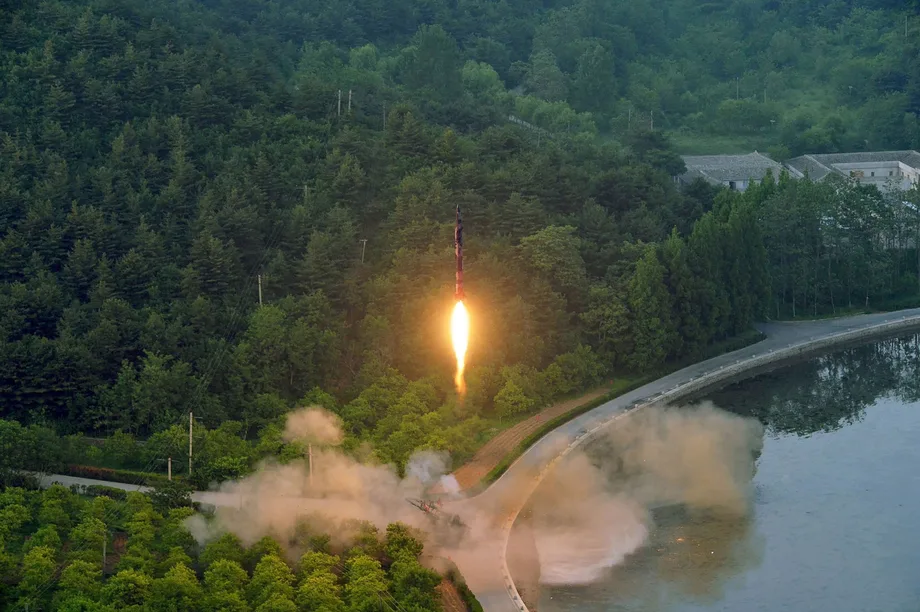
A Launch at Dawn, Two Days Before the Summit
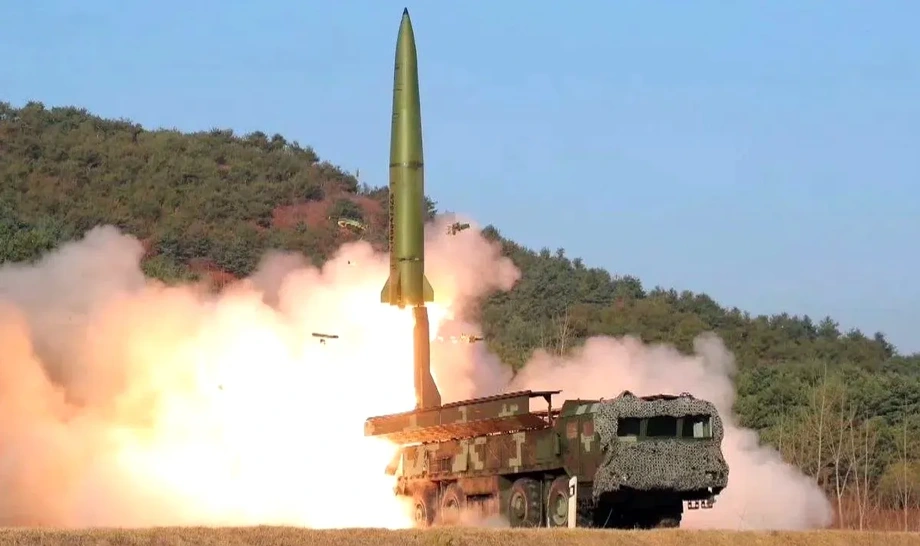
North Korea fired a ballistic missile from the area of Sinpo on its east coast at 6:42 a.m. on Wednesday, April 5, 2017, and it came down in the Sea of Japan, the water that lies between the Korean peninsula and Japan. South Korea's Joint Chiefs of Staff gave the time and the launch site, and U.S. Pacific Command confirmed the test. It came two days before Donald Trump was due to welcome Xi Jinping for the first summit between the two leaders, set for Thursday and Friday.
Contents
The clock gave the launch two dates. At 6:42 a.m. in Seoul it was still 2142 GMT on Tuesday, April 4, in Washington, so records of the North's missile programme list this test under April 4 and under April 5. For the governments closest to the launch, it happened on Wednesday morning.
U.S. Pacific Command described the weapon as a "KN-15 medium range ballistic missile" fired from a "land-based facility". The detail about the launch site carried weight. Sinpo is where North Korea has tested missiles fired from submarines, and a missile that leaves from a fixed position on land uses a different method from those earlier tests.
Two Statements, Two Descriptions
Seoul's military supplied the when and where, and the U.S. command supplied the label and the launch method. Rex Tillerson, the U.S. secretary of state, added a statement that read less as a condemnation than as a refusal to keep repeating one.
North Korea launched yet another intermediate range ballistic missile. The United States has spoken enough about North Korea. We have no further comment.
The two American statements did not use the same words for the weapon. Pacific Command called the missile medium range, and Tillerson called it intermediate range. Both terms describe missiles that fly further than the short range weapons able to reach any point in South Korea and less far than the intercontinental missiles built to reach the United States. The boundary between the two categories comes from convention rather than from physics, and the difference in wording was left unexplained.
Tillerson's closing line set the tone for the week. With the summit two days off, Washington wanted the North Korean file placed in front of Beijing rather than answered launch by launch.
What the Missile's Name Reveals
North Korea names its own missiles, using Hwasong and Pukguksong among other names, and those names appear in its state media. American intelligence agencies use a separate shorthand, the KN numbers, and the two systems do not line up neatly. Pacific Command's KN-15 label belongs to the missile the North calls the Pukguksong-2, the weapon it first flew on Feb. 11, 2017.
Records of the April launch name the missile as a Hwasong-12 and record that the test failed. Identifying a new missile from outside is hard work, and a launch that ends early leaves watchers with less of a flight path to measure than one that runs its full course. Pacific Command's statement gave no distance and no result.
Sinpo, on the east coast, holds a submarine base and has been used for tests of missiles built to be fired from submarines. A launch from land there does not need a submarine, a crew and calm water, the three things a sea launch depends on, and it shortens the preparation a firing requires.
Six Weeks of Testing
The April launch was the third major test in less than two months, each with a different missile and a different result.
- Feb. 11, 2017: A Pukguksong-2 crossed the Sea of Japan in the first flight of the North's new medium range ballistic missile.
- March 6, 2017: Four Hwasong-9 missiles left the Tongchang-ri site in the northwest, and some flew 1,000 km (620 miles) before falling into the Sea of Japan.
- April 4 and 5, 2017: A Hwasong-12 fired from Sinpo failed, two days before the summit.
Early accounts of the first two tests gave the dates as Feb. 12 and March 5.
Three different missiles in six weeks, with one success, one partial success and one failure, is a testing schedule that covers several designs at once. The Pukguksong-2 belongs to a family built to be launched from a submarine or from a canister on the ground. The Hwasong-9 is an older weapon the North fires in batches. The Hwasong-12 is a newer design with a longer reach. Each test tells engineers something the previous one could not.
What Trump Asked of Xi
Four days before the launch, the Financial Times published an interview in which Trump set out what he wanted from the Chinese president and what would follow if it did not arrive.
China will either decide to help us with North Korea, or they won't. And if they do that will be very good for China, and if they don't it won't be good for anyone.
China is North Korea's largest trading partner and its main supplier of fuel and food, which makes Beijing the one government able to give economic pressure real weight. Washington has no diplomatic relations with Pyongyang and no trade of comparable size to bargain with, so its leverage runs through the Security Council and through the Chinese border.
The summit gave the two presidents one working day, Friday, after Thursday's arrival and formal meetings. North Korea was set to sit high on the agenda in a week in which the North had just shown it would keep testing whatever the diplomatic calendar said.
Sanctions Already on the Books
North Korea faced severe sanctions from the UN Security Council over a series of launches in 2016, measures that came on top of the penalties imposed after two nuclear tests that year. Security Council sanctions on the country have been built to cut the foreign currency that pays for its weapons work, through limits on exports of coal and minerals and through restrictions on banks and cargo ships. Those measures only bite if the states that trade with North Korea enforce them, and China handles most of that trade.
Every launch after a resolution becomes evidence in the argument over whether the resolutions work. The April test handed Washington a fresh case two days before its president sat down with the leader whose cooperation the sanctions need.
The U.S. government said it was ready to consider all options to contain the North Korean threat, a formulation that leaves the choice of those options open and says nothing about what they might be.
What the Launch Left Open
Neither military announcement gave the distance the missile covered or the height it reached. The Joint Chiefs of Staff named the launch site and the minute of the launch, and Pacific Command gave the designation and said the missile came from land. What the North meant the launch to test has not been made public, and no claim of success went with it.
Whether the summit would produce a joint statement on North Korea, or any Chinese commitment on enforcement, had not been settled before the meetings began. Trump's own account of the choice awaiting Xi suggested that Washington expected a clear yes or no rather than a gradual tightening.
The launch also fixed the shape of the problem for the two U.S. allies in the region. The missile flew from North Korea's east coast into the Sea of Japan, water that Japan and South Korea both border, which is why both governments tracked the flight and both want the programme halted.
Key Points
- North Korea fired a missile from the Sinpo area at 6:42 a.m. on Wednesday, April 5, 2017, and it fell into the Sea of Japan.
- U.S. Pacific Command called it a KN-15 medium range ballistic missile launched from a land-based facility.
- Secretary of State Rex Tillerson said the United States had "spoken enough about North Korea" and had no further comment.
- The test came two days before the first summit between Donald Trump and Xi Jinping, on Thursday and Friday.
- Trump told the Financial Times that China would either help or not, and that if it did not "it won't be good for anyone".
- Earlier tests included a Pukguksong-2 on Feb. 11 and four Hwasong-9 missiles on March 6, some of which flew 1,000 km.
- Records of the April launch identify the missile as a Hwasong-12 and record the test as a failure.
- North Korea was under severe UN Security Council sanctions imposed over launches in 2016 and two nuclear tests.