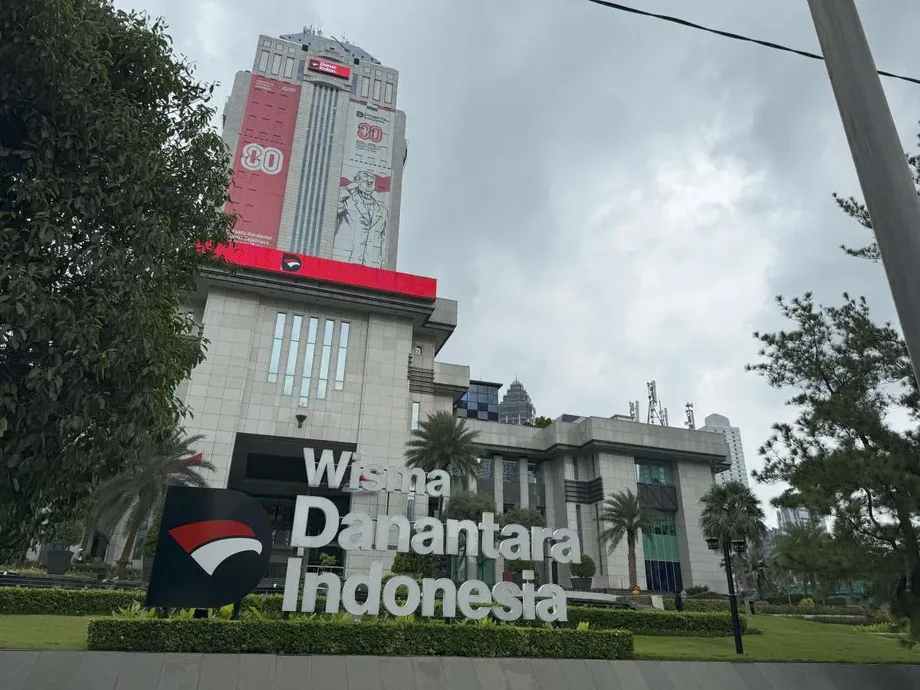
Danantara names three habits that keep state firms from making money
Indonesia's sovereign wealth fund Danantara told a parliamentary committee on Thursday 26 November 2026 that three habits have kept many of the country's state companies from earning a profit: dressing up the books, pouring money into projects that never earn back their cost, and hiding improper deals inside subsidiaries. The findings came from Dony Oskaria, chief operating officer of the fund, in a hearing with Commission VI of the House of Representatives in Jakarta.
Contents
- Danantara names three habits that keep state firms from making money
- Books dressed up, and accountants called in
- A Rp26 trillion furnace that never ran
- Why subsidiaries became the hiding place
- From more than 1,000 companies toward 380 and then 600
- What the cuts have produced so far
- Tax payments now count for more than dividends
- Three years of tax relief to speed up the mergers
- Four labels, one decision for each company
- The 2027 queue: plantations, the post office, trains and builders
- Key Points
Danantara, formally Badan Pengelola Investasi Daya Anagata Nusantara, holds and manages the state's stakes in a sprawling collection of companies, from airlines and steel mills to fertiliser makers, a pawnshop chain and railway builders. Its answer to those three problems is a combination of audits, new approval rules and a sweeping reduction in the number of companies under its wing. The cleanup is still running, and Dony said the aim is a smaller, leaner set of companies that earn money from their main business rather than from side ventures.
The government's stake in these companies, known in Indonesia as BUMN, matters to the budget. The fund's companies paid Rp567 trillion in tax in 2025, a sum Dony put at roughly three times the net contribution dividends used to make after money handed back through state capital injections was subtracted.
Books dressed up, and accountants called in
Dony named financial engineering as the first problem. The phrase describes transactions and accounting choices arranged to make a company look healthier or more profitable than its operations justify, such as moving losses between entities, revaluing assets or rearranging debt. Dony said the practice had spread widely across the portfolio.
The first is financial engineering. A lot of financial engineering has happened on a massive scale in our companies.
To counter it, Danantara has brought public accounting firms, known in Indonesia as KAP, into the cleanup. Dony did not say how many firms are involved or what they are reviewing. The intent is that independent auditors check the numbers behind restructuring decisions, so the same accounting tricks do not survive the process.
A Rp26 trillion furnace that never ran
The second problem is investment without a reckoning of what it returns. Dony said many state companies committed money without measuring the return on investment, the profit an asset is expected to generate over its life compared with what it cost. Two examples came up in the hearing: Kimia Farma, the state pharmaceutical maker, whose factories run at low utilisation, meaning a large share of its production capacity sits idle; and Krakatau Steel, the state steelmaker, which carries a blast furnace built with Rp26 trillion of investment that Dony said has never operated since construction.
Starting with Kimia Farma, where utilisation is low, then Krakatau Steel, which to this day faces problems with the blast furnace and a Rp26 trillion investment, but from the day it was built until today it has never run. There are many cases like this.
Krakatau Steel's wider finances have started to turn. The company booked a net profit of US$10.94 million in the first half of 2026, against a loss of US$105.38 million in the same period a year earlier, according to figures Dony presented at a press conference on the fund's 2025 financial report the day before the hearing.
The fix Danantara has settled on is procedural. No investment can now be approved by a company's board alone. Every decision must pass through an investment committee set up inside each company.
To guard against this in future, everything has to go through an investment committee. No investment can be decided on its own any more, by the board, but has to go through the investment committee at each company.
Why subsidiaries became the hiding place
Fraud is the third problem, and Dony described one mechanism in detail: layering transactions through subsidiaries. A state company sets up a series of child companies, and because those children are not audited and do not carry BUMN status, they sit outside the scrutiny that applies to the parent. Deals can then be routed through them for purposes the parent would not survive being asked about.
This needs to be said: most of our pattern is to build subsidiaries, and then those subsidiaries, because they are not audited and are not state firms, get used for things that are not good.
Subsidiaries also create waste even without bad intent. Dony said many of them exist only to take work from the parent or from other units inside the same group, which lengthens the chain of companies handling a single job and adds cost at every link. That is the reasoning behind the closures.
From more than 1,000 companies toward 380 and then 600
Danantara has so far streamlined about 380 companies, a count Dony gave at the press conference at Wisma Danantara in Jakarta on Wednesday 25 November 2026 and repeated at the hearing the next day. The tools are mergers, divestments and other schemes that fold one company into another or shut it down.
This has been closed, which is why up to now we have streamlined almost 400, exactly about 380 companies. We hope that by the end of the year we can complete 600 companies that will be closed.
The target for the end of 2026 is about 600 companies. Rosan Roeslani, the fund's chief executive, went further in October 2026, telling a plenary cabinet session marking two years of the Prabowo Subianto government that the figure could reach 700 by the end of December.
So our target of streamlining, God willing, reaching 700 companies, can be realised at the end of December, Mr President.
The end point is a far smaller portfolio than the one Danantara inherited. Dony has said the goal is roughly 200 state companies, down from more than 1,000 units at the start. No deadline for reaching that 200 has been given.
What the cuts have produced so far
Danantara points to several companies where the reshaping has already changed the numbers. The largest gain comes from energy. Pertamina's downstream operations were consolidated, with the business segment of Pertamina International Shipping folded into Pertamina Patra Niaga and the refining business placed under Pertamina International Refinery.
In the last six months we booked US$1 billion in additional profit from this.
At Pupuk Indonesia, the state fertiliser group, the business model moved from cost-plus pricing, where a price is built up from costs plus a margin, to market pricing, where prices are set against what the market will bear. Dony said that change lifted profit by as much as 200%. A percentage gain of that size implies a tripling of profit, and Danantara has not published the rupiah figures behind it.
Other results are spread across the portfolio. Garuda Indonesia added 20 aircraft deemed fit to fly, bringing its operating fleet to 104 planes as of September 2026. The four state investment managers were merged into Danareksa Investment Management Indonesia, together holding more than Rp170 trillion in assets. Pegadaian, the state pawnshop network, is projected to post profit of up to Rp11 trillion. Semen Indonesia, the cement maker, is in the middle of a turnaround. Rosan has put profitability across the portfolio at a projected Rp334 trillion by the end of 2026.
Tax payments now count for more than dividends
The way Danantara measures what state firms give back to the state has changed. Under the old arrangement, the government received dividends but also handed money back through state capital injections, known as PMN, which are funds provided to companies to shore up their balance sheets. Dony said no company in the portfolio asked for a capital injection during 2025.
If we compare the dividends previously paid to the government minus the amount of capital injection requested, and compare that with today's tax payments, the increase is significant.
In 2021 and 2022, the net flow ran the wrong way, with capital injections larger than the dividends received. The figure turned positive at about Rp40 trillion in 2023. Tax payments reached Rp567 trillion in 2025, up by roughly Rp80 trillion from about Rp480 trillion in 2024, and Danantara projects about Rp650 trillion for 2026, an expected rise of about Rp100 trillion.
In 2025 we gave taxes to the government of Rp567 trillion. In 2026 our rough calculation is up to around Rp650 trillion. Compared with the increase in the taxes we give, compared with BUMN dividends minus capital injections in the past, we are already three times larger.
Three years of tax relief to speed up the mergers
Restructuring on this scale involves moving assets and merging entities, both of which normally trigger tax bills. A government regulation on the management of Danantara provides that taxes connected to the streamlining are waived for three years, and Dony said a finance ministry regulation to put the rule into practice is due shortly from Finance Minister Suahasil Nazara.
Thank you to the Finance Minister, because in our management regulation it is set out that during the three year streamlining process the taxes connected to streamlining are freed. We are grateful that the regulation is out, and the minister will issue the implementing rule soon.
Without the relief, Dony said, the tax cost of the consolidation would be very large and would slow the work. He framed the three year window as the reason the streamlining can be finished within that period. He did not say what happens to deals that run past it, and the 2027 agenda below stretches beyond the first wave of closures.
Four labels, one decision for each company
Danantara sorts companies after measuring them against global peers on a fixed set of tests: the business model, where revenue comes from and how it is composed, the cost structure, and the EBITDA margin, a measure of operating profit before interest, tax, depreciation and amortisation are counted. The fund also weighs the outlook for the industry a company operates in, to separate those with room to grow from those whose market is shrinking.
The result places each company in one of four groups.
- Liquidation, for companies whose assets and operating capacity are no longer enough to justify keeping them alive.
- Divestment, for companies running businesses outside the parent's focus, with ownership reshuffled through internal transfers or shares sold to outside parties.
- Consolidation, for companies in the same line of business that can be merged.
- Financial restructuring, as a last step for companies that need their finances repaired rather than their ownership changed.
Dony's example of a company that lost its focus was a state contractor that also ran hotels, water supply systems known as SPAM and fibre optic networks. Businesses that far from the parent's main work pull attention and capital away from it, which is what the divestment category is meant to correct.
The 2027 queue: plantations, the post office, trains and builders
Five larger restructurings are lined up for 2027, and Dony asked Commission VI for its agreement on them at the same hearing. Each has its own timetable.
- Plantations: PTPN is being finalised into three business groups, Palm Co for palm oil, Sugar Co for cane and sugar, and a third for tea, coffee, rubber and other crops. Financial obligations are being consolidated at the same time, with completion targeted for the first quarter of 2027.
- Post: Pos Indonesia needs an impairment of about Rp9.5 trillion to correct bookkeeping errors, a write down of assets to the value they should properly carry. Danantara targets the first half of 2027 to finish it.
- Trains: INKA, the state rail manufacturer, will be consolidated with the operator KAI, with the work hoped to finish in early 2027.
- High speed rail: KCIC, the operator of the Jakarta to Bandung Whoosh line, needs its financial obligations restructured and several functions reassigned so responsibilities sit where they belong. Dony said the process is almost final and should close early next year.
- Construction: the BUMN Karya group is last because its problems run deepest. Adhi Karya and PP have finished financial restructuring. The merger of Nindya Karya and Brantas Abipraya is targeted for this year, then Adhi Karya and PP will be merged, and Waskita Karya and Wijaya Karya will follow from early 2027.
BUMN Karya is the last to go through restructuring because of how deep the problems are. We accept that the condition is quite heavy.
What the closures mean in practice is fewer corporate layers between the state and the work being done. A subsidiary that only passes contracts along to its own parent adds cost without adding output, and Dony's argument is that removing those layers, alongside the investment committees and the audits, is how the portfolio stops repeating the losses of the past few years.
Key Points
- Danantara chief operating officer Dony Oskaria told Commission VI of the House of Representatives on 26 November 2026 that financial engineering, investment without return and fraud through subsidiaries have held back state company profits.
- Public accounting firms have been brought in to check the numbers, and every investment must now pass an investment committee rather than a company board alone.
- Examples cited were Kimia Farma's low plant utilisation and a Krakatau Steel blast furnace built with Rp26 trillion that never operated.
- About 380 companies have been streamlined, with about 600 targeted by the end of 2026; chief executive Rosan Roeslani has put the figure at up to 700.
- Pertamina's downstream consolidation added US$1 billion in profit over six months, Pupuk Indonesia's switch to market pricing raised profit by up to 200%, and Pegadaian is projected to earn up to Rp11 trillion.
- Tax payments from the portfolio reached Rp567 trillion in 2025, up from about Rp480 trillion in 2024, and are projected at about Rp650 trillion for 2026.
- A government regulation waives taxes linked to streamlining for three years, with an implementing finance ministry rule still to come.
- Five restructurings are queued for 2027: PTPN, Pos Indonesia with a Rp9.5 trillion impairment, INKA's consolidation with KAI, KCIC, and the construction companies.