What did North Korea order?
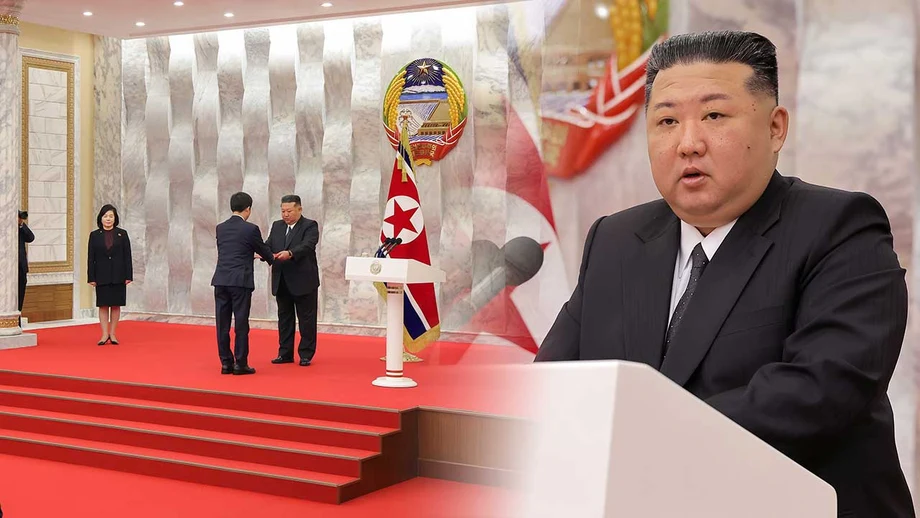
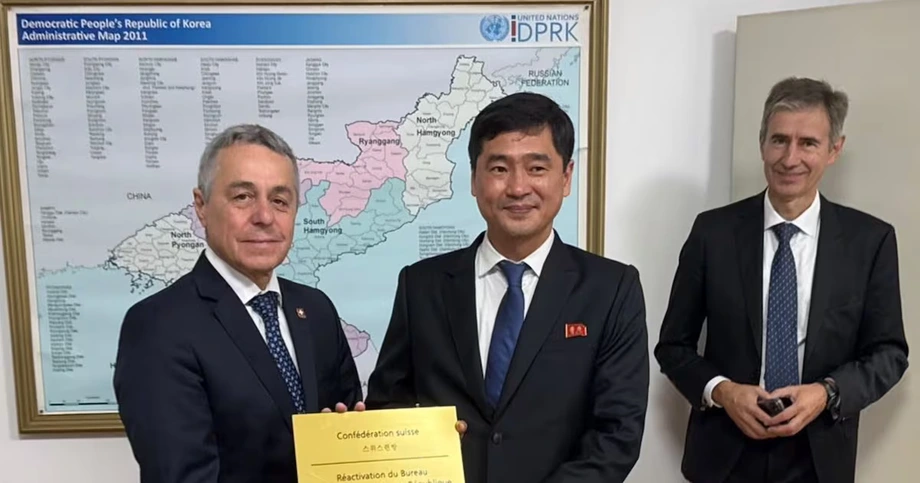
North Korea on November 25, 2026 ordered Switzerland to close its diplomatic office in Pyongyang and gave its chief, Sylvain Astier, 48 hours to leave the country. Park Hyon Su, director general for European affairs at North Korea's Foreign Ministry, summoned Astier and delivered a memorandum protesting Swiss sanctions on the Songdowon International Children's Camp. The order came 37 days after the office began normal operations on October 19, and less than a month after Swiss Foreign Minister Ignazio Cassis attended its formal opening.
Contents
- What did North Korea order?
- How did a threat become an expulsion in one day?
- Why was a children's camp added to Russia sanctions?
- What is Songdowon, and what did visitors describe?
- How can Switzerland combine sanctions with dialogue?
- What did the Pyongyang office represent?
- What does the British dispute reveal?
- What remains undecided?
- The Essentials
Park also declared Astier persona non grata, a Latin diplomatic term meaning unwelcome person. The declaration requires a foreign representative to leave but is not a criminal charge. North Korea's memorandum called Switzerland's inclusion of the camp on its sanctions list a blatant hostile act and demanded the closure of the office.
The Swiss Federal Department of Foreign Affairs said it received formal notification on November 25. It expressed regret, began arrangements for Astier to return to the Swiss Embassy in Beijing and confirmed that no additional Swiss personnel were required to leave North Korea. The ministry summarized its immediate response in two statements.
We regret the decision. The representative will return to the embassy in Beijing.
How did a threat become an expulsion in one day?
On November 24, the Swiss government said it would maintain the camp sanctions while continuing to distinguish sanctions policy from the operation of its Pyongyang office. The Swiss Foreign Ministry also said that neither its embassy in Beijing nor the office in Pyongyang had received formal contact from North Korea about a possible withdrawal at that stage.
Kim Yo Jong, the sister of North Korean leader Kim Jong Un and director of the Workers' Party General Affairs Department, then issued a statement condemning Switzerland. She said she would recommend that the North Korean Foreign Ministry consider removing the Swiss office.
I will advise the Foreign Ministry to seriously review the issue of withdrawing the Swiss diplomatic office within a few days.
Park delivered the closure memorandum the following day, turning the warning into an order well inside the period Kim had mentioned. The dispute developed through these decisions:
- May 2026: The United Kingdom placed Songdowon on its sanctions list.
- September 28: The European Union adopted its listing of the camp as part of its 21st package of sanctions against Russia.
- October 19: Switzerland's new Pyongyang diplomatic office began normal operations.
- October 29 and 30: Cassis visited North Korea, attended the formal opening and held talks with senior officials.
- November 3 and 4: Switzerland adjusted its sanctions list, with the measures entering into force at 11 p.m. on November 4.
- November 24: Kim threatened a review of the office's withdrawal, while Switzerland maintained its sanctions position.
- November 25: North Korea ordered the office closed and gave Astier 48 hours to depart.
Why was a children's camp added to Russia sanctions?
The European Union said Songdowon had participated in an organized program, alongside forces linked to Russia, that transferred children from Russian occupied areas of Ukraine to North Korea. EU officials described the camp's activities as going beyond cultural exchange. They said programs for Ukrainian young people included political instruction promoting narratives favorable to Russia.
Kateryna Rashevska, a lawyer with the Ukrainian human rights organization Regional Center for Human Rights, provided specific cases in testimony to a United States Senate subcommittee on December 3, 2025. She identified Misha, a boy aged 12 from occupied Donetsk, and Liza, a girl aged 16 from Simferopol in Crimea. According to her findings, each was transported about 9,000 kilometers from home to the North Korean camp.
Those cases help explain why a recreational youth complex appeared in a sanctions package concerned with Russia's war against Ukraine. European governments were addressing the alleged movement and political education of children, rather than treating the camp as an ordinary tourism or cultural exchange business. The public statements did not provide a total number of Ukrainian children sent to Songdowon.
North Korea's Foreign Ministry did not address those individual cases in its closure announcement. It instead presented the Swiss listing as an infringement of national sovereignty and the interests of North Korean citizens.
Actions that infringe the sovereign rights of the Democratic People's Republic of Korea and the interests of its citizens can never be welcomed by us.
What is Songdowon, and what did visitors describe?
The camp occupies a 300,000 square meter coastal site in Wonsan, Kangwon Province, with 40,000 square meters of building floor space. It opened on August 17, 1960 as the Songdowon Central Children's Camp and reopened in April 1993 after modernization. Its original international purpose included presenting the supposed superiority of North Korea's political system to young visitors from countries friendly to Pyongyang.
The complex contains an international friendship children's palace, an indoor swimming pool, water slides, sports fields and themed dining halls. A summer session held from July 22 to August 2, 2024 brought together students of Russian and Chinese nationality. These facilities allow the camp to combine recreation, international gatherings and organized political activities in one location.
Yuri Frolov, a Russian visitor who stayed there in 2014, described a tightly controlled routine. He said participants were kept under strict surveillance and separated from local North Korean children until the final day. His account also described early morning cleaning of monuments dedicated to North Korean leaders, political songs and computer games containing hostile political narratives.
The daily routine he described differs sharply from the image suggested by swimming pools and sports grounds. It also supplies context for the European Union's focus on indoctrination, a term for teaching people to accept a political message without encouraging them to question it.
How can Switzerland combine sanctions with dialogue?
The Swiss measures attach financial restrictions to Songdowon as an institution. They include an asset freeze and financial prohibitions within Swiss jurisdiction. In practical terms, Swiss banks and businesses must freeze covered assets and cannot provide funds or economic resources where the prohibitions apply. The diplomatic closure in Pyongyang does not itself remove or amend those measures.
Switzerland is not an EU member, so EU listings do not automatically become Swiss law. The Federal Council independently adopted the relevant EU list, while the Federal Department of Economic Affairs, Education and Research adjusted the Swiss sanctions schedules. Swiss authorities linked the decision to evidence of the camp's participation in transfers of Ukrainian children and to their response to severe violations of international law.
The Swiss sanctions decision followed the British action in May and the EU listing in September. Switzerland nevertheless rejected the idea that financial restrictions require it to abandon diplomatic contact. Its Foreign Ministry described the Pyongyang office as part of a policy of universal diplomacy, meaning that Bern seeks communication channels with all governments, including those with which it has serious disagreements.
The ministry also said that opening the office had not affected Switzerland's implementation of United Nations sanctions connected with North Korea's nuclear program or EU sanctions connected with the war in Ukraine. It restated the distinction between the two policies after the closure order.
Sanctions and dialogue efforts are separate.
Diplomatic relations will now continue through the Swiss Embassy in Beijing, which handles North Korea, and the North Korean Embassy in Bern. Closing a local office removes Switzerland's diplomatic base inside North Korea, but it does not terminate relations between the two countries.
What did the Pyongyang office represent?
Switzerland's presence in Pyongyang did not begin with Astier's office. It operated a humanitarian cooperation office there from 1997 until 2020, when it withdrew during the COVID-19 pandemic. The new diplomatic office was intended to restore the local communication channel lost when that earlier operation stopped and to strengthen bilateral discussions.
The distinction between the two offices matters. Switzerland had previously maintained a humanitarian presence, but the mission opened in October was its first diplomatic base handling political affairs in Pyongyang since the two countries established relations in 1974. It operated without a resident ambassador and remained under the authority of the Swiss Embassy in Beijing.
Ignazio Cassis gave the opening political weight through his visit on October 29 and 30. He met Jo Yong Won, a senior Workers' Party secretary, and North Korean Foreign Minister Choe Son Hui in addition to attending the opening ceremony. Five weeks after operations began, the practical work assigned to the office was being returned to diplomatic channels outside North Korea.
For Swiss diplomats, the immediate change is geographic and operational: their representative is being moved back to Beijing, and they no longer have the local contact point whose restoration they had announced. For North Korea, the decision removes a channel that its own senior officials had received Cassis to celebrate only weeks earlier.
What does the British dispute reveal?
Britain's experience earlier in 2026 shows that North Korea has already used diplomatic representation to protest sanctions on Songdowon. After London listed the camp in May, Pyongyang recalled its ambassador to Britain, Mun Myong Sin, in June, only about a month after he had taken up the post.
North Korea subsequently said relations would be reduced to the level of chargé d'affaires until the sanctions were lifted, and its Foreign Ministry formalized that position in late August. A chargé d'affaires can run an embassy without an ambassador, so the arrangement preserves a mission while lowering the seniority of its leadership.
The British and Swiss responses by Pyongyang moved in opposite directions. North Korea withdrew its own senior representative from London, while it ordered Switzerland's representative out of Pyongyang. Both actions tied diplomatic contact to the camp listings. Switzerland, however, said the office closure did not interrupt its relations with North Korea and announced no corresponding downgrade.
The United States had not publicly joined the camp listings at the time of the Swiss expulsion. The State Department had not responded by the afternoon of November 25 to questions about whether Washington was considering sanctions on Songdowon or about North Korea's closure of the Swiss office.
What remains undecided?
The Swiss Foreign Ministry has not announced when or under what conditions the Pyongyang office could operate again. Its answer on that point left the future of the mission open.
It is too early to say whether the office will reopen.
Astier's order required departure within 48 hours of the November 25 summons, but no exact travel time was announced. No date has been set for another Swiss visit, a new round of talks or a review of the office's status. Switzerland's response also announced no change to the camp's financial listing.
The immediate arrangements are therefore clearer than the longer diplomatic outcome. Astier is assigned to return to Beijing, other Swiss personnel can remain, and official contact can pass through Beijing and Bern. Songdowon remains listed by Switzerland, Britain and the European Union, while the Swiss outpost established to restore direct communication in Pyongyang has been ordered closed after only five weeks.
The Essentials
- North Korea ordered Switzerland's Pyongyang diplomatic office closed on November 25, 2026.
- Office chief Sylvain Astier was declared persona non grata and given 48 hours to leave.
- The order retaliated against Swiss sanctions on the Songdowon International Children's Camp.
- Switzerland expressed regret, arranged Astier's return to Beijing and said no other Swiss personnel had to depart.
- The EU and Swiss authorities linked the camp to a program transferring Ukrainian children from Russian occupied areas to North Korea.
- The office had operated for only five weeks and was Switzerland's first political diplomatic base in Pyongyang since relations began in 1974.
- Bern says diplomatic relations will continue through Beijing and Bern, but it has given no date for reopening the office.