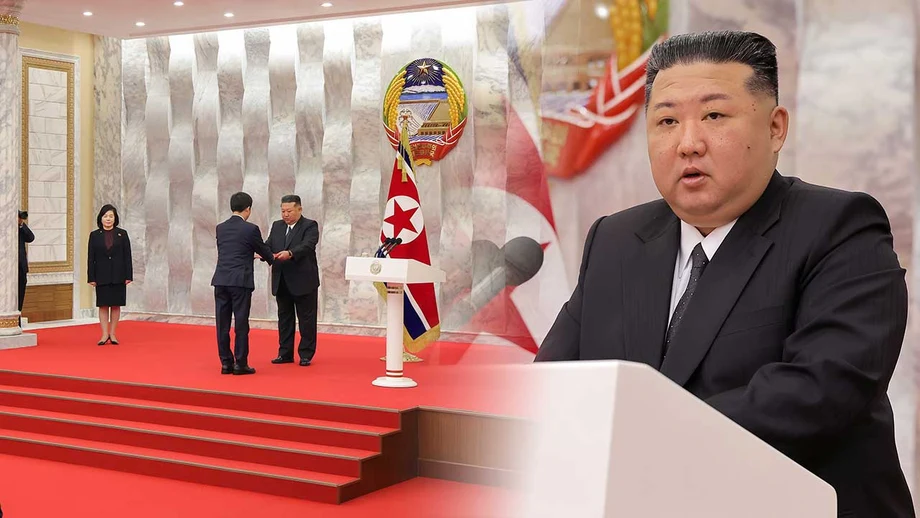
Kim Jong Un Takes Foreign Credentials in Pyongyang
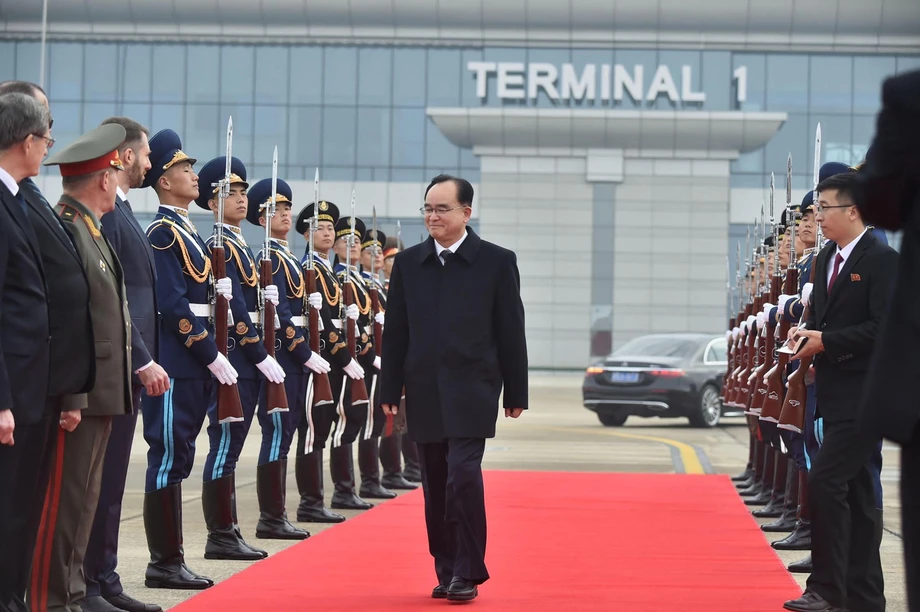
North Korean leader Kim Jong Un received credentials from ten newly appointed ambassadors on November 22, 2025, at the headquarters of the Workers Party Central Committee in Pyongyang. The ceremony marked a rare diplomatic moment for the country, as it was the first time in approximately 30 years that a supreme leader of North Korea personally accepted credentials from foreign diplomats. The gathered diplomats represented Russia, Indonesia, Sweden, Vietnam, Brazil, Czechia, India, the Philippines, Thailand, and Bangladesh. Foreign Minister Choe Son Hui also attended the morning event.
Contents
State media accounts from the official state news service reported that Kim posed for individual photographs with each ambassador following the presentation. The ceremony took place just three days after a summit meeting among the leaders of the United States, China, and Russia in Shenzhen, drawing attention to Pyongyang's diplomatic timing. In March, the Supreme People's Assembly revised the national constitution, specifically inserting Article 90, Section 6, which grants the chairman of the State Affairs Commission the direct power to receive credentials from foreign diplomatic representatives. Kim exercised that newly codified authority during the ceremony.
Shifting Diplomatic Protocol and Leadership Roles
Accepting foreign credentials directly breaks decades of established practice within North Korea's ruling structure. During the rule of Kim Il Sung, the founding leader also received credentials in person, but the duty shifted during the leadership of Kim Jong Il, when the role was handed over to the president of the Presidium of the Supreme People's Assembly. By taking back this responsibility, Kim Jong Un aligns his public role more closely with the formal duties of a head of state in other nations.
Experts observing the event noted that outside of Russia and China, most Pyongyang-based ambassadors rarely secure face-to-face meetings with the top leader. Taking the credentials directly suggests an effort to signal a more active foreign engagement strategy, moving away from isolated routines. The presence of ambassadors from countries like Sweden, which maintains an active diplomatic mission in Pyongyang, highlights the continued presence of European representation despite broader international sanctions and isolation.
Addressing International Instability and Security Pressures
Following the photo session, Kim delivered an address to the diplomats outlining the current goals and security assessments of his government. He described the global situation as one marked by systemic insecurity and economic turmoil, arguing that the wider geopolitical climate forces North Korea to maintain strong defensive capabilities. A ballistic missile, for example, is a rocket-powered weapon that follows an arcing trajectory high into the atmosphere before plunging down toward its target, differing from a cruise missile that flies closer to the ground under continuous engine power.
Kim linked regional security concerns directly to the political and military environment of East Asia. He stated that outside powers often prioritize their own interests above international law while attempting to impose narrow values on other countries. Those remarks echoed past frustrations regarding international pressure, arriving shortly after the first three-way summit held by the leaders of the United States, China, and Russia in Shenzhen, where the participants discussed regional stability without reaching a unified public stance on North Korea's nuclear program.
Rejecting Hegemony While Defending National Rights
Despite emphasizing the need for military strength, Kim made explicit statements regarding regional dominance and expansion. He assured the assembled diplomats that North Korea has no intention of seeking hegemony or territorial expansion. 강권과 강압 (coercion and high-handedness) have no place in the foreign policy of the country, according to the official text.
Kim addressed the assembled ambassadors with specific assurances regarding their diplomatic status and legal protections, promising that their privileges would remain fully secure under domestic law and international treaties. He delivered this message directly to the foreign representatives:
I completely respect the full powers and trust delegated to you by the heads of state of your countries, and I affirm that your diplomatic privileges and prerogatives will be thoroughly guaranteed in accordance with international law and the relevant regulations of our republic.
That language mirrored diplomatic norms used by globally recognized sovereign states, which analysts view as an effort to present North Korea as a predictable participant in international relations. South Korea's Unification Ministry evaluated the address as a reconfirmation of existing state positions, noting that the emphasis on national defense runs alongside efforts to project a normal state image.
Context of Recent Military and Economic Cooperation
The diplomatic reception occurs while North Korea maintains deep strategic ties with Moscow, highlighted by the recent visit to Moscow by senior party official Jo Yong Won. Ties between Pyongyang and Moscow expanded significantly following the signing of a mutual defense treaty, which led to the deployment of thousands of North Korean troops to the Kursk region inside Russia to support military operations. Earlier reports from monitoring groups and foreign officials detailed the human and material costs of that involvement, including official ceremonies in Pyongyang where Kim honored fallen soldiers and consoled grieving families.
At the same time, international monitoring teams have raised concerns over economic circumvention. A recent report by the Multilateral Sanctions Monitoring Team documented thousands of North Korean workers entering Russia under student visa categories, generating substantial revenue that outside governments argue flows back into weapon development programs.
- November 22, 2025: Kim Jong Un received credentials from ten foreign ambassadors at the party headquarters in Pyongyang.
- March 2025: The Supreme People's Assembly amended the constitution to grant the State Affairs Commission chairman the power to accept foreign credentials.
- November 19, 2025: U.S., Chinese, and Russian leaders held a summit in Shenzhen discussing regional security and the Korean Peninsula.
- November 23, 2025: State media outlets published details of Kim's speech rejecting hegemony and expansionism.
At a Glance
- Kim Jong Un accepted credentials from ten foreign ambassadors, marking a practice not seen at the supreme leader level for approximately 30 years.
- The ceremony followed a constitutional revision from March granting the top leader direct authority over diplomatic credential acceptance.
- Ambassadors from Russia, Sweden, Vietnam, Indonesia, Brazil, Czechia, India, the Philippines, Thailand, and 방글라데시 (Bangladesh) attended the event.
- Kim stated that North Korea does not pursue hegemony or expansion while defending the nation's sovereign right to maintain military capabilities.
- Foreign Minister Choe Son Hui participated in the credential presentation ceremony at the party headquarters.