Student visas mask a growing workforce, monitoring team says
Russia issued 35,839 student visas to North Korean nationals in 2025, up from 8,617 in 2024, according to the Multilateral Sanctions Monitoring Team (MSMT). The increase of more than four times lies at the centre of a US accusation that Moscow is disguising workers as students to evade United Nations sanctions, including at factories making military drones for use against Ukraine.
Contents
- Student visas mask a growing workforce, monitoring team says
- How education became a route into employment
- What the UN resolutions require
- Russia's drone factories connect labour to the war
- China remains the largest destination
- Workers keep little of the money they earn
- Six deaths bring worker safety into focus
- Investigations and sanctions begin to follow the money
- Eleven governments seek stronger enforcement
- Key Points
The team's third monitoring report, released on September 16, 2026, estimates that 35,600 to 101,280 North Korean labourers work across at least 17 countries. Their activities generated an estimated $450 million to $800 million for the North Korean government in 2025, with most of that revenue coming from information technology workers.
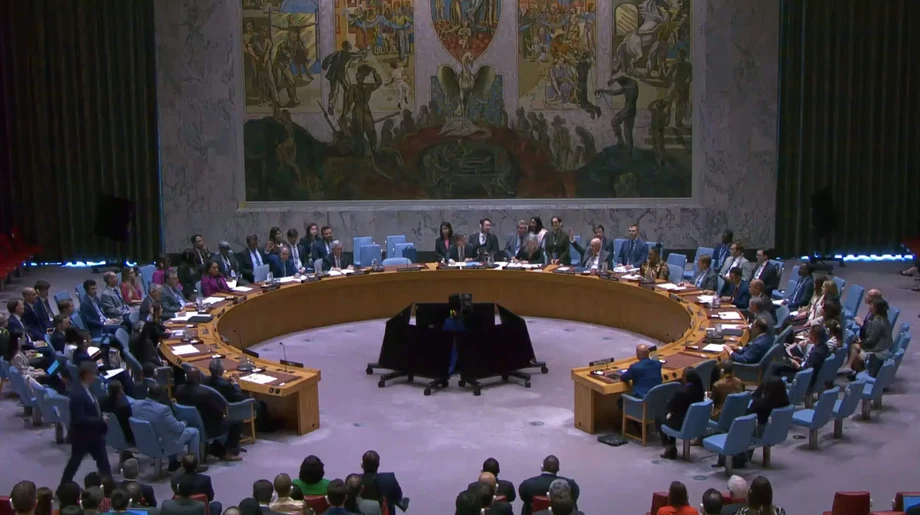
At a briefing at UN headquarters in New York, Jennifer Rosetta, the US deputy ambassador for special political affairs, accused Russia of making a deliberate policy choice to evade the obligation to send North Korean workers home. She urged governments to stop issuing visas used to conceal employment and to investigate, prosecute and, where possible, sanction those organising it.
Rosetta described Russia's student visa issuance as rising from more than 8,000 in 2024 to more than 36,000 in 2025. The monitoring report gives a more precise breakdown: 35,839 student visas out of 36,413 visas of all types issued to North Koreans in 2025, meaning more than 98% were labelled for education.
The allegations connect three concrete concerns: money reaching Pyongyang's weapons programmes, labour supporting Russia's war, and workers surrendering most of their pay while facing strict controls over their lives.
How education became a route into employment
Russia reported issuing no work visas to North Korean nationals from 2020 onward, according to the MSMT report. Student visas, however, offered another route into the country. The report describes workers entering as international students before being assigned to construction sites, farms and logging operations under the label of practical training.
A change to Russian law in February 2020 allowed foreign students enrolled full time in accredited professional education programmes to work without a separate work permit. The monitoring team says intermediaries used education arrangements, payments to institutions and other methods to conceal the presence and scale of North Korean labour.
Russian university enrolment figures offer a striking comparison. A senior Russian official said only 96 North Korean students were enrolled at Russian universities in 2024, while 8,617 student visas were issued that year. The report presents that gap as evidence that education was being used to cover other activities.
Moscow's Sodeystviye Arts and Humanities College appears repeatedly in the report. In June 2025, approximately 10 North Korean women entered Russia on student visas and worked at a pig farm in Vladivostok, feeding animals and cleaning buildings for a stated monthly salary of $700. The college was their nominal receiving institution.
Another group of approximately 30 North Koreans arrived in Sakhalin in July 2024 as industrial trainees. The report says they appeared neither to attend classes at the college nor to receive training after arrival. South Korea sanctioned the college and its representative in April 2024 over their role in dispatching North Korean workers.
What the UN resolutions require
UN Security Council Resolution 2375, adopted in 2017, prohibited new work authorisations for North Korean nationals, subject to specified exceptions. Resolution 2397, adopted unanimously later that year, required countries to repatriate North Koreans earning income in their jurisdictions by December 2019. Russia voted for those measures.
The United States says the repatriation obligation remains in force after the deadline. Under the monitoring team's recommendations, governments should examine the real purpose of travel when assessing visas and ensure that student status is not used to conceal income earning abroad.
The sequence shows how restrictions and monitoring changed:
- 2017: The Security Council adopted Resolutions 2375 and 2397, restricting employment and requiring repatriation.
- December 2019: The deadline for sending overseas workers home expired.
- March and April 2024: Russia vetoed renewal of the UN expert panel's mandate, and the panel ceased operating.
- October 2024: Eleven governments established the MSMT to monitor sanctions violations and evasion.
- September 16, 2026: The team released its third report, focused on overseas labour.
Japan's deputy UN ambassador, Tomohiro Mikanagi, who chaired the New York briefing, said the end of the expert panel's work left existing Security Council resolutions legally binding on every UN member state.
Russia's drone factories connect labour to the war
Russia hosted an estimated 15,000 to 30,000 North Korean workers at the end of 2025, according to the MSMT. They worked through approximately 70 to 80 North Korean companies in sectors including construction, manufacturing, agriculture, shipbuilding and information technology.
Alabuga, a special economic zone in Russia's Republic of Tatarstan, is among the locations identified as employing North Koreans to manufacture military drones. The report says those aircraft are supplied to Russian forces for use against Ukraine.
Germany's deputy UN ambassador, Florian Laudi, told the briefing that some North Koreans entering Russia under student labels had reportedly been assigned to facilities producing military drones. He called on Russia and North Korea to halt those deployments.
The number working at Alabuga remains uncertain. Ukrainian defence intelligence described a plan in November 2025 to bring as many as 12,000 North Korean workers there that year. Information from an MSMT participating state confirmed deployments for drone production, while putting actual numbers below existing estimates.
The concern extends to skills workers could take home. An October study examined how drone factory experience could give North Korean technicians practical knowledge of mass production and improvements made during wartime. Factory placements can therefore bring Pyongyang both income and experience in producing weapons.
China remains the largest destination
China hosts an estimated 20,000 to 70,000 North Korean labourers, making it the largest destination in the MSMT's assessment. Canada's foreign ministry director general for Northeast Asia, Ken England, told the New York briefing that workers there were seeking to expand beyond basic processing into household appliance assembly.
The participating governments' joint statement says 10,000 to 20,000 workers were temporarily repatriated from China between 2023 and 2025. Approximately 10,000 new workers arrived between January 2025 and January 2026, showing how departures were accompanied by fresh deployments.
The report describes factory employees receiving training visas valid for six months and restaurant employees receiving student visas. Some training visas could reportedly be renewed without workers returning to North Korea.
Dandong, the Chinese border city across from North Korea, features in the report's account of discreet transport. In October 2025, 11 empty coaches with heavily tinted windows and no signs crossed towards North Korea and later returned carrying passengers. Other arrangements reportedly involved immigration procedures taking place inside buses before passengers were transported to assigned workplaces.
Russia offers a strong financial incentive for deployment. The MSMT estimates that each North Korean worker there generates an average of $7,500 in annual wages. Depending on the industry, monthly earnings in Russia may be as much as five times those in China.
Workers keep little of the money they earn
North Korean overseas workers typically work 12 to 18 hours a day, six or seven days a week, according to the monitoring report. They must surrender 80% to 90% of their income, sometimes more, to the North Korean government.
The Netherlands' deputy UN ambassador, Bahia Tahzib-Lie, told the briefing that the state takes more than 90% of some workers' earnings and severely punishes attempts to leave. The participating governments also describe restrictions on movement and contact with outsiders, with relatives in North Korea facing reprisals if workers defect.
Fees can leave workers owing money even after long shifts. A Global Rights Compliance investigation found that monthly state fees for some workers in Russia rose from $600 to $700; one worker described demands reaching $850. Unpaid amounts could carry over into the next month as debt.
The MSMT report also describes a proposed agricultural recruitment scheme involving nearly 500 workers. Organisers planned to retain workers' bank cards, withdraw their wages, take a commission and distribute what remained. Such control over bank accounts gives workers little direct access to the money paid for their labour.
An investigation into Russian recruitment advertising found teams of 50 to 100 North Koreans marketed for factory and agricultural work, with shifts of 12 hours a day for 28 days a month. Advertisements presented embassy control of documents and separation from other nationalities as selling points for employers.
Six deaths bring worker safety into focus
A collision at a railway crossing in Russia's Jewish Autonomous Oblast in October 2026 killed six North Korean nationals travelling in a minibus. A seventh passenger was taken to hospital with serious injuries.
The research group RT SAVE said its local inquiries suggested the victims belonged to a North Korean subcontracting crew at a Russian construction site. It examined possible links to No. 1 Construction Company, a firm associated with North Korea in the Khabarovsk region. Their employer, contracts, purpose of travel and compensation arrangements remained unconfirmed.
The deaths put a human cost alongside the revenue estimates. Workers whose documents, wages and movements are controlled by dispatching agencies have limited freedom to negotiate conditions or demand assistance. Families also depend on those agencies for information when relatives die or suffer injury abroad.
Russia's labour shortages and North Korea's need for foreign currency have helped expand their cooperation, alongside the mutual defence treaty they signed in 2024. For the workers sent abroad, the immediate stakes include safe transport, manageable hours, access to pay and support after an accident.
Investigations and sanctions begin to follow the money
US officials told the New York briefing that the MSMT's second report, issued in October 2025 and focused on cyber and information technology activity, had already prompted action. Argentina froze a facilitator's assets, Pakistan began investigating document forgery, and the United States sanctioned facilitators based in Vietnam.
Laos checked names from that report against immigration records. In July 2026, its government told the monitoring team that it had found matches for 19 of 29 listed individuals. Records showed those people entering Laos during 2018 and 2019 and departing between 2018 and 2025.
Australia's deputy UN ambassador, Beth Delaney, said Canberra had imposed sanctions the previous month on two North Korean individuals and two entities, including Korea Mangyongdae Computer Technology Company, over assistance to concealed IT employment and money laundering.
Sanctions records are also being revised. A November 16, 2026 announcement by the Security Council's 1718 Sanctions Committee described an amendment removing Algeria from the countries where Mansudae Overseas Project Group of Companies reportedly conducted business. The company remained listed, with 14 other countries named, including Angola, Cambodia, Malaysia and Syria.
Mansudae was first sanctioned on August 5, 2017, for its role in exporting workers for construction, including statues and monuments, to generate revenue for North Korea's government or ruling party. The update concerns another part of the overseas labour business beyond factories and IT work.
Eleven governments seek stronger enforcement
The MSMT comprises Australia, Canada, France, Germany, Italy, Japan, the Netherlands, New Zealand, South Korea, the United Kingdom and the United States. Its reports combine information from participating governments with publicly accessible research.
Those governments used their September statement to urge restoration of the UN expert panel with its previous strength and structure. They stated:
We encourage all UN Member States to raise awareness and hold responsible parties and facilitators accountable for UNSCR violations, including through domestic action.
Canada said the team notified 35 countries before publication about information concerning North Korean labourers in their jurisdictions. Some governments supplied further details or described action they had taken. The report's estimate of workers in at least 17 countries reflects its assessment of continuing deployments.
South Korea's deputy UN ambassador, Yoon Jong-kwon, said monitoring would continue until the UN panel was restored, alongside diplomatic efforts towards progress on North Korea's nuclear programme and lasting peace on the Korean Peninsula.
The team's recommendations focus on practical checks: scrutinising visas, identifying the true purpose of training arrangements, sharing information with banks and businesses, and investigating intermediaries. For enforcement agencies, following the chain from visa sponsor to workplace to wage payment is central to identifying who benefits.
Key Points
- Russia issued 35,839 student visas to North Koreans in 2025, more than four times the 2024 figure.
- The MSMT estimates that 35,600 to 101,280 North Korean labourers work across at least 17 countries.
- Overseas labour generated an estimated $450 million to $800 million for Pyongyang in 2025, mostly through IT workers.
- The monitoring team identifies North Korean workers in Russian military drone production at Alabuga.
- Workers commonly surrender 80% to 90% or more of their earnings and face strict controls on movement.
- Eleven governments are calling for stronger enforcement and restoration of the UN sanctions expert panel.