Brussels Plans a Wide Net for Hybrid Car Imports
The European Union's planned safeguard on hybrid car imports would reach far beyond China. A leaked draft sets first year quotas of 350,000 vehicles for China, 310,000 for Japan, 230,000 for Türkiye, 190,000 for the United Kingdom and 105,000 for South Korea. The text also names Morocco and Serbia. Those numbers would apply to conventional hybrids and plug-in hybrids cleared through EU customs from December 1, with each cap based on 2025 import volumes. Cars imported before that date could still be sold normally.
Contents
- Brussels Plans a Wide Net for Hybrid Car Imports
- Why Hybrids Became the Pressure Point
- What Counts as a Hybrid Under the Plan
- China's Surge Gave Brussels Its Trigger
- WTO Rules Pulled Other Countries Into the Case
- Türkiye Fights for Its Place in European Car Production
- Shippers Raced to Clear Cars Before December 1
- European Plants Become the Escape Route
- Other Governments Seek Special Arrangements
- Key Dates and Unsettled Rules
- Key Points
The figures could still change. The draft gives each cap a 6% rise each year from the second year over a four year mechanism, taking China's allowance to about 417,000 vehicles in 2030. A safeguard is a trade tool used when a surge in imports is said to threaten local producers. A quota is the permitted amount of a product that can enter before extra restrictions may apply.
At the centre of the plan is a simple rule with large consequences: the quota follows the plant, not the badge. A Chinese brand car built in Türkiye would count against Türkiye's allocation. A European brand car built in China would count against China's. A hybrid built inside the EU would not count at all. That design rewards companies that already assemble cars in Europe and pushes exporters to move production closer to European buyers.
Why Hybrids Became the Pressure Point
Hybrid imports into the EU rose from 957,965 vehicles in 2023 to 1,423,691 in the 12 months to June 30, 2026, according to the Commission's initiation notice. That is a 49% increase. The Commission opened the investigation on October 30 and notified the World Trade Organization the same day, saying the rise threatened the market share and profitability of European carmakers.
The surge followed the EU's 2024 duties on battery electric vehicles from China. Those duties did not cover hybrids, leaving hybrids subject to the standard 10% import duty. Buyers in Europe kept buying Chinese cars, and Chinese sellers shifted more of their push toward models that combined an engine with a battery.
Rico Luman, senior sector economist for transport and logistics at ING, said Chinese brands changed course after the battery car duties.
Basically, Chinese brands shifted their sales efforts to hybrids to sidestep these tariffs
Luman also pointed to a wider change in the market. Chinese brands held 10% of European new car sales in the first nine months of 2026, up from 6% in the same period a year earlier. That makes hybrids part of a larger contest over who supplies Europe's car fleet, not a small technical dispute over engine types.
What Counts as a Hybrid Under the Plan
The draft reaches conventional hybrids, plug-in hybrids and mild hybrids, sometimes called microhybrids. Conventional hybrids use a petrol engine and a battery but do not plug into a socket. Plug-in hybrids can be charged outside and can usually drive longer on electricity. Mild hybrids use a small electric motor to help the engine but cannot drive on electricity alone.
Some vehicle types sit near the edge of the scheme. Extended range electric vehicles use a petrol engine to generate electricity for the wheels. EU customs rules class them as battery electric vehicles, so they are unlikely to consume a hybrid quota. They still face the EU duties on subsidised Chinese electric cars, which can reach 35.3% on top of the standard 10% import duty. Leapmotor and XPeng already sell these models in Germany.
There is also a used car route. EU rules treat a vehicle as used once it has more than 6,000 kilometres on the clock or is more than six months old. Such cars fall outside the quota and outside countervailing duties, which are extra charges meant to offset subsidies. That exception could shape how importers clear stock after December 1.
China's Surge Gave Brussels Its Trigger
China was already known to be the main target before the wider list appeared. EU imports of Chinese hybrids rose from about 46,000 in 2023 to 107,000 in 2024 and roughly 302,000 in 2025. A Commission official estimated 2026 imports at around 800,000 at the growth rate seen this year. Trade Minister Omer Bolat used a projection of 850,000 by year end. Both figures are more than twice the planned first year cap.
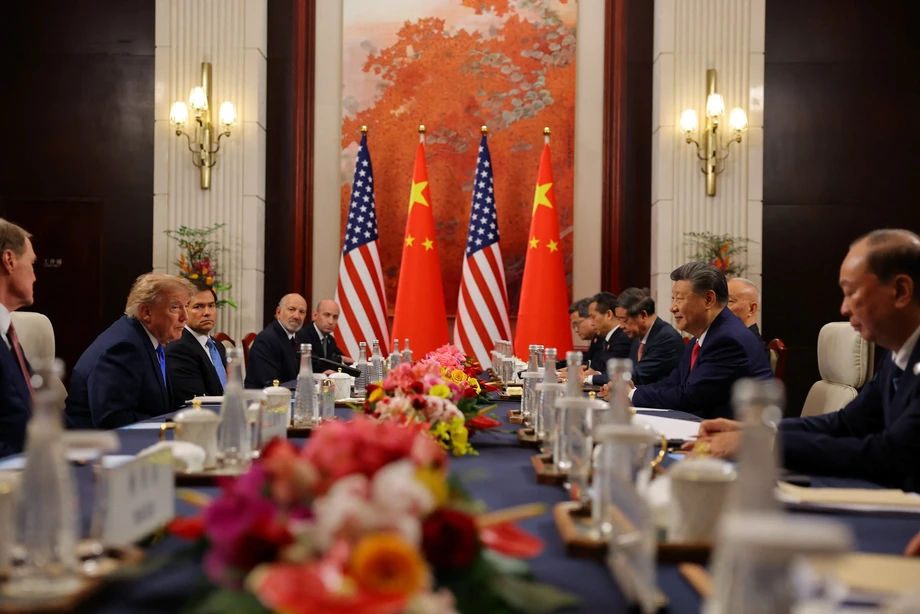
Trade Commissioner Maroš Šefčovič and Commerce Minister Wang Wentao reached an understanding in Beijing on October 9. Šefčovič said the arrangement would cut Chinese exports sharply.
opens the prospect of cutting China's exports by more than a half.
A Commission representative later confirmed the 350,000 first year limit for Chinese hybrids. Beijing has presented the number differently. It notes that 302,000 Chinese hybrids entered the EU in 2025, meaning the quota is above last year's level. Both readings start from different baselines: the 2025 total and the much faster 2026 pace that Brussels wants to stop.
China won trade concessions as part of the understanding. Beijing agreed to cut most favoured nation tariffs on EU goods ranging from car parts to olive oil and footwear. The affected exports are worth almost 4 billion euros, with duty savings of at least 225 million euros. For European farmers and smaller manufacturers, that part of the deal brings gains outside the car sector.
WTO Rules Pulled Other Countries Into the Case
World Trade Organization safeguards are meant to apply to all trading partners without discrimination. That rule explains why the Commission did not limit its investigation to China. Once it opened the case, exporters in Japan, South Korea, the United Kingdom, Türkiye and other places faced the same question: would their hybrids also be capped?
At the WTO goods council meeting on November 16 and 17, South Korea questioned whether the investigation was fair and transparent. It raised concerns about a result decided in advance, the way quotas would be divided and the treatment of different hybrid types. Japan, the UK, Switzerland and Türkiye pressed for transparency and due process.
The leaked draft suggests the answer may be a set of country allocations. Under the draft, Japan would receive 310,000 vehicles in the first year, Türkiye 230,000, the UK 190,000 and South Korea 105,000. Hyundai and Kia build some hybrid models, including the Tucson and Sportage, in Czechia and Slovakia. Only cars shipped from plants in South Korea would draw on Seoul's quota.
Türkiye Fights for Its Place in European Car Production
Türkiye's Automotive Manufacturers Association applied to the European Commission to become an interested party in the safeguard investigation. Bodies from Japan, South Korea, the UK and Russia are also seeking to take part. The stakes are high because hybrid models account for nearly half of Türkiye's automobile exports, and Türkiye is the EU's third biggest hybrid supplier.
Trade Minister Omer Bolat said Ankara would keep pressing EU institutions until the final decision. He argued that stricter European origin rules, including a Franco German plan announced on October 16, would harm European industry as well as Turkish suppliers.
they are trying to make a political decision, but if it goes ahead in this form, it will have no economic rationale and will run counter to their own interests
Bolat pointed to the ties built since the Customs Union began in 1996. Nearly 70,000 European companies operate in Türkiye, including 1,650 automotive investors. Bilateral trade has risen from 21 billion dollars to 233 billion dollars, more than eleven times its starting level. He signed an official letter to EU Trade Commissioner Maroš Šefčovič arguing that Customs Union membership should shield Turkish automakers from the restrictions.
"We do not want this to be harmed," Bolat said. He warned that any break in the Customs Union would hurt both sides.
If a gap is opened in the Customs Union, both sides will lose
Two large Chinese car projects in Türkiye show how the quota question could reshape investment plans. BYD signed a one billion dollar agreement in July 2024 for a plant in Manisa with capacity for 150,000 vehicles a year and a research centre. Work has not started, and Bolat said the company confirmed in June 2026 that the project was on hold while it prioritised Hungary. Chery's one billion dollar plan in Samsun, announced in March 2025, aims at 200,000 vehicles a year and more than 5,000 jobs, but no final factory decision or construction timetable has been confirmed.
Shippers Raced to Clear Cars Before December 1
Chinese exporters moved large volumes ahead of the December 1 customs date. In September alone, China exported almost 100,000 hybrids to the EU, up 204.2% from a year earlier and 18.9% from August. BYD, SAIC, Chery and Geely led the flow. Zeebrugge and Bremerhaven were among the main entry points, and port terminals were used as storage space while cars waited for transport inland.
Eurostat data show EU hybrid imports reached 474,475 in the first eight months of 2026, up 175% from a year earlier and 64% above the full 2025 total. The Association of European Vehicle Logistics said vehicle flows would change if the cap took effect. Its members handle finished vehicle logistics, the work of moving new cars from factories and ports to dealers.
Spain shows how quickly the market changed. Plug in registrations there ran between 14,500 and 15,600 a month from June to October, reaching 131,411 in the first ten months, up 32%. In October, the four leading plug in models were the BYD Atto 2 DM-i, BYD Dolphin G, Geely Starray EM-i and BYD Seal U DM-i. Conventional hybrids grew more slowly. The China Passenger Car Association said Chinese sales to Europe rose 95% in the third quarter and 87% from January to September, reaching 1.83 million cars.
European Plants Become the Escape Route
The draft's plant based rule gives carmakers a clear way around the cap: build in Europe. Hyundai and Kia already produce hybrid models such as the Tucson and Sportage in Czechia and Slovakia, so those cars would not use South Korea's quota. BYD has built a car factory in Hungary and has said mass production is near. The full ramp up may run into 2028. SAIC is preparing an MG plant in Spain, and Geely plans to produce at Ford's Valencia plant through a joint venture. Because these cars would be made inside the EU, each hybrid sold from those plants would fall outside the quota.
Rico Luman of ING expects a renewed push toward Chinese battery electric cars and more local production by brands such as BYD and Leapmotor. Antwerp-Zeebrugge, Europe's busiest port for finished vehicle traffic, handled 706,228 imports from the Far East, including China, in the first nine months, up 28% from a year earlier. More than 55% of its imports came from that region. A port spokesperson said operations were near maximum capacity.
That creates a practical shift for logistics companies. If fewer hybrids arrive by ship from China, some capacity may move to other car types, other origins or new factory routes inside Europe. Port storage, rail links and inland transport may be redesigned around a mix of locally built vehicles and different imports.
Other Governments Seek Special Arrangements
South Africa is seeking an exemption or a country specific quota if the EU imposes safeguards. Deputy director general for trade Xolelwa Mlumbi-Peter said up to 36 billion rand, about 2 billion dollars, of South African exports could be affected. The EU is South Africa's largest trading partner. Trade in transport equipment reached 9.5 billion euros in 2025, or 21% of total goods trade between them, though that figure covers more than hybrid cars. The two sides are also pursuing a Clean Trade and Investment Partnership on clean technology and supply chains. That partnership runs alongside the investigation and does not settle it.
No safeguard has been agreed. The Commission is still investigating whether rising imports are causing or threatening serious injury to EU producers. Its notice allows up to nine months for a decision, with an extension possible in exceptional cases. Provisional measures may last up to 200 days if critical circumstances are found.
Inside the EU, pressure is also growing for a broader trade response. A letter to Commission President Ursula von der Leyen and Trade Commissioner Maroš Šefčovič was initiated by Slovak MEP Miriam Lexmann and backed by members of the EPP, Renew, S&D, Greens and ECR. It calls for horizontal quotas and tariffs to deal with Chinese overcapacity, faster regulatory changes for European companies, stronger customs controls and a wider defence of European industry. The letter points to a trade deficit with China of one billion euros a day. Šefčovič is due to meet Wang Wentao in January and March next year, and the Commission is expected to unveil a new trade defence instrument before the end of 2026.
Key Dates and Unsettled Rules
The sequence matters because announcements, customs dates and votes can affect which cars count.
- October 9: Šefčovič and Wang Wentao reached the understanding in Beijing.
- October 16: France and Germany proposed stricter European origin rules for cars, leaving Türkiye outside that framework.
- October 30: The Commission opened the safeguard investigation and notified the WTO.
- From November 2: Several Chinese automakers met officials in Beijing to argue for a share of China's quota.
- November 16 and 17: South Korea, Japan, the UK, Switzerland and Türkiye raised concerns at the WTO goods council.
- November 20: EU governments were described as backing provisional measures, with publication possible as early as November 24.
- November 23: The proposal was still pending.
- December 1: Cars cleared through EU customs from this date would count toward the quotas.
The legal text remains unpublished, leaving three mechanics unsettled: whether vehicles above a quota would be blocked outright or face an extra duty, how China's 350,000 slots would be divided among automakers, and how firm the final WTO process would be. People familiar with the discussions said Brussels was keeping a hard quota, meaning a fixed ceiling. A qualified majority vote on definitive measures would come later. The European Parliament, Council and Commission also have reconciliation meetings ahead on the separate Made in EU rules that Ankara is watching closely.
Shang-Jin Wei, a professor of finance and economics at Columbia Business School and Columbia University's School of International and Public Affairs, compared the arrangement with voluntary export restraints used in earlier decades. In such a system, an exporting country agrees to limit shipments, often under pressure from the importing country. The 1995 WTO Safeguards Agreement banned these restraints and required existing ones to be phased out. Wei pointed to the 1981 limit on Japanese car exports to the United States, capped at 1.7 million vehicles a year until 1994, and the 1991 agreement between the European Community and Japan that sought a 9.4% cut.
Wei argued that quotas can raise prices and profits for exporters that receive licences, while tariffs raise revenue for the importing government. He also said China's overall trade surplus, which exceeded one trillion dollars in 2025, would not shrink much if cars moved to Southeast Asia, Latin America, the Middle East or Africa. The first test arrives on December 1, when customs data will start to show which cars count and which routes exporters choose.
Key Points
- The draft sets first year hybrid import quotas of 350,000 for China, 310,000 for Japan, 230,000 for Türkiye, 190,000 for the UK and 105,000 for South Korea.
- The caps would apply to hybrids cleared through EU customs from December 1 and rise 6% each year from the second year.
- The scheme follows where a car is built, so EU built hybrids would not count against any quota.
- Chinese hybrid imports rose sharply in 2025 and 2026, with estimates of 800,000 or 850,000 for 2026.
- Türkiye, Japan, South Korea, the UK, Switzerland, South Africa and EU lawmakers are pressing for changes, exemptions or wider trade tools.
- The legal text, quota mechanics and company allocations remain unsettled.