What Kazakhstan Wants From a New Civil Code
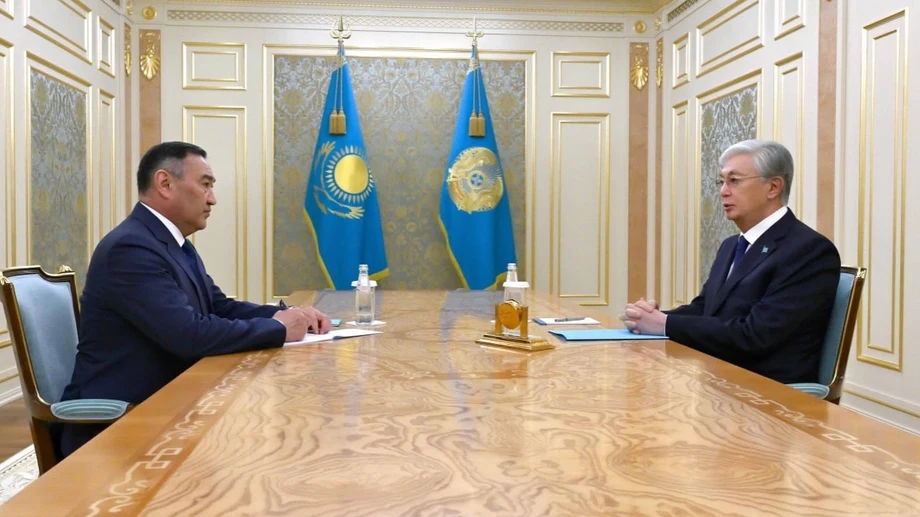
Kazakhstan is preparing the ground for a new Civil Code after President Kassym-Jomart Tokayev called for a document able to protect citizens, guide businesses and govern digital assets. The push comes as the country has adopted a new Constitution this year, a change that officials and deputies say requires ordinary laws to catch up. Nurlan Dulatbekov, a deputy of the Kurultai, wrote on November 17, 2026 that the initiative deserved close attention because the Civil Code reaches property, contracts, entrepreneurship, inheritance and the activities of legal entities.
Contents
- What Kazakhstan Wants From a New Civil Code
- Why an Ordinary Citizen Cannot Simply Rewrite a Bank Contract
- What Business Owners Need From Civil Rules
- Why Lawyers Call the Code an Economic Constitution
- Where Contract Rules Fall Behind
- Which Digital Concepts Need Legal Room
- Who Pays When Artificial Intelligence Causes Harm
- What Kazakhstan Does Not Want to Throw Away
- Why Investors Are Watching the Draft
- Who Should Help Write the Rules
- What Remains Unknown
- Key Points
The existing code has deep roots. Its General part was adopted in 1994 and its Special part in 1999, during Kazakhstan's transition to a market economy. Both parts have been changed many times as new economic tools and new objects of civil relations appeared. The question now is not whether the old code served a purpose. It did. The question is whether a law written for a market in transition can handle bank contracts, construction disputes, holdings, tokens, artificial intelligence and digital inheritance in the 2020s and beyond.
Kazakhstan's main dates in this debate are:
- 1994: The General part of the current Civil Code was adopted.
- 1999: The Special part of the current Civil Code was adopted.
- 2026: Kazakhstan adopted a new Constitution, and the new Civil Code initiative moved into public discussion.
- November 17, 2026: Dulatbekov set out the case for widening the reform debate to digital rights, digital property and wider public input.
A Civil Code is the rulebook for private life and private business. It sets out who owns what, how agreements become binding, what duties people owe each other, what happens when someone causes harm and how property passes after death. A legal entity is an organisation, such as a company, that the law treats as able to own property and sign contracts. In plain language, the code decides what a person can expect when buying a flat, taking a loan, selling shares or entering a contract with a large company.
Why an Ordinary Citizen Cannot Simply Rewrite a Bank Contract
The push for reform starts with an imbalance that many people recognise from daily life. A person dealing with a bank, a construction company or another large institution usually receives a ready made contract. The customer can sign it or walk away, but cannot easily change the clauses. When a disagreement follows, that same contract often becomes the first obstacle to defending a right.
The new code is expected to protect the citizen in that setting while keeping the rights of both sides equal. That is a practical change, not a slogan. If a bank or construction company writes the terms, the law has to make sure the terms are clear, fair and open to challenge. For a family paying for a home or a borrower facing a claim, the difference can be the cost of a legal fight and the chance to keep savings.
Kazakhstan has already seen how financial rules reach households. The code debate follows debt relief for 98,600 citizens, with 373 billion tenge in personal debt written off through bankruptcy procedures and another 23,195 people still in proceedings involving 134.5 billion tenge. Personal bankruptcy became available in March 2023, and a shorter procedure outside court has been open since March 2026 for some debts unpaid for more than five years. Those figures give the reform a human scale: contract and debt rules shape real household budgets.
What Business Owners Need From Civil Rules
For entrepreneurs, the central demand is stability. Business owners need to know that a contract signed today will be judged under rules they can understand, and that the rules will not shift when a dispute reaches a court or regulator. Dulatbekov said a new code should create a clear and effective legal environment for both citizens and entrepreneurs.
That concern sits beside the push for digital controls for business inspections, after the business ombudsman reported a sharp gap in how often companies of different sizes face checks. In 2025, small businesses faced roughly one inspection for every 64 companies, medium businesses 2.5 each and large businesses 4.8 each. Kanat Nurov, Kazakhstan's commissioner for the protection of entrepreneurs' rights, said moving from the small category to the medium category can raise the average inspection rate by more than 150 times.
The proposed automated risk system, known by its Russian abbreviation SUR, would use government data to find businesses needing scrutiny. It was still incomplete in 2026, with automated solutions covering 15 of 66 areas of state control marked for automation. The wider reform began with a presidential instruction in September 2020 and a December 2021 law introducing regulation from a clean slate, meant to focus state regulation on risks to life, health, the environment, public order and morality.
This is part of the same problem the Civil Code is meant to address: rules may exist on paper, but people and firms need predictable ways to use them. A digital economy depends on contracts that can be checked and enforced without a company guessing which authority will arrive next.
Why Lawyers Call the Code an Economic Constitution
Ermek Bayakhmetuly, a doctor of legal sciences, described the Civil Code as a foundation for economic life. He said modern corporate structures have created relationships that the law must register and manage, from relations among corporation members to the sale of goods and shares. Dulatbekov also said the code should be among the most important legal documents after the Constitution because it affects daily life, the business environment, property relations and economic activity.
Bayakhmetuly, the doctor of legal sciences, said digital conditions require different legal tools. He said:
The Civil Code can be called an economic constitution. For example, corporations and holdings have appeared. A new legal right has emerged. Within it, relations among members, receiving money, selling things and selling shares all have to be regulated. In the digital age, its methods must be different.
His description explains why the code is larger than a book of contract templates. It is about who has legal power in an economy, how that power is checked and how value moves between people and organisations. When the code fails to describe a new transaction, courts and businesses must improvise, and improvisation can be expensive.
Where Contract Rules Fall Behind
Darkhan Tokeev, leading research fellow at the Institute of Legislation and Legal Information of the Republic of Kazakhstan, focused on the parts of civil law that businesses meet first: contracts and their enforcement. He said the current code leaves many questions unanswered, especially when agreements change or when foreign investment is involved.
Tokeev, the leading research fellow, said amendments are needed in both wording and implementation. He asked:
The Civil Code currently does not cover many issues. Changes and additions are needed for contracts. How will they be implemented? If contracts involving foreign investment arise, how should the norms of the Civil Code be applied? All of this requires changes and additions.
A contract is a promise the law can enforce. The key practical question is what happens after a promise changes, who must prove what and which rule wins if a contract connects Kazakhstan with investors abroad. Clear answers help ordinary firms and large investors because they reduce the space for surprise interpretations after money has already been spent.
Which Digital Concepts Need Legal Room
Dulatbekov listed a group of ideas that are already part of economic life but lack full regulation in the current Civil Code. He said the new document should take them into account because weak legal rules can slow the use of new technology, innovation projects and new business directions.
- Digital rights, meaning rights that exist in electronic form, such as access to or control over online assets.
- Digital property, covering things that exist as data but can be owned, transferred or restricted.
- Smart contracts, which are computer programs that carry out agreed actions when conditions are met.
- Asset tokenization, where a right to an asset is represented by a token on a digital ledger, a shared record kept by a computer network.
- Digital inheritance, the question of what happens to online accounts, files or digital assets after a person dies.
Nurlan Dulatbekov, a Kurultai deputy, said the code should describe current social relations and remain able to adjust to later changes. He wrote:
The new Civil Code should comprehensively cover current social relations and be able to adapt to future changes.
These concepts sound abstract, but they touch ordinary questions. If a person buys a token, receives a digital asset or leaves behind online accounts, families and firms need to know which rules apply. The same is true when a computer program automatically releases payment after a delivery is confirmed.
Who Pays When Artificial Intelligence Causes Harm
Snezhanna Imasheva, a Kurultai deputy, said the initiative could become one of the largest legislative reforms in Kazakhstan. She said the old code fulfilled its historical mission, but the digital economy and artificial intelligence are creating legal relations that were hard to imagine when its two parts were adopted.
The statement quoted President Kassym-Jomart Tokayev, Kazakhstan's head of state, saying that the new code had to give citizens, businesses and investors a stable set of rules. He said:
The new Civil Code must form the legal basis of the economy of the future, ensuring stability and predictability of legal relations for citizens, entrepreneurs and investors.
Artificial intelligence raises a basic civil law question: liability, meaning who is responsible when harm occurs. If an automated system gives a wrong instruction, mishandles data or causes a financial loss, a court still needs a person or legal entity to hold responsible. The code can set the frame for that responsibility, even if detailed technical rules come in other laws.
Imasheva also pointed to tokens, digital assets, electronic transactions and smart contracts. For a shop, a bank or a household, electronic transactions are already routine. The legal task is to make them predictable when a payment fails, a signature is disputed or a digital record is challenged.
What Kazakhstan Does Not Want to Throw Away
The reform is not a clean sweep. Dulatbekov said the current Civil Code was built on a solid scientific basis, stood the test of time and helped shape market relations and the civil law system. Imasheva said the best approach is to preserve proven legal institutions while ensuring continuity in legislation and stability in civil circulation.
Civil circulation means the ordinary movement of rights and duties through sales, leases, loans, inheritances and company deals. Stability here does not mean no change. It means a person can plan a transaction without fearing that the legal ground will move without notice.
That is why both deputies described the new code as more than a rewrite. Kazakhstan wants to keep the parts that work and add mechanisms for property, contracts and responsibility in an economy where value can sit in data, shares, tokens or artificial intelligence systems.
Why Investors Are Watching the Draft
The new Civil Code arrives while Kazakhstan is also planning changes to its capital market. A capital market overhaul through 2030 is aimed at bringing more private businesses to investors. The combined value of share and bond markets reached 99.8 trillion tenge in 2025, almost twice the 51.1 trillion tenge recorded in 2021.
The numbers show where the gap is. Government securities and bonds issued by companies with state participation account for 89% of the bond market, leaving private businesses with 11%. Share market capitalisation stood at 41.8 trillion tenge, or 26% of gross domestic product, while the bond market reached 58 trillion tenge, or 36% of gross domestic product. Gross domestic product is the value of goods and services produced in the country.
The draft law On the Capital Market would replace the Law on the Securities Market, in force since 2003, and introduce stronger duties toward investors. The programme has seven areas and 35 strategic initiatives covering investment funds, pension assets, bonds, derivatives and access to public share offerings. Derivatives are contracts whose value follows another asset. For households, the proposals would also widen investment choices and change how brokers handle orders.
Civil law sits under those markets. Shares, bonds, company duties and investor claims all depend on clear property and contract rules. If the new code gives clearer answers about ownership, enforcement and liability, it can support the wider effort to make company securities a practical way to raise money alongside bank loans.
Who Should Help Write the Rules
Dulatbekov argued that a code touching daily life and economic activity cannot be written by lawyers alone. He called for legal scholars, economists, experts, business representatives, entrepreneurs and civil society institutions to take part. The aim is to reflect the interests of different groups and make the legal environment understandable and useful.
He also said Kazakhstan should use science, international experience and the achievements of its own legal school. That combination matters because digital assets and artificial intelligence are not local problems. Rules that are too narrow can slow new projects, while rules copied without regard for local courts and businesses can be hard to apply.
Digital administration is already expanding in other areas of economic life. Mobile transfer checks require people identified as earning undeclared business income in 2026 to report it on Form 270 by September 15, 2027. The test looks for transfers from at least 100 different senders in each of three consecutive months and total receipts above 360 monthly calculation indices, or 1.557 million tenge in 2026. The monthly calculation index is a statutory unit Kazakhstan uses to set legal amounts. The previous threshold was 1.02 million tenge, so the 2026 figure is 537,000 tenge higher. Such examples show why clear civil rules and clear tax rules need to speak the same language.
What Remains Unknown
The reform is at an early stage in public discussion. The statements set out goals and priorities, but no draft text, publication date, parliamentary hearing schedule, vote date or implementation timetable was given. That means the precise wording on digital property, smart contracts, foreign investment clauses and artificial intelligence liability is still open.
The coming lawmaking work will test how the code handles a narrow line: how much freedom to give private parties while preventing powerful institutions from using standard terms to shift risk onto weaker ones. Citizen protection and business certainty have to sit together, because a code that favours one side too heavily would leave disputes to be settled late and expensively.
For citizens and business owners, the value of the code will be judged in everyday settings, not in abstract language. A loan agreement, a flat purchase, a business contract, a share sale or a digital asset dispute will show whether the promised balance between citizen and business rights has become real.
Key Points
- President Kassym-Jomart Tokayev called for a new Civil Code after Kazakhstan adopted a new Constitution this year.
- The reform aims to reduce legal inequality when citizens sign standard contracts with banks, construction companies and large institutions.
- The existing code's General part dates to 1994 and its Special part to 1999, while digital assets, smart contracts, tokens and artificial intelligence need modern rules.
- Ermek Bayakhmetuly called the Civil Code an economic constitution, while Darkhan Tokeev pressed for clearer contract and foreign investment rules.
- Deputies want legal scholars, economists, business representatives, entrepreneurs and civil society institutions involved in drafting.
- No draft text or timetable has been announced.