A New Pact in Antalya
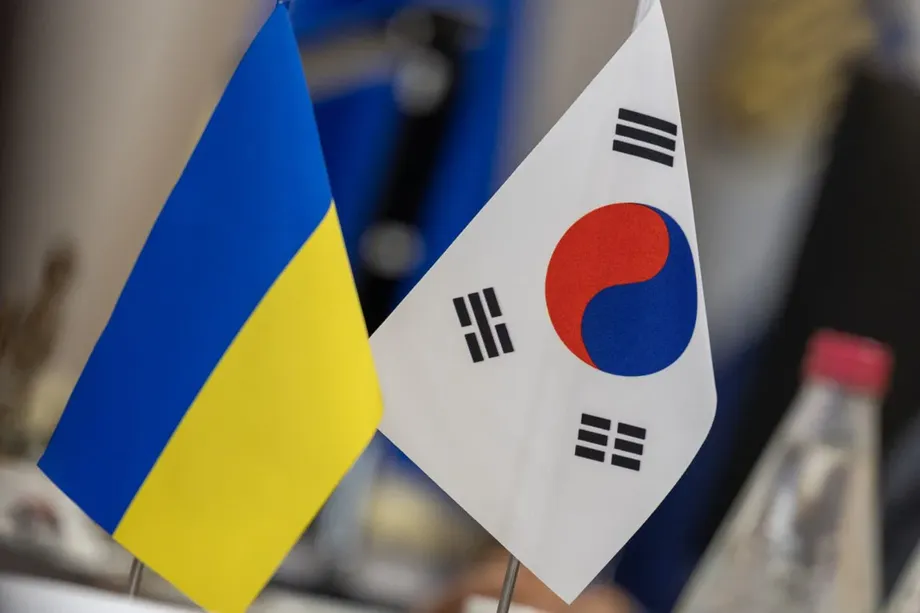
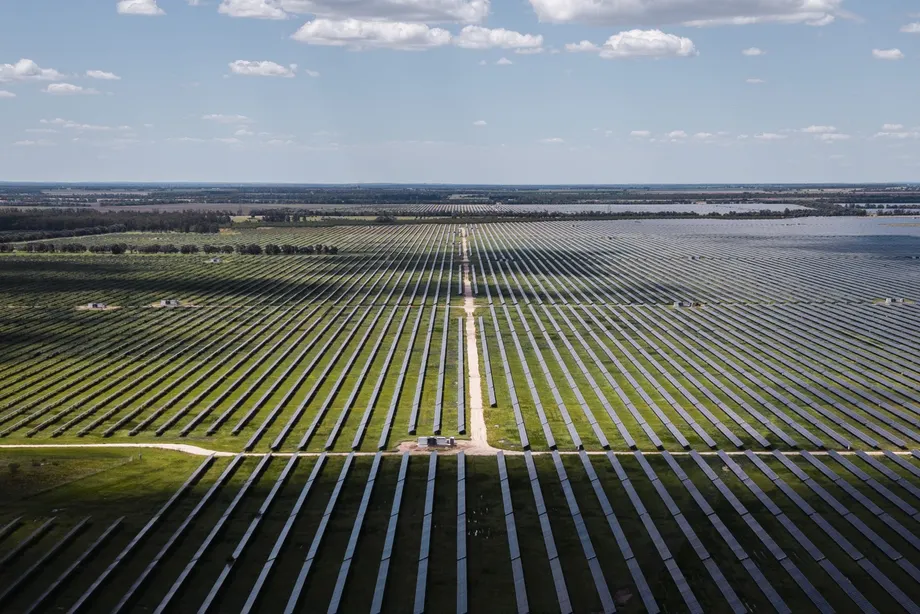
Australia and South Korea signed a bilateral agreement on November 17, 2026, to connect Australian renewable energy and mineral deposits with South Korea's heavy manufacturing factories. Reached on the sidelines of the 31st United Nations Climate Change Conference (COP31) at the Antalya Expo Center in Antalya, Türkiye, the Memorandum of Understanding on a Joint Decarbonization Pathway and an accompanying joint ministerial statement aim to replace a decades-old trade in coal and liquefied natural gas with materials produced using lower carbon emissions.
Contents
- A New Pact in Antalya
- How the Six Cooperation Pillars Work
- From Coal Shipments to Green Iron
- Trillions in Private Capital Await Policy Details
- Taking the Bilateral Pact to the United Nations
- Campaigners Challenge Ongoing Gas Trade and Overseas Finance
- Supply Chain Security Across the Asia-Pacific
- Key Points
Chris Bowen, Australia's Minister for Climate Change, Energy, the Environment and Water, whose country holds the COP31 negotiating presidency, signed the pact alongside Kim Sung-hwan, South Korea's Minister of Climate, Energy and Environment, during a Tuesday morning ceremony at the Korea Pavilion. The agreement pairs South Korea's factory-driven economy, which produces steel, semiconductors, batteries, vehicles, and electronics, with Australia's large tracts of sunlit and windy land and vast underground mineral reserves.
In their joint statement on bilateral decarbonization pathways, the two ministries committed to accelerating the shift away from fossil fuels in a just, orderly, and equitable manner during this decade to reach net-zero greenhouse gas emissions by 2050. That target aligns with the Paris Agreement's goal of keeping global warming within 1.5 degrees Celsius above pre-industrial temperatures. The two governments framed the partnership as an urgent break from traditional energy commerce, declaring why they took action in their joint statement.
Australia and the ROK agree this is a critical moment to strengthen cooperation and propel implementation to achieve our climate targets and keep 1.5 within reach in line with the Paris Agreement. The status quo will not do.
South Korea expects to mobilize around A$1 trillion (Australian dollars) through to 2035 to transform its energy grid and industrial base, creating massive demand for clean power, green metals, hydrogen, clean shipping, and critical minerals. Speaking at the Korea Pavilion ceremony after foreshadowing the agreement during a weekend negotiating update, Minister Bowen praised South Korea's trillion-dollar clean-energy expenditure as world-leading and impressive, explaining the mutual benefits of the deal.
We want to help you. And we need your help on our plans as well. And that's what this MOU is all about: helping each other on the economic transformation underway in our two countries.
How the Six Cooperation Pillars Work
South Korea's Ministry of Climate, Energy and Environment and Australia's Department of Climate Change, Energy, the Environment and Water structured the Memorandum of Understanding around six operational pillars. Rather than creating a new bureaucracy from scratch, the two governments will use their existing ministerial consultative body while bringing private businesses and research institutes into the planning process. The six areas of cooperation are:
- Electrification and securing power grids to handle fluctuating renewable power generation
- Technology cooperation and capacity building between energy researchers and engineers
- Creating investment conditions that fund clean energy and factory decarbonization
- Strengthening climate adaptation and physical resilience against extreme weather
- Supporting the implementation of Nationally Determined Contributions, which are each country's official emission-cutting pledges under the United Nations climate treaty
- Expanding the participation of civil society and young people in climate policy
Alongside those six broad themes, the joint ministerial statement assigns specific follow-up tasks to both governments. Officials and researchers will draft a green industry initiative, study how to build secure clean energy supply chains, and conduct joint research on hydrogen certification. A hydrogen certification system acts like a nutritional label for fuel, verifying for buyers and regulators how much carbon dioxide was released when the hydrogen was produced, which is essential for distinguishing hydrogen made with solar or wind power from hydrogen extracted using coal or natural gas.
The joint statement also establishes a Track 1.5 policy dialogue. In international diplomacy, Track 1 talks involve only government officials, while Track 2 discussions involve only private citizens and academics; a Track 1.5 dialogue brings government policymakers and private sector experts to the same table to solve regulatory problems together. Minister Kim said at the signing ceremony that the arrangement sets out concrete actions to drive South Korea's transition plans, adding that his ministry will develop a green industry initiative to support clean energy projects.
Now more than ever, we need swift action to drive the transition towards a decarbonised green economy.
From Coal Shipments to Green Iron
South Korea ranked as Australia's fourth-largest two-way trading partner in 2025, buying A$44.2 billion in Australian goods and services while sending A$23.2 billion in exports to Australia. Much of that commerce rests on fossil fuels. Australia is South Korea's largest supplier of natural gas, and Australian coal exports to South Korea for burning in power plants and blast-furnace steel mills are worth about A$6.5 billion a year, accounting for nearly 15 percent of all Australian exports to the East Asian country.
That coal trade faces a clear deadline. South Korea plans to end imports of thermal coal, the grade burned to generate electricity, by 2040. Because traditional steelmaking uses coking coal to strip oxygen from iron ore inside blast furnaces, replacing coal with renewable hydrogen to produce low-emissions green iron and steel is central to the new partnership. A 2025 report by the Clean Energy Investor Group estimated that Australian green iron and green aluminium export industries could generate A$127 billion a year by 2050, nearly twenty times the value of Australia's current annual coal sales to South Korea.
Canberra also wants to keep more of the industrial processing inside Australia before ships leave port. Instead of simply digging up raw rock and shipping unprocessed ore abroad, Australian policymakers want foreign capital to help refine minerals domestically into intermediate products such as battery materials, separated rare earth elements, processed graphite, and lower-emissions metals. Australian Industry and Innovation Minister Tim Ayres explained how this shift supports domestic manufacturing.
Working more closely with Korea will help Australia move further up the value chain, expand Australia's industrial capability and make more of the clean energy technologies and materials the world increasingly needs.
Matt Kean, chair of Australia's Climate Change Authority, warned on Saturday, November 14, that Australian mining communities and exporters must prepare for their longtime Asian buyers to stop ordering fossil fuels.
You don't need to believe in climate change to believe in capitalism. The reality is that Australia's fortunes, economic fortunes, are tied to the markets that have underwritten our prosperity for generations, and they are changing.
Trillions in Private Capital Await Policy Details
Financial groups managing retirement funds and institutional portfolios quickly backed the Antalya agreement, while noting that the document does not automatically commit private money to construction sites. In a November 17 statement, the Investor Group on Climate Change (IGCC) and the Asia Investor Group on Climate Change (AIGCC) welcomed the bilateral pathway. Together, the two networks represent institutional investors across the Asia-Pacific region managing approximately US$46 trillion in global assets.
Since 2024, the AIGCC has operated a dedicated Korea Working Group that engages major South Korean corporations, including steelmaker POSCO Holdings, state utility Korea Electric Power Corp. (KEPCO), energy and battery firm SK Innovation, and technology giant Samsung Electronics. The investor group has also worked with Seoul policymakers on climate transition finance and the government's Korea Green Transformation (K-GX) Strategy. Rebecca Mikula-Wright, Chief Executive Officer of both the IGCC and the AIGCC, said the bilateral deal helps link supply and demand across the ocean.
Turning those possibilities into investible projects and pipelines that depend on clear, durable policy settings, credible certification standards, and strong trading relationships. This MoU is a constructive step in that direction. Investors welcome the opportunity to continue their government engagements and contribute to the proposed policy dialogue.
Building refineries that make green iron or hydrogen requires billions of dollars up front, meaning bankers typically refuse to lend money until a buyer signs an offtake agreement, which is a legally binding contract to purchase a set volume of output over many years. Richie Merzian, Chief Executive Officer of the Clean Energy Investor Group, called the ministerial pact a cornerstone agreement for capital markets.
The high levels of capital for green iron and steel need certainty on demand and a credible path to offtake before it commits. If this partnership delivers that, it will move money.
Neither government announced direct public funding figures, specific construction timelines, or individual corporate contracts under the memorandum. The mining and energy sectors will now watch to see whether the government platform leads to South Korean equity investments, formal offtake agreements, and financing support for Australian processing plants.
Taking the Bilateral Pact to the United Nations
Beyond bilateral trade, Seoul and Canberra used their agreement to influence wider diplomatic negotiations at COP31. The two ministries formally submitted a joint proposal to the secretariat of the United Nations Framework Convention on Climate Change (UNFCCC) showing how two trading partners can connect their national emissions targets with shared technology and investment rules. The submission covers implementation strategies for their 2035 Nationally Determined Contributions and feeds into the United Nations' second Global Stocktake, a periodic worldwide audit that measures whether national pledges add up to the goals of the Paris Agreement.
During the high-level segment of COP31 on November 17, Minister Kim proposed launching a global climate dialogue that brings young people, civil society groups, and private businesses directly into international climate negotiations alongside national governments. To illustrate why outside voices matter, Kim pointed to a landmark domestic lawsuit brought by South Korean youth and environmental activists. That legal challenge resulted in a South Korean Constitutional Court ruling that required lawmakers to enact a medium- and long-term greenhouse gas reduction pathway into national law.
The diplomatic rollout in Antalya spanned three days of technical meetings and public forums across the summit venue:
- November 16, 2026: Minister Kim met with Bolivian Minister of Sustainable Production, Environment and Water Resources Oscar Mario Justiniano Pinto at the Antalya Expo Center, while officials held industrial cooperation talks on clean fuels at the Australian Pavilion.
- November 17, 2026: Ministers Bowen and Kim signed the Memorandum of Understanding at the Korea Pavilion, released their joint statement, submitted their joint proposal to the UNFCCC secretariat, and hosted a global climate citizens' forum.
- November 18, 2026: Minister Kim delivered opening remarks at the Korea-Australia COP31 Green Industrialization Roundtable, where delegates held in-depth discussions on technology investment and low-carbon steelmaking.
Addressing the November 18 roundtable, Minister Kim noted that 2026 marks the 10th anniversary of the Paris Agreement entering into force, telling delegates that international responses to the climate crisis must go beyond political declarations and produce physical changes in factories and power networks.
Campaigners Challenge Ongoing Gas Trade and Overseas Finance
Environmental organizations praised the focus on green steel but warned that the pact does not stop the flow of fossil fuels between the two nations. In a joint media release issued from Antalya on November 17, Greenpeace Australia Pacific and the Greenpeace East Asia Seoul office urged both governments to pair their renewable energy targets with binding schedules to end coal and gas commerce. The groups warned that expanding gas exports competes directly with renewable energy projects for skilled workers, engineering talent, and investment capital.
Justin Jeong, Senior Campaigner at Greenpeace East Asia Seoul, noted in Antalya that while South Korea's steel sector is a major industrial polluter that needs green iron from Australia, the country's electric grid remains heavily reliant on imported Australian fuel.
Alongside this, South Korea should also work to decarbonize its power sector. The country still imports massive amounts of gas from Australia, and concerns remain that gas-fired power generation will be even expanded currently. I look forward to seeing South Korea demonstrate climate leadership by promptly establishing a decarbonization roadmap to phase out gas power.
Dr. Susie Byers, Head of Advocacy at Greenpeace Australia Pacific, called on Canberra to halt domestic fossil fuel approvals while developing green iron and steel exports.
This must be coupled with urgent action at home to accelerate the transition away from fossil fuels, and to stop the expansion of new coal and gas projects that are incompatible with a 1.5°C-aligned future.
Criticism also targeted South Korea's overseas lending institutions. In a November 18 press release, the advocacy group Oil Change International pointed out that South Korea remains the world's largest provider of international public finance for fossil fuel projects that has not yet pledged to end such funding. By contrast, Australia is a signatory to the Clean Energy Transition Partnership (CETP), an international pact whose members have collectively cut their cross-border public fossil fuel financing by up to 80 percent, representing an annual reduction of US$8.5 billion to US$13.2 billion compared with their baseline spending before joining the partnership. Adam McGibbon, Campaign Strategist at Oil Change International, challenged Seoul to match Canberra's policy within a year.
If South Korea is serious about transitioning away from fossil fuels, it can follow Australia's example in the one area where it has made progress to address fossil fuels head-on, and join the Clean Energy Transition Partnership (CETP), committing to end all international public finance for fossil fuels. South Korea could sign this today, and Australia could help them develop the policy over the next 12 months. Without committing to clear actions like this, the memorandum both countries signed yesterday is meaningless.
Supply Chain Security Across the Asia-Pacific
For both Canberra and Seoul, the decarbonization pact also serves as an industrial security strategy. South Korea relies heavily on imported raw materials to keep its battery, automotive, and semiconductor factories running, while Australia has sought to diversify its mineral buyer base so it is less reliant on a small number of overseas commodity customers. Securing materials from a politically stable trading partner has become a priority for Seoul, coming three months after an August economic expansion with Malaysia covering semiconductors, clean energy, and US$27.9 billion in bilateral commerce.
Both nations are also working to fortify their regional trade ties while facing friction with Washington, where the Office of the United States Trade Representative is weighing a Section 301 investigation into digital trade regulations in both South Korea and Australia. By anchoring their next generation of heavy industry in a bilateral clean energy corridor, Australian miners and South Korean manufacturers aim to build regional supply chains that can weather shifts in global trade rules and carbon border taxes.
Key Points
- Australia and South Korea signed a Memorandum of Understanding on a Joint Decarbonization Pathway and issued a joint ministerial statement on November 17, 2026, at the COP31 climate summit in Antalya, Türkiye.
- The pact links South Korea's A$1 trillion clean industrial transformation through 2035 with Australian supplies of renewable energy, critical minerals, green hydrogen, and low-emissions iron and steel.
- South Korea is Australia's fourth-largest two-way trading partner, accounting for A$44.2 billion in Australian exports and A$23.2 billion in imports in 2025, including roughly A$6.5 billion a year in Australian coal shipments that face a 2040 South Korean phase-out of imported thermal coal.
- Follow-up commitments include a hydrogen certification study, a clean energy supply chain study, a green industry initiative, a Track 1.5 government-and-industry policy dialogue, and a joint submission to the UNFCCC covering 2035 emissions targets.
- Climate campaigners urged South Korea to establish a domestic gas power phase-out roadmap and join Australia in the Clean Energy Transition Partnership to end international public finance for fossil fuels.