New Delhi Considers Fresh Taxes on Rice Shipments
India, the largest rice exporter in the world, is considering new taxes on foreign rice sales as early as December 2026 to keep more grain at home and slow down rising food costs for families and local businesses. Officials across ministries in New Delhi are examining a potential export duty of around 20% on specific grades that have jumped in price, while a broader panel has also discussed raising the tariff as high as 30% on rice outside the aromatic Basmati category. Alongside those duties, policymakers are weighing a minimum export price, which is a legal price floor that stops exporters from selling grain abroad below a set rate.
Contents
- New Delhi Considers Fresh Taxes on Rice Shipments
- Why Rice Prices Are Jumping Across Southern India
- Gradual Curbs Preferred Over an Immediate Ban
- Strong Export Demand and Global Price Comparisons
- Smaller Monsoon Crop Clashes With Record Reserves
- Steps Already Taken Inside the Domestic Market
- Timeline of Earlier Indian Rice Export Curbs
- The Bottom Line
An export duty works like a fee charged by the government when goods leave the country. By making Indian rice more expensive for foreign buyers, officials hope traders will sell more grain inside India instead, increasing local supply and easing pressure on grocery bills. Discussions remain private, and no final decision has been reached yet, with a government spokesperson not immediately responding to a request for comment. One government official explained that animal feed producers had pushed for action after facing steep costs for broken rice, which consists of shattered grains separated during milling.
We are considering measures to limit exports and support the domestic industry.
Why Rice Prices Are Jumping Across Southern India
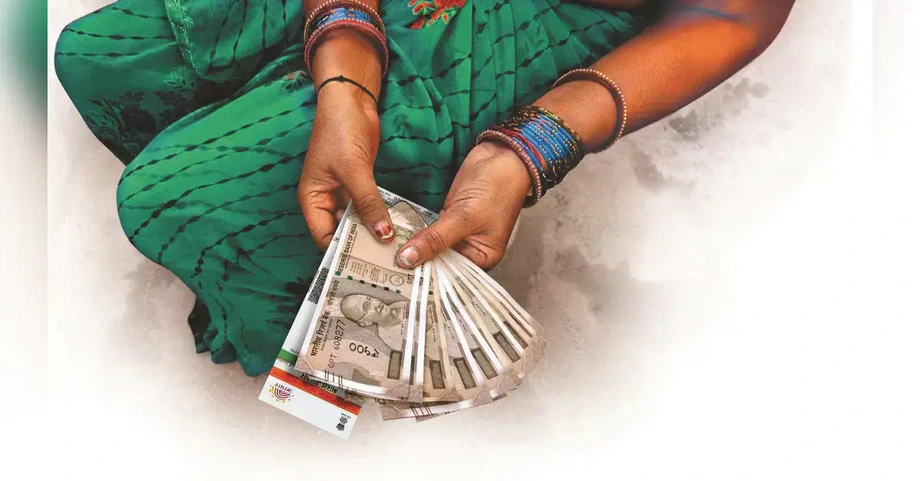
Food inflation across India accelerated to 8.94% in October 2026, rising from 7.74% in September, driven largely by sharper increases in staple grains. Rice inflation climbed for five consecutive months, moving from 1.72% in June to 3.30% in July, 5.89% in August, 8.27% in September, and 12.51% in October compared with the same months twelve months earlier. Even after emergency market steps in early November, the nationwide average retail price of rice on November 21 stood more than 11% above the level recorded a year earlier.
Southern states felt the sharpest squeeze on household budgets during October, with shortages concentrated in 100% broken rice and premium non-Basmati grades. Retail and wholesale rice prices rose 43.2% in Karnataka, 25.7% in Andhra Pradesh, 24.6% in Telangana, 17.4% in Tamil Nadu, and 9.4% in Kerala. Beyond kitchen tables, poultry farms and cattle feed manufacturers depend heavily on cheap broken rice as a primary energy source in animal feed, leaving those industries exposed when millers divert broken grains to overseas buyers.
Gradual Curbs Preferred Over an Immediate Ban
A complete ban on non-Basmati rice exports remains on the table only as a last resort. An official panel across ministries reviewed several options during the first week of November and chose to avoid an immediate blanket prohibition. Unlike previous restrictions introduced in 2023 that stayed in place for 14 months, any measures adopted this time are expected to be temporary and adjusted step by step as domestic prices move.
An official source familiar with the panel discussions outlined how policymakers plan to roll out any restrictions in stages rather than shutting down trade overnight.
Though various options were discussed, the panel of officials decided not to put a blanket ban on export as the first measure and all such restrictions aimed at domestic price reduction will be calibrated one after another depending on price movement.
Even with a 20% export duty in place, trade participants expect Indian grain to keep moving to overseas buyers, though at a slower pace. A dealer based in New Delhi with a global trade house noted that India holds a wide enough price cushion over rival suppliers that an export tax would dampen shipments without halting them altogether. Final rules will only take shape after consultations conclude across every relevant ministry.
Strong Export Demand and Global Price Comparisons
Foreign demand for Indian rice has expanded strongly throughout 2026 despite rising prices inside the country. During the 2025/26 fiscal year, India shipped 15.04 million metric tons of non-Basmati rice worth $5.87 billion. Between April and October 2026, total non-Basmati exports including unmilled paddy and seed grew 7% to 8.84 million metric tons, compared with 8.28 million metric tons during the same seven months in 2025.
From April to October 2026, export growth varied sharply across rice categories. Shipments of broken rice jumped 74% to 0.98 million metric tons, while white rice exports rose more than 18% to 2.82 million metric tons. Parboiled rice, which is partly boiled in the husk before milling to hold nutrients and resist breakage, moved in the opposite direction, falling 5% to 4.87 million metric tons.
International shipping quotes in early November 2026 show why foreign buyers turned to India. Measured on a free on board basis, which means the price of grain loaded onto a ship at the export port before ocean freight and insurance, Indian white rice with 5% broken grains cost $384 to $389 per metric ton. At the same time, comparable rice cost about $415 per metric ton from Pakistan, $480 from Vietnam, and $495 from Thailand.
Putting a 20% duty on Indian rice priced at $384 to $389 per metric ton would raise its export cost by roughly $77 to $78, putting it around $461 to $467 per metric ton, which would sit above Pakistan but remain cheaper than Vietnam and Thailand. Raising the duty to 30% would add $115 to $117 per metric ton, lifting the price to roughly $499 to $506 and erasing India's cost advantage over all three competitors, which could shift orders toward rival suppliers including Thailand, Vietnam, and Myanmar.
Smaller Monsoon Crop Clashes With Record Reserves
Deficient rainfall during the 2026/27 kharif season, which is India's main summer crop planted with the arrival of monsoon rains, reduced the paddy planting area across several farming regions by roughly 4% to 42.68 million hectares. While the central government has not yet published its first official harvest estimate, trade and industry participants forecast kharif production at 112 million to 115 million metric tons, a drop of 8% to 10% from the 124.76 million metric tons harvested in the 2025/26 kharif season.
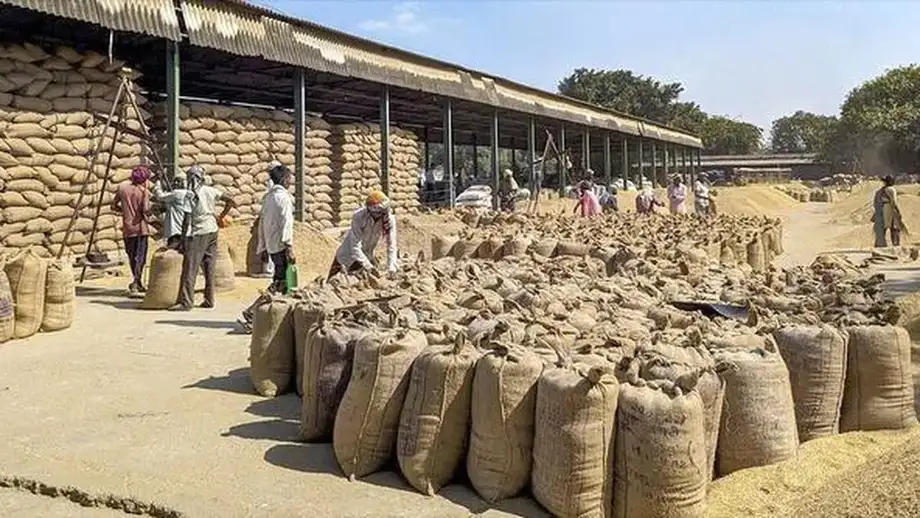
State warehouses, by contrast, hold historic volumes of grain. On November 1, 2026, government reserves of rice, including unmilled paddy still in its outer hull, reached a record 55.3 million metric tons, nearly four times the official buffer target. That gap between tight regional markets in the south and overflowing state silos has sparked debate inside the grain trade over whether export limits are warranted.
Mukesh Jain, a rice exporter based in Raipur in the central state of Chhattisgarh, pointed out that price increases have been concentrated in select premium non-Basmati grades while other varieties remain stable with domestic supply comfortably exceeding demand. He argued against shutting off foreign buyers ahead of incoming harvests.
There is no need to restrict rice exports. Exports should continue uninterrupted to help create storage space for the new crop.
Steps Already Taken Inside the Domestic Market
Before considering new export duties, the central government rolled out several domestic measures to cool retail prices. On November 6, 2026, officials doubled the sales target for rice offered through electronic auctions under the Open Market Sale Scheme for the 2026/27 season to 5 million metric tons, after selling 2.5 million metric tons during the seven months through October. Through that program, the state sells grain from its public reserves directly to millers and traders to boost availability in local markets.
Public cooperatives including NAFED, NCCF, and Kendriya Bhandar were also instructed to expand retail sales of subsidised grain under the Bharat Rice brand, with a particular focus on southern states. Alongside cheaper retail supplies, authorities ordered traders, retailers, wholesalers, processors, and millers across the country to declare their inventories separately every Friday across six categories: Basmati rice, premium non-Basmati rice, standard non-Basmati rice, parboiled rice, broken rice, and paddy. Andhra Pradesh, Karnataka, Kerala, Tamil Nadu, and Telangana were also granted authority to set caps on how much rice and paddy private businesses can hold in storage if local shortages worsen.
Timeline of Earlier Indian Rice Export Curbs
India previously used sweeping export restrictions between 2022 and 2025 to manage domestic grain prices before lifting them in stages as supplies recovered.
- September 2022: The government banned broken rice exports and placed a 20% export duty on paddy, brown husked rice, and non-Basmati white milled rice.
- July 2023: Officials prohibited exports of non-Basmati white rice, leaving parboiled rice outside the ban.
- August 2023: Authorities added a 20% export duty on parboiled rice and set a minimum export price for Basmati rice.
- September to October 2024: India removed those restrictions, including the minimum export price, while keeping the ban on broken rice.
- March 2025: The government lifted the final ban on broken rice exports.
Whether New Delhi returns to tariffs in December 2026 will depend on how retail prices respond to increased state auctions and subsidised sales in southern states over the coming weeks.
The Bottom Line
- India is considering a 20% to 30% export duty on select non-Basmati rice varieties, alongside a minimum export price, potentially starting in December 2026.
- Rice inflation reached 12.51% in October 2026, with sharp increases in Karnataka (43.2%), Andhra Pradesh (25.7%), Telangana (24.6%), Tamil Nadu (17.4%), and Kerala (9.4%).
- Non-Basmati rice exports grew 7% from April to October 2026 to 8.84 million metric tons, led by a 74% surge in broken rice shipments.
- Indian white rice at $384 to $389 per metric ton in early November remained far cheaper than supplies from Pakistan, Vietnam, and Thailand.
- A 4% drop in kharif paddy planting area has lowered trade harvest forecasts to 112 million to 115 million metric tons, even as state reserves sit at a record 55.3 million metric tons.
- The government has already doubled its electronic auction sales target to 5 million metric tons, expanded Bharat Rice sales, mandated weekly Friday stock reports, and allowed five southern states to cap private inventories.