A Brief Glimpse Sparks Curiosity After a Huge Opening
On November 5, 2026, director Nitesh Tiwari launched Ramayana: Part 1 in cinemas worldwide, and audiences quickly turned the epic into a commercial powerhouse. Net ticket sales reached Rs 1,700 crore globally within 17 days of release, building on an opening run that had already crossed Rs 1,600 crore. Amid the massive turnout for lead actors Ranbir Kapoor, Sai Pallavi, and Yash, a brief silhouette during the closing credits drew intense discussion from viewers leaving theatres.
Contents
- A Brief Glimpse Sparks Curiosity After a Huge Opening
- Why Namit Malhotra Compares Hanuman to Iron Man
- What Made Sunny Deol the Choice After Dara Singh
- Inside the Closing Credits Teaser in Part One
- How Part One Sets Up the Rescue Mission
- Sixty Percent Filmed and Major Visual Effects Ahead
- Why the Sequel Moved From 2027 to Diwali 2028
- Key Points
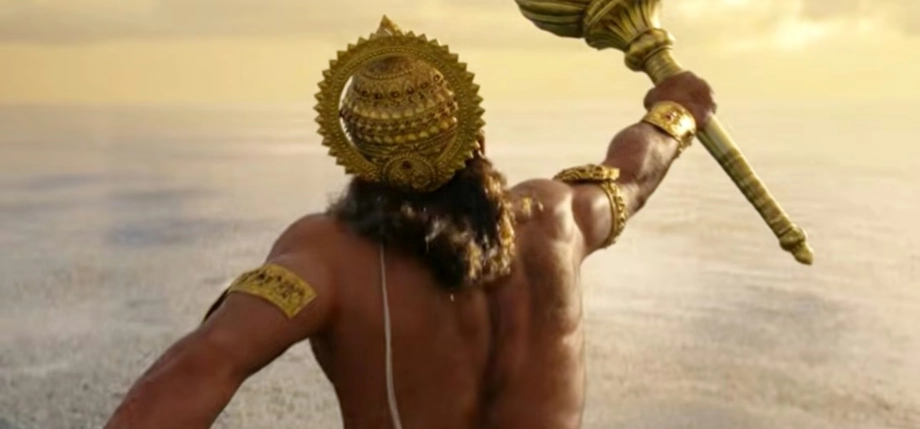
Sunny Deol appeared in that closing sequence as Lord Hanuman, one of the most revered figures in Hindu tradition and a central hero of the ancient Sanskrit epic. Viewers saw only a hint of the character, whose face stayed hidden from the camera, because producer Namit Malhotra and director Nitesh Tiwari decided to hold back his full arrival for the sequel. That sequel, Ramayana: Part 2, will now reach cinemas during Diwali 2028 instead of 2027.
The Ramayana follows Prince Rama on a quest to rescue his wife, Sita, after she is kidnapped by Ravana, the powerful king of Lanka. Hanuman is a divine warrior of extraordinary strength, loyalty, and devotion who helps Rama locate Sita and lead the assault on Lanka. By saving Hanuman for the second chapter, the filmmakers wanted audiences to leave the theatre wondering what Rama will do next.
Producer Namit Malhotra and director Nitesh Tiwari recently explained why they kept Deol's scene short and why they trusted the veteran action star with the role. Their remarks show that casting Hanuman required far more than physical muscle, because Indian audiences expect the character to combine gentle warmth with unstoppable fury.
Why Namit Malhotra Compares Hanuman to Iron Man
Namit Malhotra views Hanuman as the emotional heartbeat of the second film, comparing the deity's cultural standing in India to Marvel's superhero Iron Man. While Iron Man anchored modern Western superhero cinema with humor and spectacle, Malhotra sees Hanuman holding an unmatched place in the hearts of Indian families across generations.
Malhotra explained this comparison while discussing why the creative team waited until the very end of Part 1 to reveal even a shadow of the character. The producer said that holding back Hanuman's full entry gives the next instalment momentum and leaves viewers eager to see who guides Rama forward.
Imagine him as our Iron Man, because he's the fan favourite. The next film will really be elevated because we have Hanuman; it's a roller-coaster waiting to happen. And it's good to have preserved that introduction, because we left the audience with this sense of suspense over what Rama will do next. And now you'll see who is going to lead the charge.
Nitesh Tiwari and Namit Malhotra divided the ancient tale into two distinct cinematic experiences. Part 1 establishes the world, the royal court, and the conflict between Rama and Ravana, while Part 2 shifts into an adventure on a grand scale once Hanuman joins the mission.
What Made Sunny Deol the Choice After Dara Singh
Dara Singh set the benchmark for playing Hanuman on Indian screens decades ago, and his portrayal remains etched in public memory. Viewers across the country still measure every new depiction against the late wrestler and actor's gentle smile and towering presence.
Nitesh Tiwari said the production searched for a performer who could capture two contrasting sides of the character without feeling forced. Explaining the casting decision, the director pointed to Sunny Deol's decades of popular cinema roles, where quiet decency regularly gives way to explosive strength.
In India, we have a history of popular actors playing Lord Hanuman. He's a character who needs to have this combination of being very innocent and likable, but when he's angry, the mountains will shake. That's the kind of image that Sunny Deol enjoys in our country, so we felt that he was the person that could best do justice to this immortal character.
Namit Malhotra backed the director's reasoning and noted that Sunny Deol already occupies a superhero space in Indian pop culture, even without wearing a cape or mask. In many of Deol's classic films, a gentle, earnest man is pushed past his limits until his anger overwhelms every opponent.
Malhotra described how that screen history aligns with the demands of the Ramayana's second half. Speaking about Deol's past roles and the scope of the upcoming sequel, the producer explained why the narrative truly takes off from this point.
Sunny has done a couple of films where he's gone from being sweet and innocent to making mountains shake. He's already celebrated as one of India's superheroes without ever actually playing a superhero as such. The next part of the story goes into a whole new orbit in terms of the scale of the storytelling, so it will be great to have Hanuman in there alongside Rama. In some ways, the epic of the Ramayana really begins here.
Sunny Deol's casting pairs a familiar screen persona with an immortal mythological figure, helping the filmmakers bridge classic storytelling with modern blockbuster spectacle for both longtime devotees and younger cinema audiences.
Inside the Closing Credits Teaser in Part One
Audiences who stayed in their seats as the closing credits began rolling witnessed the first visual hint of Deol's transformation. The sequence shows Hanuman leaping into the sky while gripping his gada, a traditional heavy mace associated with the deity, as the devotional hymn Hanuman Chalisa plays in the background.
Cinematographers and editors kept Sunny Deol's face concealed throughout the short clip, ending on a wider aerial shot as Hanuman chants "Jai Shri Ram". Clips of the moment circulated widely online soon after theatres opened, turning the hidden reveal into one of the most discussed scenes from the opening film.
Pankaj Kumar, the cinematographer for Ramayana, revealed that the brief teaser was never trimmed down from a longer episode. According to Kumar, the original screenplay itself ended on that small snippet of Hanuman, designed from the start to serve as a musical and visual bridge toward the sequel.
How Part One Sets Up the Rescue Mission
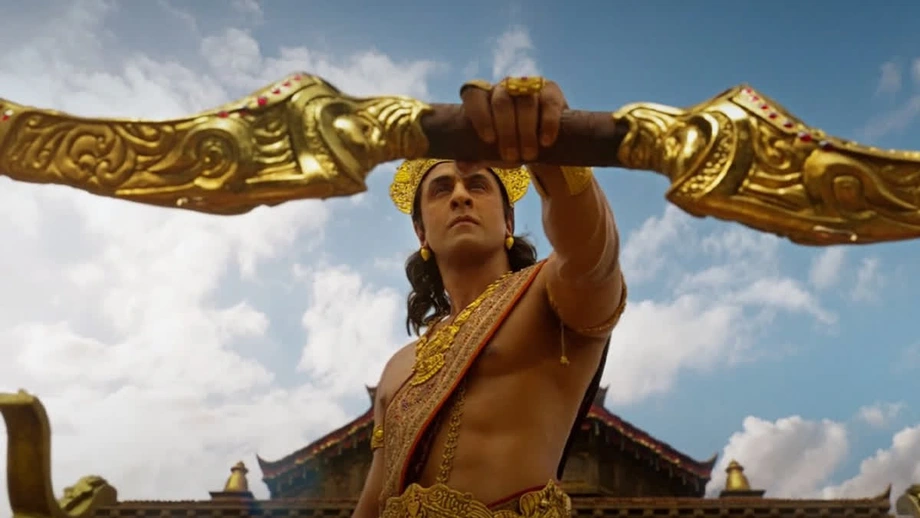
Ranbir Kapoor leads the cast as Lord Rama alongside Sai Pallavi as Sita, Yash as Ravana, and Ravie Dubey as Rama's loyal brother Lakshman. Rather than rushing straight into war, Nitesh Tiwari structured Part 1 around two parallel journeys that slowly converge.
Ravana's rise forms one narrative thread, tracing his path from Paatal Lok, the underworld of Hindu tradition, to claiming the golden throne of Lanka and amassing formidable power. The second thread follows the birth of Rama, the royal marriage ceremony known as Sita's swayamvar where a bride chooses her husband, and the couple's exile to the forest.
Part 1 closes on a dramatic cliffhanger when Ravana abducts Sita during that forest exile, leaving Rama and Lakshman stranded and searching for answers. Because the opening film stops right at the moment of crisis, Hanuman's arrival at the very end signals the shift from tragedy to counterattack in Part 2.
Sixty Percent Filmed and Major Visual Effects Ahead
Ramayana: Part 2 is already well underway in production, even though audiences face a wait until 2028 to see the finished work. Cinematographer Pankaj Kumar confirmed that nearly 60 percent of the sequel has already been shot, giving the team substantial progress on filming with actors on set.
Pankaj Kumar said the crew has already captured several spectacular action sequences featuring Sunny Deol as Hanuman. Aware of the high expectations surrounding the character, the cinematographer promised that Hanuman's extended screen time in the sequel will reward viewers for their patience.
Postproduction teams face the heaviest share of the remaining schedule rather than camera crews on physical sets. Kumar noted that extensive visual effects and digital motion capture still need to be completed before the film can match the director's vision, where mythical flight, giant armies, and supernatural battles require seamless computer animation.
Why the Sequel Moved From 2027 to Diwali 2028
Diwali 2027 was the original target for Ramayana: Part 2, roughly one year after the first film arrived in cinemas. Namit Malhotra recently confirmed the move to 2028, shifting the release window to Diwali 2028 without naming an exact day.
Namit Malhotra and his team also reshaped the project around expanding international ambitions. Earlier in development, the filmmakers considered splitting the epic into three films before reorganising it into two parts, while leaving room to revisit the structure if global response calls for another chapter. The studio also produced two master versions of Part 1, creating an English edition with script adjustments and a separate edit rather than relying on simple voice dubbing.
Namit Malhotra explained why the second instalment needed a gap of two years instead of a single year, saying the scale of the finale left no room for shortcuts after the enthusiastic worldwide reception for Part 1.
That extra year is what I genuinely believe we need to do justice for a film of this size. When you see part 2 coming in, that will be a whole other story. We didn't want to do a rush job or get ahead of ourselves. We want to deliver the finale in the most grand way that it deserves.
Four milestones across the production show how the two films evolved from initial planning to their current schedule:
- Initial planning: Filmmakers first explored adapting the epic across three separate parts.
- Revised format: The project was reorganised into two feature films, with an English master edit created alongside the Hindi version.
- November 5, 2026: Ramayana: Part 1 opened in cinemas worldwide and passed Rs 1,700 crore in net ticket sales within 17 days.
- November 2026: Cinematographer Pankaj Kumar confirmed that roughly 60 percent of Part 2 had been filmed, with visual effects and digital motion capture continuing.
- Diwali 2028: Ramayana: Part 2 is scheduled to arrive in theatres worldwide on an exact day yet to be announced.
Key Points
- Ramayana: Part 1 opened on November 5, 2026, and reached Rs 1,700 crore in net worldwide ticket sales within 17 days.
- Sunny Deol appears briefly as Lord Hanuman during the closing credits of Part 1, with his face hidden while he flies carrying a gada and chants Jai Shri Ram.
- Director Nitesh Tiwari cast Deol because Hanuman requires a balance of innocent warmth and anger capable of shaking mountains.
- Producer Namit Malhotra compared Hanuman's popularity in India to Iron Man and said Deol is already celebrated like a superhero despite never playing one.
- Part 1 follows Ravana's rise and Rama's early life through Sita's abduction, setting up Hanuman's major role in the rescue mission of Part 2.
- Cinematographer Pankaj Kumar said about 60 percent of Part 2 has been filmed, though extensive visual effects and digital motion capture remain unfinished.
- The sequel moved from its earlier Diwali 2027 target to Diwali 2028 so the filmmakers have an extra year to complete the finale.