A Budget Rewritten in the Senate
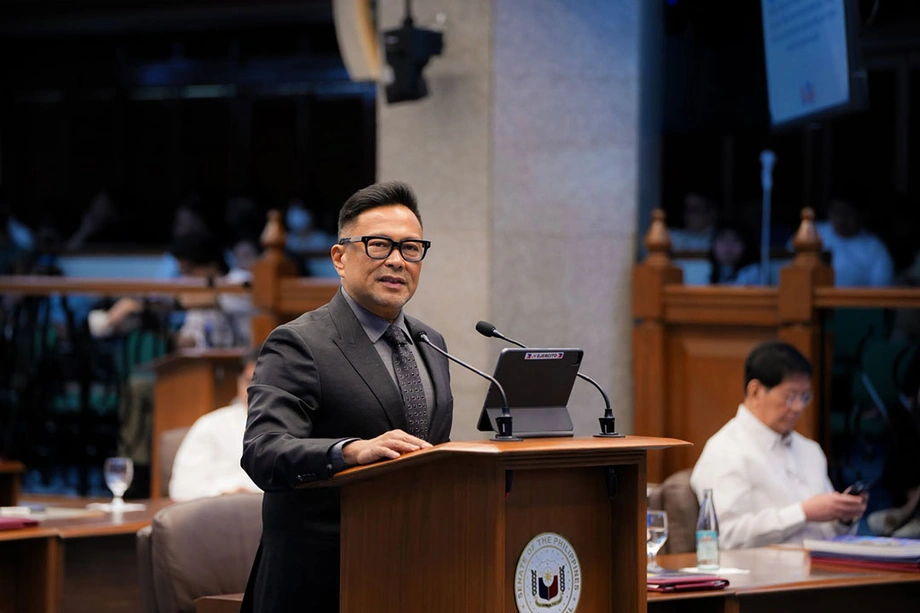
Senator Joseph Victor G. Ejercito filed Committee Report No. 131 on House Bill 10858 on Nov. 20, 2026, proposing P204.634 billion in amendments to the 2027 national budget. Three days later, on Monday, Nov. 23, the Senate Committee on Finance endorsed its version of the spending plan, realigning P4.61 trillion toward healthcare, agriculture, education, foreign-assisted projects and public safety. The appropriations consist of P4.49 trillion in programmed allocations and P111 billion in unprogrammed allocations, while keeping the P7.20 trillion spending ceiling under the National Expenditure Program (NEP).
Contents
- A Budget Rewritten in the Senate
- Where the P204.6 Billion in Changes Comes From
- The P97 Billion Cut From Public Works
- Health: PhilHealth Gets P19.8 Billion More
- Education and the Fight Over the ARAL Program
- Agriculture and El Niño Preparation
- Infrastructure and Transport: Subway, Rail and Roads
- Defense, Social Welfare and Workers
- Lacson Flags Patronage Spending and Ghost Projects
- The Economic Stakes
- A Tight Calendar
- Key Points
The NEP is the executive branch's proposed budget. The General Appropriations Bill (GAB) is the version Congress debates and changes. Programmed allocations are backed by expected revenue. Unprogrammed allocations are set aside and only released if revenue exceeds targets. The Senate kept the total ceiling from the NEP but moved money between agencies and programs. Ejercito, the finance committee chair, called the approach "back to basics" and said the amendments aim to direct limited fiscal resources to basic needs.
Before we focus on complicated matters, we should focus what limited resources we have on ensuring that the basic needs of our people are provided.
The committee report was signed by 18 senators, including Senate President Pro Tempore Vicente Sotto III, Majority Leader Juan Miguel Zubiri, Risa Hontiveros, Panfilo Lacson, Bam Aquino and Francis Escudero. Senate Minority Leader Alan Peter Cayetano did not sign. He said his signature was missing "not because I did not want to sign but because it is physically impossible to come up with a good judgment, even if I do trust the chairman of the committee on finance, Senator JV."
Where the P204.6 Billion in Changes Comes From
The Senate finance committee's amendments break down into P113.286 billion in additional allocations and P91.348 billion in realigned funds. The committee identified P14.041 billion in new funding sources and P7.065 billion from various government agencies. Another P27.369 billion was proposed for various agencies based on requests and recommendations made during Senate budget hearings.
The biggest single source of savings is the Department of Public Works and Highways (DPWH). The panel removed about P97 billion worth of projects from the DPWH budget. Of that amount, P87 billion covered 3,132 projects in the House-approved version that failed documentary requirements, including insertions and multipurpose buildings. Another P8.8 billion covered 295 noncompliant projects from the NEP, and P1.7 billion covered 36 DPWH building projects.
Health received a P52 billion increase. Education received P15.3 billion. Agriculture received a P48.62 billion increase through realignments within the sector. Defense received a P5.56 billion increase, though the committee report itself raised the Department of National Defense budget by P1.73 billion to P326.9 billion.
The P97 Billion Cut From Public Works
Ejercito said the cuts resulted from weeks of Senate scrutiny. Infrastructure projects now have to meet safeguards that include geotagging, an endorsement from the Regional Development Council, a certificate of implementability and a program of works. Projects without these requirements were mostly deleted. A Senate review found that the number of DPWH projects rose from 11,420 in the NEP to 16,244 in the House version of the 2027 budget.
Budget watchdogs People's Budget Coalition and BetterGovPH had flagged nearly 7,000 projects worth P190 billion that lacked published project attachments in the House-approved 2027 budget. The People's Budget Coalition also tracked some 6,200 DPWH projects worth P170 million that were inserted into the budget.
Ejercito said the reductions in the DPWH budget would be realigned to foreign-assisted infrastructure projects, which saw a P130 billion decrease in the House-approved GAB. "Our target here is really... more for economic recovery. Of course, we intend to accelerate economic growth through increased public spending," he said.
Health: PhilHealth Gets P19.8 Billion More
The Senate version provides P378.6 billion for the Department of Health (DOH) and its attached agencies. PhilHealth, the state health insurer, received an additional P19.8 billion, raising its allocation from P74.4 billion in the House version to P94.2 billion. The funding is meant to support indirect contributors, expand health benefit packages and strengthen the Zero Balance Billing program, which aims to keep patients from paying hospital bills out of pocket when they qualify for government assistance.
The DOH Office of the Secretary received an additional P9.6 billion. This includes P5.49 billion for the Health Facilities Enhancement Program, P1.5 billion for immunization, P1.09 billion for health promotion and P736 million for the Sulu transition after the province opted out of the autonomous region. The committee also realigned medical assistance funds directly to hospitals: P7.6 billion for DOH hospitals, P2 billion for specialty hospitals and P1 billion for local government hospitals.
The P24.97 billion allocation for the DOH's Medical Assistance to Indigent and Financially Incapacitated Patients (MAIFIP) program under the House version was reduced by about P10 billion. Ejercito said the goal is to make assistance faster and more direct. "Our goal is simple: to ease the worries of every patient. They should no longer have to think about where to get money to pay for their medical treatment. Their only concern should be getting well," he said.
Education and the Fight Over the ARAL Program
The education sector received P915.4 billion in the Senate's budget bill. The Department of Education (DepEd) received an additional P11.8 billion, including P11 billion for the School-Based Feeding Program for kindergarten to Grade 1 pupils. State universities and colleges received P138.2 billion, with each SUC getting P7.5 million for the Smart Campus Project, a program to provide internet connectivity to more than 100 campuses.
A tutoring program that DepEd credits with cutting the number of struggling readers by two-thirds stands to lose nearly all its funding. The Academic Recovery and Accessible Learning (ARAL) Program received no funding in the executive's proposed 2027 budget, a complete wipeout of its P9 billion budget this year. The House allocated P350 million after Education Secretary Sonny Angara raised the problem at its budget hearing in September. That covers about 2% of the P15.68 billion DepEd says it needs to run the program.
Senator Erwin Tulfo questioned the reduction during the Senate finance committee's deliberations. "I don't understand why this was zeroed out. The General Appropriations Bill took a little pity and put in P350 million, but that's loose change," he said. Carmela Oracion, DepEd's undersecretary for learning systems, told senators that ARAL brought the number of struggling readers in schools down from 6.7 million to 2.2 million in its first year. "It's the main strategy by which we can improve the outcomes for our learners," she said.
Vivien Labastilla, a Department of Budget and Management director, explained that ARAL had no line item of its own in the NEP because it was funded under the budget for textbooks and other instructional materials. Pressed by Tulfo on how tutors would be paid, Labastilla said they could receive overtime pay. Angara said at least P1.09 billion of the P15.63 billion DepEd is seeking for ARAL is meant to cover overload pay for teachers who conduct the tutoring. "If the ARAL tutor is a teacher, they will not be entitled to the additional compensation unless it's an overload pay," he said.
Agriculture and El Niño Preparation
The Senate earmarked P251 billion for the Department of Agriculture (DA), its attached agencies and irrigation support. The plan includes an additional P4 billion for the National Rice Program, P250 million for the AGRI-RECOVER program to assist farmers affected by drought, and an additional P1 billion for the DA's Quick Response Fund. The National Irrigation Administration received P47.5 billion in subsidies, plus another P1 billion for El Niño preparedness.
More than P1 billion was allotted for the Benguet AgriPinoy Trading Center, P50 million for a cold storage facility in Barlig, Mountain Province, and P200 million for a cold storage facility in Oriental Mindoro. Ejercito said these facilities would help vegetable farmers preserve produce, reduce spoilage and secure better prices. The agriculture sector increase of P48.62 billion came through realignments within the sector.
Infrastructure and Transport: Subway, Rail and Roads
The DPWH will receive P587 billion for infrastructure projects. The Senate restored P33.1 billion for foreign-assisted projects, including the Bataan-Cavite Interlink Bridge, the Laguna Lakeshore Road Network and the Pasig-Marikina River Channel Improvement Project. In total, the committee proposed P68.797 billion for foreign-assisted infrastructure. It also set aside P4.7 billion in government counterpart funding for the Metro Manila Subway Project and P30 billion in loan proceeds for the subway and the North-South Commuter Railway.
The Department of Transportation's proposed budget stands at P294.57 billion. The committee added P35.993 billion, including about P34 billion for railway projects, P600 million for airports and P146.5 million for the NCR Busway Project, the Active Transport Bike Share System and the Safe Pathways Program. "We should not let projects that ease our countrymen's commutes be delayed. We need to properly fund railway projects and other transport infrastructure so we can have faster, orderly, and safer public transportation," Ejercito said.
Defense, Social Welfare and Workers
The Department of National Defense will receive P326.9 billion, an increase of P1.73 billion, on top of P50 billion for the continued modernization of the Armed Forces of the Philippines. The Philippine Navy gets an additional P750 million, bringing its budget to P71.2 billion. The Philippine Coast Guard will receive P45.6 billion, including an additional P146.8 million. The Philippine National Police is allocated P245.2 billion and the Bureau of Fire Protection P39.3 billion. The defense sector also includes P750 million for infrastructure in the Kalayaan Island Group, according to the committee report.
The Department of Social Welfare and Development will receive P253.3 billion, including P48.1 billion for the Assistance to Individuals in Crisis Situations, nearly P10 billion below the House-approved amount. The Department of Labor and Employment gets P53.8 billion. The Department of Migrant Workers' Aksyon Fund receives an additional P250 million, and the Overseas Workers Welfare Administration's emergency repatriation fund gets P600 million. A P20 million allocation is set for the Sugarcane Workers' Assistance Scholarship. Government employees, including public school teachers, will receive a P1,000 increase in the monthly Personnel Economic Relief Allowance (PERA). The Department of Human Settlements and Urban Development and its attached agencies will receive P6.4 billion, including P4.04 billion for the Expanded Pambansang Pabahay para sa Pilipino Program.
Lacson Flags Patronage Spending and Ghost Projects
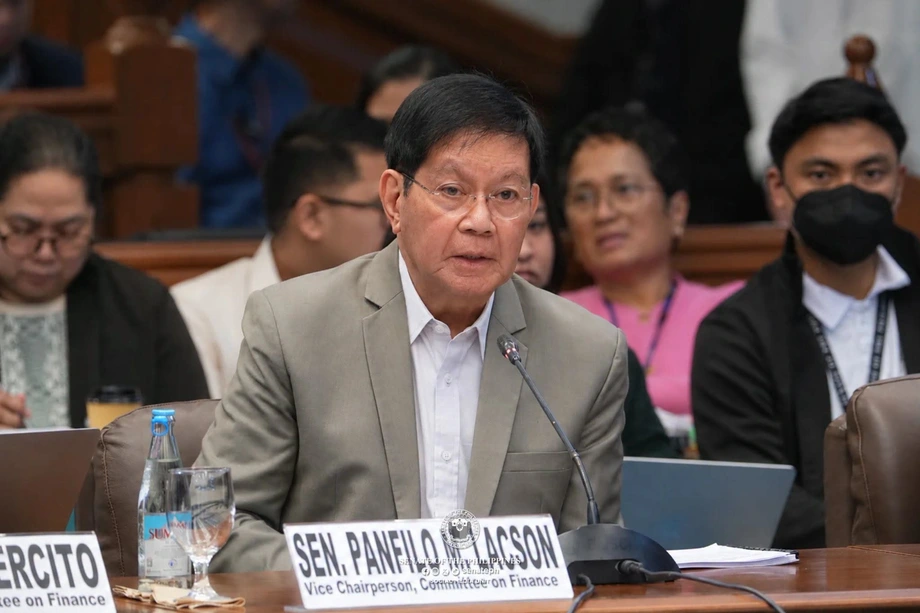
Senator Panfilo Lacson said the Senate version still contains at least P241 billion in fragmented cash aid programs and thousands of multipurpose buildings that he called patronage spending. The Senate trimmed the ayuda allocations from P263 billion in the House-approved GAB, but the measure still funds 3,950 multipurpose buildings. That is separate from another 1,584 multipurpose buildings under the Local Government Support Fund's financial assistance subprogram from 2022 to 2026.
Lacson said the government has already spent more than P770.9 billion on 79,816 multipurpose buildings over the past 12 to 14 years. He questioned the need for another P54 billion allocation for 3,950 new buildings. His office identified at least 30 multipurpose buildings suspected to be ghost or non-existent. He alleged commissions of about 10 percent. During his interpellation, he showed Ejercito an example of a building that was funded in 2024, 2025 and 2026, yet the site remains an empty lot. Lacson said some projects received double, triple, and even quadruple appropriations.
Lacson also flagged flood control projects with double and triple appropriations. He said some were funded in 2024, 2025 and 2026 but still appear in the proposed 2027 budget. "Funded in 2024, 2025, 2026, there is funding in 2027, but it's still land there, no structure," he said. He vowed to oppose the additional funding and to remove these projects.
He cited a 29 percent plunge in government construction from January to September 2026, a 4.8 percent contraction in agriculture, forestry and fishing, and a 15.1 percent drop in public construction investment. Third-quarter gross domestic product growth slowed to 2.1 percent from 2.4 percent in the second quarter, while October inflation hit a three-year high of 7.8 percent. "We must alter our priorities. Because our government spending is already in the negative. This is what's pulling our economy down. So we need to redirect our 2027 GAA so that we can recover from our economic slump," he said.
Lacson wants MAIFIP funds channeled to the Universal Health Care program instead, citing estimates that medical inflation under MAIFIP reaches around 50 percent. He also questioned Tulong Dunong scholarships despite free tertiary education. Ejercito said his office would review the flagged projects and remove those found to have irregularities.
The Economic Stakes
The Philippine economy is expected to grow by 3 percent in 2026 "realistically," Ejercito said. Economy Secretary Arsenio M. Balisacan said the economic team is confident the country could recover next year with a target of about 5 percent gross domestic product growth. Michael L. Ricafort, chief economist of Rizal Commercial Banking Corp., described the spending increases as "catch up spending" whose efficacy depends on better governance standards.
This is a delicate balancing act on the need for government catch up spending, especially to make up for the underspending since the latter part of 2025 due to the anomalous flood control projects and stimulate the economy to bring back GDP growth to at least 5% to 6%.
Senate President Sherwin Gatchalian said a reenacted budget is not an option. A reenacted budget happens when Congress fails to pass a new spending plan and the previous year's budget is reused. Gatchalian argued that the sluggish economy needs fresh spending. "If we have a new budget, we will have new spending, because if we analyze it, one of our country's economic problems is slow spending. So, the 2027 budget will serve as a stimulus program," he said.
A Tight Calendar
The Senate is working against a tight schedule. Plenary deliberations opened on Nov. 23. The Senate targets approval of its version by Dec. 7, with the bicameral conference committee likely to begin on Dec. 10 or around the week of Dec. 13. Ratification is targeted for Dec. 17, the same day Congress adjourns. President Ferdinand Marcos Jr. must sign the budget before the New Year to avoid a reenacted budget. Last year's budget impasse pushed ratification to nearly Dec. 29.
- Nov. 20, 2026: Committee Report No. 131 filed on House Bill 10858.
- Nov. 23, 2026: Plenary deliberations begin.
- Dec. 1, 2026: Impeachment trial of Vice President Sara Duterte resumes.
- Dec. 7, 2026: Senate targets approval of its version.
- Dec. 10 or week of Dec. 13: Bicameral conference committee.
- Dec. 17, 2026: Target ratification and adjournment.
- Before Jan. 1, 2027: President Marcos must sign the budget.
The Senate is also juggling the impeachment trial of Vice President Sara Duterte, which is scheduled to resume on Dec. 1 and aims to conclude before the year ends. Six defense witnesses remain. The Commission on Appointments must process about 35 presidential appointees, including Cabinet secretaries, ambassadors and military officers, before the Dec. 17 adjournment. The CA will hold three hearings before the break.
Senators denied an allegation by Vice President Duterte that the 2027 budget is being used as a bargaining chip in her impeachment trial. Senator Erwin Tulfo expressed surprise: "For what? The 2027 budget? Wow!"
Key Points
- The Senate finance committee filed Committee Report No. 131 on Nov. 20, 2026, proposing P204.634 billion in amendments to the 2027 national budget.
- The panel cut about P97 billion from DPWH projects, including 3,132 House-only projects worth P87 billion that lacked documentary requirements.
- Health received a P52 billion increase, with PhilHealth's allocation rising from P74.4 billion to P94.2 billion.
- Education received P915.4 billion, including P11 billion for the School-Based Feeding Program, but the ARAL tutoring program got only P350 million in the House version against a P15.68 billion request.
- Agriculture received P251 billion, with additional funds for rice production, El Niño response and irrigation.
- The Senate restored P33.1 billion for foreign-assisted infrastructure and added P30 billion in loan proceeds for the Metro Manila Subway and North-South Commuter Railway.
- Senator Panfilo Lacson flagged at least P241 billion in fragmented cash aid and thousands of multipurpose buildings as patronage spending, citing ghost projects and double appropriations.
- The Senate targets ratification by Dec. 17 so President Marcos can sign the budget before the New Year and avoid a reenacted budget.