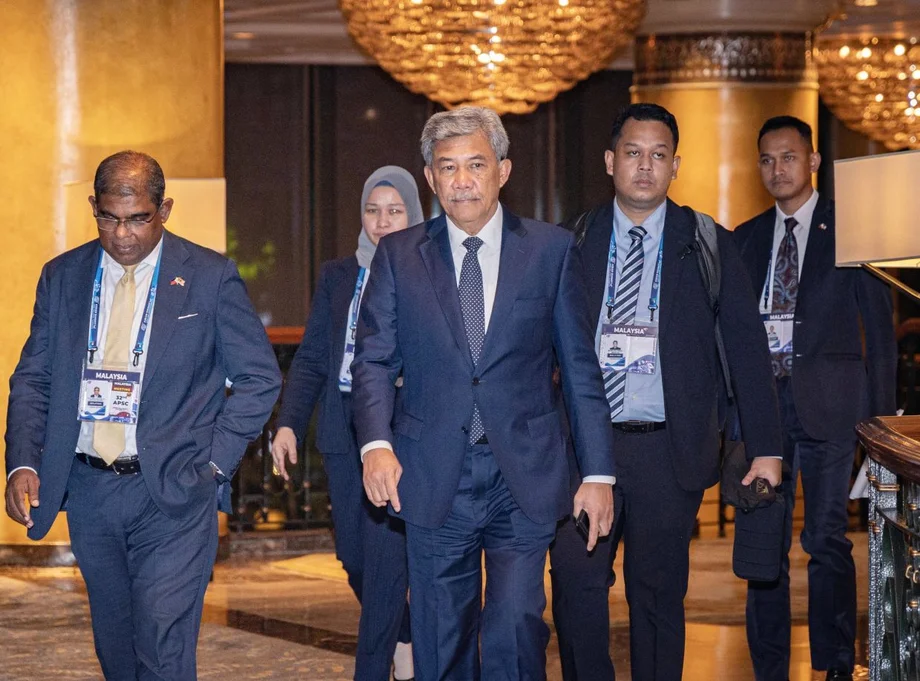
Two rejected proposals put ASEAN's peace framework under strain
Myanmar has rejected proposals on ASEAN's special envoy and regular progress reports, Malaysia's Foreign Minister Datuk Seri Mohamad Hasan said in Manila on November 14, 2026, leaving the regional bloc without agreement on two tools intended to advance its peace efforts.
Contents
- Two rejected proposals put ASEAN's peace framework under strain
- Why Myanmar wants the envoy role removed
- What the five commitments require
- Progress reports have an existing mandate
- Five years of decisions lead to Manila
- Thailand seeks a return to ministerial meetings
- Malaysia balances engagement with pressure
- Can a longer appointment sustain mediation?
- What the decisions mean for civilians
- Key Points
The dispute comes before ASEAN leaders meet in Manila from November 15 to 17 to review Myanmar's exclusion from summits and foreign ministers' meetings. Myanmar argues that elections have removed the need for an envoy. Malaysia maintains that the role belongs to the Five-Point Consensus, the framework ASEAN adopted in April 2021 after the military coup.
The disagreement reaches beyond whether to appoint a diplomat. ASEAN leaders had already instructed foreign ministers to monitor progress and report back in decisions adopted in October 2024 and October 2025. The 2025 decision also asked senior officials to consider an envoy serving for longer, to preserve continuity.
Philippine Foreign Affairs Secretary Maria Theresa Lazaro, who serves as ASEAN's special envoy on Myanmar, said on November 14 that negotiations on a review of the framework were continuing. She described the bloc's position at a press conference:
To answer you bluntly, there is no easing (of the approach to Myanmar). There is still the Five-Point Consensus.
ASEAN now faces linked decisions: how to maintain mediation, how to measure results and whether Myanmar's political leadership should return to regional meetings. Thailand supports allowing Myanmar's foreign minister to participate. Lazaro said that proposal remained under discussion, with no decision made.
Why Myanmar wants the envoy role removed
Mohamad said Myanmar had challenged the continuing appointment of a special envoy because the country had held elections. He described the objection to Malaysian media:
Myanmar rejected it and even said there was no longer a need for a special envoy because they had held elections. They said, 'why is there a need for a special envoy anymore'?
Voting took place in December 2025 and January 2026. The Union Solidarity and Development Party, backed by the military, won overwhelmingly in the absence of viable opposition. Malaysia's position is that changing the envoy arrangement requires a decision by ASEAN's heads of government.
ASEAN's existing policy sets a different sequence from Myanmar's argument. In their October 2025 decision, adopted in Kuala Lumpur on October 26, leaders said an end to violence and inclusive political dialogue must come before elections. They also called for voting that was free, fair, peaceful, transparent, inclusive and credible.
The current disagreement therefore concerns what must change before ASEAN changes its response. Myanmar points to completed elections. Malaysia points to commitments on violence, dialogue and mediation that remain part of the regional framework.
What the five commitments require
ASEAN adopted the Five-Point Consensus to connect an end to violence with political talks and humanitarian relief. Its five commitments are:
- An immediate end to violence, with all parties exercising restraint.
- Constructive dialogue among all parties concerned to seek a peaceful solution.
- A special envoy of the ASEAN chair to help mediate dialogue, assisted by ASEAN's secretary general.
- Humanitarian assistance through the ASEAN Coordinating Centre for Humanitarian Assistance on disaster management, known as the AHA Centre.
- A visit to Myanmar by the envoy and a delegation to meet all parties concerned.
The envoy consequently has a role that extends beyond talks with Myanmar's authorities. The framework requires contact with different parties to the conflict, bringing political opponents and armed groups into the effort to find peace.
Decision 19 of the 2025 review directs the envoy to continue engaging relevant stakeholders to build trust toward inclusive national dialogue. Decision 22 asks senior officials to deliberate on an envoy serving for longer. ASEAN was considering how to sustain that work before Myanmar challenged whether the role should continue at all.
Progress reports have an existing mandate
Mohamad said Myanmar also rejected a proposal on progress reports, describing scrutiny of developments in the country as an internal matter. The two proposals were discussed through non-papers, informal diplomatic documents used to explore ideas before governments agree on formal wording.
Malaysia wants implementation assessed against clear targets and measurable progress. Senior ASEAN officials have been discussing the two documents under a mandate from the 48th ASEAN Summit, held in Cebu in May. Leaders want reports that the special envoy can present for review at ministerial and summit meetings.
Reporting already appears in two successive leaders' decisions. The October 2024 decision, adopted in Vientiane on October 9, mandates foreign ministers to monitor progress and report to the ASEAN Summit. Decision 28 of the 2025 review repeats that responsibility for the next summit.
The proposed assessment methods would give that reporting a more specific purpose: showing whether diplomacy is producing observable changes. Singapore Foreign Minister Vivian Balakrishnan has identified protection of civilians, release of political detainees including Aung San Suu Kyi, and humanitarian access regardless of political allegiance as areas where progress should be visible.
Those indicators concern practical outcomes. They would ask whether civilians face less violence, whether detainees gain freedom and whether aid reaches communities across political and territorial divisions. The exact targets and reporting arrangements remain under negotiation.
Five years of decisions lead to Manila
ASEAN's debate has developed through repeated reviews rather than a single negotiation. The main milestones show how the bloc moved from adopting a peace framework to discussing continuity and measurement:
- April 2021: ASEAN leaders agree on the Five-Point Consensus following Myanmar's military coup.
- October 9, 2024: Leaders in Vientiane retain the framework, continue envoy engagement and mandate progress reporting.
- October 26, 2025: Leaders in Kuala Lumpur reaffirm those duties and request discussion of an envoy serving for longer.
- December 2025 and January 2026: Myanmar holds elections, which its authorities later cite in challenging the envoy's role.
- May 2026: Leaders at the 48th ASEAN Summit in Cebu support more frequent engagement with Myanmar.
- November 14, 2026: Mohamad describes Myanmar's objections, while Lazaro says the review remains under negotiation.
- November 15 to 17, 2026: Leaders are scheduled to meet in Manila and review Myanmar's participation restrictions.
Philippine spokesperson Dominic Xavier Imperial said leaders would issue a negotiated document reviewing implementation of the Five-Point Consensus. Its wording will have to address competing preferences over engagement while preserving an approach members can collectively support.
Thailand seeks a return to ministerial meetings
Thai Foreign Minister Sihasak Phuangketkeow wants Myanmar's foreign minister to participate in ASEAN meetings. After visiting Myanmar, he said direct engagement would help the bloc communicate its concerns to people making decisions.
Sihasak hopes sufficient progress will allow a decision by Thailand's ASEAN chairmanship in 2028 at the latest. Thailand's interests include fighting along its border, refugees, migrant workers, trade and energy cooperation.
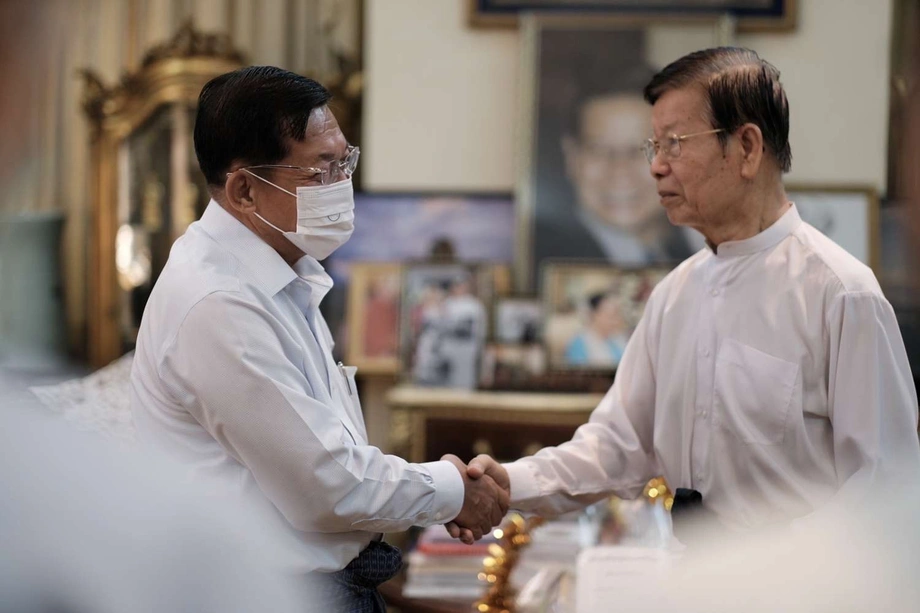
Laos, Thailand, Vietnam, Cambodia and Malaysia have welcomed Myanmar leader Min Aung Hlaing on official visits this year. Those five countries account for five of ASEAN's 11 members, showing how widely direct engagement has spread while collective restrictions remain in place.
Myanmar has also organised its own effort to restore its regional standing. Its ASEAN Affairs Committee held its first meeting on October 13 and is tasked with recovering the country's original role and rights in the bloc.
ASEAN's 2025 decision maintains representation by nonpolitical officials at summits and foreign ministers' meetings until meaningful progress on the peace framework. Changing that arrangement requires collective agreement. The Manila discussions will bring Thailand's proposed opening before leaders alongside the existing conditions.
Malaysia balances engagement with pressure
Malaysia illustrates the practical demands behind closer contact. Prime Minister Anwar Ibrahim pledged in October to work toward Myanmar's reintegration, while his government sought cooperation on returning Myanmar nationals.
During Min Aung Hlaing's October visit, Anwar said Malaysia had repatriated 10,493 Myanmar nationals that year. The talks also covered a plan to return 5,000 immigration detainees. Rights groups warned that people returned could face persecution, forced military conscription or other abuses.
Mohamad nevertheless maintains that the Five-Point Consensus must remain ASEAN's main reference. He said the bloc operates by consensus, meaning members must reach a shared position, and acknowledged limitations under its charter. He also described Malaysia's concern about pushing Myanmar toward withdrawal:
We do not want to pressure Myanmar so much that it eventually leaves Asean. We do not want that. We want Asean to remain intact.
More frequent engagement, Mohamad said, is intended to prevent further isolation. He said contacts extend beyond the military authorities to nearly 40 groups involved in Myanmar's internal conflicts. Some members have also suggested examining how ASEAN's framework could align with Myanmar's own five-point roadmap.
Continued hostilities against civilians remain a major obstacle to accepting Myanmar's proposals, Mohamad said. He called for a ceasefire, engagement with opposing parties and inclusive elections.
Can a longer appointment sustain mediation?
Lazaro has acknowledged a weakness in the annual rotation of special envoys: each incoming ASEAN chair must rebuild relationships and knowledge of the conflict. A longer appointment could preserve contacts across successive chairmanships, making mediation less dependent on an annual handover.
ASEAN foreign ministers have discussed both an envoy serving for longer and a mechanism for assessing implementation. These address two different problems. Continuity would help sustain diplomatic work; benchmarks would give members common standards for judging results.
Thailand's November call for action also proposed a permanent crisis coordination team and stronger regional leadership. Sihasak argued that repeating support for the framework each year needed to be matched by practical direction for the envoy.
Lazaro's October humanitarian mission showed the access problems such diplomacy faces. Following preparations for her October Myanmar mission, she held talks and delivered assistance but did not meet Suu Kyi. The former civilian leader was moved to house arrest in April, and a Red Cross official met her in August; foreign leaders and envoys have continued seeking access.
Simon Tay, chairman of the Singapore Institute of International Affairs, supports interim goals such as regular access to Suu Kyi, reduced violence and humanitarian aid. He described the order in which ASEAN should proceed:
Political acceptance should follow progress, not precede it.
What the decisions mean for civilians
Myanmar's civilians need results from the commitments being debated: fewer attacks, access to relief and political talks that include people outside the authorities' own structures. Millions remain displaced as the civil war continues.
ASEAN's 2025 decision specifically calls for humanitarian assistance to reach people displaced by conflict directly and without discrimination. It supports delivery through the AHA Centre and other mechanisms, including across borders where necessary. The decision also recognises recovery needs after the March 28, 2025 earthquake.
The 2024 and 2025 reviews both connect Myanmar's crisis with regional problems including human trafficking, drug trafficking and online scams. Border states and countries receiving migrants therefore face consequences alongside the people living within Myanmar.
Manila's immediate task is to settle a collective position on the review, the envoy and participation restrictions. Singapore takes over ASEAN's chairmanship in 2027, inheriting responsibility for carrying the resulting decisions into another year. The central test will be whether regional engagement delivers the civilian protection, aid access and inclusive dialogue leaders have repeatedly requested.
Key Points
- Myanmar rejected proposals concerning ASEAN's special envoy and progress reports, according to Malaysia's foreign minister.
- ASEAN's 2024 and 2025 decisions already mandate monitoring and reporting on the peace framework.
- Myanmar cites completed elections in challenging the envoy's role; ASEAN's 2025 decision called for peace and inclusive dialogue before voting.
- Thailand wants Myanmar's foreign minister admitted to ASEAN meetings, with the proposal still under discussion.
- Leaders meet in Manila from November 15 to 17, 2026, to review implementation and Myanmar's participation restrictions.
- Proposals for a longer envoy appointment and measurable progress aim to improve continuity and accountability.