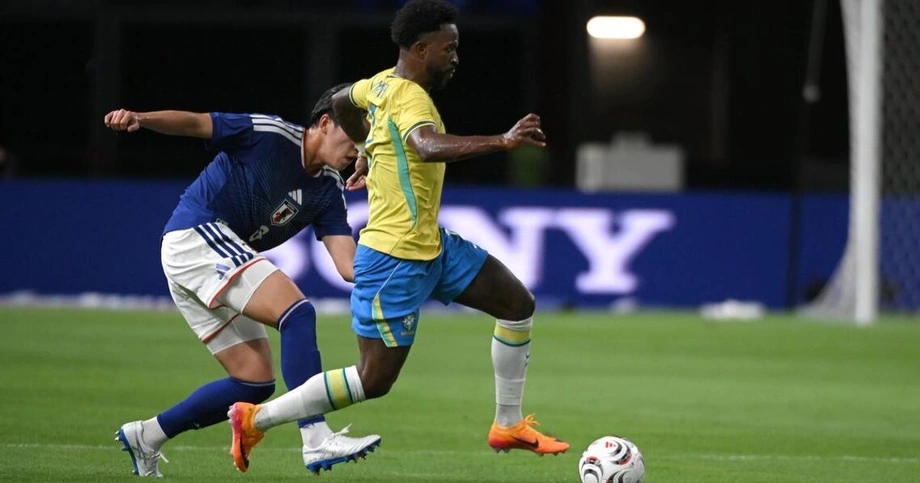
A 91st minute finish decides a dramatic rematch
Tatsuhiro Sakamoto scored in the first minute of stoppage time as Japan beat Brazil 3-2 at Singapore's National Stadium on November 14, 2026, recovering from the loss of a two goal lead to win in front of 38,688 spectators.
Contents
- A 91st minute finish decides a dramatic rematch
- Japan punish Brazil's exposed defence
- Vinicius brings Brazil back twice
- Substitutes produce the final twist
- Raphinha apologises while challenging decisions
- Brazil's younger team faces a demanding test
- A crowd drawn from across the region
- A different outcome from Singapore's 2014 meeting
- Paraguay and Singapore are next
- Key Points
Takefusa Kubo put Japan ahead in the 15th minute and Keito Nakamura doubled the advantage in the 19th. Vinicius Junior brought Brazil back with goals in the 33rd and 75th minutes before substitute Sakamoto delivered the decisive finish.
The J.League's official match record lists Sakamoto's winner at 90+1 and red cards for Brazil coach Carlo Ancelotti and forward Raphinha a minute later. Brazil protested an incident before the winning goal, with Singapore referee Jansen Foo sending Ancelotti off after he entered the pitch.
Japan's victory in the Mizuho Blue Challenge followed a 2-1 defeat by Brazil in the round of 32 at the 2026 World Cup. On that occasion, Japan had taken the lead before losing to a goal in added time. In Singapore, they delivered the late blow themselves.
The result was Japan's second victory over Brazil in 16 meetings. Their previous win had also finished 3-2, the previous October, when they came from behind. This time, Hajime Moriyasu's team had to regain control after Brazil erased their early advantage.
Japan punish Brazil's exposed defence
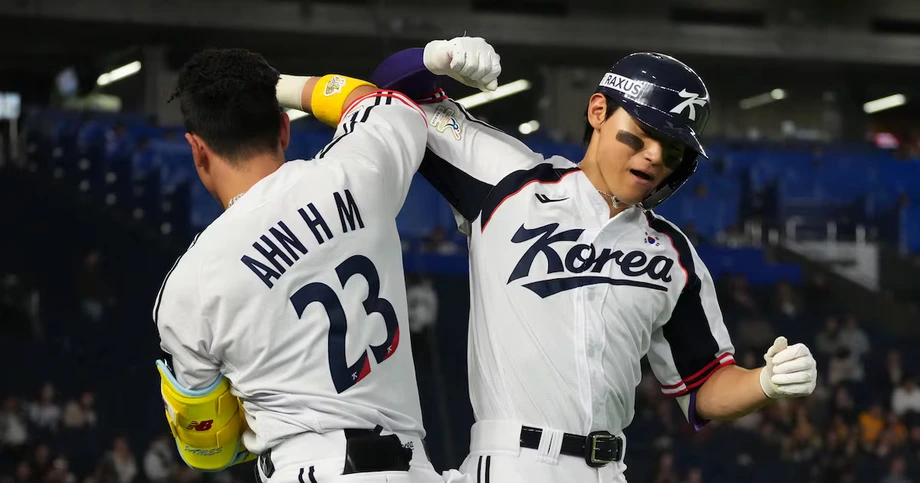
Japan's opening goal came from quick work through the middle. Daizen Maeda fought to retain possession before captain Ritsu Doan sent a pass behind Brazil's defence for Kubo. The midfielder adjusted his position and beat goalkeeper Pedro Morisco with a low finish.
Brazil had been defending high up the pitch, leaving space between their defenders and goalkeeper. Doan's pass allowed Kubo to attack that space before the defence could recover.
Four minutes later, Shuto Nakano supplied the second goal from the right. His pass back into the penalty area reached Nakamura, who had time to control the ball and choose his finish past Morisco.
Japan's pressing helped set the tone. Players moved quickly to challenge Brazil when possession changed, making it difficult for the South Americans to settle. The two early goals rewarded that intensity and forced Ancelotti's team to chase the match before 20 minutes had passed.
Kubo also marked his goal with a message of support for Real Sociedad teammate Ander Barrenetxea, who had undergone surgery for a severe hamstring injury. Kubo himself had suffered a left knee injury during Japan's opening World Cup draw against the Netherlands earlier in the year.
Vinicius brings Brazil back twice
Vinicius supplied Brazil's response with two strikes from outside the penalty area. His first arrived in the 33rd minute, shortly after Japan goalkeeper Zion Suzuki had come off his line to deny Estevao a clear chance.
The Real Madrid forward found room between defenders and drove a shot from about 23 metres into the top corner. Japan still led 2-1 at halftime, but Brazil had recovered a route into the contest.
Suzuki remained important after the interval, saving an effort from Raphinha inside the penalty area. Brazil pushed for an equaliser while Japan sought opportunities to extend their lead, although clear chances became less frequent.
Vinicius struck again in the 75th minute following a short corner. His curling effort from the left went in off the post, bringing Brazil level with 15 minutes of normal time remaining. The official record lists the goal at 75 minutes, or 30 minutes into the second half.
Substitute Endrick then hit the crossbar as Brazil threatened to complete the turnaround. Japan had gone from a comfortable early lead to facing the possibility of another painful defeat after scoring first against Brazil.
Substitutes produce the final twist
Moriyasu changed several attacking players during the second half, introducing Sakamoto, Junya Ito, Takumi Minamino and Koki Ogawa in the 71st minute. Sakamoto replaced Doan, while Brazil brought Endrick on for Raphinha at the same stage.
The changes gave both teams fresh options for the closing minutes. Endrick came closest to putting Brazil ahead, but Sakamoto eventually settled the game at the other end.
A deflected shot fell to Sakamoto close to goal in added time. He lifted the ball over Morisco to restore Japan's lead at 3-2, leaving Brazil little time to respond.
The main scoring and disciplinary moments were:
- 15th minute: Kubo finished Doan's pass to put Japan ahead.
- 19th minute: Nakamura converted Nakano's delivery for 2-0.
- 33rd minute: Vinicius reduced Brazil's deficit with a shot from distance.
- 75th minute: Vinicius scored again, curling the ball in off the post.
- 90+1: Sakamoto scored Japan's winning goal.
- 90+2: Ancelotti and the already substituted Raphinha received red cards.
Stoppage time is added at the end of each half to account for interruptions such as substitutions and injuries. Sakamoto's goal came in the first of those extra minutes, giving Japan a late victory in a match that had repeatedly changed direction.
Raphinha apologises while challenging decisions
Brazil's bench believed a foul had occurred before Sakamoto's goal. Ancelotti entered the pitch to protest, while Raphinha, who was no longer playing, also confronted the referee. Their dismissals followed the winning goal, and some Brazil players continued challenging the officials after the final whistle.
Raphinha, Brazil's captain for the match and Barcelona's captain, apologised afterward for his conduct.
First of all, I want to take this opportunity to apologize for my behavior and for being sent off. Sometimes it's difficult to control myself.
He also criticised three decisions: an alleged handball before Japan's opener, a penalty appeal in the first half and what he described as a foul on Joao before Sakamoto scored. Raphinha said the video assistant referee, or VAR, had helped validate Japan's third goal.
VAR allows designated officials to review video of certain major incidents, including goals and possible penalties. No detailed explanation from the match officials was given for the disputed decisions. Japan's winning goal stood.
Raphinha also acknowledged that Brazil needed to improve and said the team had played better in the second half. He will miss the next friendly against Singapore because of suspension, removing one of Ancelotti's experienced attacking options.
Brazil's younger team faces a demanding test
Ancelotti's selection mixed established stars with players still building experience in international football. Brazil's starting team had an average age of 24, and six starters had fewer than 10 appearances for the national side. Corinthians midfielder Andre made his debut.
The wider squad had been shaped around renewal. Brazil's selection for Singapore included 15 players under 23 in a group of 26, with five awaiting their first senior international appearance. Those younger players accounted for about 58 percent of the squad.
Experienced names including Vinicius, Raphinha, Gabriel Magalhaes and Bruno Guimaraes gave Ancelotti a core around which to assess newcomers. Other regulars, including goalkeepers Alisson and Ederson, captain Marquinhos and forward Gabriel Martinelli, were absent from the squad.
Moriyasu chose a more familiar Japan team, retaining six starters from the World Cup meeting with Brazil. Nakano, making only his third appearance, was the only starter who entered the match with fewer than 17 caps. A cap is an appearance for a national team.
The official statistics recorded 21 shots for Brazil and 16 for Japan. Brazil therefore attempted five more shots, but Japan scored three times to Brazil's two. Suzuki's saves, Brazil's effort against the crossbar and Sakamoto's late finish all mattered in a match where both teams created chances.
A crowd drawn from across the region
Singapore's National Stadium attracted 38,688 spectators despite ticket prices ranging from S$98 to S$888. Fans travelled from places including China, Chinese Taipei, Hong Kong and Malaysia, while some Brazil supporters came from the Americas.
The attendance was about 2.7 times the 14,316 who watched Paraguay beat Singapore 4-1 at the same venue the previous evening. The difference was 24,372 spectators, illustrating the drawing power of Japan and Brazil for this showcase.
Koji Senga, a Japanese citizen working in Singapore's semiconductor industry, paid about S$250 per ticket and arranged for his wife to fly from Tokyo to watch Japan live for the first time. The 54-year-old described why the World Cup rematch mattered to him.
I was very much looking forward to revenge since Japan lost to Brazil at the World Cup. The Japan national team has been stronger and stronger over the years and as Japanese, we are very proud of them.
Brazilian supporter Eme Campos, 28, who works in insurance in Boston, travelled with Caio Santos. Together, they spent at least S$15,000 on flights, accommodation and match tickets. Campos described combining travel with support for the national team.
This is my first time to Singapore and we decided to combine it to watch our beloved Brazil. This is how we want to enjoy life, travel to a beautiful place and watch this beautiful sport. The national team is the pride of our country no matter the result.
A different outcome from Singapore's 2014 meeting
Japan and Brazil had met at the National Stadium in October 2014, when Neymar scored all four goals in Brazil's 4-0 victory. That match drew 51,577 spectators, compared with 38,688 for the latest meeting.
The 2026 crowd was 12,889 smaller, but those attending saw a much closer contest. Instead of one Brazilian forward deciding the match with four goals, Vinicius scored twice and still finished on the losing side.
For Japan, the change was especially striking. Their latest victory required an early attacking surge, resistance during Brazil's recovery and a decisive contribution from the bench. Moriyasu's team found a way to win even after the advantage built by Kubo and Nakamura had disappeared.
Paraguay and Singapore are next
The four nation Mizuho Blue Challenge continues on November 17, when Japan are scheduled to face Paraguay and Brazil meet hosts Singapore. Those fixtures complete the programme of four friendlies.
Paraguay enter their meeting with Japan after beating Singapore 4-1 in the opening fixture on November 13. Brazil must prepare for the hosts without Raphinha following his dismissal.
Japan leave the Brazil match with a second victory over the five time world champions and another opportunity to test their squad against South American opposition. Brazil's next game offers Ancelotti a chance to assess his younger players after a contest in which his team recovered from 2-0 down but conceded the decisive goal in added time.
Key Points
- Japan beat Brazil 3-2 at Singapore's National Stadium on November 14, 2026.
- Kubo and Nakamura established a 2-0 lead before Vinicius scored twice to equalise.
- Substitute Sakamoto won the match with a goal at 90+1.
- Ancelotti and the already substituted Raphinha were sent off after protests over the winner.
- The crowd of 38,688 watched Japan record their second win over Brazil in 16 meetings.
- Japan face Paraguay and Brazil play Singapore on November 17, with Raphinha suspended.