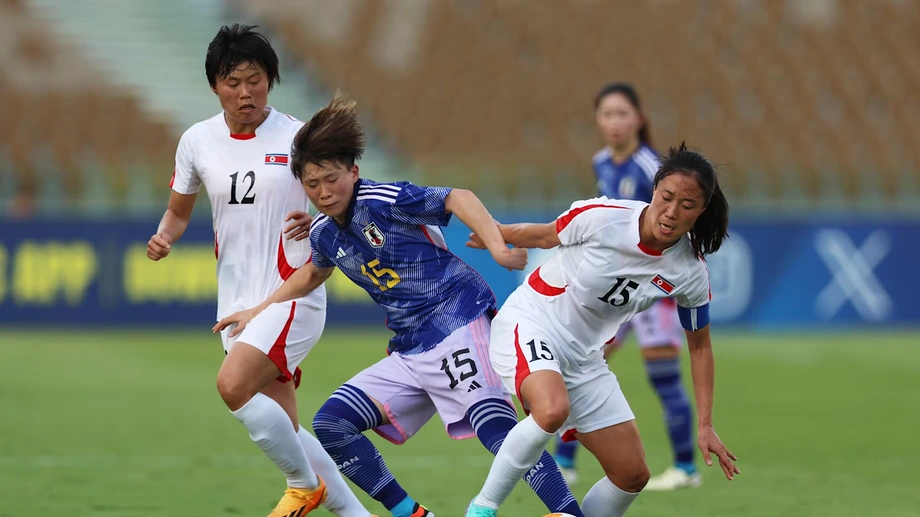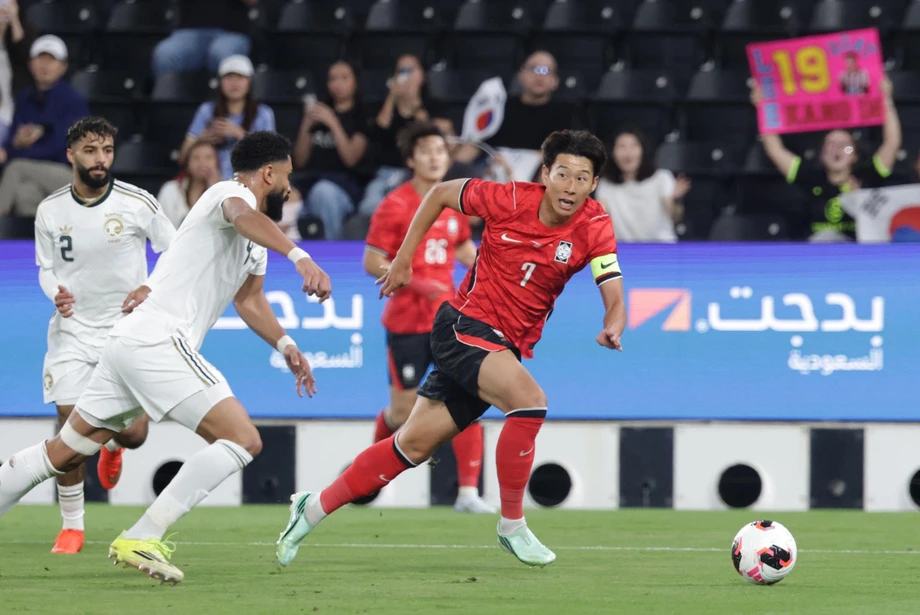
Three home runs turn elimination threat into a final berth
South Korea beat Taiwan 6-4 at Tokyo Dome on November 14, 2026, using three home runs and six innings from starter Lee Ro-woon to reach the Asia Professional Baseball Championship final after losing its first two games.
Contents
- Three home runs turn elimination threat into a final berth
- Japan's 11-run opening inning changes the stakes
- Why one win was enough to advance
- Park starts a three-run third inning
- Lee strikes out nine despite Taiwan's response
- Kim answers immediately after the tie
- Park adds a double, Moon supplies breathing room
- A breakthrough night for Park
- Japan awaits after another unbeaten preliminary round
- Key Points
Park Jae-hyun opened the scoring, Kim Do-yeong broke a 3-3 tie and Moon Jung-bin supplied the final insurance run. Manager Choi Won-ho's team finished the preliminary round with one win and two losses, the same record as Taiwan and Australia, but advanced through the Team Quality Balance tiebreaker.
South Korea will face Japan at Tokyo Dome on November 15 at 7 p.m. local time. Japan finished the preliminary round unbeaten, completing its third victory with a 16-1 win over Australia earlier on November 14.
The championship game gives South Korea its third APBC final appearance, following runner-up finishes against Japan in 2017 and 2023. It also offers an immediate rematch after Japan's 9-5 victory on November 13, when South Korea recovered from a four run deficit before losing to another late Japanese home run.
The report of South Korea's November 13 defeat identifies the current tournament as the 2026 APBC and dates the final to November 15, 2026. The official 2023 tournament details cover the earlier edition, held at Tokyo Dome from November 16-19, 2023. In that tournament, South Korea beat Chinese Taipei 6-1 on November 18 before losing the November 19 final to Japan 4-3. The official final standings placed Japan first, South Korea second, Chinese Taipei third and Australia fourth.
Japan's 11-run opening inning changes the stakes
Japan gave South Korea a route back into the tournament by overwhelming Australia before the evening game. An 11-run first inning, including a grand slam by Rui Muneyama, put Japan in control almost immediately.
Australia scored its only run on Brent Aydel's solo home run in the fourth inning. Sasaki Tai drove in Japan's 16th run in the fifth, and the game ended after seven innings under the tournament's mercy rule. That rule allows a preliminary game to finish after seven innings when one team leads by at least 10 runs.
Japan had already beaten Taiwan 5-0 and South Korea 9-5. Its victory over Australia completed a perfect preliminary round and left South Korea needing a win over Taiwan, regardless of the margin. An Australian victory would instead have eliminated South Korea before it took the field.
Why one win was enough to advance
The APBC preliminary round involved four teams, each playing the other three once. The top two advanced to the final. Japan's three victories secured first place, while South Korea's win over Taiwan left the other three teams level at one victory and two defeats.
Team Quality Balance, usually shortened to TQB, separated those teams. The calculation subtracts runs allowed per defensive inning from runs scored per offensive inning. In simple terms, it compares how quickly a team scores with how quickly it gives up runs, allowing for differences in innings played.
The official 2023 tournament rules rank preliminary-round teams by winning percentage, then by TQB across all three preliminary games: (runs scored / offensive innings) minus (runs allowed / defensive innings). Further tiebreakers are ER-TQB, which uses earned runs, team batting average and a coin toss. The report of the November 13, 2026, game also describes TQB across all three preliminary games as the deciding measure in a three-way tie at one win and two losses. However, the official pages cover 2023, not 2026, and do not substantiate the precise 2026 TQB figures or the conclusion that any winning margin against Taiwan would be enough.
Australia finished with a TQB of minus 0.640. Before their last preliminary game, South Korea stood at minus 0.333 and Taiwan at minus 0.167. Japan's heavy win had left Australia far enough behind that the winner of South Korea against Taiwan would finish ahead of it.
South Korea therefore needed to win rather than chase a particular winning margin. The tournament also listed further tiebreakers involving earned runs, preliminary round batting average and ultimately a coin toss, but those steps were unnecessary.
Park starts a three-run third inning
Park Jae-hyun, batting ninth and playing left field, broke a scoreless tie in the bottom of the third. Facing Taiwan starter Hsu Hsiang-sheng, he drove a fastball travelling at 145 kilometres per hour over the right field fence for a solo home run measured at 115 metres.
Park had been behind in the count with two strikes, leaving him little room for error. SBS Sports commentator Lee Soon-chul praised his response to a pitch left in a hittable position:
Even with an absolutely unfavorable count, he didn't miss this mistake.
South Korea kept the inning moving as Kim Ji-chan, Kim Joo-won and Han Dong-hee reached base. Kim Ji-chan also stole second. Kim Hwi-jip singled home Kim Ji-chan to make it 2-0, and An Jae-seok later singled to left to bring Han home.
Kim Hwi-jip tried to score on An's hit but was thrown out at the plate, ending the inning with South Korea ahead 3-0. Park's home run had opened the scoring, while the two singles turned it into a lead that Taiwan needed several swings to erase.
Lee strikes out nine despite Taiwan's response
Lee Ro-woon gave South Korea an outstanding start on the mound. The SSG Landers pitcher struck out all three batters in the first inning, using a changeup and fastballs, including one clocked at 150 kilometres per hour.
Taiwan did not record a hit through three innings. Its first came in the fourth, but Lee stranded the runner after a wild pitch had moved him to second base. South Korea still led 3-0 entering the fifth.
Zheng Sheng-an changed the game with a solo home run after the inning's first out. Lee then issued a walk following a battle lasting 10 pitches. With two outs, Zhang Ren-wei hit a home run worth two runs to tie the score at 3-3.
Lee finished with nine strikeouts over six innings, allowing three hits and three runs on 97 pitches. His performance met baseball's definition of a quality start: at least six innings pitched with no more than three earned runs allowed.
Lee had thrown 90 pitches through five innings, but returned for the sixth and retired all three hitters on just seven more pitches. That quick inning gave South Korea a clean transition to its relief pitchers after a difficult fifth.
Kim answers immediately after the tie
Kim Do-yeong restored South Korea's lead before Taiwan could build on its comeback. Leading off the bottom of the fifth, he hit a solo home run against reliever Chen Mu-heng to make it 4-3.
Kim connected with a slider travelling at 135 kilometres per hour with one ball and one strike. The drive travelled an estimated 120 metres. A slider is a pitch that moves sideways and downward, intended to pull the hitter's swing away from solid contact.
The home run came after a quiet opening to Kim's tournament. He had managed one hit in eight at-bats across the losses to Australia and Japan. Against Taiwan, he struck out and flew out to centre field before his decisive third trip to the plate.
Kim's timing mattered as much as the distance. Taiwan had just removed a three run deficit, but South Korea needed only its next batter to take the lead again. Lee then protected that advantage with his efficient sixth inning.
Park adds a double, Moon supplies breathing room
South Korea extended the lead in the bottom of the sixth through consecutive contributions from the bottom of its batting order. Cho Hyeong-woo doubled, and Park followed with a double into right centre that brought Cho home for a 5-3 advantage.
Park's double drove in one run, adding to the run he had supplied with his earlier home run. The two hits meant the ninth batter had directly contributed to two of South Korea's six runs.
Taiwan stayed close. Zheng hit his second solo home run in the top of the seventh, cutting the deficit to 5-4 after Jo Dong-wook had taken over from Lee.
Moon Jung-bin answered in the bottom half. With two outs, the LG Twins hitter sent a solo home run over the left centre field fence, restoring a two run cushion. South Korea then kept Taiwan scoreless over the final two innings to complete its first victory of the tournament.
A breakthrough night for Park
Park's contribution followed a sharp improvement during his season with KIA. Born in 2006 and a graduate of Incheon High School, he entered professional baseball after KIA selected him in the third round, 25th pick, of the previous year's rookie draft.
In 2025, Park collected five hits in 62 at-bats for a .081 batting average. His 2026 figures were much stronger: a .293 average, 19 home runs and 69 runs batted in across 556 plate appearances.
Park also posted an .802 OPS, a statistic that combines how often a hitter reaches base with the value of the bases gained through hits. His Tokyo Dome performance brought both parts of that attacking game into view: a home run that created the first lead and a double that widened the decisive one.
South Korea's scoring came from several places in the lineup. Park, Kim and Moon supplied the home runs, while Kim Hwi-jip and An delivered singles with runners in scoring position. That spread helped the team keep responding when Taiwan closed the gap.
Japan awaits after another unbeaten preliminary round
Japan enters the final having scored 30 runs and allowed six across its three preliminary games. Those totals come from victories of 5-0, 9-5 and 16-1, showing the size of the challenge facing South Korea.
South Korea has lost all five of its previous APBC meetings with Japan, including both earlier finals. The latest defeat featured Muneyama's five runs batted in and two home runs, with his decisive drive arriving after South Korea had fought back to 5-5.
South Korea's route to the final unfolded over four days:
- November 12: South Korea lost its opening game to Australia.
- November 13: Japan beat South Korea 9-5, leaving Choi Won-ho's team without a victory.
- November 14: Japan defeated Australia 16-1, then South Korea beat Taiwan 6-4 to qualify through TQB.
- November 15: South Korea and Japan meet in the final at 7 p.m. at Tokyo Dome. The third place playoff is also scheduled for that day.
The starting pitchers for the final had not been announced. South Korea reaches the championship game with its first win secured and an immediate task: contain a Japanese batting order that has scored at least nine runs in each of its past two games.
Key Points
- South Korea beat Taiwan 6-4 on November 14 to reach its third APBC final.
- South Korea, Taiwan and Australia finished level at one win and two losses; TQB sent South Korea through.
- Park Jae-hyun, Kim Do-yeong and Moon Jung-bin hit South Korea's three home runs.
- Lee Ro-woon struck out nine and allowed three runs over six innings.
- Japan completed an unbeaten preliminary round with a 16-1 victory over Australia.
- The final is scheduled for November 15 at 7 p.m. local time at Tokyo Dome.