How One Project Gets Paid For Four Times
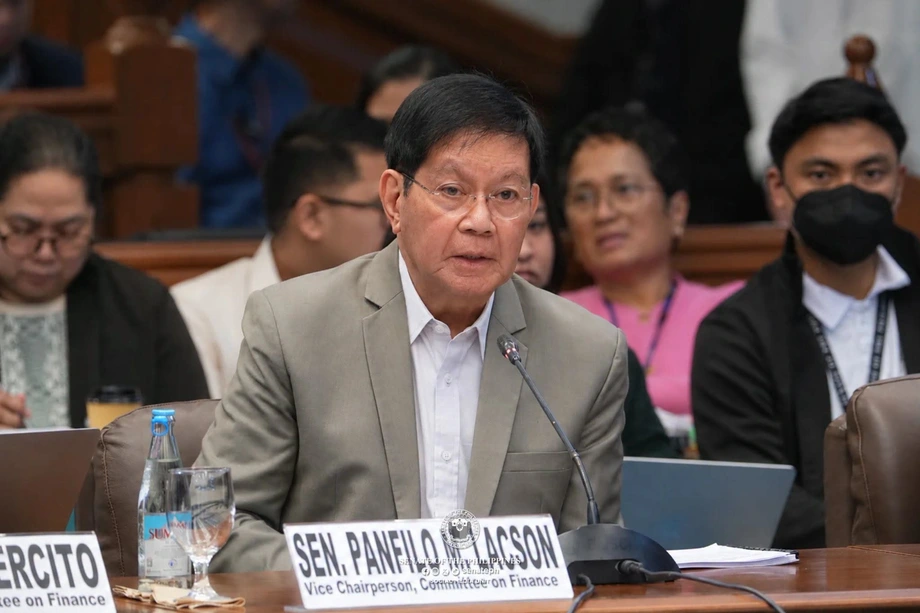
Senator Panfilo Ping Lacson on Monday, November 23, 2026, exposed flood control projects and multipurpose buildings in the Philippines proposed 7.2 trillion peso national budget for 2027 that have been funded two, three, or even four times since 2024 without ever being built. An appropriation is a legal permission inside the national budget that sets aside public money for a specific government project or program. Under normal budgeting rules, once a structure receives its full funding in one year, it should be built and completed without asking taxpayers to pay for the exact same item again in following years.
Contents
Lacson, who serves as Senate President Pro Tempore and a vice chairperson of the Senate Finance Committee, told reporters and radio listeners that his staff discovered identical infrastructure items tucked into the 2027 General Appropriations Bill after already receiving money in the 2024, 2025, and 2026 spending laws. Speaking during a media briefing on Monday, Lacson explained how the repeated allocations appeared in the latest spending measure.
We found more irregularities. Double appropriations. Some flood control projects even received triple budget allocations. They were funded in 2024, 2025, and 2026, yet they remain under the proposed budget in 2027.
These repeated flood control items are separate from at least 30 suspected ghost multipurpose buildings that Lacson and his team identified inside the proposed 2027 budget of the Department of Public Works and Highways (DPWH). A ghost project is a scheme where public money is released from the treasury for a road, dike, or community hall, while inspection of the actual geographic coordinates shows only an empty field or unfinished dirt. Ahead of the Senate plenary debates starting in late November, Lacson prepared drone footage of designated building sites that received allocations in 2024, 2025, and 2026, and are now lined up for a fourth round of money in 2027 despite having no visible structure on the ground.
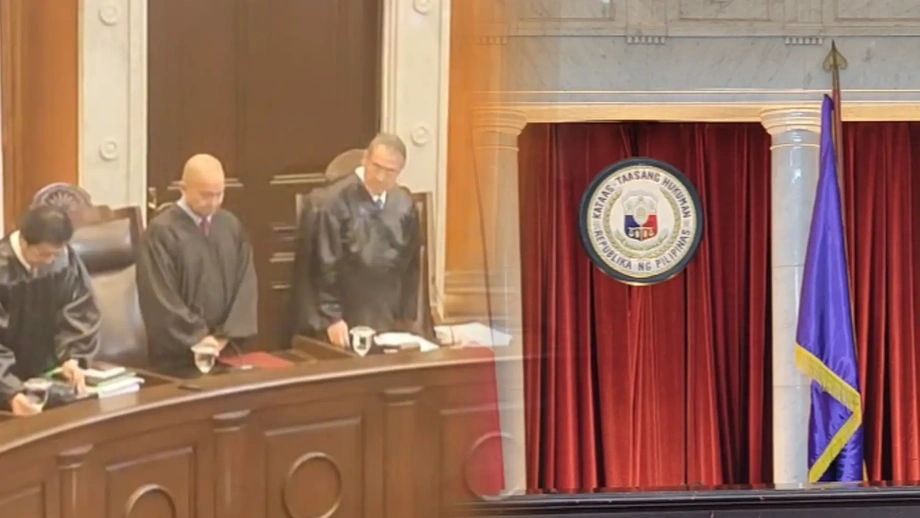
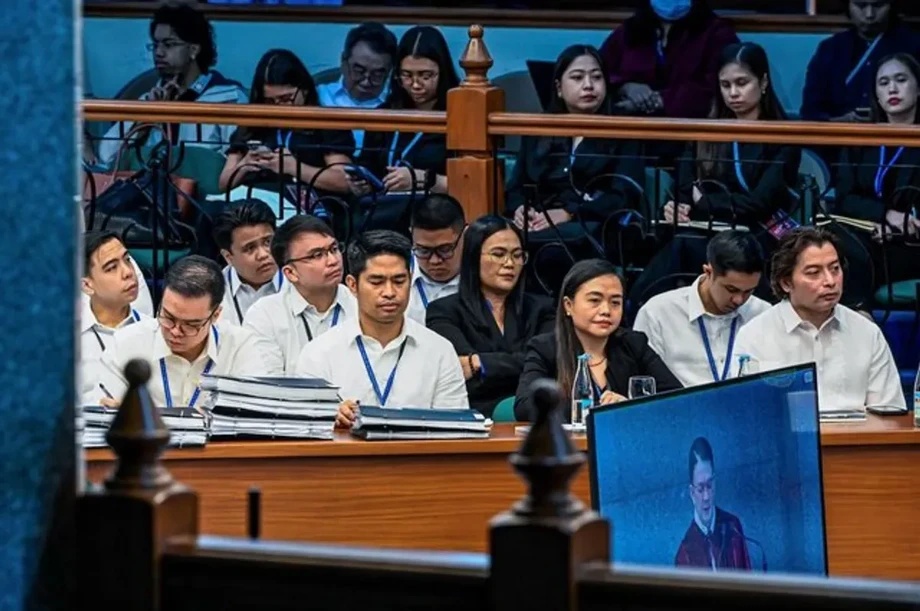
During the first day of plenary budget debates, Lacson presented one of these empty lots to Senate Finance Committee Chairman JV Ejercito, who sponsors the budget bill on the Senate floor. Lacson questioned why lawmakers should approve fresh billions for structures that never materialized, asking where the public funds went and confirming he will move to strip the questionable entries during the period of amendments and, if needed, during the bicameral conference committee where the Senate and the House of Representatives settle differences between their two versions of the budget before sending the final bill to the President by December.
We continue to scrutinize the bill and find more of these kinds of appropriations. If there are double appropriations, one should be removed. If there are quadruple appropriations, three should be removed.
Ejercito responded during the plenary session that his committee office will conduct another review of all the projects Lacson flagged and delete any item found to have irregularities from the Senate version of the 2027 budget.
Why Multipurpose Halls Cost 770.9 Billion Pesos
Over the past 12 to 14 years, the Philippine government has spent 770.9 billion pesos to fund 79,860 multipurpose halls across the country, yet the proposed 2027 spending bill still asks for another 54 billion pesos to build 3,950 new multipurpose buildings. Those 3,950 halls are completely separate from another 1,584 multipurpose buildings funded through the Financial Assistance to Local Government Units subprogram under the Local Government Support Fund between 2022 and 2026. The People's Budget Coalition, an independent group of civil society organizations that tracks public spending, found that total allocations for multipurpose buildings ballooned to 83.7 billion pesos after the House of Representatives augmented the 2027 DPWH budget.
An initial investigation by Lacson and his staff uncovered why these community halls remain so popular among legislators and contractors: multipurpose building projects allegedly involve standard kickbacks or commissions of up to 10 percent of the project cost for the people who propose them. While a 10 percent cut drains billions of pesos from public construction, it is lower than the 15 percent to 30 percent kickbacks Lacson previously exposed in anomalous flood control contracts. Because flood control projects came under intense public anger following a July 2025 investigation ordered by President Ferdinand Marcos Jr. into collapsed and nonexistent dikes, shifting money into thousands of small community buildings offers an alternative channel for commissions across scattered towns.
During his floor exchanges with Ejercito, Lacson pointed out that although the Senate Finance Committee already cut a substantial number of multipurpose buildings that had been inserted into the House version of the bill, dozens of nonexistent halls across the archipelago slipped through. By checking the exact geographic coordinates of the proposed halls, Lacson's team verified at least 30 locations in various parts of the Philippines where money was released year after year with nothing built.
How Budget Programs Were Used to Hide Duplicates
To understand how the same road, dike, or building can be funded twice in the same year or across consecutive years, one has to look at how the DPWH divides its budget into overlapping subprograms. In an official Senate report from November 2025 during the 2026 budget deliberations, Lacson demonstrated how the DPWH Convergence and Special Support Program (CSSP) was repeatedly expanded by Congress between 2023 and 2025 to house duplicate items under two different subprograms: the Sustainable Infrastructure Projects Alleviating Gaps (SIPAG) and the Basic Infrastructure Program (BIP).
The National Expenditure Program (NEP) is the initial budget book prepared by the executive branch through the Department of Budget and Management, while the General Appropriations Act (GAA) is the final budget law after Congress adds and moves funds. In 2024, the executive branch proposed 174.088 billion pesos for the CSSP in the NEP, and lawmakers inflated it by 136.08 percent to 410.91 billion pesos in the final GAA. In 2025, the CSSP started at 221.499 billion pesos in the NEP and swelled by 127.61 percent to 504.226 billion pesos in the final law. For 2026, the CSSP rose by 39.6 percent from 167.79 billion pesos in the NEP to 234.236 billion pesos in the House version. Within that 2026 CSSP budget, SIPAG grew from 69.725 billion pesos in the NEP to 111.03 billion pesos in the House bill and 110.649 billion pesos in the Senate bill, while BIP rose from 60.38 billion pesos in the NEP to 90.996 billion pesos in the House bill and 88.905 billion pesos in the Senate version. Senator Sherwin Gatchalian, who chaired the Senate Finance Committee during the 2026 budget talks, stated on the floor that these massive annual increases were mostly congressional insertions.
By splitting money between SIPAG and BIP, lawmakers were able to list the exact same physical road or divide a project into vague phases under two separate columns in the 2025 budget:
- In Donsol, Sorsogon, the construction of Barangay San Jose to Barangay Bandi Road Package 2 received 39.433 million pesos under SIPAG and another 150 million pesos under BIP.
- In Umingan, Pangasinan, Phases 1 and 2 of a road rehabilitation project received 125 million pesos and 200 million pesos under SIPAG, while Phase 3 of the construction and rehabilitation of roads in Umingan received 17 million pesos under BIP.
- In Labo, Camarines Norte, Phase 2 of a road construction project at Barangay Guisican got 30 million pesos under SIPAG, while Phase 1 of a similarly named road project received 100 million pesos under BIP.
- In Pilar, Sorsogon, Phase 1 of the road rehabilitation from Barangay Naspi to Barangay Abucay was given 100 million pesos under SIPAG, and Phase 2 of the Naspi to Abucay Road construction received 50 million pesos under BIP.
Beyond the regular budget, flood control projects also drew huge sums from unprogrammed appropriations, which are standby funds that the government can only spend if it collects extra revenue or secures new loans. From 2023 to 2025, the government spent 151.426 billion pesos on flood control from unprogrammed appropriations (34 billion pesos in 2023, 107 billion pesos in 2024, and 9.7 billion pesos in 2025), on top of 1.006 trillion pesos taken from regular programmed appropriations. A study by the University of the Philippines National College of Public Administration and Governance (UP NCPAG) examined around 9,800 flood control projects and found that only 923 projects, or 9.4 percent, had no issues. The UP NCPAG study flagged 29.9 percent as potentially ghost projects, 6,290 projects as fragmented or duplicated within the same boundaries, and 5,423 projects as identical twins or doppelgangers.
To stop district engineers from having unchecked discretion over vaguely named roads and halls, Gatchalian announced during those deliberations with DPWH Secretary Vince Dizon that the agency would collapse SIPAG and BIP into a single program starting with the 2027 budget. Under those promised reforms, the DPWH also committed to replacing vague labels like Phase 1 or Phase 2 with exact station numbers, technical descriptions, and building identification numbers tied to geographic coordinates. Yet as Lacson's November 2026 findings show, repeated flood control funding and empty lot multipurpose buildings still made their way into the 2027 budget bill.
Why 241 Billion Pesos in Cash Aid Faces Scrutiny
Alongside questionable construction, Lacson criticized 241 billion pesos set aside in the Senate version of the 2027 budget for scattered cash assistance programs, locally known as ayuda, which had been trimmed down from 263 billion pesos in the House version of the bill. He described both the thousands of multipurpose halls and the loosely divided cash hand-outs as patronage or papogi spending, a Filipino term for political spending designed to make politicians look generous to voters rather than build lasting public goods.
The senator pointed to four major assistance channels that overlap with existing national laws:
- Medical Assistance for Indigent and Financially Incapacitated Patients (MAIFIP), where patients must often ask a lawmaker's office for a guarantee letter to pay hospital bills.
- Tulong Panghanapbuhay sa Ating Disadvantaged/Displaced Workers (TUPAD), an emergency short-term cash-for-work program under the labor department.
- Assistance to Individuals in Crisis Situations (AICS), a social welfare cash distribution program for food, medical, burial, and transport needs.
- The Tulong Dunong scholarship program, where lawmakers select student beneficiaries for educational grants.
When healthcare or college tuition is routed through political offices instead of automatic national systems, aid is distributed based on who a citizen knows rather than objective poverty or academic merit. Budget advocacy groups estimate that medical inflation under MAIFIP reaches around 50 percent, leading Lacson to argue that MAIFIP money should instead go directly into the Universal Health Care program so any sick citizen receives automatic coverage at the hospital counter. Similarly, he noted that the Philippines already has the Pantawid Pamilyang Pilipino Program (4Ps) for poor households, the Unified Student Financial Assistance System for Tertiary Education (UniFAST), and the free tertiary education law. While Lacson stated he would not seek the outright removal of MAIFIP, TUPAD, and AICS, he renewed his push to delete the Tulong Dunong scholarship fund, just as he moved to delete it during the 2022 and 2026 budget cycles. Explaining how political sponsorship distorts student aid, Lacson spoke out against the selective system on Saturday night before the plenary debates.
Again, this is patronage. Depending on who you know. This is not needs-based. Like a sponsor, if you have a backer, you get the funding, even if you are not qualified or deserving.
How Sluggish Growth Adds Pressure on the 2027 Budget
The battle over how to spend the 7.2 trillion peso budget comes as the Philippine economy shows sharp signs of slowing down in late 2026. Department of Budget and Management (DBM) Acting Secretary Kim Robert De Leon formally submitted the 2027 National Expenditure Program to President Ferdinand Marcos Jr. on Monday, August 10, 2026, after the Cabinet agreed on the spending ceiling on July 10, and the palace transmitted it to Congress on Tuesday, August 11, 2026. The 7.2 trillion peso proposal is 407 billion pesos, or 6 percent, larger than the 6.793 trillion peso national budget for 2026. At the time of submission, Palace Press Officer Claire Castro said the budget followed the theme People-Centered Growth for an Inclusive and Resilient Future, aiming to maximize the value of every peso across education, healthcare, livelihoods, security, and community development.
By November 2026, official economic numbers revealed how badly unproductive public spending was hurting the country. Gross domestic product (GDP), which measures the total value of all goods and services produced in the country, slowed to a 2.1 percent growth rate in the third quarter of 2026, down from 2.4 percent in the second quarter. At the same time, inflation hit a three-year high of 7.8 percent in October 2026, making food and daily essentials much more expensive for ordinary families. Government construction plunged by 29 percent between January and September 2026, overall public construction investment dropped by 15.1 percent, and the agriculture, forestry, and fishing sector shrank by 4.8 percent.
When billions of pesos are locked up in ghost buildings, duplicate flood walls, and fragmented cash hand-outs, the money fails to build real roads, irrigation systems, or transport networks that lower food prices and create permanent jobs. Urging members of the House of Representatives to sacrifice politically motivated projects, Lacson called on Congress to shift the 2027 budget toward productive investments, such as foreign-assisted subway and railway networks that generate long-term economic returns. In a radio interview on Monday, November 23, Lacson appealed to his fellow lawmakers to realign the spending bill.
We are in extraordinary times right now. I hope our colleagues, especially in the Lower House, understand that we need to sacrifice a bit first because we have to recover our economy since we have been left behind. When you build a multipurpose building, there is no economic return from that.
Timeline of the 2027 Budget and Safeguards Ahead
The dispute over duplicate infrastructure and patronage funds has evolved through a series of budget reviews and transparency pushes across 2025 and 2026:
- July 2025: President Ferdinand Marcos Jr. orders an investigation into ghost and substandard flood control structures after completed dikes fail to stop community flooding.
- November 25, 2025: During interpellations on the 2026 DPWH budget, Lacson exposes duplicate road projects split between SIPAG and BIP in the 2025 budget and 151.426 billion pesos in unprogrammed flood control spending from 2023 to 2025.
- July 10, 2026: The Marcos Cabinet approves the 7.2 trillion peso spending ceiling for the 2027 National Expenditure Program.
- August 10 to 11, 2026: DBM Acting Secretary Kim Robert De Leon submits the 2027 NEP to the President, and the executive branch transmits it to Congress the next day.
- November 8, 2026: Following House approval of the budget bill with roughly 190 billion pesos in realignments, Lacson pushes for written transcripts and continuous livestreams of the upcoming bicameral conference committee talks.
- November 21 to 23, 2026: As the Senate opens plenary debates, Lacson reveals quadruple-funded flood control projects, at least 30 ghost multipurpose buildings with 10 percent kickbacks, and 241 billion pesos in fragmented cash aid.
- December 2026: Target deadline for the Senate and House to finish amendments, reconcile the bill in the bicameral committee, and pass the 2027 budget on time to avoid operating under a reenacted budget.
To prevent deleted ghost projects and duplicate flood control items from being quietly put back into the budget behind closed doors, the Senate has invited independent watchdogs, including the People's Budget Coalition, to sit inside the room and monitor the bicameral conference committee proceedings. Watchdogs and citizens still await the specific list of all 30 ghost multipurpose building locations and the exact roster of duplicate flood control items, which Lacson's team continues to compile for the formal Senate period of amendments. Lacson also renewed his demand that livestream video cameras inside the bicameral conference room remain turned on and broadcasting even when formal meetings are temporarily suspended, ensuring the public can see who approaches the table to negotiate last-minute project insertions before the December deadline.
At a Glance
- Senator Panfilo Ping Lacson flagged flood control projects and multipurpose buildings in the proposed 7.2 trillion peso 2027 national budget that received double, triple, or quadruple funding across 2024, 2025, 2026, and 2027.
- Field checks and drone footage of geographic coordinates uncovered at least 30 suspected ghost multipurpose buildings that remain empty lots despite years of funding, alongside alleged 10 percent commissions on multipurpose halls and 15 to 30 percent kickbacks on flood control contracts.
- The government has already spent 770.9 billion pesos on 79,860 multipurpose halls over the past 12 to 14 years, yet the 2027 budget proposes another 54 billion pesos for 3,950 new halls, separate from 1,584 halls under the Local Government Support Fund from 2022 to 2026.
- Lacson urged lawmakers to redirect 241 billion pesos in fragmented cash aid (down from 263 billion pesos in the House version) and hall allocations toward productive rail and subway investments as third-quarter 2026 GDP growth slowed to 2.1 percent, October inflation hit 7.8 percent, and government construction fell 29 percent from January to September 2026.
- Senate Finance Committee Chairman JV Ejercito pledged to review and remove irregular projects before the Senate passes its budget version in December, with the People's Budget Coalition invited to monitor livestreamed bicameral negotiations.