A written record of who changes the budget
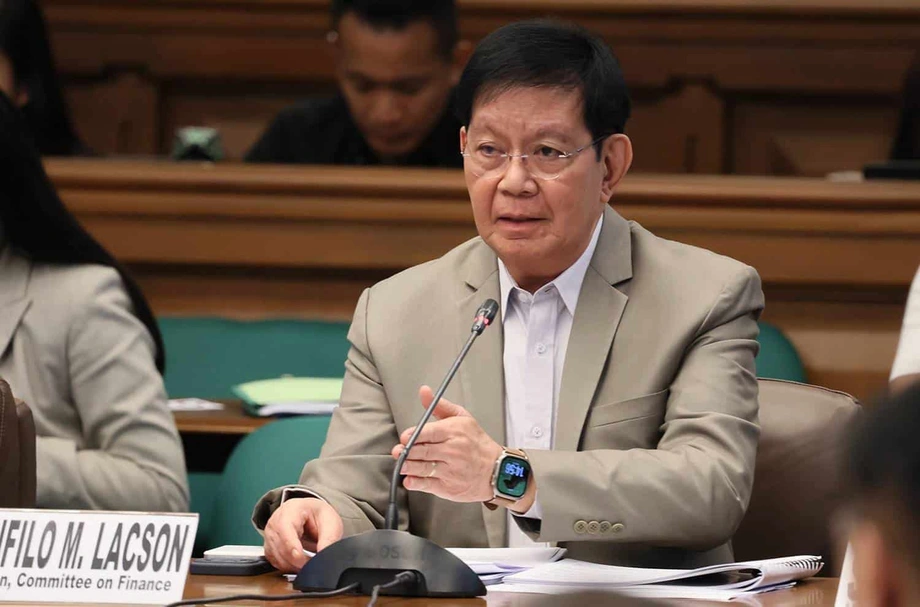
Senator Panfilo Lacson is pushing for published transcripts and continuous livestreaming of negotiations on the Philippines' proposed P7.2 trillion national budget for 2027, seeking a public record of which lawmakers introduce amendments and move money between spending items.
Contents
- A written record of who changes the budget
- What transcripts would add to livestreaming
- Civil society groups would watch the negotiations
- Why Lacson is looking beyond the final talks
- House lawmakers say idle funds should move
- P15.33 billion in disaster funds enters the debate
- Project coordinates point to another weakness
- Documentation could determine which projects receive money
- Keeping project codes attached from proposal to approval
- Key Points
Speaking in a radio interview on November 8, 2026, Lacson said the Senate would identify senators behind proposed amendments and publish proceedings on its website. The effort comes as the Senate reviews the spending bill approved by the House of Representatives, whose estimated P190 billion in amendments have drawn scrutiny.
Lacson, a vice chairperson of the Senate Finance Committee, wants the record to extend into the bicameral conference committee. That committee brings together representatives of the House and Senate to settle differences between their versions of the budget before the final congressional bill goes to the president.
Lacson said a written record was needed to identify who requested particular changes:
There should be a transcript containing the minutes so it will be clear who initiated amendments and who pushed for realignments.
A realignment moves proposed funding from one budget item to another. Such changes can determine which roads receive money, which agencies can distribute assistance and which programs must operate with less. The dispute concerns both the reasons for those decisions and whether the public can follow them.
House lawmakers have defended their adjustments as a way to move money away from programs struggling to spend their allocations. Lacson's proposed safeguards would make those explanations, and the names of lawmakers seeking changes, easier to examine during the final negotiations.
What transcripts would add to livestreaming
Lacson said budget bicameral proceedings had long lacked transcripts, describing the budget bill as the only measure whose bicameral discussions had no such written record. He argued that this gap made it difficult to trace amendments to their authors.
A livestream lets people watch negotiations as they happen. A transcript gives them a written account to consult afterward, making it easier to locate a proposal, identify its sponsor and follow the discussion around it. Publishing both would connect public access during the meeting with a record that remains available later.
The Senate's plans build on measures used during deliberations on the 2026 budget, including identifying senators who proposed amendments and publishing proceedings and proposed changes on its website. Lacson wants those practices continued alongside detailed transcripts for the 2027 negotiations.
Senate Finance Committee chairperson JV Ejercito has also confirmed that the bicameral deliberations would be livestreamed. The proposed transcript publication would add another layer of documentation to that access.
Civil society groups would watch the negotiations
Ejercito has committed to inviting civil society organizations to observe the bicameral talks. Lacson specifically named the People's Budget Coalition among the groups the Senate plans to invite to scrutinize allocations and flag questionable changes.
Those observers would bring independent scrutiny into the stage when the two chambers reconcile their spending choices. Their practical task would be to examine changes, compare explanations with project information and publicly identify proposals they consider questionable.
Lacson, arguing that observation alone would not deter lawmakers, urged watchdog groups to apply public pressure:
My plea is that vigilance is not enough. My plea to them is maybe they can resort to shaming.
No date was given for the bicameral meetings or publication of their transcripts. The House version remained under Senate review before the reconciliation stage.
Why Lacson is looking beyond the final talks
Lacson's concerns extend to how projects enter the budget before the bicameral committee meets. He described a practice he called a "double kill," alleging that some lawmakers secure projects during executive preparation and then seek more allocations after the proposal reaches Congress.
The executive branch prepares the National Expenditure Program, or NEP, through the Department of Budget and Management. It is the president's proposed spending plan for the next fiscal year, setting out requested funding for agencies, programs and projects.
Congress examines that proposal and makes changes through the appropriations process. The resulting legislation is the General Appropriations Bill, or GAB. When the House and Senate approve different versions, their bicameral committee works on a common text.
Lacson's allegation links those stages: a project could enter the executive proposal, receive another adjustment in Congress and undergo further changes in the final negotiations. Following its history would require records that connect the initial proposal to each later version.
The steps described in the budget debate include:
- During the 2026 budget deliberations, transparency measures included identifying senators proposing amendments and publishing proceedings on the Senate website.
- On June 30, 2026, P15.33 billion in disaster rehabilitation allocations remained unspent, according to Representative Brian Poe, who later cited the figure to explain a proposed realignment.
- On November 8, 2026, Lacson called for transcripts, continued livestreaming and civil society observation of the 2027 bicameral talks.
- The House approved a P7.2 trillion spending bill that was undergoing Senate review before bicameral negotiations.
House lawmakers say idle funds should move
House members have defended their realignments by pointing to programs with slow implementation and unused allocations. Bataan Representative Albert Garcia, senior vice chair of the House Committee on Appropriations, said the adjustments targeted particular programs rather than entire agency budgets.
Garcia said lawmakers wanted to avoid adding another year's funding to programs still struggling to use existing money. He described shifting resources toward priorities that agencies could carry out sooner while slower programs addressed implementation problems.
Garcia also said some budget hearings lasted up to 10 hours and that certain agencies faced further scrutiny. His explanation places the agencies' ability to spend effectively at the center of the House's defense.
Surigao del Sur Representative Romeo Momo Sr. said the House Budget Amendments Review Subcommittee considered how much a program could realistically spend. According to Momo, the review did not automatically remove the entire allocation from a program with weak spending performance; it balanced the amount to transfer against what should remain.
For readers following the dispute, the practical issue is the reason behind each transfer. House members say money should reach programs capable of delivering services sooner. Lacson wants records that let the public identify who sought a transfer and examine that explanation alongside the allocation.
P15.33 billion in disaster funds enters the debate
Representative Brian Poe of FPJ Panday Bayanihan cited the Disaster Rehabilitation and Reconstruction Assistance Program under the National Disaster Risk Reduction and Management Fund as an example of unused funding.
Poe said the program had P15.33 billion in unspent allocations as of June 30, 2026. He said that figure helped prompt a proposed amendment to increase the quick response funds of the Department of Social Welfare and Development and the Department of Agriculture.
Poe argued that the change would retain the money's disaster response purpose while placing resources with agencies able to deliver assistance sooner. Explaining why the two departments were proposed as recipients, he said:
It just so happens that the DA and DSWD could mobilize quicker.
The P15.33 billion figure describes the unused allocation Poe cited as a basis for the proposal. The amount to be transferred under that particular amendment was not specified in his explanation.
Poe also asked senators and civil society groups to help check whether programs identified as underspending were appropriate sources of funding for other priorities. That request gives budget observers a concrete issue to examine: how much an agency can use, why spending has been slow and what services would gain or lose funding.
Project coordinates point to another weakness
Lacson also raised concerns about infrastructure project locations flagged by budget advocacy groups. He cited the People's Budget Coalition's finding that coordinates attached to a proposed project pointed to the Celebes Sea, following concerns involving locations in Leyte.
Geotagging attaches geographic coordinates to project information. For an infrastructure project, an accurate location helps inspectors find the site, check construction quality and verify whether the work described in the budget exists where it is supposed to be.
Lacson said the questionable coordinates appeared deliberate rather than the result of a typing mistake. He argued that geotagging should pinpoint a project closely enough for it to be located and inspected.
A wrong location creates a practical problem for anyone checking public spending: the project description sends them somewhere other than the intended site. Resolving the discrepancy requires a correct location tied to the same project and allocation being considered by lawmakers.
The location issue connects the budget debate to checks on actual construction. A public record of who proposed an allocation answers one question. Accurate project details allow inspectors and residents to follow what happens to that allocation after approval.
Documentation could determine which projects receive money
Public Works Secretary Giovanni Lopez's funding requirements include programs of work, feasibility studies and geotagging information. Lacson said he and fellow senators would follow those requirements when considering project funding.
A program of work describes the activities a project is meant to carry out. A feasibility study examines whether the project can realistically be delivered. Geotagging supplies its location. Together, those records help lawmakers assess a proposal before providing money for it.
Senate President Sherwin Gatchalian said the Senate would remove P8.836 billion in infrastructure projects from the proposed 2027 budget because documentation from the Department of Public Works and Highways was missing.
That amount is about 0.12 percent of the P7.2 trillion spending proposal. The calculation places the proposed removal in proportion to the full budget, while P8.836 billion remains the amount of project funding facing exclusion over missing records.
Keeping project codes attached from proposal to approval
Lacson wants the Unified Account Code Structure, or UACS, retained throughout the legislative process so projects remain traceable. The coding system provides identifiers used to organize and track government budget information.
He said those identifiers were being removed as the budget moved through deliberations on the General Appropriations Bill and in the Senate. Keeping them attached would help reviewers follow an allocation across successive versions rather than relying on its description alone.
The proposed safeguards address different parts of the same spending decision. Transcripts would identify who requested changes. Published amendments would show the proposed funding adjustments. Project codes would help connect entries across budget versions, while feasibility studies, programs of work and coordinates would provide details needed to assess and inspect projects.
For communities waiting for roads, repairs or disaster assistance, those records connect congressional decisions to services on the ground. The next legislative steps are completion of the Senate's review and bicameral reconciliation, where lawmakers will have to settle both spending differences and the arrangements for public scrutiny.
Key Points
- Lacson wants published transcripts and continuous livestreaming of bicameral negotiations on the proposed P7.2 trillion budget for 2027.
- The Senate plans to identify senators proposing amendments, publish proceedings and invite civil society observers, including the People's Budget Coalition.
- House lawmakers defend realignments as a way to move resources from slow programs to agencies able to deliver services sooner.
- Poe cited P15.33 billion in unused disaster rehabilitation allocations as a basis for a proposed funding adjustment.
- Gatchalian said P8.836 billion in infrastructure projects would be removed because of missing public works documentation.
- Lacson also wants accurate project locations and continuous use of UACS identifiers to help track allocations through the budget process.