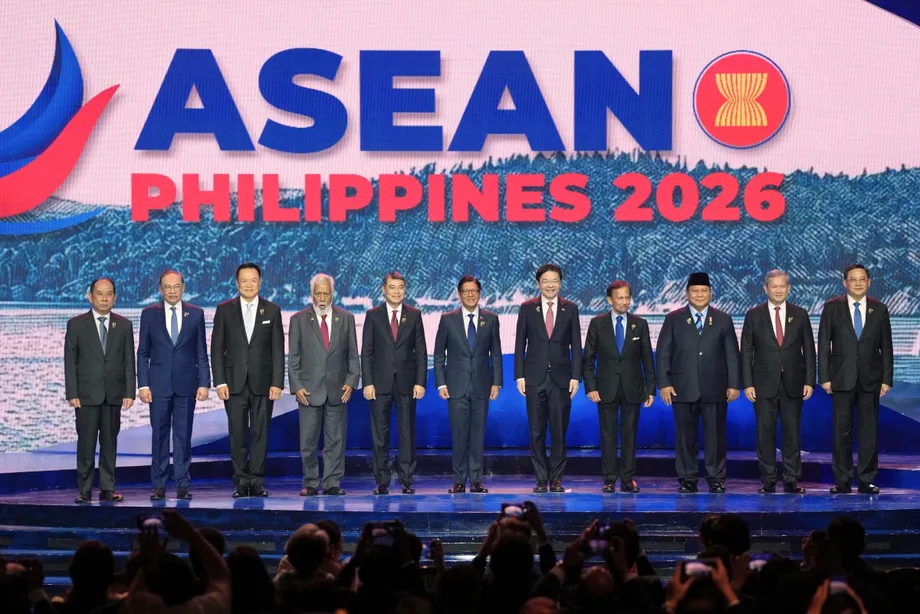
Manila keeps Myanmar's summit seat below political level
Myanmar leader Min Aung Hlaing will remain excluded from the 49th ASEAN Summit in Manila, the Philippines confirmed on November 11, 2026, despite his assumption of the presidency in April and official visits to five countries in the regional bloc.
Contents
- Manila keeps Myanmar's summit seat below political level
- A new presidency meets an unchanged restriction
- The peace plan at the centre of the dispute
- Naypyidaw challenges ASEAN's authority
- Rights groups seek deadlines and consequences
- Civilian deaths keep pressure on regional leaders
- Why neighbouring governments keep talking
- The dates that shaped the decision
- Singapore will inherit the unfinished diplomacy
- Key Points
The Philippine Department of Foreign Affairs said Myanmar would instead send the director general of its Foreign Ministry's ASEAN Affairs Department. The decision preserves restrictions on Myanmar's political leadership introduced after the military overthrew Aung San Suu Kyi's elected government in February 2021.
The announcement places a limit on Min Aung Hlaing's effort to rebuild regional acceptance after elections held under military control. Individual governments have welcomed him, but ASEAN's collective decision continues to keep him outside the room where its national leaders meet.
Manila's November 11 announcement put the summit and related meetings on November 15 to 17. A November 9 statement by two regional rights organisations listed November 16 to 18. Myanmar's crisis is expected to feature in the leaders' plenary and retreat discussions.
The Philippines chairs the Association of Southeast Asian Nations this year after the bloc postponed Myanmar's scheduled turn. Its confirmation means the change from military commander to president has brought Min Aung Hlaing neither the chairmanship nor access to the leaders' summit.
ASEAN continues to link Myanmar's political representation to progress on its Five-Point Consensus, the peace framework agreed in April 2021. Ending violence, opening dialogue and delivering humanitarian assistance remain central to that framework, more than five years after its adoption.
A new presidency meets an unchanged restriction
Min Aung Hlaing became president through a parliamentary vote in April following elections held from December 2025 to January 2026. The military aligned Union Solidarity and Development Party provided the political route for that transition.
Myanmar's Foreign Ministry describes the process as the formation of an elected government. In its May 10 statement, the ministry said more than 13.13 million of 24.23 million eligible voters participated. Those figures put participation at about 54 percent.
The ministry also repeated the military authorities' allegation that the 2020 election contained more than 11.3 million irregularities among over 38.2 million eligible voters. It used that allegation to justify the later electoral process and the prosecution of former officials.
ASEAN has withheld recognition of the recent election. Philippine Foreign Affairs Assistant Secretary Dominic Xavier Imperial explained during the earlier summit period in May that the existing leaders' decision still governed Myanmar's representation.
Imperial, speaking as an ASEAN spokesman, stated the basis for Manila's position:
We are guided by the leaders' decision.
Myanmar sent senior diplomatic officials rather than its president to the earlier gathering in Cebu. November's choice of an ASEAN Affairs Department director general continues the same approach: Myanmar remains represented, while its political leadership remains excluded.
The peace plan at the centre of the dispute
ASEAN adopted the Five-Point Consensus at its leaders' meeting in Jakarta on April 24, 2021, two months after the coup. Min Aung Hlaing attended that meeting.
The framework combines immediate civilian protection with efforts to begin political negotiations. Its five commitments are:
- An immediate end to violence, with all parties exercising restraint.
- Constructive dialogue among all parties to seek a peaceful solution.
- A special envoy appointed by the ASEAN chair to help mediate dialogue, supported by the ASEAN secretary general.
- Humanitarian assistance through the ASEAN Coordinating Centre for Humanitarian Assistance on Disaster Management, known as the AHA Centre.
- A visit by the special envoy and a delegation to meet all parties concerned.
An envoy is a representative appointed to carry out a diplomatic task. Under this plan, the envoy's job includes helping different sides talk, rather than dealing only with the authorities in Naypyidaw.
ASEAN restricted senior military representation after key commitments went unfulfilled. The continuing ban keeps those commitments attached to Myanmar's participation at the bloc's highest political level.
Naypyidaw challenges ASEAN's authority
Myanmar's authorities have increasingly argued that the restrictions violate the principles of equal membership and noninterference in domestic affairs. The Foreign Ministry's May statement cited Chapter I, Article 2 of the ASEAN Charter and accused a small number of members of continuing discriminatory treatment.
The ministry said most ASEAN countries understood Myanmar's political developments and wanted closer cooperation. It also pointed to Myanmar's membership since 1997, its financial contributions and its continuing engagement with individual member states.
A June 26 parliamentary proceedings report published by Myanmar's Ministry of Information records how that argument entered parliament. Dr. Nanda Hla Myint, representing Kalaw, introduced a motion urging the government to review the Five-Point Consensus because, he argued, it conflicted with ASEAN principles and Myanmar's current political circumstances.
Daw Nan Yi Yi Win, representing Pyinlaung, supported the motion. Both argued that an administration formed after elections should receive different treatment. The June record says parliament accepted the motion for discussion and scheduled its next sitting for July 2. Parliament subsequently rejected the consensus in July.
Foreign Minister Tin Maung Swe nevertheless continued to describe Myanmar as implementing the framework during October talks with Philippine Foreign Secretary and ASEAN special envoy Ma. Theresa Lazaro. He said the process was proceeding "without compromising its national interests and sovereignty in accordance with its own roadmaps and objectives."
Naypyidaw therefore presents its own political timetable as the basis for cooperation, while ASEAN continues to use the shared 2021 framework as the basis for restoring political representation.
Rights groups seek deadlines and consequences
ASEAN Parliamentarians for Human Rights (APHR) and the Special Advisory Council for Myanmar (SAC-M) urged the Philippines on November 9 to confirm that Min Aung Hlaing and other senior military figures would receive no invitation.
Their joint November statement called for measurable benchmarks, clear deadlines and progressively stronger punitive measures if the military authorities failed to comply. Benchmarks are specific results that can be checked, such as prisoner releases or aid reaching communities that need it.
Yanghee Lee, a SAC-M founding member and former United Nations special rapporteur on human rights in Myanmar, described the stakes before Manila confirmed the exclusion:
Given ASEAN's mounting political and moral failures on Myanmar, Min Aung Hlaing's attendance at the Summit would mark a total capitulation.
APHR chair Mercy Chriesty Barends, a member of Indonesia's House of Representatives, said inviting him would signal that the military authorities could disregard the peace framework without consequences. The groups also urged the Philippines and incoming chair Singapore to consult Myanmar's democratic organisations, ethnic groups, women and minority communities.
Civilian deaths keep pressure on regional leaders
October's airstrikes provide a concrete measure of the distance between diplomatic exchanges and conditions inside Myanmar. APHR and SAC-M cited the Assistance Association for Political Prisoners as recording at least 100 civilians killed by military airstrikes that month, including 12 children.
Their statement also described nine airstrikes over four days during and after Lazaro's humanitarian mission in late October. Sixteen people were killed, including three children and a newborn, in attacks involving a school in Karenni State and a maternity clinic in Rakhine State, the groups said.
UN figures cited in assessments of the crisis put civilian deaths caused by regime forces since the coup at at least 8,384 and displacement at more than 4 million people. Nearly 23,000 political prisoners remain detained, including Aung San Suu Kyi.
APHR and SAC-M want benchmarks to include an end to military violence, the immediate and unconditional release of political prisoners, and humanitarian assistance reaching everyone in need. Their statement specifically names Suu Kyi and ousted president Win Myint, whom it describes as remaining under strict house arrest.
For families affected by the conflict, those proposals concern whether they can remain safely at home, obtain food and medical care, or see detained relatives released. The summit restriction is the diplomatic measure; protection and access to assistance are the changes the groups want it to help secure.
Why neighbouring governments keep talking
Min Aung Hlaing has visited Laos, Thailand, Vietnam, Cambodia and Malaysia since taking office in April. Those contacts show how individual governments are pursuing practical cooperation while ASEAN's collective restrictions stay in place.
Malaysian Prime Minister Anwar Ibrahim said in October that Malaysia would work toward Myanmar's "full reintegration" into ASEAN. His government has tied direct engagement to the return of Myanmar nationals from Malaysia.
During October's repatriation talks, Anwar said Malaysia had returned 10,493 Myanmar nationals that year. Rights groups warned that returnees could face persecution, forced military service or other abuses. Malaysia sought cooperation on returns while Min Aung Hlaing gained an official welcome.
Thailand faces immediate security pressures along its border. On November 3, Thai Foreign Minister and Deputy Prime Minister Sihasak Phuangketkeow urged Tin Maung Swe to reduce violence before the summit. Further talks in Naypyidaw were planned around border security and Myanmar's regional reintegration.
Pongpipat Mibenjamart, mayor of Thailand's Mae Sam Laeb subdistrict, said daily airstrikes near the border had left a hospital and 18 houses with minor damage from bomb fragments. Four evacuation shelters were prepared in Mae Hong Son's Sob Moei district.
Thailand and Malaysia therefore have reasons to maintain working channels with Naypyidaw. Restoring Myanmar's political place in ASEAN, however, requires a decision by the grouping rather than an invitation from one government.
The dates that shaped the decision
November's exclusion follows a year of electoral claims, parliamentary resistance to the peace plan and renewed regional contact. The main developments are:
- December 2025 to January 2026: Myanmar holds elections under military control.
- April 2026: Min Aung Hlaing becomes president through a parliamentary vote.
- May 10: Myanmar's Foreign Ministry demands equal treatment and defends the electoral process.
- June 26: Parliament accepts a motion challenging the Five-Point Consensus for discussion, ahead of its rejection in July.
- October 13: Myanmar's ASEAN Affairs Committee holds its first meeting, seeking to restore the country's regional role and rights.
- Late October: Lazaro visits Myanmar for humanitarian discussions.
- November 9: APHR and SAC-M demand confirmation that senior military figures will remain excluded.
- November 11: The Philippines confirms representation by a Foreign Ministry director general.
The next immediate test is the Manila summit itself. Beyond the attendance decision, leaders face demands to agree on how progress will be measured and what consequences will follow failure.
Singapore will inherit the unfinished diplomacy
Singapore takes over the ASEAN chairmanship in 2027. Its Foreign Minister Vivian Balakrishnan has said the Five-Point Consensus "was and remains valid" and called for "demonstrable progress" on civilian protection, political detainees and humanitarian assistance.
ASEAN foreign ministers have discussed a benchmarking mechanism and an envoy serving for longer than a single chairmanship. Lazaro has acknowledged that changing envoys every year forces each new chair to rebuild relationships and knowledge.
Thailand's November peace plan proposals included a permanent crisis coordination team and stronger regional direction. Those ideas address a practical weakness: ASEAN has kept its framework but still struggles to turn it into consistent action across successive chairs.
The November 9 APHR and SAC-M statement also says the International Court of Justice is scheduled to deliver judgment on November 19 in The Gambia v. Myanmar, concerning allegations of genocide against the Rohingya. That case concerns Myanmar's responsibility as a state. Min Aung Hlaing commanded the military during the 2016 and 2017 operations at issue.
No decision has been announced on adopting the proposed benchmarks, punitive measures or a longer serving envoy. Manila has settled who may represent Myanmar at the summit; the larger task is agreeing on the conditions that would change that representation and improve conditions inside the country.
Key Points
- The Philippines confirmed on November 11 that Min Aung Hlaing remains excluded from the ASEAN summit.
- Myanmar will send the director general of its Foreign Ministry's ASEAN Affairs Department.
- His April presidency and visits to five ASEAN countries have left the collective restriction unchanged.
- APHR and SAC-M want deadlines, measurable peace commitments and escalating consequences for noncompliance.
- Singapore takes over as ASEAN chair in 2027, inheriting discussions on benchmarks and greater continuity for the special envoy.