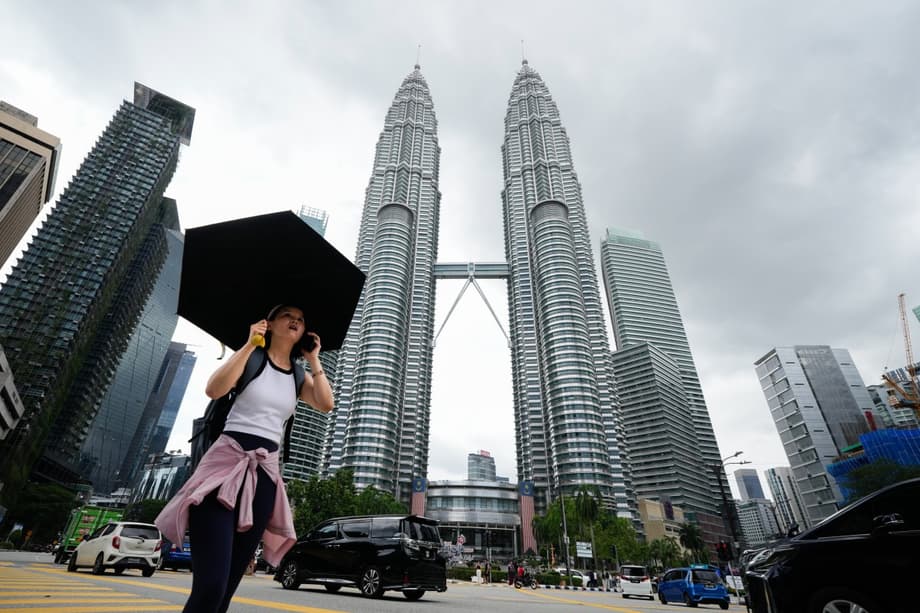
A wider economic partnership takes shape
Malaysia is seeking a deeper economic relationship with South Korea, moving beyond traditional manufacturing and trade links into semiconductors, artificial intelligence, electric vehicles, renewable energy, biotechnology and the global halal economy.
- A wider economic partnership takes shape
- Trade and investment provide a strong base
- Why semiconductors are at the center
- AI and digital skills move alongside chip investment
- Halal products create a different kind of opening
- Electric vehicles and batteries widen industrial ties
- Clean energy cooperation includes difficult choices
- A free trade agreement could support new sectors
- What could determine the success of the strategy
- The Bottom Line
The push reflects a shift in how both countries view their commercial relationship. South Korea brings advanced technology, major industrial companies and experience in areas such as memory chips, batteries, digital services and clean energy. Malaysia offers a growing manufacturing base, an established halal certification system and access to the wider Association of Southeast Asian Nations market.
Malaysian Investment Development Authority director Redzuan Abd Rahman said the two countries had built a durable relationship over several decades and now had an opportunity to work together in industries that will shape future economic growth.
Malaysia and South Korea have built a strong and enduring economic partnership over the past several decades. We believe the greatest opportunities lie in deepening collaboration in industries that are shaping the future of our economies.
The proposed expansion comes as companies reassess supply chains because of US China technology tensions, rising production risks and the need for reliable partners across Asia.
Trade and investment provide a strong base
South Korean companies had implemented investments worth US$11.7 billion across more than 400 projects in Malaysia by 2025, according to MIDA. Those projects created almost 50,000 jobs and covered chemicals, transport equipment, electrical and electronic products, petroleum products and basic metals.
Two way trade also reached a record US$27.9 billion in 2025, according to South Korean Ambassador to Malaysia Yeo Seung bae. Malaysia became South Korea’s 11th largest trading partner, rising two places from when Yeo arrived in the country, while South Korea ranked as Malaysia’s seventh largest trade partner.
Electrical and electronic products, chemicals, machinery, energy products and semiconductor components support much of this trade. The existing industrial base gives companies a platform for new projects, since suppliers, skilled workers, logistics networks and export channels are already present.
Malaysia is also presenting itself as a regional gateway. Its location, established ports and participation in regional trade arrangements allow South Korean companies to serve customers across Southeast Asia while spreading production across several locations.
Why semiconductors are at the center
Semiconductors have become the leading product category exchanged between the two countries. South Korea is a global leader in memory chips through companies such as Samsung Electronics and SK Hynix. Malaysia has developed a strong position in the later stages of chip production, especially assembly, testing and packaging.
Assembly and testing involve putting chips into finished packages and checking whether they work to exact technical standards. Advanced packaging is becoming more valuable as chip designers seek better performance, lower power use and greater integration in products used for data centers, vehicles and AI systems.
Yeo said the strengths of the two countries fit together well. Malaysia wants to move into more advanced packaging, chip materials and equipment, while South Korean firms can bring technical expertise and connections to global manufacturers.
Twenty nine Korean companies took part in the SEMICON Southeast Asia 2026 conference in Malaysia. Many were medium sized technology companies that produce testing systems, filtration equipment and cooling technology. These products are essential in modern chip plants, where clean environments and precise temperature control protect sensitive manufacturing processes.
The Korea Malaysia Semiconductor Cooperation Centre is also being used to connect government officials, researchers and companies. The aim is to give Korean businesses a clearer view of Malaysia’s industrial capabilities and help Malaysian firms gain access to technology, investment and new customers.
AI and digital skills move alongside chip investment
AI is closely linked to the semiconductor opportunity. Training advanced AI systems requires large data centers, high performance processors, reliable electricity and cooling infrastructure. A country that attracts AI facilities therefore needs more than software developers. It also needs strong networks, secure data systems and a dependable supply of electronic components.
Malaysia is building its policy framework through the New Industrial Master Plan 2030 and the National Semiconductor Strategy. These programmes seek to move the economy toward higher value production, research and innovation. The National Energy Transition Roadmap adds a focus on cleaner power and reduced emissions.
Cooperation already includes public sector training. Malaysian civil servants have taken part in a programme in South Korea focused on digital government and practical AI applications. Korean agencies, technology companies and universities have shared examples of how digital tools can improve public services.
Other programmes have introduced AI and digital skills to Malaysian and Southeast Asian youth. These exchanges matter because the supply of trained workers will shape how quickly companies can expand. Investment in factories and data centers can create jobs, yet those projects also require engineers, technicians, researchers and managers with specialist knowledge.
Halal products create a different kind of opening
The halal economy gives the partnership a route into food, medicine, cosmetics, finance and consumer products. Halal certification confirms that products and processes meet Islamic requirements. Malaysia has built one of the world’s most developed certification and market support systems, making it an attractive base for companies that want to reach Muslim consumers in Southeast Asia and beyond.
South Korean companies have strong capabilities in food manufacturing, pharmaceuticals, biotechnology, cosmetics and consumer branding. Malaysian officials see a chance to combine those capabilities with Malaysia’s certification system and regional market access.
Malaysia’s position in the global Islamic economy supports that pitch. It ranked first in the 2025 to 2026 Global Islamic Economy Indicator and led the halal food, Islamic finance, halal pharmaceuticals and halal cosmetics categories. Malaysia’s halal related imports reached US$30.64 billion, while global spending across the Islamic economy is forecast to reach US$3.56 trillion by 2029.
The Malaysia International Halal Showcase in 2025 recorded sales of 4.97 billion ringgit, exceeding its 4.5 billion ringgit target. The event brought together 2,400 booths and exhibitors from 80 countries, including South Korea. Korean businesses used such events to display halal certified food and explore partnerships with Malaysian retailers, distributors and manufacturers.
Future cooperation could also involve digital certification and product traceability. Technologies such as blockchain can record the movement of ingredients through a supply chain, while AI tools may help auditors manage records and identify possible compliance risks. These systems would need to work alongside trusted regulators and established certification procedures.
Electric vehicles and batteries widen industrial ties
Electric vehicles provide another area where the two economies can connect. South Korean companies have expertise in vehicle production, battery materials and energy storage. Malaysia is encouraging electric vehicle adoption and developing the charging infrastructure needed to support wider use.
SK Nexilis operates a copper foil facility in Sabah. Copper foil is a key material in lithium ion batteries because it carries electric current inside battery cells. Samsung SDI has also invested in Negeri Sembilan in the production of electric vehicle battery components.
Hyundai has returned to Malaysia with renewed sales and manufacturing activity, including vehicle production in Kulim, Kedah. More projects could follow as Malaysia seeks local supply chains for batteries, vehicle components, charging equipment and related services.
For Malaysia, the goal is to gain more value from the electric vehicle industry rather than serve only as a low cost assembly location. For Korean companies, Malaysia can provide a production base close to growing Southeast Asian markets.
Clean energy cooperation includes difficult choices
Energy transition is another growing part of the relationship. South Korea has a target of carbon neutrality by 2050 and experience in nuclear power, renewable energy, carbon capture and carbon capture, utilisation and storage. Malaysia is examining ways to reduce emissions while meeting rising electricity demand from factories and digital infrastructure.
South Korea operates one of the world’s largest nuclear power programmes, with nuclear energy supplying about one third of its electricity. Malaysia is still assessing whether nuclear power should form part of its energy mix. Any decision would require new laws, an independent safety system, emergency planning and a large pool of trained specialists.
Yeo said nuclear development could take seven or eight years even if Malaysia chooses to proceed. Workforce training would begin well before a plant became operational. Cooperation in renewable power, grid management and carbon capture may move faster, since these areas can be developed through pilot projects and industrial partnerships.
Clean energy is also linked to the semiconductor and AI plans. Chip factories and data centers use large amounts of electricity, so access to stable and lower carbon power will affect investment decisions.
A free trade agreement could support new sectors
A Malaysia South Korea Free Trade Agreement is expected to provide a more stable framework for cooperation. Such an agreement would cover more than tariffs. It could address digital trade, services, investment rules, data, bioeconomy projects and other areas that are becoming central to modern business.
About 20 Korean companies took part in a recent business forum organised by MATRADE and the Korea Importers Association. The interest suggests that companies are looking for practical partnerships, although investment decisions will depend on issues such as regulations, costs, workforce quality, infrastructure and market demand.
For Malaysia, the challenge is to turn interest into projects that develop local suppliers and technical skills. For South Korea, the task is to understand Malaysia’s investment rules and industrial clusters more fully. Better contact between companies, universities and public agencies can help close that gap.
What could determine the success of the strategy
The two countries have complementary strengths, yet cooperation will require careful planning. Semiconductor projects need long preparation, reliable utilities and strict quality control. AI projects raise questions about data security, electricity use and access to skilled workers. Halal businesses must maintain certification across every stage of production, including ingredients supplied by third parties.
Malaysia’s policy programmes provide a direction for industrial upgrading, while South Korean firms bring capital and technical experience. The strongest results are likely to come from projects that include Malaysian suppliers, research partnerships and training rather than investments limited to importing equipment and exporting finished goods.
Both governments also need to keep communication open as global trade rules change. Businesses want predictable regulations and clear approval processes, especially in sectors tied to national security, advanced technology and energy.
The Bottom Line
- Malaysia is seeking wider cooperation with South Korea in semiconductors, AI, electric vehicles, clean energy and halal products.
- South Korean companies had invested US$11.7 billion in more than 400 Malaysian projects by 2025, creating almost 50,000 jobs.
- Two way trade reached a record US$27.9 billion in 2025.
- South Korea brings strengths in memory chips, batteries, vehicles, biotechnology and advanced manufacturing.
- Malaysia offers chip packaging capacity, regional market access and a leading halal certification ecosystem.
- Potential energy cooperation includes renewables, carbon capture and nuclear power preparation.
- A proposed free trade agreement could support investment in digital services, AI, bioeconomy projects and other emerging industries.