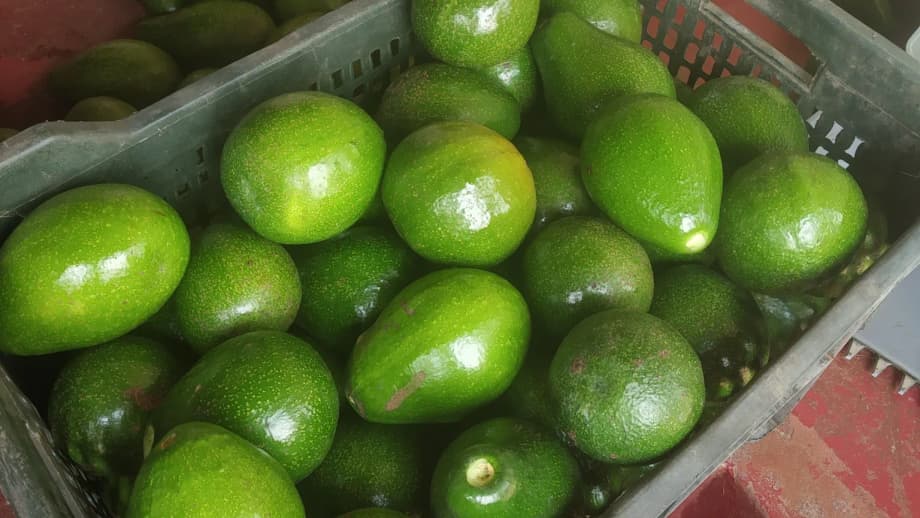
India’s avocado boom moves from novelty to serious business
Fifteen years ago, ripe avocados in parts of India had little commercial value. Fruit fell from trees and was often eaten by dogs, giving the crop the unappealing local nickname dog fruit. Today, the avocado is appearing in restaurant dishes, supermarket displays, skincare conversations and new commercial orchards across the country.
- India’s avocado boom moves from novelty to serious business
- How a shade tree became a valuable crop
- Why supply remains behind demand
- Commercial orchards demand specialist skills
- Can Indian varieties compete with Hass?
- What Asia’s changing market means for India
- Farmers want buyers as much as better trees
- The economics and environmental questions
- Key Points
The change reflects a widening gap between demand and domestic supply. India imports about 15,000 tonnes of avocados each year, while local production is estimated at only 8,000 to 9,000 tonnes. That shortfall has encouraged plantation companies, specialist nurseries and small farmers to treat the fruit as a serious business rather than a tree planted casually for shade.
India’s rising middle class, expanding food delivery sector and growing interest in international cuisines have helped make avocado more familiar to consumers. The fruit is now used in salads, sandwiches, toast, smoothies, desserts and contemporary Indian cooking. Its image as a healthy food has also supported demand among urban shoppers.
The market is still developing. Farmers must improve fruit quality, planting material, orchard management and access to buyers before India can reduce its reliance on imports. The shift is already visible in the southern hills of Kerala, where avocado is being planted alongside, and sometimes instead of, traditional crops such as coffee and pepper.
How a shade tree became a valuable crop
Madhu Bopaiah, group manager at Cottanad Plantations in Wayanad, Kerala, has worked in India’s plantation industry for 26 years. He remembers when avocado was never considered a main source of income. Cottanad originally planted the trees to provide shade for coffee plants, with little expectation that the fruit itself would become profitable.
That view began to change around 2011, when Bollywood actor Shilpa Shetty spoke publicly about using avocado for skincare. Bopaiah says prices doubled almost overnight and continued rising as consumers became more familiar with the fruit.
Cottanad now grows avocado on about 40 acres. The plantation harvested between 10 and 15 tonnes last year and expects production to reach 40 to 50 tonnes within three or four years. The company has had to revise its methods after studying commercial production in South Africa.
Avocado roots are highly vulnerable to disease, especially in wet conditions. Cottanad now uses raised beds, wider spacing and different planting arrangements to improve drainage and reduce the risk of root damage. Those changes show why commercial production is more demanding than simply allowing an avocado tree to grow among other crops.
We never planted avocado as our main crop. We introduced it as a shade tree for coffee plantations, and only later realised it could become a profitable business.
Bopaiah’s experience reflects a wider trend. Climate pressure has affected coffee and pepper production in several growing regions, making crop diversification more attractive. Avocado can provide another source of income, although it requires technical knowledge and reliable buyers.
Why supply remains behind demand
Manilal Palliyath, who helps promote India’s avocado industry, describes the domestic market as having a large gap between supply and demand. Imported fruit continues to fill much of that space, especially for retailers, hotels and restaurants that need predictable quality throughout the year.
Indian-grown avocados come from many regions and include a wide range of unnamed local types. Their size, texture, taste and ripening behaviour can differ from one farm to another. Seasonal changes can also affect availability, making it difficult for professional kitchens to plan menus around local fruit.
Hussain Shahzad, executive chef at Hunger Inc. Hospitality in Mumbai, says imported avocados currently provide the consistency required by the group’s restaurants, including Veronica’s and The Bombay Canteen. For chefs, consistency means a fruit that has the expected size, flavour, firmness and ripening time when it reaches the kitchen.
He also says the group wants to use more local produce as Indian agriculture develops. That creates a commercial opportunity for growers who can produce standard varieties and meet delivery schedules. Restaurants may pay more for dependable fruit because inconsistent supplies can lead to waste, menu changes and higher preparation costs.
Indian grown avocados are improving and there are some great farmers working with local varieties, but the quality and availability can vary depending on the season and region.
The challenge is therefore larger than producing more tonnes. India needs a supply chain that connects nurseries, farmers, packers, transport companies, retailers and food businesses. Proper harvesting and controlled ripening are also needed because avocados often continue to mature after they are picked.
Commercial orchards demand specialist skills
Harshit Godha founded Indo Israel Avocado Nursery in Bhopal, Madhya Pradesh, in 2021 after spending a month studying the industry in Israel. His nursery supplies international varieties such as Hass and Pinkerton, which are already familiar to consumers and buyers in global markets.
Godha says his business has supplied about 18,000 avocado plants to farmers across India over the past five years. The interest reflects the search for planting material that can deliver more uniform fruit than the mixed trees commonly found in home gardens and older farms.
A commercial avocado tree is usually grafted. The lower section, called the rootstock, is selected for qualities such as tolerance to local soil, water and disease conditions. The upper section determines the fruit variety. This combination allows growers to match the tree’s underground characteristics with the market qualities they want to sell.
Orchard design is also essential. Avocado trees can grow to about 25 feet within six or seven years if they are left unchecked. That height makes harvesting difficult and increases labour costs. Regular, strong pruning keeps trees at a manageable height and improves access to fruit.
Pollination adds another layer of complexity. Many avocado varieties do not pollinate efficiently on their own. Growers generally plant compatible varieties together because the flowers release pollen and receive pollen at different times. The correct mix and spacing can determine whether an orchard produces a commercial crop.
If a farmer gets this planting ratio wrong, the trees will fail to produce fruit, no matter how advanced the irrigation technology is.
These details make avocado a poor choice for farmers who plant without technical advice. An orchard may look healthy for several years before problems with disease, pollination or variety selection become visible. The cost of replacing mature trees can be severe.
Can Indian varieties compete with Hass?
Imported Hass avocados dominate many international markets because buyers recognise the variety and understand how it behaves during transport and ripening. Pinkerton and other improved varieties are also being introduced through Indian nurseries. These trees can help farmers produce fruit with more predictable characteristics.
India also has an extensive base of local avocado trees. The problem is that many backyard trees are genetically different. Dr Ganeshan Karunakaran, principal scientist at the ICAR Indian Institute of Horticultural Research in Bengaluru, says this genetic variation has contributed to markets filled with fruit of uneven quality.
Karunakaran has spent 25 years working on a breeding programme based on local trees. The programme has released two varieties intended to provide farmers with uniform, high yielding and good quality planting material. Such varieties could help build a stronger domestic market while retaining traits suited to Indian conditions.
Standardisation does not mean that every farm must grow the same fruit. It means that farmers and buyers can identify a variety’s expected size, taste, harvest period and performance. That information helps restaurants plan purchases and gives retailers a more dependable product.
Plant health is another concern. Unregulated nurseries may sell unidentified or diseased saplings. A plant can appear healthy when it is young, then decline or die after five or seven years. By that stage, the farmer may have spent years on irrigation, pruning, fertiliser and land preparation.
Farmers may unknowingly buy diseased plants. The trees may look healthy initially, but after five or seven years they can suddenly die, causing huge financial losses.
What Asia’s changing market means for India
India’s avocado market is part of a wider Asian expansion, although the region does not have a single consumer pattern. China is seeing more avocado use in drinks and prepared foods, Japan places strong value on presentation and consistent quality, and South Korea combines fresh consumption with demand for avocado based products.
Industry groups working across Asia are increasingly studying how consumers eat the fruit, when they buy it and which formats suit them. That includes fresh fruit, ready to eat products, foodservice ingredients and items sold through online retailers. India’s fast growth in e commerce and restaurant delivery gives suppliers several routes to reach consumers.
Westfalia Fruit, a global avocado company, has described a strategy based on more than increasing supply. The company says decisions about varieties, growing regions, packing, ripening and product development should be linked to consumer preferences in each market.
Hans Boyum, the company’s customer director for developing markets, said that choices made at the start of the supply chain can shape what consumers receive years later. Diego Vasquez, Westfalia’s Asia commercial lead, said origin, specifications, ripeness and format must match how the fruit will ultimately be sold and eaten.
That approach matters in India because consumers are still learning what a good avocado should taste and feel like. A poor experience with an underripe or overripe fruit can discourage a shopper from buying it again. Better ripening systems and clearer guidance could help turn occasional purchases into regular demand.
Farmers want buyers as much as better trees
Shiju Sebastian was an early adopter in Wayanad. Eight years ago, he dedicated two acres of his farm to avocado. This year, he expects to harvest about 3,500 kilograms, all of which will be sold in Bengaluru.
His experience points to a key condition for expansion: farmers need access to markets before they commit land and money to the crop. Avocado trees take years to reach strong production, so growers cannot easily switch back if buyers disappear or prices fall.
Farmers also need guidance on variety selection, planting density, irrigation, pruning, disease control and pollination. Training can reduce mistakes, while links with retailers and foodservice companies can give growers a clearer idea of the fruit specifications buyers want.
Sebastian plans to plant another three acres entirely with avocado. His confidence comes from having a buyer for the current harvest, yet his optimism also carries a warning. Rapid planting without quality control could produce another cycle of uneven fruit, disappointed customers and financial losses.
A durable industry will need cooperation between research institutes, nurseries, plantation companies, farmers and buyers. Local varieties suited to India can develop alongside internationally recognised types. Better orchards can raise yields, while improved storage and ripening can reduce waste.
The economics and environmental questions
Avocado offers a possible income source where coffee and pepper face unstable weather, yet it is not a simple climate solution. The crop needs careful water management, healthy soils and protection from root diseases. Production methods that work in Israel or South Africa cannot be copied without adjustment to India’s monsoon patterns, soil types and regional conditions.
Raised beds and wider spacing may help in wet plantation areas, while irrigation must be managed carefully in drier regions. Farmers will need reliable information about local water availability before establishing orchards. Long term success depends on producing more fruit without placing excessive pressure on land and water resources.
Imports will likely remain part of India’s market because different growing regions produce fruit at different times of the year. Local production can still gain ground by supplying fresher fruit, reducing transport time and matching varieties to regional tastes. A mixed supply system may give buyers more choice while local orchards mature.
The next stage of India’s avocado growth will be measured by quality and reliability as much as by acreage. Consumers may welcome lower prices, but retailers and restaurants also need fruit that arrives in good condition and ripens at a predictable pace.
Key Points
- India imports about 15,000 tonnes of avocados each year, while domestic production is estimated at 8,000 to 9,000 tonnes.
- Avocado demand has grown through changing diets, restaurant use, skincare interest and wider retail access.
- Commercial orchards require grafted trees, correct pollination partners, pruning and careful disease control.
- Indian researchers are developing more uniform varieties based on local avocado trees.
- Unregulated nurseries and diseased planting material pose serious financial risks for farmers.
- Farmers in regions such as Kerala are turning to avocado as coffee and pepper face climate pressure.
- Future growth will depend on dependable quality, ripening systems, market access and responsible water use.