Flood Emergency Grips the Capital
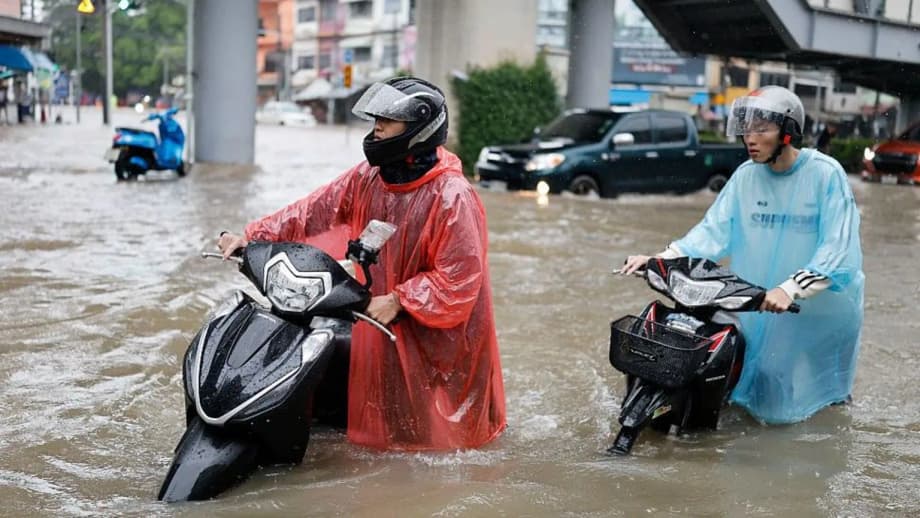
Bangkok woke to a city transformed by water on Sunday after more than 300 millimetres of rain fell in three days, turning major roads into slow moving rivers and forcing officials to declare a flood disaster across all 50 districts of the Thai capital. Cars sat half drowned on streets in the east and north, commuters waded through brown water that reached knees and waists in low areas, and small boats replaced cars on some lanes. The Bangkok Metropolitan Administration (BMA) said the downpour from Thursday to Sunday overwhelmed pumps and drains in one of the most congested cities in Asia, bringing traffic to a near standstill.
- Flood Emergency Grips the Capital
- How Three Days of Rain Broke the Drainage System
- Homes and Shops Swamped Near the Canals
- Thousands Seek Safety in Schools Turned Into Shelters
- Disaster Declaration Unlocks Aid and Two Day Pause
- Travel, Schools and Markets Feel the Strain
- Why Bangkok Is So Vulnerable When Rain Turns Extreme
- The Bottom Line
By Sunday morning the heaviest rain had eased but danger had not passed. Governor Chadchart Sittipunt warned that canal levels remained high and every canal was full, with water spilling into streets and homes near the banks. Residents were urged to stay home and avoid needless travel, while families living close to canals were told to lift furniture, food and valuables to upper floors. The Thai Meteorological Service said more heavy rain was likely through the week as the area of low pressure behind the storm drifted toward central Thailand.
How Three Days of Rain Broke the Drainage System
September marks the peak of the rainy season in Thailand, a month when short sharp thunderstorms are normal in Bangkok. This time the storms stalled and dumped rain hour after hour. Weather officials recorded more than 330 millimetres in the hardest hit parts of the city between Thursday and Sunday, with nearly 300 millimetres falling in a single 48 hour burst. That volume fell faster than drains, tunnels and pumping stations could move it to the Chao Phraya River and the sea.
Governor Chadchart said the east of the city suffered the worst flooding, with northern districts toward Don Mueang Airport also under deep water. Phetchaburi Road in the city centre, a vital link for shops, offices and hospitals, was impassable in places. He said pumps were running at full capacity but canal water was too high to accept more flow. In plain terms, there was nowhere for the rain to go. Streets that already flood in a normal storm stayed under water for a day or more.
Drivers abandoned cars where water flooded engines and stalled traffic for hours. Stranded vehicles blocked lanes and forced buses to change routes, adding to delays in a city famous for long jams. Officials asked employers to allow remote work where possible and urged the public to postpone trips into the centre. The message on Sunday was simple. Stay put unless movement is urgent.
Homes and Shops Swamped Near the Canals
The worst pain was felt in homes and small shops along the canals, where water rose from the drains and over the banks at night. For families in single storey houses and ground floor flats, the flood arrived with little time to lift beds, fridges and stock. Shopkeepers pulled shutters down and watched water seep under doors, knowing each hour under water meant lost income and costly repairs.
Near a canal just north of central Bangkok, 67 year old shopkeeper Somkid Pheuk Ngam described water rising to waist level inside her home. She said she had closed her shop for two days and could not leave to buy supplies. She believes this flood feels worse at street level than the great flood of 2011 that swamped large parts of the country for three months.
The water keeps coming in. It is hard to go out now. It is like at my waist level now. I cannot go anywhere. I have been closing my shop for two days now.
On the outskirts of the capital along the Premprachakorn canal, 44 year old resident Kosin Nilset spent hours sweeping water from his house with a broom. He said the building sat under water for about 30 hours and the level rose higher than he remembers from 2011. His account was echoed by other residents who said official alerts arrived after water had already entered bedrooms and kitchens.
This time the water level is higher than the 2011 flood.
Thousands Seek Safety in Schools Turned Into Shelters
As water filled ground floors, the city opened schools as temporary shelters and the army set up relief points with field kitchens, drinking water and sleeping space. The Bangkok Metropolitan Administration said nearly 4,900 people had moved to shelters by Sunday and about 52,000 households were affected by flooding across the capital. In one school gymnasium, evacuees rested under mosquito nets while volunteers handed out rice, water and blankets.
Among them was 46 year old grocery store employee Sunaporn Thongphajuti, who arrived with almost nothing after water cut her route home. She asked staff for a spare shirt and a blanket for the night. Teacher Namphet Chanjuingtavorn, 47, sought shelter at her own school after power and water were cut at her flat, then stayed to help coordinate food and sleeping areas for about 100 people.
I came with only one shirt. It would be great if I can get another. What I am lacking is a blanket to sleep with, but I can survive.
Not everyone reached shelter in time. Office worker Bandit Pankan said he received a text alert from the disaster agency after water had already entered his street during the night, leaving no chance to move his car or lift appliances. Student Sansuk Laowatcharakul, 19, said she had not stored food and felt anxious facing the flood alone while her parents were away. Resident Suppakarn Julavijitphong hauled luggage from a condo ringed by floodwater and admitted he had not thought to relocate until the emergency advisory told canal side families to move goods to higher floors.
Disaster Declaration Unlocks Aid and Two Day Pause
On Saturday Governor Chadchart declared all 50 districts of Bangkok as disaster zones, a legal step that allows rapid release of relief money, deployment of crews and compensation for damaged homes and shops. Neighboring provinces followed. Nonthaburi and Samut Prakan placed several districts under the same status as water spread beyond the capital. The declaration states that the floods pose a risk to lives and may damage public and private property, with the highest risk for people living near canals.
Speaking on Saturday, Governor Chadchart said crews were pumping nonstop but canals could take no more water. He pointed to canal side communities as the main concern and said the east of the city needed the most help.
The rain keeps falling and we are doing our best. We are trying to pump the water out, but the water in canals is full. The risk areas are those who live near canals. Every canal is now filled.
On Sunday Prime Minister and Interior Minister Anutin Charnvirakul announced special public holidays on September 28 and 29 for Bangkok, Nonthaburi, Pathum Thani and Samut Prakan. The decision, approved at a special Cabinet meeting at Government House, aims to reduce travel, keep roads clear for rescue vehicles and give families time to move, clean and seek help. Anutin said light to moderate rain was still expected in Bangkok, with heavier rain possible in central and eastern regions, and ordered governors to keep staff, machines and vehicles ready for fast deployment.
The government said temporary shelters, food packs, relief supplies and medical teams were being prepared for affected residents. Governors were told to declare additional disaster areas where needed and to request emergency funds through the Department of Disaster Prevention and Mitigation (DDPM) if conditions worsened. Officials stressed that price rises on essentials would be punished, after reports of long queues and empty shelves raised fears of panic buying.
Travel, Schools and Markets Feel the Strain
Travel across Bangkok remained difficult on Sunday. Several major roads in the east and north were closed to small cars, and routes toward Don Mueang Airport and along Phetchaburi Road were blocked in parts by standing water. Suvarnabhumi Airport, the main international gateway, stayed open but the tourism authority advised passengers to allow an extra two to three hours for the journey. Stranded cars and flooded bus stops forced many commuters to wade or turn back.
City authorities said hundreds of schools would stay closed on Monday to protect children and to keep buildings available as shelters. Markets told a parallel story. Stallholders lifted vegetables and fish into foam boxes or hung goods just above the water to stay dry. Supermarkets closer to flooded streets ran out of bread, eggs and drinking water, while larger stores saw queues of one to two hours at cash registers as shoppers stocked up for several days.
The office of the prime minister urged the public not to panic buy and warned that charging unfair prices during a disaster is a criminal offence. Beyond the capital, the Department of Disaster Prevention and Mitigation reported flooding in 25 provinces on Sunday. The defence ministry said more than 10,000 soldiers were deployed across the country to help carry elderly residents, fill sandbags, clear drains and deliver food.
Why Bangkok Is So Vulnerable When Rain Turns Extreme
Bangkok sits on a low plain built on the delta of the Chao Phraya River, barely above sea level in many districts. A web of canals once drained rain to the river and the Gulf of Thailand, but rapid growth has paved much of the ground with concrete and filled many waterways. When rain falls fast, water cannot soak into the soil and the remaining canals fill in hours. Pumps can help only if river and canal levels leave room to push water out.
That geography meets a warming climate. Warmer air holds more moisture, so downpours can be heavier in a short time. Scientists who study the climate say the strength and number of extreme rain events are rising as the planet heats because of emissions from fossil fuels. Residents feel the shift. Many told reporters this flood rose faster and higher at street level than recent monsoons, with some comparing water inside homes to 2011.
The floods of 2011 remain the benchmark. That year deluges across Thailand killed more than 500 people, damaged millions of homes and shut factories for three months, with Bangkok fighting for weeks to keep central districts dry. Last November the south faced its worst floods in decades, with at least 145 deaths and thousands of homes damaged. No deaths have been reported in Bangkok in the current floods, but officials say the toll of damaged homes, lost trade and disrupted schooling is already large and will take time to count.
The Bottom Line
- More than 300 millimetres of rain fell on Bangkok from Thursday to Sunday, with more than 330 millimetres in the hardest hit areas, prompting a disaster declaration in all 50 districts.
- Canal levels stayed high on Sunday, with the east and north of the city worst affected, including routes toward Don Mueang Airport and Phetchaburi Road in the centre.
- Nearly 4,900 people moved to shelters and about 52,000 households were affected, with schools opened as temporary shelters supported by army field kitchens.
- September 28 and 29 were declared special public holidays for Bangkok, Nonthaburi, Pathum Thani and Samut Prakan to limit travel and support relief work.
- Residents near canals were told to stay home, avoid needless travel and move belongings to upper floors as pumps struggled against full waterways.
- Suvarnabhumi Airport stayed open with advice to allow an extra two to three hours, while hundreds of schools will stay closed on Monday.
- Flooding was reported in 25 provinces nationwide, with more than 10,000 soldiers deployed to help with rescue and relief.
- No deaths have been reported in Bangkok so far, but more rain is forecast and officials warn the flood risk has not passed.
- Many residents compare street water to the 2011 floods that killed more than 500 people across Thailand and lasted three months.