A Frozen Word Becomes a Kamakura Attraction
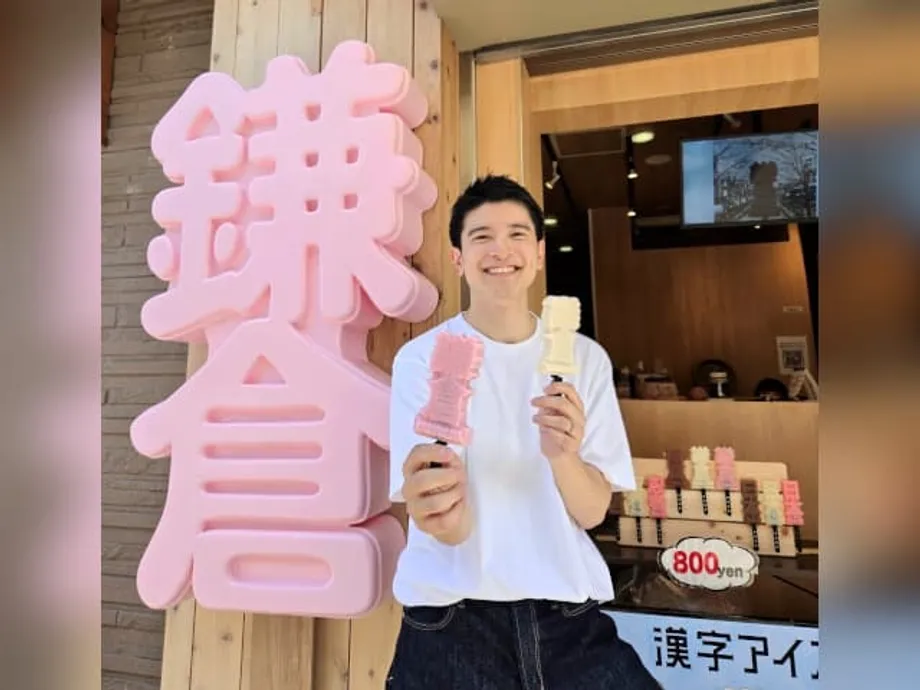
A shop at 1-6-4 Yukinoshita in Kamakura, the historic seaside city in Kanagawa Prefecture near Tokyo, is turning written Japanese into something visitors can eat. Since opening on 1 May 2026, Kanji Ice Cream has attracted crowds larger than its operators expected, selling frozen desserts shaped into characters that spell Kamakura, Japan and Ninja.
Contents
- A Frozen Word Becomes a Kamakura Attraction
- What Customers Are Buying
- How the Dessert Holds Its Shape
- Why the First Shop Matters
- Local Words at Stations, Stadiums and Festivals
- Investment Supports Plans to Grow
- From Founding to Expansion: The Timeline
- Why the Product Fits Social Media
- A Small Language Lesson With a Local Meaning
- Key Points
The attraction combines a snack, a souvenir and a photograph. Customers can hold up the name of Kamakura against the city's famous Great Buddha or Tsurugaoka Hachimangu Shrine, connecting the word on their dessert with the place they have come to see. The ice cream becomes a small, edible sign for the destination.
KANJI JAPAN, the company behind the KANJI ICE brand, says the product can remain solid for up to 30 minutes at room temperature. That gives visitors time to walk, arrange a photograph and eat without the usual rush to catch melting drips. The promise of a dessert that holds its shape is central to its appeal.
The opening came just before Golden Week, the cluster of national holidays from 3 to 6 May that makes this one of Japan's busiest travel periods. Tourists filled Kamakura's streets, and several products sold out completely within days. For a new business, the response offered an early sign of demand beyond what its operators had anticipated.
By 17 July 2026, the story had grown beyond that first shop. The company had announced investment to support expansion, placed locally branded products at a stadium, a railway station and a flower festival, and supplied custom designs for a business event in Tokyo.
What Customers Are Buying
KANJI ICE uses molds to turn ice cream into individual kanji characters and short phrases. Kanji are the complex written symbols used in Japanese, often carrying meaning rather than representing just a single sound. Here, the writing becomes the shape of the food itself.
The standard designs include 鎌倉 for Kamakura, 日本 for Japan and 忍者 for Ninja. Precise molds give the finished desserts the appearance of carved stone seals or pieces of edible typography. Instead of receiving an ordinary cone or cup, customers get a sculptural block of frozen sweetness.
The menu has three flavors: Crunchy Rich Chocolate, with a deep cocoa taste and a crunchy texture; Crispy Strawberry, with a bright fruit flavor and a light, crisp finish; and Chewy Milk, with a soft texture resembling mochi. Each flavor can be made in different kanji designs, allowing the taste and the word to be selected separately.
In casual Japanese, aisu often means ice cream rather than simply frozen water. The shop's name draws on that familiar abbreviation. Its wider concept is to make Japanese language and culture something a visitor can hold, photograph and consume.
KANJI JAPAN describes the service as a tourism experience rather than just a snack. That approach explains why the words matter as much as the flavors: a dessert carrying a place name can act as a souvenir while it is being eaten, then remain in the customer's travel photographs.
How the Dessert Holds Its Shape
Strawberry polyphenols are behind the product's resistance to melting, according to the company. Polyphenols are natural compounds found in strawberries and many other plants. They are known for antioxidant properties, and food scientists have explored their use as stabilizers in dairy products.
In this ice cream, the compounds appear to interact with fats and proteins in the mixture, helping its structure stay together as the temperature rises. The result is a frozen dessert that softens slowly instead of quickly collapsing into a puddle. The company's stated period of up to 30 minutes at room temperature gives customers a practical window for sightseeing and photography.
Fulllife, a Japanese company specializing in functional food technologies, holds the patent protecting the formula. KANJI JAPAN has an exclusive licensing agreement with Fulllife to use that technology in its products shaped into kanji. A license gives the business permission to use another company's protected invention under an agreement.
The two companies are also working on a new patent application specifically for the Kanji Ice Cream process. Together, the existing patent, the exclusive license and the planned application form a strategy that could make it harder for competitors to copy both the science and the shaped product concept.
Japan already has other examples of ice cream designed to resist melting. In Gifu Prefecture, an ice cream shaped like a samurai sword uses kudzu, a starchy plant root, to achieve similar strength. Kanji Ice Cream's particular combination is its character molds, licensed technology and branding built around local identities.
Why the First Shop Matters
The Kamakura flagship is open from 11 a.m. to 5:30 p.m. Its location at 1-6-4 Yukinoshita places the business in the heart of a city where visitors are already walking between historic attractions. The founders intended the shop to demonstrate a model that could be repeated at tourist destinations across Japan.
Kamakura provides a close match between the product and its setting. A dessert spelling the city's name has an immediate connection to the streets, temples and monuments around the customer. A photograph beside the Great Buddha or Tsurugaoka Hachimangu Shrine joins the written name, the landmark and the visit in a single image.
The Golden Week launch brought that idea to a large seasonal audience. The crowds and early sellouts showed how a familiar purchase, an ice cream during a day out, could become a distinct part of the trip when its shape carried local meaning.
The shop also serves as a working example of the company's intended expansion. Its purpose extends beyond selling one set of designs in one city: the same approach can be adapted to another destination by changing the words customers carry away.
Local Words at Stations, Stadiums and Festivals
Sanga Stadium in Kyoto is already selling character ice cream branded for Kyoto. At JR Shin-Fuji Station in Shizuoka Prefecture, travelers can buy a version that reads Mount Fuji. Visitors to the Fuji Shibazakura Festival in Yamanashi Prefecture can also purchase the Mount Fuji design while surrounded by pink moss phlox flowers.
These locations give the product different routes to customers. A stadium brings it to fans, a station to travelers, and a festival to people visiting a seasonal attraction. Each setting pairs the dessert with words that fit the place, keeping the local identity at the center of the purchase.
The Mount Fuji version illustrates how one design can work in more than one setting. At the station, it connects with travel through Shizuoka; at the flower festival, it becomes part of an outing in Yamanashi. The company can retain the same basic product while placing it in different tourism settings.
KANJI JAPAN has also supplied custom products for corporate events. For an annual business event at Takanawa Gateway City in Tokyo, it created two special designs: 高輪 for Takanawa and ゲートウエイテック for Gateway Tech.
Those commissions extend the idea beyond the standard menu. The molds can be adapted for almost any word or name, making the product attractive to event organizers, local governments and tourist boards seeking something connected to their own venue or identity. A custom dessert can carry an event's name just as the Kamakura version carries the city's name.
Investment Supports Plans to Grow
KANJI JAPAN announced on 12 June 2026 that it had raised a pre-seed investment round from Startup Factory, an investment fund led by Osamu Suzuki. The exact amount was not disclosed. The backing signals confidence in the brand's growth potential after the strong response to its first shop.
Pre-seed funding is an early stage of venture investment. It typically helps a young business refine a product, build a small team and prepare for larger fundraising rounds. KANJI JAPAN says its money will support national expansion and additional sales locations, with an ambition to expand globally later.
KANJI JAPAN set out the purpose of the investment in a company statement:
The funds raised will be used for the nationwide expansion of KANJI ICE and the expansion of sales locations. The company aims to expand nationwide and globally in the future.
The business was founded in December 2025 by Ko Shinohara and Kohei Takahashi, both former Nippon Television professionals. Shinohara worked as a freelance announcer, while Takahashi served as a director. Their media backgrounds may help explain a product built around a clear visual idea and a story that is easy to share.
A dessert that looks distinctive on camera and communicates a place name fits naturally into social media. The founders have combined that visual appeal with a practical feature, resistance to melting, that gives customers more time to make the image they want.
From Founding to Expansion: The Timeline
KANJI JAPAN moved from its founding to a flagship opening and an investment announcement within a few months. The dated milestones show the order of that development:
- December 2025: Ko Shinohara and Kohei Takahashi founded KANJI JAPAN.
- 1 May 2026: The Kanji Ice Cream flagship opened in Kamakura.
- 3 to 6 May 2026: Golden Week holidays brought heavy tourist traffic, with several products selling out within days of the opening.
- 12 June 2026: The company announced its pre-seed investment from Startup Factory.
- 17 July 2026: The business had described plans for national expansion and eventual global growth, alongside sales beyond Kamakura and custom event products.
The early sellouts drew attention beyond the shop's visitors. The June investment announcement then gave the company financial support for its stated aim of reaching more locations. Its station, stadium, festival and event products show the different settings in which that expansion can take place.
Why the Product Fits Social Media
Instagram and TikTok favor food that can be recognized quickly in a photograph or short video. Kanji Ice Cream offers an unusual shape, a connection to a specific destination and enough time outside the freezer to be posed in front of a landmark.
The resistance to melting removes some of the pressure that usually comes with photographing ice cream. A customer can frame it against a temple gate, hold it beside a street sign or set it on a stone wall without the same immediate rush to prevent a sticky mess.
The writing adds another reason to share. A tourist can post a picture and explain that the dessert taught them the characters for Japan or Ninja. Travel, culture and humor meet in a simple image, giving friends and followers something more distinctive than another soft serve cone.
For tourism businesses, the appeal lies partly in what lasts after the food is gone. A souvenir eaten in a few bites can leave a lasting digital trace. Continued expansion could create a network of snack stops that encourage visitors to encounter regional Japan through its place names and characters.
A Small Language Lesson With a Local Meaning
A Kamakura ice cream puts a written word and its real setting together. The customer sees the characters, reads their pronunciation, tastes the dessert and connects the name with the city around them. That combination gives the writing a place in a personal experience rather than leaving it as an item on a vocabulary list.
Language teachers often describe memory as stronger when information is connected with emotion and experience. A dessert shaped into a place name offers a simple version of that connection: the word is associated with a visit, a flavor and a photograph.
The local designs also provide an easy opening for curiosity. A child might ask what a character means, while an adult might look up the history of the word Ninja. The immediate experience is small, but it can prompt further interest in Japanese language and culture.
Kanji Ice Cream fits a broader direction in Japanese tourism toward making culture tangible and portable. Food, crafts and augmented reality apps offer different ways to encourage visitors to stop, engage and share. This business uses a familiar snack to make written language part of the journey.
The company's challenge now is to carry the appeal of its first shop into more locations while preserving the connection between each design and its setting. Its existing products show the central idea: the technology keeps the dessert together long enough for the place name to become part of the visitor's experience.
Key Points
- KANJI JAPAN opened its Kamakura flagship on 1 May 2026, just before Golden Week.
- The standard designs spell Kamakura, Japan and Ninja, with three flavors available.
- The company says strawberry polyphenol technology keeps the dessert solid for up to 30 minutes at room temperature.
- Fulllife holds the formula's patent and has granted KANJI JAPAN an exclusive license for its kanji products.
- Startup Factory, led by Osamu Suzuki, provided pre-seed investment announced on 12 June 2026. The amount was not disclosed.
- Sales extend to Sanga Stadium, JR Shin-Fuji Station and the Fuji Shibazakura Festival, with custom designs also supplied for Takanawa Gateway City.
- The company plans more sales locations across Japan and aims for global expansion.