A Legend Prepares to Depart
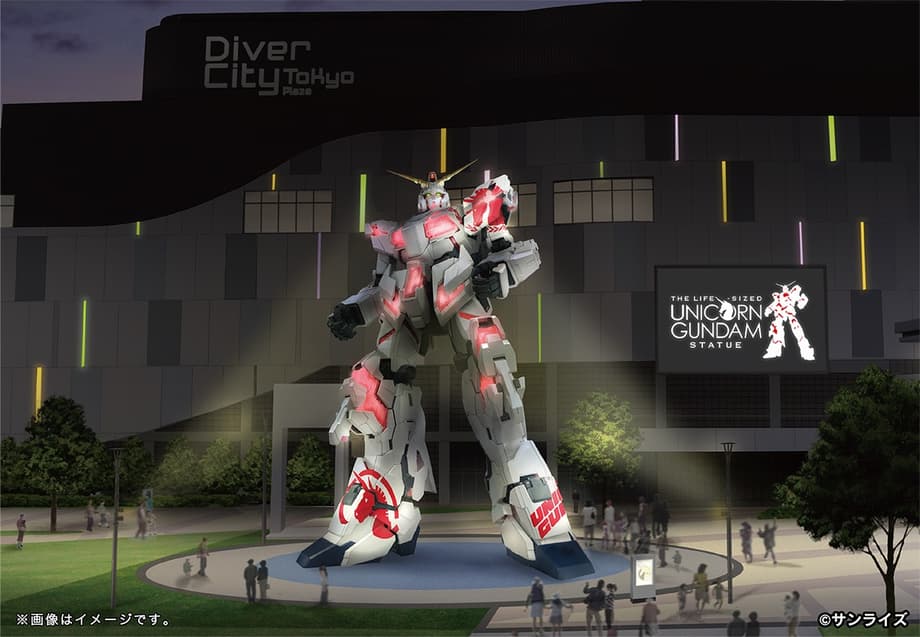
After nearly nine years of standing guard over the artificial island of Odaiba in Tokyo Bay, the life size RX 0 Unicorn Gundam statue is preparing for its final departure. Bandai Namco announced on May 15 at the Gundam Conference SPRING 2026 that the iconic 19.7 meter mecha will conclude its exhibition at the end of August 2026, leaving fans with a narrow window to witness one of the most recognizable pieces of public art in Japan before it vanishes from the plaza outside DiverCity Tokyo Plaza.
Since its installation on September 24, 2017, the towering white mobile suit has served as both a neighborhood symbol and a global pilgrimage site for anime enthusiasts. The statue represents the titular machine from Mobile Suit Gundam UC, a story set within the franchise core Universal Century timeline that follows protagonist Banagher Links as he pilots the experimental unit during a conflict between the Earth Federation and the Neo Zeon remnant faction known as the Sleeves.
The announcement arrives without any official explanation for the retirement, a silence that has left many supporters surprised given the continued ability of the statue to draw massive crowds. Yet Bandai has framed the departure not as a quiet dismantling but as a celebration, promising a series of commemorative events and a special visual transformation designed by the very artist who first gave the Unicorn Gundam its distinctive appearance.
The district of Odaiba sits on reclaimed land in Tokyo Bay, a futuristic playground of shopping centers, exhibition halls, and waterfront parks that draws millions of visitors annually. The placement of the Unicorn Gundam outside DiverCity Tokyo Plaza positioned it at the heart of this commercial and cultural crossroads, where families, couples, and international travelers regularly encountered the machine without necessarily seeking it out. For many, the statue became an unexpected highlight of their Tokyo itinerary, a free spectacle that demonstrated the willingness of Japan to merge public space with pop culture mythology on a massive scale.
A Final Form by the Original Creator
Beginning June 20, visitors will see the statue in a new configuration dubbed the RX 0 Unicorn Gundam Ver. TWC Final. This farewell appearance comes courtesy of Hajime Katoki, the original mechanical designer who defined the visual identity of the Unicorn for the anime series. Katoki has created an array of special decals that will be applied directly to the 49 ton structure, giving the machine a fresh aesthetic for its final eleven weeks on display.
The involvement of the original designer of the unit lends this makeover a degree of authorial weight that a standard cosmetic update would not carry. Rather than simple stickers, these decorations represent a closing statement from the person who envisioned the sharp white armor and transformation mechanics of the mobile suit. The decal installation period runs through August 31, though organizers note that weather conditions could affect the precise scheduling of the public reveal.
The design contributions of Katoki to the Unicorn Gundam date back to the original novel and anime adaptation of Mobile Suit Gundam UC, which began its run in 2010 as part of the core Universal Century timeline. His design language is known for sharp geometric panel lines, industrial detailing, and a sense of mechanical realism that distinguishes his creations from more fantastical robot concepts. Applying this visual philosophy to a structure nearly twenty meters tall requires a different approach than illustrating for animation or designing plastic model kits, yet the result promises to give the statue a sendoff that honors its origins.
Farewell Programming Under the Lights
The Unicorn Gundam has never been a static display. Throughout its residency, the statue performed hourly transformation sequences in which motorized panels shifted across its shoulders, waist, and knees while its head horn split and face configuration changed. Fifty illuminated points across the body allowed it to glow dramatically as it transitioned from Unicorn Mode to Destroy Mode, reproducing the power up sequence from the anime with surprising mechanical fidelity.
The transformation sequences have long been the signature draw of the statue. During the shift to Destroy Mode, armor plates across the shoulders, waist, and knees expand outward while the head unit reconfigures and internal psycho frame elements glow in a vivid display of colored light. These motorized changes occur in coordination with projected video content and musical scores, creating a multimedia experience that lasts several minutes and draws crowds to the Festival Plaza even on weeknights. For the final run, these performances carry added emotional weight as spectators witness the last iterations of a ritual that has played out thousands of times since 2017.
For its final months, organizers have released a structured schedule of nightly light up and sound shows. The evening program begins at 7:00 p.m. with the Mobile Suit Gundam Hathaway Flash Special Movie, followed by MidNight CHA CHA at 7:30 p.m., Mobile Suit Gundam UC Special Movie Ver. 2.0 “Cage” featuring music by SawanoHiroyuki at 8:00 p.m., archival footage Fly! Gundam 2017 at 8:30 p.m., Mobile Suit Gundam UC Perfectibility at 9:00 p.m., and Gundam Beyond at 9:30 p.m. Daytime transformation shows will also continue at 11:00 a.m., 1:00 p.m., 3:00 p.m., and 5:00 p.m.
The Gundam Cafe Kitchen Car, which operates near the statue or at the Diver City Tokyo Teleport side entrance depending on the day, is joining the festivities by offering a physical keepsake to visitors. Throughout June, July, and August, each purchase from the food truck comes with a Unicorn Gundam headband, allowing fans to wear a piece of the experience as they capture final photographs with the towering mecha.
From RX 78 2 to Unicorn: A History of Giant Robots in Odaiba
The departure of the Unicorn Gundam marks the end of an era for Odaiba, but it is not the first time the plaza outside DiverCity Tokyo Plaza has bid farewell to a colossal mobile suit. An earlier life size version of the original RX 78 2 Gundam occupied the same location starting in 2009 before its removal in March 2017. A six month gap followed before the Unicorn Gundam took its place, establishing a tradition of rotating flagship statues that has defined the area for nearly two decades.
The Unicorn installation represented a significant technical leap forward. At 19.7 meters tall, it surpassed the 18 meter height of its predecessor. The structure incorporates sophisticated motorized gimmicks that open armor panels, alter facial configurations, and manage dozens of internal lighting elements. These engineering feats transformed the statue from a mere replica into a kinetic sculpture, one that could faithfully reproduce the metamorphosis of the fictional machine between its standard and combat ready states.
Over the years, the statue has anchored countless festivals, cosplay gatherings, and seasonal events. It has appeared in travel guides, social media posts, and television broadcasts, effectively serving as a visual shorthand for the modern identity of Tokyo. The site also houses two Gundam specialty stores inside DiverCity, including THE GUNDAM BASE TOKYO ANNEX, which have benefited from the foot traffic generated by the outdoor attraction. The economic and cultural ecosystem built around the statue demonstrates how a single piece of installation art can sustain an entire quarter worth of tourism and retail activity.
The Future of Gundam Attractions
While Bandai Namco has not confirmed a direct successor for the Odaiba site, the company has teased a broader initiative known as the Gundam Landmark Project. Described as a new facility or attraction designed to draw fans from across the globe, this project suggests that the void left by the removal of the Unicorn may eventually be filled by another ambitious installation. However, details remain scarce, and no timeline has been offered for when this new concept might materialize.
The removal will leave the Tokyo metropolitan area without a life size Gundam for the first time in years. The moving RX 78F00 Gundam that delighted visitors at Gundam Factory Yokohama was relocated to Osaka for Expo 2025 after its own farewell in spring 2024, and that unit is no longer capable of its original wave and kneel movements. For now, fans seeking a life size experience must travel to Fukuoka, where the 24 meter RX 93 v Gundam has stood at LaLaPort since 2022, or visit the Bandai Hobby Center in Shizuoka to see a life size Gunpla model kit display.
Industry observers note that the Odaiba location has become too valuable to remain empty for long. The cycle from RX 78 2 to Unicorn established a precedent, and with Bandai Namco actively developing new attractions ahead of the 2029 milestone of the franchise, speculation about a replacement runs high. Some fans hope for a unit from newer series such as Mobile Suit Gundam: The Witch from Mercury, while others anticipate a return to the classic RX 78 2 in an updated form. Until official word arrives, the community is left to wonder what shape the next guardian of Odaiba might take.
A Franchise Larger Than the Statue
The presence of the Unicorn Gundam in Odaiba always served as a physical manifestation of a media empire that stretches far beyond a single statue. Since the original Mobile Suit Gundam anime debuted on April 7, 1979, the franchise has spawned more than ninety titles across film, television, and print. The business ecosystem surrounding these stories includes merchandise, video games, music, and amusement attractions, with cumulative global shipments of Gunpla plastic model kits surpassing eight hundred million units.
The Gundam franchise generates massive annual revenue through its diverse product lines. The mobile title SD Gundam G Generation Eternal, launched in 2025, surpassed eight million downloads globally within its first year. The Gundam Card Game has issued more than six hundred thirty million cards worldwide. These numbers illustrate that the Unicorn statue, while visually spectacular, represents just one node in a vast network of content and commerce. Its retirement from Odaiba does not signal a retreat for the brand, but rather a reconfiguration of how Bandai Namco deploys its most visible assets.
The annual Gundam Conference, where the removal was announced, functions as the primary platform of Bandai Namco for revealing business updates and future projects. Recent announcements include a remaster of the original 1979 series and a new project tied to Mobile Suit Gundam Wing. With the franchise building toward its fiftieth anniversary in 2029, the timing of the retirement of the Odaiba statue suggests a strategic recalibration of how the company presents its most iconic property to the world. Whether that means a new statue, an entirely different attraction, or something else entirely remains unknown, but the global fanbase is watching closely.
The Bottom Line
- The RX 0 Unicorn Gundam statue in Odaiba will be removed on August 31, 2026, after nearly nine years of continuous display since September 2017
- Original mechanical designer Hajime Katoki created a special decal makeover called Ver. TWC Final, visible from June 20 through the end of August
- Final nightly light up and sound shows run on a fixed schedule through August, with daytime transformation performances at 11:00 a.m., 1:00 p.m., 3:00 p.m., and 5:00 p.m.
- The Gundam Cafe Kitchen Car is distributing free Unicorn Gundam headbands with each purchase from June through August
- Bandai Namco has not confirmed a replacement for the Odaiba site but has teased the Gundam Landmark Project as a future attraction
- The statue stands 19.7 meters tall and weighs approximately 49 tons, with fifty illuminated points and motorized armor panels
- Once removed, Tokyo will have no life size Gundam statues, leaving the RX 93 v Gundam in Fukuoka as the only remaining full scale unit in Japan