In Pasig, sunlight changes the cost of driving
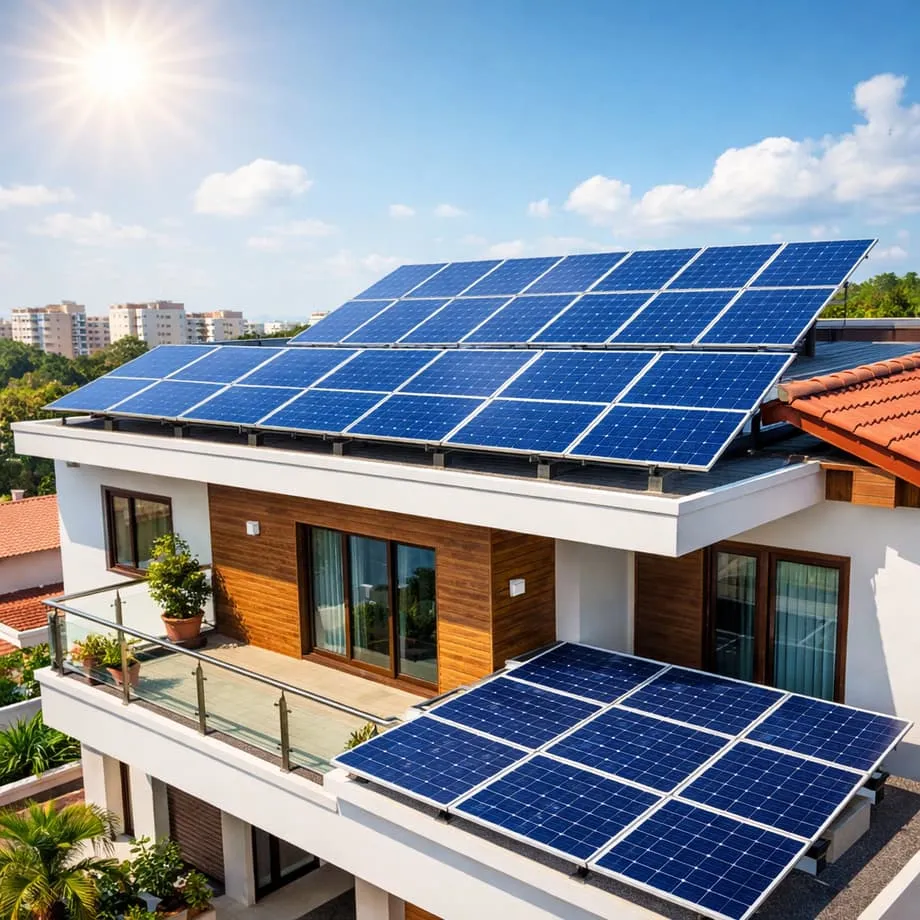
Joben Ilagan's family paid close to 1.4 million pesos for a BYD eMax 7 after the war involving Iran pushed up fuel prices. At their home in Pasig, Metro Manila, rooftop solar panels now supply much of the electricity used to charge it. For the Ateneo de Manila University assistant professor, the ability to run a car on sunshine helped turn an electric vehicle into a practical household purchase.
Contents
- In Pasig, sunlight changes the cost of driving
- Why a Middle East conflict reaches Philippine homes
- Rooftop solar grows as electricity gets dearer
- A Cavite family weighs the installation bill
- Electric vehicle sales rise in a shrinking market
- Chinese brands gain buyers despite political distrust
- Who can afford the change, and who can charge?
- Government incentives meet practical obstacles
- Other countries show the value of using less imported fuel
- Equipment bought during the crisis can outlast it
- The Bottom Line
The family installed its solar system in 2023, spending about 280,000 pesos after electricity bills rose during the COVID-19 pandemic. They then studied electric vehicles for about two years. Their two ageing petrol cars still worked reliably, so they held off replacing them until the fuel crisis changed the calculation.
The vehicle's list price was 1.498 million pesos, above what the family ultimately paid. Several family members work from home, allowing them to plug the car into a home charger during daylight hours. Ilagan said the electricity used for charging is, for the most part, nearly free.
The household's experience captures a wider change in the Philippines as of July 21, 2026. Solar panels, batteries and electric vehicles are increasingly being considered as ways to control everyday expenses, moving beyond their earlier position as niche products. A distant conflict has made dependence on imported oil and gas an immediate concern for families deciding how to power their homes and travel.
The financial appeal starts with a simple difference: households must pay for solar equipment, but sunlight itself has no market price. Once panels are operating, electricity generated at home can replace electricity bought from the grid. Charging a car while those panels are producing power can extend the savings from the household electricity bill to the family's transport budget.
Why a Middle East conflict reaches Philippine homes
The Philippines imports about 98 percent of its crude oil from the Middle East, with the remainder coming mainly from Malaysia and Brunei. Disruption around the Strait of Hormuz, a major shipping route for oil and liquefied natural gas, has therefore put pressure on the prices of transport fuel, electricity and cooking gas.
The government declared a national energy emergency, moved government offices to a workweek of four days and asked offices to limit air conditioning. Public transport workers received financial assistance, while airlines considered rationing fuel. Those responses show how the shock spread beyond motorists to workplaces, transport services and public institutions.
The climate group 350.org estimated that higher oil and gas prices cost Filipino consumers, businesses and public institutions more than $600 million during the first 60 days of the war. The expense has made energy security a question of household and business finances as well as foreign policy.
Solar generation offers a way to reduce some of that exposure. Each kilowatt hour produced at home can reduce purchases from the electricity grid, particularly during the hottest part of the day, when air conditioning demand is high. A kilowatt hour measures an amount of electricity consumed or generated; it is the unit households see on their power bills.
Families still face a substantial payment before those savings begin. The crisis has changed the comparison, however, by increasing the cost of continuing to buy fuel and electricity. Equipment that previously seemed too expensive can become more attractive when recurring bills rise sharply.
Rooftop solar grows as electricity gets dearer
Energy research group Ember estimated that Philippine rooftop solar installations may have nearly doubled in the year to April 2026. About 600 megawatts of capacity was added, taking the total to roughly 1,300 megawatts. Capacity describes how much power equipment can produce, rather than how much electricity it supplies throughout a day.
Chinese export data suggests further installations could follow. China shipped more than 3,000 megawatts of solar panels to the Philippines in March and April. The Philippines became China's second largest solar panel export market in 2026, behind the Netherlands. Ember said the large inventory points to more systems being installed in the coming months.
Residential electricity prices in May were an estimated 17 percent higher than a year earlier, according to Ember. The increase shortened the estimated payback period for a home solar system from about four years to 3.1 years. Payback is the time it takes for savings on electricity bills to recover the installation cost.
New Energy Nexus surveyed 20 local solar companies and found that weekly installations increased by 70 percent after the conflict began. It described customer inquiries as rising sixfold and also gave figures showing inquiries increasing from about 115 in February to more than 450 by mid April.
The figures trace a change already visible across several years and months:
- In 2023, the Ilagan family installed rooftop solar after electricity bills rose during the pandemic.
- From February to mid April 2026, the New Energy Nexus survey recorded a sharp increase in inquiries to local solar companies.
- In March and April 2026, China shipped more than 3,000 megawatts of solar panels to the Philippines.
- By April 2026, estimated Philippine rooftop solar capacity had reached roughly 1,300 megawatts.
- In May 2026, residential electricity prices were estimated to be 17 percent above their level a year earlier.
A Cavite family weighs the installation bill
In Cavite province, journalism student Chris Josef de Jesus said his family's monthly electricity bill rose from between 4,000 and 6,000 pesos to about 10,000 pesos at the height of the crisis. Cooking gas nearly doubled in price, while diesel reached as much as 85 pesos per litre.
The family contacted about 15 solar installers before deciding to buy equipment directly and hire an electrical engineer. Their system cost about 575,000 pesos. Installation packages they had been quoted ranged from 750,000 pesos to one million pesos.
The family expects its monthly electricity bill to fall to around 3,600 pesos, producing estimated monthly savings of 6,400 pesos compared with the crisis peak. De Jesus expects the system to repay its cost within three to four years.
The Cavite purchase and the Ilagan family's earlier installation illustrate why household decisions depend on both the initial price and the electricity a system can replace. The savings build up over time, while the equipment bill arrives at the beginning. Rising electricity prices can strengthen the incentive to install panels without making that first payment any easier to afford.
Electric vehicle sales rise in a shrinking market
Philippine electric vehicle sales reached 24,356 units in the first five months of 2026, compared with 10,431 during the same period in 2025, according to the Chamber of Automotive Manufacturers of the Philippines and the Truck Manufacturers Association. Sales more than doubled even as the wider vehicle market contracted.
Total vehicle sales fell from 190,429 to 167,324 over those periods. Using those figures, electrified vehicles increased their share of the market from about 5.5 percent to 14.6 percent. The shift means they accounted for a larger portion of purchases while fewer vehicles were being sold in total.
Andre Douglas Tan, president of dealer ADOT Motors, described a sharp increase at two MG and GAC showrooms in Valenzuela. Monthly sales rose from two to five vehicles in January to 24 in May and 28 in June. Before the energy shock, staff often approached prospective buyers online. The showrooms now receive one or two unsolicited customers walking in each day.
Rico Severino, founder and president of the Philippine Electric Vehicle Community, said a fully electric car costs less than two pesos per kilometre to operate, compared with roughly five to six pesos for a petrol vehicle. That comparison gives shoppers a concrete way to weigh their weekly fuel spending against charging costs.
Severino said savings, rather than environmental concern, are the main reason people buy electric vehicles. Bob Palanca, managing director of BYD Cars Philippines, said buyers are also considering the total cost of ownership, including fuel, maintenance and protection against future oil price shocks.
Palanca described a buying process that begins with expensive fuel but extends beyond it. Higher pump prices may bring a customer into a showroom, while the final decision often depends on the complete ownership experience, including range, performance and access to charging. Range is the distance a vehicle can travel before its battery needs to be charged again.
Chinese brands gain buyers despite political distrust
Chinese companies make many of the electric and hybrid vehicles entering the Philippine market. Their growing appeal comes despite strong distrust of Beijing linked to competing claims in the South China Sea.
Tan said customers who previously rejected Chinese brands are now comparing them with established Japanese models. Lower purchase prices, battery range and cheaper running costs have made those comparisons more attractive during the fuel crisis. The Ilagan family also researched Chinese manufacturers before buying its BYD and concluded that the company's battery systems and vehicle technology had become competitive with those of better known global brands.
China's exports show that the Philippine shift is part of a wider regional pattern. China exported more than two million electric passenger vehicles between January and May, with almost half shipped in April and May, according to energy market research. Chinese solar panel exports also rose sharply in March, providing equipment as countries sought alternatives to imported fuels.
China produces close to 80 percent of the world's solar panels and controls large parts of the battery and rare earth processing industries. Moving away from Middle Eastern oil therefore brings a different supply concern: access to panels, batteries, vehicles and minerals made or processed in China.
The Philippines faces a practical balance between affordability, supply security and developing local energy industries. Domestic production of clean technology could be more expensive and take longer to build, while Chinese equipment is available now. For households responding to high bills, the immediate price and availability of that equipment carry considerable weight.
Who can afford the change, and who can charge?
The initial expense continues to limit adoption. The Ilagan family spent about 280,000 pesos on its solar system, while electric and hybrid vehicles commonly cost more than 1.4 million pesos. Entry level petrol vehicles can cost less than one million pesos. Households with money available for equipment can reduce recurring costs sooner than families unable to make the initial purchase.
Condominium and apartment residents face another problem. They may lack control over a parking space or permission to install a charger. Outside major cities, fewer public charging stations make longer journeys more difficult.
Solar households also face limits. Batteries remain expensive, and selling excess electricity back to the grid requires technical and administrative steps. A system without storage can provide less protection during an outage after sunset, when its panels are no longer generating power.
Industry representatives say local approval procedures can be slow and confusing, adding costs to solar projects that could otherwise be installed quickly. The Association of Solar Installers of the Philippines has described the crisis as a major turning point for the young industry.
The Department of Energy's Renewable Energy Management Bureau has said rooftop solar can be installed quickly because sunlight is widely available across the country. It sees greater benefit when panels are paired with batteries, efficient appliances and electricity networks able to manage power flowing in both directions, from utilities to customers and from customers' solar systems back toward the grid.
Government incentives meet practical obstacles
The Electric Vehicle Industry Development Act provides exemptions for fully electric vehicles from excise taxes and Metro Manila's number coding restrictions. Import tariffs on plug in hybrids have also been suspended. These measures support purchases alongside the savings buyers expect from using less petrol.
The government has expanded incentives for renewable energy projects and promoted rooftop solar. Industry groups are calling for simpler permits, more charging stations, financing for buyers on middle incomes and support for local technical workers.
Government policy will help determine whether the surge becomes a lasting change or a temporary response to expensive fuel. The choices involve both access to equipment and the infrastructure needed to use it. A family considering an electric car needs a workable charging arrangement, while a household buying solar needs approvals, installation expertise and a suitable connection to the grid.
The government's conservation measures, including shorter workweeks in public offices and limits on cooling, address immediate demand. A longer response would combine those steps with rooftop solar, battery storage, public transport, vehicle electrification and a stronger electricity grid.
Other countries show the value of using less imported fuel
Pakistan's rapid expansion of distributed solar, meaning generation spread across homes and other sites, has reduced its need for imported oil and gas during the current crisis. The country imported nearly 50 gigawatts of solar panels between 2021 and 2025. An estimated 35 gigawatts has already been installed through household systems and systems connected to the grid.
China has reduced oil demand through widespread electric vehicle adoption and domestic renewable electricity generation. France and Spain have faced less pressure in parts of their electricity markets because nuclear power and renewables supply a large share of their power, reducing their need for generation using gas.
Jan Rosenow, an Oxford professor of energy and climate policy, has said the Middle East conflict is accelerating the transition. He argues that renewable energy and electric vehicles can improve energy security while making economic sense for consumers.
The security argument is straightforward. Solar, wind and geothermal power use domestic resources and have no fuel bill once the equipment is operating. Electric vehicles replace petrol purchases with electricity, which can increasingly come from local generation. Energy analysts have described the wider pattern as a security response rather than a climate campaign.
Broad fuel subsidies can ease immediate financial pressure, yet they may encourage continued petrol and diesel use and reduce the incentive to invest in solar or electric vehicles. Targeted assistance for families on low incomes, cheaper public transport and financing for energy efficiency can protect vulnerable households without locking in higher fossil fuel demand.
Equipment bought during the crisis can outlast it
A solar system installed in 2026 can keep generating electricity after oil prices fall. An electric vehicle purchased during a fuel shortage can continue reducing petrol demand throughout its working life. Price spikes may fade, while equipment bought in response can remain in use for years.
Consumers who learn how much home charging saves may be less likely to return to petrol vehicles. Businesses installing solar to control electricity costs may later expand their systems or add batteries. Installers, mechanics and lenders can develop services around the growing market.
More electric vehicles will also increase demand on the grid, especially if many drivers charge in the evening. Solar output is strongest during daylight, so charging around midday and adding storage can help align electricity use with generation. The Ilagan family's ability to charge while working from home shows how a household schedule can support that match.
Access remains the central test. Clean technology limited to wealthy households would lower costs for some families while leaving many others exposed to fuel and electricity shocks. Affordable loans, community solar projects, workplace chargers and reliable public transport could spread the benefits more widely.
The Iran war has changed the financial question facing Philippine consumers. Solar panels and electric vehicles are increasingly being assessed as tools for lowering bills and reducing dependence on unstable fuel markets, rather than primarily as symbols of environmental awareness. Whether more households can afford and use them will shape how widely that change lasts.
The Bottom Line
- Electric vehicle sales reached 24,356 in the first five months of 2026, up from 10,431 a year earlier.
- Electrified vehicles increased their market share from about 5.5 percent to 14.6 percent while total vehicle sales fell.
- Ember estimated rooftop solar capacity at roughly 1,300 megawatts after about 600 megawatts was added in a year.
- Residential electricity prices in May were estimated to be 17 percent higher than a year earlier.
- The Philippines imports about 98 percent of its crude oil from the Middle East.
- High initial costs, expensive batteries, limited charging access and complicated permits restrict wider adoption.
- Tax incentives and renewable energy programs support the shift, while financing and infrastructure remain central to broader access.