Floodwaters Recede, but the Crisis Continues
Assam is facing one of its most severe flood disasters in decades after intense monsoon rain caused the Dikhow, Disang and Dhansiri rivers to overflow between 19 and 24 July. Hundreds of villages across Upper Assam were submerged, with Charaideo, Sivasagar and Jorhat among the worst affected districts linked to the Diocese of Dibrugarh.
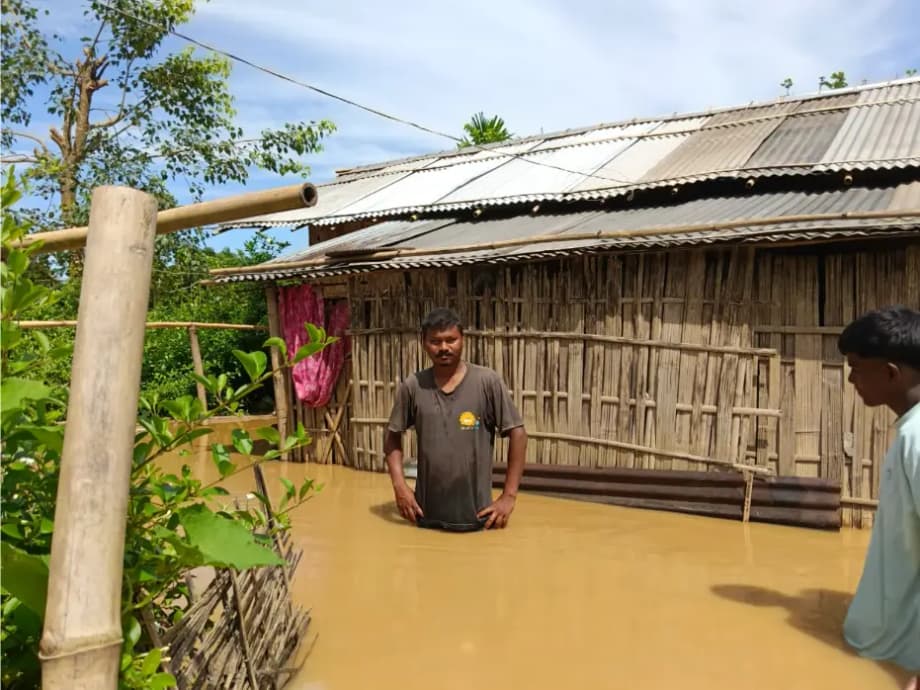
Homes, roads, bridges, crops and public infrastructure were damaged or swept away. Thousands of families were forced to leave their houses, taking shelter in government camps, on riverbanks or in temporary structures. Although rainfall has eased and many rivers have fallen below danger levels, water remains trapped in several areas because drainage is slow.
Reports from state authorities and humanitarian agencies have shown different figures as the disaster developed. UCA News reported on 28 July that 68 people had died, more than 37,000 were staying in 109 government relief camps and about 650,000 people had been affected across Assam. An earlier state update cited by other reports put the death toll at 62, while a later account recorded 66 deaths and more than 6.5 lakh affected residents. The figures reflect changing assessments during an active emergency.
The scale of the damage extends beyond immediate displacement. More than 34,000 hectares of farmland were reported submerged, while hundreds of thousands of animals and livestock were affected. For rural families, the loss of cattle, crops and farm equipment can remove the income needed to repair homes and buy food.
How the Dibrugarh Diocese Responded
The Diocese of Dibrugarh began organising assistance through parishes, priests, religious communities, volunteers and donors as soon as access became possible. Church groups have focused on villages where roads were damaged or where government supplies had not yet reached residents.
Father John Minj of the diocese said relief materials had been prepared while teams waited for the rain to subside and routes to reopen. He said five parishes had been badly affected, though no deaths had been reported within the Church communities in the diocese.
The first distribution phase reached Kona, Lakwa and Nahorhabi in Charaideo district. A second phase provided aid to 106 families in Bihubor, Chutia Basti and Nepali Gaon. Supplies included rice, lentils, mustard oil, salt, potatoes and mosquito nets, allowing families to meet basic food and health needs after losing household stocks.
The parish of Rajabari added milk, biscuits, soy products, sanitary napkins, personal hygiene supplies, cleaning materials and drinking water. Other parishes and diocesan groups supplied clothing, food, water and hygiene items without distinction based on caste, religion or social class.
Why Remote Villages Need Special Attention
Assam is particularly vulnerable to flooding because much of the state lies on the floodplains of the Brahmaputra and its tributaries. Rivers carry large volumes of water during the monsoon, while sudden rainfall in neighbouring hill areas can cause water levels to rise within hours. Damaged roads, mud, submerged bridges and broken electricity networks can then isolate villages from formal relief centres.
During the July floods, officials said rescue teams from the State Disaster Response Force, National Disaster Response Force, Army and Air Force had rescued tens of thousands of people. More than 2,000 villages were reported submerged at one stage, with some areas of Nazira and Sivasagar difficult or impossible for ground teams to reach.
Church agencies have used parish networks to identify communities in need and distribute supplies locally. The structure is useful in areas where churches, convents and community groups already know the villages, families and local routes. Several village churches, parish buildings and convents were themselves submerged, limiting the capacity of these groups while increasing their need for outside assistance.
Jonas Lakra, a former Caritas India official associated with a local humanitarian organisation, said Christian groups were assessing newly affected areas before beginning additional operations. He said teams were ready to act after receiving information and clearance from the authorities.
Families Return to Damaged Homes
The end of flooding does not mean a return to normal life. Many families have gone back to houses that were destroyed, weakened or filled with mud and debris. Bamboo structures that remained underwater for several days have collapsed in many places. Other homes require new roofs, doors, windows and structural repairs before they can be occupied safely.
Residents have also lost cooking utensils, stored food, clothes, beds, blankets, water containers and cleaning materials. Bishop Albert Hemrom of Dibrugarh said some families had received food but had no place or equipment to cook because their household possessions were carried away by the water.
The bishop described the slow retreat of the water in parts of the diocese, saying that several days without rain had not yet brought a quick improvement because floodwater had no clear outlet.
Though there has been no rain for the last three to four days, the water has no outlet to go out. The water level is still not going down.
The return home also brings health concerns. Stagnant water can contaminate wells and create breeding areas for mosquitoes. Decomposing animals and other material can increase the danger of infection, while people living in crowded shelters may face additional risks. Church leaders have called for doctors, nurses and medicines to be available if disease outbreaks develop.
Rebuilding Homes and Livelihoods
The Diocese of Dibrugarh has moved from emergency food distribution to a longer rehabilitation programme. The next phase aims to help families restore safe housing, replace essential household goods and recover the means to earn an income.
Requested construction materials include roofing sheets, bamboo, wood, cement, tarpaulins, doors, windows and tools. Families also need kitchen vessels, beds, blankets, clothing, solar lamps, water filters, storage containers and hygiene kits. These items are basic, yet they determine whether a household can safely leave a relief camp and begin living independently.
Agricultural recovery will require seeds, fertiliser, tools and assistance with livestock. Farmland remains covered in silt and debris, and many farmers have lost animals that provided food, transport or income. Small traders and shopkeepers may also need help replacing stock and reopening businesses.
Children face a separate set of losses. Floodwater has destroyed schoolbooks, notebooks, backpacks, uniforms, certificates and registration documents. Parishes are helping families replace study materials so that children can return to school. Government arrangements for duplicate registration certificates may also help students whose records were lost.
Bishop Hemrom said the cost of rehabilitation would be greater than the expense of distributing groceries during the emergency phase. He appealed for assistance with rebuilding houses, replacing utensils and clothing, and meeting medical needs.
I would like to request all the people of goodwill to really come forward and help, especially in the second phase of the rehabilitation, where we have to construct houses and also buy utensils and clothes.
Government Relief and Church Action
The Church response is taking place alongside a large government operation. Assam authorities have opened relief camps and distribution centres, restored electricity in stages and deployed rescue personnel to flooded areas. The central government has said that funds from the State Disaster Response Fund are being used for immediate assistance, with further national funding expected after detailed damage assessments.
Government teams have reported damage to embankments, roads, bridges, power infrastructure and paddy fields. Veterinary teams have also been treating affected animals. The state and central authorities face the difficult task of repairing public infrastructure while helping families replace private property that is often not covered by standard emergency supplies.
Church leaders have said their role is to reach people who may be missed by large relief systems, particularly residents in remote villages. Their work includes distributing food and water, identifying households with urgent needs and maintaining contact with families after the camps close.
The relief effort includes the Diocesan Women’s Commission, the Youth Commission and parishes in Doomdooma, Duliajan, Nilmoni and Rajabari. Mothers’ groups, youth volunteers and the diocesan Seva Kendra have also collected and delivered supplies. Smaller nongovernmental organisations are participating, although Church officials say the scale of destruction requires help from a wider network of charities, businesses and donors.
A Long Recovery for Upper Assam
Recurring floods are a familiar part of life in Assam, yet the speed and extent of this disaster have placed unusual pressure on families and response agencies. Reports described rainfall in parts of Assam and Nagaland at several times the normal level during 18 to 20 July, with some areas inundated within hours.
Recovery will depend on more than replacing lost goods. Families need safe shelter before the next period of heavy rain, clean water to prevent illness, tools to clear fields and assistance to restart farming or small businesses. Children need documents and school materials, while older people, women, people with disabilities and those who have lost relatives may require specialised care.
Environmental concerns have also entered the public discussion. Local voices have linked damage from mining and hill cutting in parts of Upper Assam to the severity of flooding, although no official agency has confirmed that such activity caused the current disaster. The immediate focus remains rescue, public health and rebuilding, while wider questions about drainage, land use, embankments and flood preparation will require separate review.
Bishop Hemrom has called on donors and organisations to help communities regain dignity and self reliance. The diocese says the goal is to provide materials and financial assistance that allow families to rebuild their homes, recover livelihoods and send their children back to school.
Together, let us be instruments of God’s compassion, enabling our brothers and sisters to rebuild their homes, restore their livelihoods, and look to the future with renewed hope.
The Bottom Line
- Flooding between 19 and 24 July devastated parts of Upper Assam, especially Charaideo, Sivasagar and Jorhat.
- State and humanitarian reports placed the death toll between 62 and 68 as assessments changed during the emergency.
- About 650,000 people were reported affected across Assam, with tens of thousands staying in relief camps.
- The Diocese of Dibrugarh has distributed food, water, hygiene supplies and mosquito nets to affected villages, including aid for 106 families in three communities.
- The next phase focuses on housing repairs, household goods, health care, education and the recovery of farming and small businesses.
- Church groups are appealing to charities, companies and individual donors for sustained rehabilitation assistance.