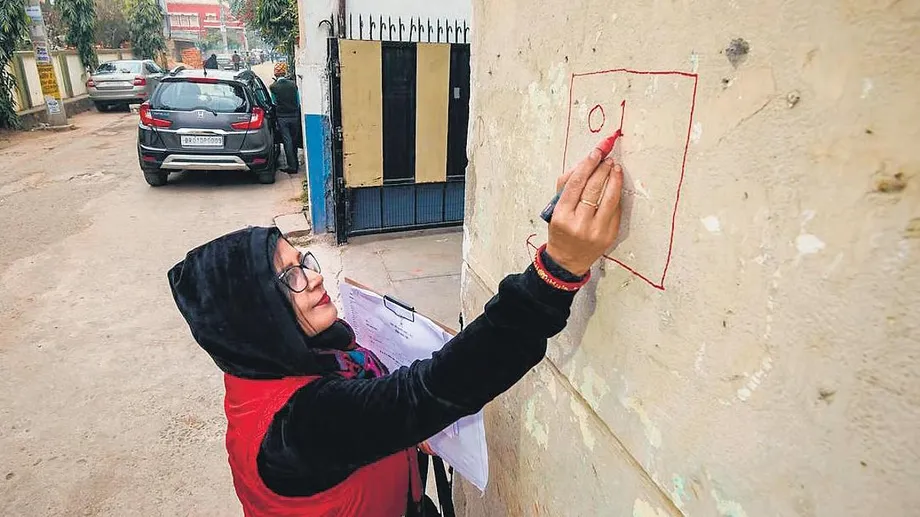
A digital census with different calendars across India
India's Census 2027 will open online self-enumeration on January 10, followed by visits to households from January 25 to February 28 across most of the country. The Ministry of Home Affairs has set a further checking round for March 1 to 5, with the population reference time fixed at midnight at the start of March 1, 2027.
Contents
- A digital census with different calendars across India
- Which dates apply to your household?
- How online registration and household visits fit together
- What the 40 questions will cover
- Why the caste question marks a major change
- Identity questions draw a political challenge
- Why some places are counted earlier
- Two phases answer different questions
- The scale behind the count
- Key Points
The exercise will be India's first digital census and the first since Independence to collect caste details across communities. Its population questionnaire contains 40 questions, covering subjects ranging from age and employment to digital literacy, bank accounts and personal identification numbers.
Residents of Uttar Pradesh, Punjab, Goa and areas of Uttarakhand without snow have an earlier timetable because of upcoming elections. The government's Census 2027 schedule gives those areas an online submission window of November 16 to 30, 2026, followed by household visits from December 1, 2026, to January 4, 2027.
Manipur remains outside the announced population enumeration timetable until a further declaration. Ladakh and designated areas affected by snow also fall outside the main January and February schedule, having been assigned an earlier count.
Which dates apply to your household?
The Home Ministry's October 30 notification sets the main population enumeration dates under Section 3 of the Census Act, 1948, together with Rules 6A and 6D of the Census Rules, 1990. Population enumeration means recording information about each person, rather than simply counting buildings or households.
The timetable has several stages, so the date when a census worker visits depends on where a household lives:
- April 1 to September 30, 2026: the first phase, covering house listing and housing information, with Manipur excluded.
- September 1 to 30, 2026: the population enumeration window assigned to areas affected by snow in Uttarakhand, Himachal Pradesh and Jammu and Kashmir.
- November 16 to 30, 2026: self-enumeration in Uttar Pradesh, Punjab, Goa and areas of Uttarakhand without snow.
- December 1, 2026, to January 4, 2027: household visits in those four states, followed by revision from January 5 to 9.
- January 10 to 24, 2027: self-enumeration across most remaining states and Union Territories.
- January 25 to February 28, 2027: the main household population count, followed by revision from March 1 to 5.
The official schedule ends self-enumeration in the four states on November 30, 2026. An earlier description placed the closing date at January 5, 2027; the government calendar instead assigns January 5 to the start of their revision round.
How online registration and household visits fit together
Households will have the option to enter their information online before census workers arrive. The self-enumeration portal will operate in 16 languages, including Hindi and English, and will generate a unique Self-Enumeration ID after a submission is completed.
A resident can share that ID with the enumerator, who will confirm the information during the household visit and bring it into the census record. Online submission therefore remains connected to a visit by a census worker.
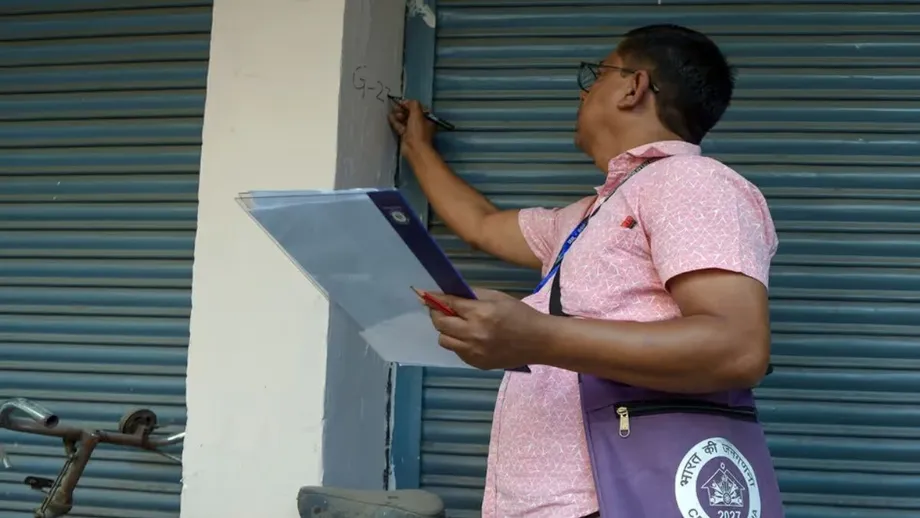
Enumerators will use mobile applications and digital tools to collect information. For residents who do not choose online self-enumeration, the visits provide the route for their details to be recorded. The optional online stage allows households to submit information beforehand while retaining a process for people who need an enumerator to collect it.
What the 40 questions will cover
The population questionnaire has 40 questions, compared with 29 in the 2011 Census, an increase of 11 questions, or about 38%. The larger questionnaire reaches beyond basic population totals into details about people's lives, work, movement and access to services.
Topics include age, marital status, religion, caste, education, employment, migration and disability. Questions also cover the place and date of birth of both parents, a spouse's name and a permanent address.
Other information sought includes digital literacy, the number of bank accounts, the place of COVID-19 vaccination, nationality as declared by the respondent, a passport number and the availability of a driving licence. Mobile, Aadhaar and voter ID numbers will be requested if available.
Digital literacy concerns a person's ability to use digital technology. Placing it alongside education and employment gives the census a way to record another aspect of everyday participation, at a time when many services involve phones or computers.
Why the caste question marks a major change
The Cabinet Committee on Political Affairs decided on April 30, 2025, to include comprehensive caste enumeration in Census 2027. The population questionnaire will record caste as provided by the respondent.
Previous censuses since Independence systematically recorded caste information for Scheduled Castes and Scheduled Tribes. These are communities recognised under India's constitutional framework for specific protections and support. Census 2027 extends caste enumeration across communities.
The change will produce a broader statistical account of caste groups alongside information on education, employment and other population characteristics. For readers, the central change is straightforward: the exercise will ask about caste across the population, rather than limiting systematic collection to Scheduled Castes and Scheduled Tribes.
The decision adds a major social dimension to an operation already being changed by digital collection. Enumerators will be handling both a wider caste question and an expanded set of personal details during the same household exercise.
Identity questions draw a political challenge
Congress General Secretary for Communications Jairam Ramesh has alleged that Prime Minister Narendra Modi and Home Minister Amit Shah are arranging Census 2027 in a way that could be used to determine citizenship. His criticism followed a claim about an enumerator training session and efforts to obtain Aadhaar details.
Ramesh described the alleged use of the census to determine citizenship in these words:
This is blatantly illegal.
The questionnaire includes nationality as declared by the respondent and requests several identification numbers if available. Those questions place the collection of personal identity information at the centre of the political dispute.
The announced details do not specify how every identification field will be handled when a respondent lacks a document, and no government response to Ramesh's allegation was given with the schedule. Residents will need clear instructions on the information requested and how enumerators will record missing details.
Why some places are counted earlier
Uttar Pradesh, Punjab, Goa and areas of Uttarakhand without snow are being counted ahead of the main national window because of their election schedules. Their household visits finish on January 4, before online self-enumeration begins across most of the rest of India on January 10.
The four states also have their own checking period, January 5 to 9. Keeping that round separate matters because a household there follows a different calendar from one in a state covered by the January 25 start.
Snow conditions require another timetable. Population enumeration in designated areas of Uttarakhand, Himachal Pradesh and Jammu and Kashmir was scheduled for September 1 to 30, 2026. Enumeration in Ladakh and the designated areas affected by snow was described as completed by September 30.
Manipur's census remains deferred amid violence. The October notification excludes the state until a further declaration, leaving its population enumeration date unannounced.
Two phases answer different questions
The first census phase, House Listing and Housing Census, began on April 1, 2026, and was described as completed across the country by September 30, except in Manipur. It collects information about housing conditions, household assets and amenities.
The second phase counts people and records demographic, social, economic and cultural information. In simple terms, the first phase asks about the home and what it contains; the second asks about the people who live there.
The March 1 reference time provides a common point for the main population count, even though visits take place over several weeks. Census workers then have March 1 to 5 for the revisional round, a final checking stage after the principal household visits.
The first notification for Census 2027 was issued on June 16, 2025, proposing a population count in February 2027 with an exception for Ladakh and regions affected by snow. The later timetable gives residents more precise dates for online submission, visits and revision.
The scale behind the count
The government has approved an outlay of Rs 11,718.24 crore for Census 2027. The exercise is projected to cover 36 states and Union Territories, 7,092 subdistricts and approximately 639,000 villages.
Urban coverage includes 5,128 statutory towns and 4,580 census towns, a combined 9,708. Statutory towns have formal urban administrative status, while census towns are classified as urban for statistical purposes.
The resulting population and social statistics are used for policymaking, resource allocation and planning. Housing information can help describe access to amenities, while data on age, education, employment and migration can show how needs vary between places.
For households, the immediate task is more specific: follow the timetable for their area, choose whether to submit information online, and provide details during the enumerator's visit. For administrators, the operation brings together a new digital collection system, broader caste enumeration and several regional calendars within one national census.
Key Points
- Most of India will have household population enumeration from January 25 to February 28, 2027.
- Optional online self-enumeration for the main schedule runs from January 10 to 24.
- Uttar Pradesh, Punjab, Goa and areas of Uttarakhand without snow follow an earlier schedule, with household visits from December 1, 2026, to January 4, 2027.
- The questionnaire has 40 questions, compared with 29 in 2011, and includes comprehensive caste enumeration.
- Online submissions generate an ID for verification during an enumerator's visit.
- The main census reference time is midnight at the start of March 1, 2027, followed by revision through March 5.
- Manipur remains deferred until a further declaration.