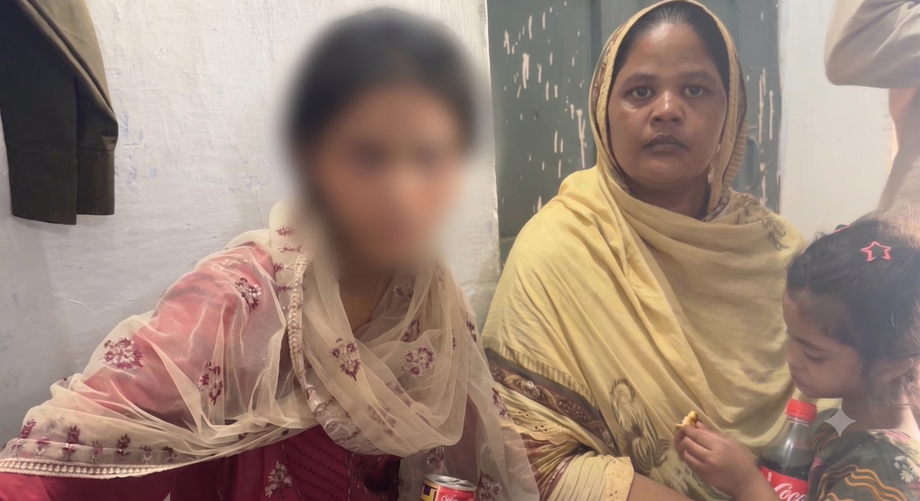
Custody ruling sparks alarm in Faisalabad
A Pakistani court has handed custody of a 13 year old girl back to the man accused of abducting her, despite conflicting age records, allegations that she was pressured to claim adulthood, and questions over the validity of her conversion and marriage documents.
The decision, issued by a sessions court in Faisalabad on July 25, 2026, has triggered condemnation from human rights defenders and Christian advocacy groups. The girl, whose name has not been released in the Faisalabad case, was also reportedly returned to the accused as his purported wife. The man was granted bail.
Rights advocates warn that the ruling may expose the child to renewed violence, intimidation and sexual abuse. They are urging Punjab authorities to intervene, protect the girl and ensure that official birth records and other evidence are properly examined before any final decision on custody is made.
The case has also revived wider concerns about the abduction, forced conversion and marriage of girls from religious minority communities in Pakistan. Activists say alleged perpetrators often rely on conversion certificates, marriage documents and statements recorded in court to present a kidnapping as a voluntary marriage.
The Faisalabad case began on June 12, when Mohsin Liaquat allegedly abducted the girl. Her family reported the incident at Raza Abad police station, and police registered a First Information Report under Section 365 B of the Pakistan Penal Code. That provision deals with kidnapping or abduction of a woman for marriage or sexual exploitation.
Police arrested the accused about two weeks later and recovered the girl from his custody. She was placed under the protection of the Gender Based Violence Unit of the Faisalabad Police before being transferred to Dar ul Aman, a government shelter for women and girls at risk.
Conflicting documents became central to the case
According to the account presented by rights defenders, the girl told the court on June 27 that the accused man’s family had coached and pressured her to say she was an adult. The alleged pressure is central to the dispute because a statement made by a child in the custody or influence of an alleged abductor cannot be treated as proof of free consent without careful safeguards.
The accused’s side reportedly produced a religious conversion certificate and a marriage certificate listing the girl’s date of birth as June 2008. Her family disputes that date. They say it conflicts with family records, including the fact that her parents married in 2012.
Faced with the conflicting material, the court ordered a medical examination to assess the girl’s age and directed that she remain in Dar ul Aman while the proceedings continued. Rights groups say that decision was consistent with the need to protect a child while the evidence was being tested.
They were therefore shocked when the sessions court later granted custody to the accused and accepted his claim that he was the girl’s husband. Activists say the court failed to give sufficient weight to official birth records and other documentary evidence, while giving too much weight to documents they allege were fabricated.
Ashiknaz Khokhar, a human rights activist, said courts should carefully verify documentary evidence in cases involving underage victims. Khokhar argued that a minor’s statement or supposed consent cannot alone decide custody when the child may have been subjected to threats, coercion or control.
Joseph Janssen, president of Voice for Justice, said lawyers in court threatened the girl with punishment for apostasy if she rejected Islam. Janssen described the alleged conduct as a serious misuse of legal and religious authority. He called on Punjab Chief Minister Maryam Nawaz Sharif to act over what he described as an injustice, statutory rape and the removal of a child from her parents.
Why conversion can complicate protection
Pakistan’s legal system contains protections for children, women and religious minorities. In practice, activists say those protections can become difficult to enforce when an abducted girl is presented as a Muslim convert and a married woman.
The religious conversion may shift the focus of a hearing away from the original allegations of kidnapping, confinement and abuse. A girl may then be asked whether she wishes to remain with the man who took her, even though she may be a child and may have faced threats from him or his relatives.
Rights lawyers say the question should first be whether the girl was abducted, whether she was legally old enough to marry, whether her conversion was free from coercion, and whether she can speak safely and independently. They argue that an alleged victim should be interviewed away from the accused and his supporters, with access to an independent lawyer, a guardian and psychological care.
Pakistan is a party to international agreements that require protection of children from abduction, forced marriage and exploitation. The Convention on the Rights of the Child recognizes a child’s freedom of thought, conscience and religion, while also requiring that the best interests of the child guide decisions affecting children. The International Covenant on Civil and Political Rights protects freedom of religion and bars coercion in matters of belief.
Advocates say these guarantees do not permit an adult accused of abduction to obtain custody simply by presenting a conversion certificate or relying on a statement made by a vulnerable child. They also reject the idea that physical puberty establishes the mental maturity needed for a valid marriage.
Punjab law sets a higher standard
The ruling comes soon after Punjab adopted the Punjab Child Marriage Restraint Act 2026. The law sets the minimum marriage age at 18 and makes marriage involving a child a non bailable offense. It also directs courts to place the best interests of children at the center of marriage related proceedings.
Human rights activist Lala Robin Daniel said weak investigations and inconsistent court decisions are undermining the purpose of newer child protection legislation. He argued that child marriage and sexual relations resulting from such a marriage must be treated as criminal matters, rather than being protected by claims of marital status.
The legal dispute reflects a distinction that has caused confusion in earlier cases. A law may impose criminal penalties on a person who marries a child without automatically declaring the marriage invalid. Critics say this gap can allow an accused man to claim marital rights or custody even while facing allegations that he abducted the girl and forced her into the marriage.
Lawyers and religious minority representatives are calling for legislation that expressly criminalizes coerced religious conversion and makes clear that a child cannot provide valid consent to conversion or marriage under threats, confinement or manipulation. They also want stronger procedures for checking birth registration, school records, national identity records and family documents.
Those safeguards are especially important in communities where birth registration may be delayed or incomplete. A missing certificate should not become a license for an adult to claim that a child is older, activists say. At the same time, disputed documents must be examined through a transparent process rather than accepted because they support the adult’s claim.
A separate case adds to international pressure
The Faisalabad ruling has emerged as international concern grows over a separate case involving Maria Shahbaz, a Christian girl from Lahore. Shahbaz was reportedly 13 when she was abducted in July 2025, converted to Islam and married to a much older Muslim man, identified in legal advocacy reports as 30 year old Shehryar Ahmad.
That case has followed a different court timeline from the Faisalabad matter. Pakistan’s Federal Constitutional Court previously ruled that Shahbaz could remain with the man, while her family argued that official records proved she was underage and that the marriage certificate was forged. A review petition was scheduled for a July 24 hearing, with the family seeking a fresh examination of the evidence and her continued custody.
Lawyer Muhammad Saqib Jillani has argued that the main issue is not whether a Christian woman may marry a Muslim man. He says the central questions are whether a child below the legal marriage age can enter a valid marriage and whether a statement recorded under Section 164 of the Criminal Procedure Code can establish voluntary consent in circumstances involving alleged abduction and coercion.
The European Parliament’s July 9 resolution cited Shahbaz’s case and called on Pakistan to investigate allegations involving abducted and forcibly converted minority girls. It urged authorities to provide victims with independent legal representation, psychological support and access to their families. It also called for a national mechanism to receive complaints from families whose daughters disappear or are allegedly converted against their will.
Voice for Justice has reported 210 cases involving minor Christian girls allegedly abducted, forcibly converted, married and sexually abused between 2019 and 2025. The report said 89 percent of the recorded cases occurred in Punjab. Advocacy groups have separately estimated that more than 1,000 underage girls are forced into conversion and marriage in Pakistan each year, though precise figures are difficult to establish because many families face threats, social pressure or police inaction.
Families face a difficult fight for protection
Reports from other cases show why a court order returning a girl to an alleged abductor can have lasting consequences. In some instances, police have refused to intervene after a girl escaped because the accused continued to claim that she was his wife. Other families have reported threats after filing complaints or challenging forged marriage records.
Christian leaders and rights groups say minority families often lack the money and legal support needed to continue appeals through several levels of court. A girl may also be isolated from her relatives while proceedings take place, making it difficult for her to speak freely or receive counseling.
Father Lazar Aslam, director of the Capuchin Commission for Justice, Peace and Ecology, has described the pattern as a source of fear for religious minorities. He and other community representatives have called on the government to ensure the safe return of abducted girls and prosecute those who use conversion as a cover for kidnapping.
The groups calling for action say protection must continue after a girl is recovered. Safe housing, medical treatment, psychological care, schooling and protection from retaliation are needed if a victim is to rebuild her life. Returning a child to an adult accused of abducting her, they warn, defeats the purpose of rescue.
In the Faisalabad case, activists are asking the provincial government, police and higher courts to review the custody order, verify the girl’s age through all available records, investigate the alleged forged documents and examine claims of threats in court. Janssen has said he will raise the matter with international bodies, including the United Nations and European Parliament, unless the girl is returned to her family.
What the case may decide
The dispute is now about more than one custody order. It tests whether Pakistan’s recently strengthened child marriage rules will be applied when religious conversion and alleged marriage are used to challenge a family’s claim to protection.
A credible review would need to separate the question of religious belief from the allegations of kidnapping and abuse. It would also need to establish the girl’s age using reliable records, assess whether her statements were made freely, and ensure that any interview takes place without pressure from the accused or his family.
Rights defenders say the government should create a specialized procedure for cases involving minority girls, improve police investigations, punish officials who ignore complaints and make forced conversion a distinct criminal offense. They also want courts to treat the child’s welfare as the first concern, rather than allowing an alleged marriage to determine custody before the underlying criminal allegations are resolved.
The July custody decision has left the girl vulnerable, according to the organizations supporting her family. For them, the immediate priority is her safety. The wider concern is whether legal institutions will protect children regardless of their religion, gender or family income.
Key Points
- A Faisalabad sessions court gave custody of a 13 year old girl to the man accused of abducting her.
- The accused was also granted bail and presented as the girl’s purported husband.
- Rights groups dispute documents that listed the girl as an adult and question the validity of her conversion and marriage.
- Activists say a child’s statement cannot establish free consent when threats or coercion may be present.
- Punjab’s 2026 law sets the minimum marriage age at 18 and makes child marriage a non bailable offense.
- The European Parliament has urged Pakistan to protect minority girls and investigate allegations of abduction, forced conversion and child marriage.