
A library review reaches books, theses and digital archives
Schools, colleges, universities, coaching centres and public libraries in Indian administered Kashmir have been ordered to inspect their collections for material authorities consider inappropriate or objectionable. The review extends beyond library books to journals, research papers, dissertations, doctoral theses and digital material on university websites and electronic repositories.
Contents
- A library review reaches books, theses and digital archives
- Two school library books triggered the wider action
- Officials frame the review as a security measure
- Vague wording leaves academics concerned
- The August 2025 ban remains before the courts
- Bookshop seizures show the pressure beyond campuses
- Kashmir's history is central to the disagreement
- The 2019 constitutional change shapes the debate
- Screening could reshape teaching and research
- Students face the consequences of narrower collections
- The Bottom Line
The sweeping exercise follows a dispute over two books supplied to government school libraries, the suspension of eight education officials and the arrest of three people connected with the publications. It also follows an August 2025 order banning 25 books by prominent writers and scholars, a decision now being challenged in court.
Authorities want institutions to identify publications that may violate religious sentiments, Indian law, educational values or established norms. The directive also targets material considered to promote, glorify, legitimise or justify terrorism, violent extremism, secessionism, radicalisation, communal disharmony or activity harmful to India's sovereignty and security. Secessionism means seeking to separate a territory from the country that governs it.
The directive gives no precise definition of objectionable material. That leaves teachers and librarians deciding how to handle publications ranging from explicit advocacy of violence to disputed accounts of Kashmir's history. The question of who makes those decisions, and by what standards, is at the centre of the dispute.
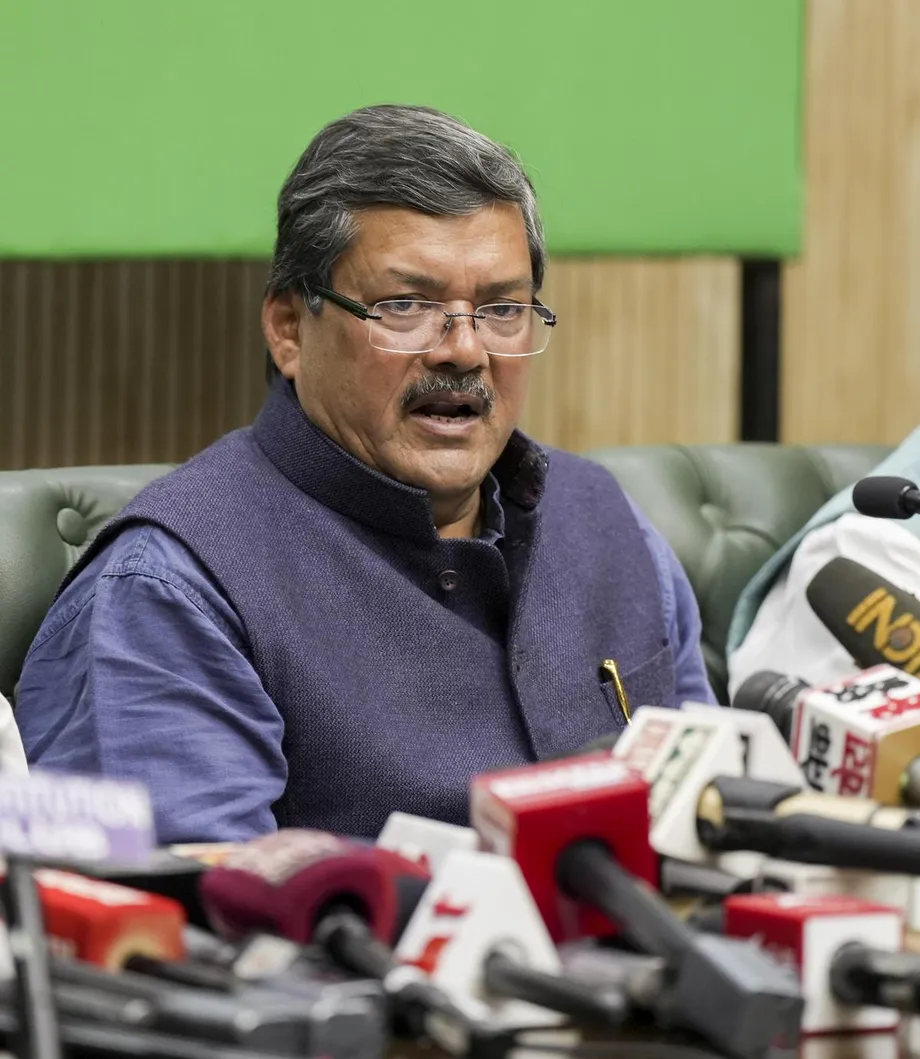
School Education Director Naseer Ahmad Wani said a committee would review books in schools and libraries. Institution heads have been told to report the title, author, publisher, publication year and number of copies of any work they flag.
Education departments have established reporting chains and made institutional heads personally accountable. Colleges face fixed deadlines, with reports moving from departments to district offices and then to senior officials. Reviews are expected to recur periodically, making the exercise an ongoing responsibility for educational institutions.
Two school library books triggered the wider action
The immediate controversy began with Personalities and Legends of J&K and Great Personalities of Jammu and Kashmir, supplied through the Samagra Shiksha education programme. Both contained profiles of politicians, writers, activists, poets and historians, including figures associated with Kashmir's separatist movement.
Representatives of the Bharatiya Janata Party, which governs India nationally, objected to passages describing some separatist figures as important personalities or martyrs. They also criticised the use of the terms India Held Kashmir and India Occupied Kashmir, which challenge New Delhi's position that the territory is an integral part of India.
BJP representatives said such descriptions could influence young readers towards separatism and militant violence. Their objections brought attention to books that had already passed through a much larger procurement exercise: officials reportedly selected hundreds of titles from hundreds of publishers for thousands of government schools.
The two volumes were withdrawn, and authorities began investigating the procurement process. Eight education officials were suspended. Police also arrested three people connected with the books, according to the authorities and accounts of the investigation.
Jammu and Kashmir Lieutenant Governor Manoj Sinha subsequently directed officials to establish a permanent system for examining books before they enter educational institutions. The University of Jammu banned the disputed titles and blacklisted their authors and publishers. Some institutions were also instructed to examine online material and remove files officials consider objectionable.
The actions span an earlier ban and the present institutional review:
- August 2025: Authorities declared 25 books forfeited to the government, prompting a court challenge.
- Before July 20, 2026: Objections to two books distributed through Samagra Shiksha led to their withdrawal, a procurement inquiry, eight suspensions and three arrests.
- By July 20, 2026: Institutions were being directed to review physical and digital collections, with reporting deadlines in colleges and periodic reviews expected.
Officials frame the review as a security measure
Government officials describe the audit as a security measure rather than a general restriction on reading. They point to Kashmir's history of armed conflict and argue that educational material can glorify militant groups or encourage political violence.
Sunil Sethi, a BJP spokesperson, said supporters of separatism should not be allowed to praise separatist leaders under the protection of academic freedom. He argued that peace had been restored with difficulty and that controversial teaching material could threaten that stability.
Imran Nabi Dar, spokesperson for the governing National Conference in Jammu and Kashmir, said the aim was to keep unnecessary disputes out of classrooms rather than stop people accessing books privately. The administration has also said school material should be factually accurate, suitable for students' ages and consistent with constitutional values.
Those arguments bring two different educational settings into the same debate. Schools choose material for children of particular ages. Universities maintain research collections where students and scholars examine competing explanations, including accounts of violence and political movements.
A publication urging readers to commit violence serves a different purpose from a scholarly work examining why violence occurred. The dispute concerns where officials draw the boundary, who judges a text's purpose and whether every political or religious viewpoint will face the same rules.
Indian law permits restrictions on freedom of expression for reasons including national security, public order and incitement. Human rights groups argue that restrictions must be specific, necessary and proportionate. In plain terms, they say authorities should identify the harm they seek to prevent and limit the restriction to what is needed to address it.
Those groups warn that searching every library under broad standards risks treating historical discussion as a security offence without showing a direct connection to violence. Government supporters maintain that educational institutions have a responsibility to prevent unlawful propaganda from reaching students.
Vague wording leaves academics concerned
The phrase objectionable content can describe very different things: a call for violence, a factual mistake, a disputed interpretation of history, criticism of government policy or language that offends a religious community. Without clearer criteria, teachers and librarians may remove material because they fear punishment.
A teacher of Kashmir studies, speaking without being named, said the region's history, education and identity are deeply contested. The teacher said the review raises legitimate concerns about academic freedom and the state's role in deciding which narratives are acceptable.
Political scientist Noor Ahmad Baba said restrictions of this kind conflict with constitutional protection for speech and expression. He also warned that broad bans can be counterproductive because books removed from physical libraries often remain available online or outside the territory.
Anuradha Bhasin, a writer and journalist whose work was among the 25 books banned in 2025, described the latest action as an attempt to intimidate readers and writers. She questioned how officials could examine thousands of publications and reliably assess their context, and argued that books should not be treated like weapons.
Even if there is objectionable content here and there, how does that matter? After all, books are not bombs.
Political scientist Sumantra Bose, whose books were also included in the earlier ban, called the new review unreasonable. He said authorities could devote enormous amounts of time to searching a vast number of books without producing a sound basis for deciding which historical accounts should remain available.
The concerns extend beyond an individual title. An institutional head facing personal accountability must decide whether to retain disputed material while awaiting a judgment or flag it for removal. Academics fear that uncertainty will push those decisions towards caution, narrowing collections before a publication receives a careful assessment.
The August 2025 ban remains before the courts
The earlier order declared 25 books forfeited to the government in August 2025. Its list included works by Arundhati Roy, A.G. Noorani, Sumantra Bose, Victoria Schofield and other scholars, journalists and writers. Authorities accused the publications of spreading false narratives, encouraging secessionism or presenting terrorism favourably.
The books covered the history of the Kashmir dispute, enforced disappearances, political repression, feminist resistance, governance after the removal of Article 370 and civilian experiences. The ban is being challenged in court.
The International Federation for Human Rights and the World Organisation Against Torture said the order breached freedom of expression, access to information and academic freedom. They argued that authorities had presented no evidence of a direct and immediate threat caused by the publications.
The organisations also pointed to India's obligations under the International Covenant on Civil and Political Rights and the International Covenant on Economic, Social and Cultural Rights. Those agreements protect the rights to seek, receive and share information, including views that challenge governments.
Academic freedom generally includes the ability to conduct research, publish findings and examine official accounts. For scholars studying Kashmir, access to competing accounts is part of the research itself: a historical argument may depend on comparing government records with political writing, testimony and other interpretations.
The court challenge to the 2025 ban may help determine how broadly authorities can apply security laws to scholarly and journalistic work. The dispute over that order now sits alongside a wider institutional audit, extending concern from a named list of publications to entire collections.
Bookshop seizures show the pressure beyond campuses
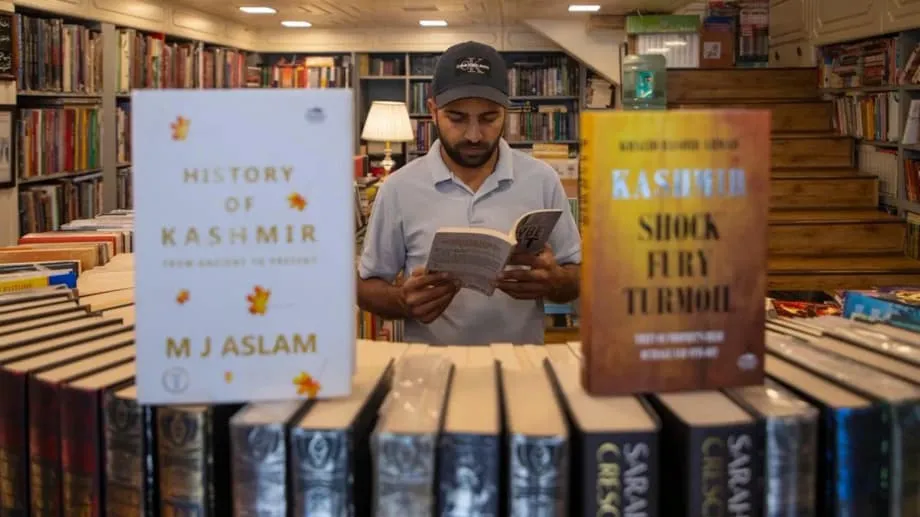
Enforcement of the 2025 order included raids on bookshops in Srinagar and the seizure of titles. In one operation, police confiscated more than 600 books linked to Jamaat e Islami and the writings of Islamic scholar Abul Ala Maududi.
Authorities said the books promoted the ideology of an organisation banned in Kashmir. Booksellers said many of the titles were legally published and had long been available in India.
Some shop owners said the raids prompted them to return books to suppliers and remove politically sensitive works from their shelves. Their accounts describe how the effects of enforcement can spread beyond the publications explicitly named in an order.
Fear of arrest, seizure or questioning can encourage self censorship even when the scope of a formal ban is unclear. For a bookseller, that can mean declining to stock a title. In an educational institution, similar concerns can affect purchases, teaching choices and access to research.
The library audit brings that pressure into a process with reporting chains, deadlines and personal responsibility. Librarians and institution heads must examine large collections while facing possible legal action if they fail to identify material that authorities later consider unlawful.
Kashmir's history is central to the disagreement
Kashmir is claimed in full by India and Pakistan, which control different parts of the region. The Indian administered side experienced an armed separatist insurgency from the late 1980s. India has accused Pakistan of supporting militant groups, while Pakistan denies the charge.
The conflict has caused tens of thousands of deaths and left a substantial civilian record of displacement, detention, disappearances and political violence. Those experiences are among the subjects examined by writers whose work has faced restrictions.
Teaching Kashmir's history may require discussion of the 1947 partition, Maharaja Hari Singh's rule, the competing claims of India and Pakistan, the United Nations, the insurgency, military operations, human rights allegations and the political aspirations of different communities. The disagreement over books therefore reaches directly into what students can learn about the region.
Government supporters say accounts praising armed groups or presenting India as an occupying power are political propaganda rather than education. Critics argue that students need access to more than the official national account to understand the dispute. They favour examining contested claims through evidence and classroom discussion.
Syed Agha Ruhullah Mehdi, the member of parliament from Srinagar, said libraries should preserve knowledge rather than serve a government's preferred political story. He explained why he believes collections should accommodate conflicting accounts:
The presence of a book in a library is not an endorsement of its contents. It is an acknowledgement that scholarship demands access, debate and critical inquiry.
Rao Farman Ali, an author and journalist based in Kashmir, said writing about resistance and separatism may appear dangerous when viewed through a security lens, yet remains necessary for understanding the region's past. University research, he said, requires primary sources, secondary sources and competing interpretations. Primary sources are records or accounts from the period being studied; secondary sources analyse those records.
The 2019 constitutional change shapes the debate
In August 2019, New Delhi removed Jammu and Kashmir's special constitutional status and divided the former state into federally administered territories. The change brought the region under more direct central control.
An elected local government has since returned, although the Lieutenant Governor retains wide authority over administration and security. That division of authority forms part of the political setting in which the current book review is taking place.
Critics say the period since 2019 has brought tighter restrictions on journalists, activists, civil society organisations and educational institutions. They see the audit as part of a broader effort to control public discussion while presenting the region as stable and normal.
Government supporters reject that interpretation. They say the security environment remains sensitive and institutions must prevent material that could encourage violence. The administration has described schools and universities as places for nation building and constitutional education, with zero tolerance for separatist narratives.
The disagreement also connects with wider arguments about academic freedom in India. Researchers have faced pressure over campus protests, public criticism, research topics and teaching material. Academic freedom indexes have recorded a sharp decline in India's score since the middle of the last decade, although the causes and interpretation of those rankings are contested.
Screening could reshape teaching and research
Librarians may avoid acquiring books about Kashmir if they fear a later official objection. Teachers may skip subjects likely to attract attention, students may hesitate to ask questions about political history, and authors may decide that publishing research on the region carries too much risk. Critics warn that vague standards can produce those effects even when a review's stated aim is to prevent incitement.
Victoria Schofield, the British historian whose Kashmir in Conflict was among the 25 banned titles, said governments have often used book bans to restrict access to information. She argued that understanding every side of a conflict is necessary for dialogue and reconciliation.
You cannot resolve a conflict if you are not fully apprised of the facts.
Critics also say removing books from libraries leaves readers able to search the internet, private collections or shelves outside Jammu and Kashmir. A ban may increase a title's appeal while making careful study harder for students who lack reliable internet access.
Supporters of the audit argue that schools need material suitable for their pupils' ages and that teachers should not have to present propaganda as established fact. They favour tighter procurement and review by qualified educationists.
Several academics have proposed independent committees involving historians, librarians, university teachers and subject specialists. They say removals should come with written reasons and an appeals process. Such assessments would separate analysis of a movement from advocacy for it, and both from incitement to violence.
Students face the consequences of narrower collections
Libraries traditionally allow readers to encounter conflicting ideas, serving a different purpose from a government communications office. Teachers can help students test a book's disputed claims against other evidence while keeping the material available for examination.
History and political science students need the sources behind competing accounts of Kashmir. Literature students need access to writers describing displacement, grief and resistance. Law students need to examine constitutional arguments and security legislation. Removing those materials can narrow the questions students are able to investigate.
Institution heads must balance those educational needs against deadlines and possible legal action. Critics fear that collections will be shaped less by scholarly value than by concern about official reaction, while supporters see stronger screening as necessary protection for students and public security.
As of July 20, 2026, the government had not said how many books would ultimately be removed under the new review or whether institutions would publish their findings. The challenge to the earlier ban remains before the courts, alongside a review process expected to continue periodically.
The Bottom Line
- Educational institutions and public libraries in Indian administered Kashmir must review printed and digital collections for material authorities consider objectionable.
- Two books distributed through Samagra Shiksha triggered withdrawals, a procurement inquiry, eight official suspensions and three arrests.
- Officials say screening is intended to prevent incitement, radicalisation and unlawful propaganda, with school material also assessed for accuracy and suitability for pupils' ages.
- Academics and critics warn that undefined standards and personal accountability could encourage self censorship and restrict study of Kashmir's contested history.
- An August 2025 order banning 25 books is being challenged in court; enforcement included bookshop raids and seizures.
- The number of books that the latest review will remove, and whether institutions will publish their findings, had not been announced.