Turning the Tide on a Critical Weakness in Renewable Energy
Solar panels go dark when the sun sets. Wind turbines stall when breezes fade. Even hydroelectric dams watch output shrink during prolonged dry spells. The renewable energy revolution has spent decades searching for a clean power source that simply runs, hour after hour, without checking the weather forecast first. In August 2025, a small facility on the southern coast of Japan began doing exactly that, drawing electricity from the chemical tension between fresh water and salt water. The plant, located inside the Uminonakamichi Nata Seawater Desalination Center in Fukuoka, is the first operational osmotic power facility in Asia. It is only the second continuous commercial plant of this kind anywhere on Earth, following a Danish installation that opened in 2023. For a nation that imports most fossil fuels and faces increasing pressure to decarbonize, the switch-on represents more than a local experiment. It is a live test of whether the oceans surrounding Japan can become a steady source of baseload clean power.
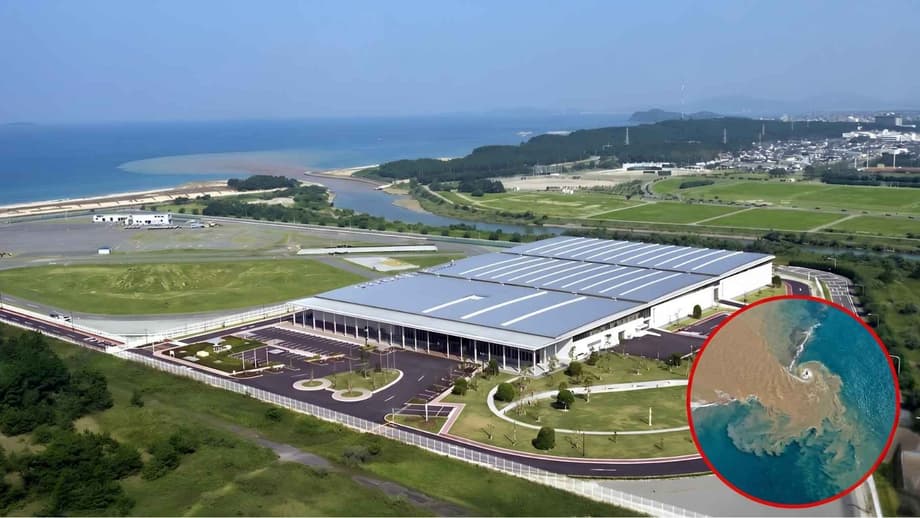
The facility, also known as Mamizupia, officially began operations with an opening ceremony on August 5, 2025. Unlike conventional power stations, it burns no fuel and emits no carbon dioxide. Beyond a single turbine, it has virtually no moving parts. Most importantly, it does not depend on sunshine, wind speed, or seasonal rainfall. The plant runs on a principle called pressure retarded osmosis, commonly abbreviated as PRO, extracting usable energy from the natural tendency of water to balance salt concentrations. By pairing two waste streams that the city already produces, concentrated brine from desalination and treated wastewater from a sewage facility, the system generates roughly 880000 kilowatt hours of electricity annually. That output is enough to cover a meaningful portion of the power needs of the desalination center while supplying the equivalent of 220 to 300 average Japanese households. The operators report a utilization rate approaching 90 percent, a level of consistency that solar and wind installations can only approach with expensive battery backups.
The Quiet Physics Behind Blue Energy
To understand how the Fukuoka plant works, it helps to recall a basic biological process. Osmosis is the same force that allows tree roots to pull water from soil and prevents human cells from collapsing when surrounded by fluids. When two solutions with different salt concentrations sit on opposite sides of a semipermeable membrane, water molecules naturally migrate from the less salty side toward the saltier side in an attempt to equalize the concentration. The salt ions themselves are too large to pass through the membrane, so only the water moves. Inside a sealed pressure chamber, this migration increases both the volume and the pressure on the salty side. Engineers capture that pressure, route it through a turbine, and spin an electrical generator. The result is electricity generated from nothing more than the chemical difference between two bodies of water.
The version operating in Fukuoka applies a variation called pressure retarded osmosis. In a standard seawater to freshwater PRO system, the chemistry works best with a pressure difference of about 26 bar, roughly equivalent to the force felt at the bottom of a 270 meter column of water. The Fukuoka installation improves on the textbook model by feeding the salty side not with ordinary seawater, but with concentrated brine left over after the desalination process strips fresh water away. On the fresh side, the plant uses treated wastewater piped in from a nearby sewage treatment facility. Sandra Kentish, a chemical engineer at the University of Melbourne, explained that this pairing widens the salinity gap and squeezes more available energy from the process than a standard seawater setup would allow. Dr Ali Altaee, a specialist in alternative water sources at the University of Technology Sydney, noted that the two streams were already being mixed before discharge, so inserting a membrane and turbine between them harvests energy that would otherwise dissipate into the sea.
A Circular Solution to a Coastal Problem
Fukuoka is not an obvious metropolis for a water crisis, but geography has forced the region to plan carefully. The greater metropolitan area serves roughly 2.6 million residents without the benefit of major nearby rivers, making rainfall an unreliable sole source of drinking water. Since 2005, the Uminonakamichi Nata Seawater Desalination Center has stabilized local taps by converting seawater into fresh water at a rate of about 50000 cubic meters per day. That process, while life sustaining, creates a difficult byproduct. Concentrated brine, often carrying salt levels near 8 percent, must be disposed of carefully to avoid damaging local marine ecosystems.
The osmotic power plant reframes that waste as a resource. Instead of viewing the brine as an environmental liability requiring dilution and discharge, operators now route it through membrane modules against treated wastewater. The freshwater push across the membrane raises pressure on the brine side, drives the turbine, and eventually produces diluted water that can be released with less ecological stress. In effect, the plant turns two disposal problems into a single power stream. The electricity generated flows back into the desalination center, trimming operating costs and reducing draw from the conventional grid. Kenji Hirokawa, who heads the Seawater Desalination Center, has described the installation as a modest first step rather than a finished solution. That framing fits a technology still proving itself at commercial scale, yet it also captures the broader ambition. Coastal cities around the world face the same twin headaches of rising energy demand and brine disposal. The Fukuoka example demonstrates how to address both simultaneously.
Learning from a Decade of False Starts
The idea of harvesting power from salinity gradients is not new. An American researcher first proposed the concept in 1976 in the Journal of Membrane Science. For more than three decades, the theory sat largely untouched until Norwegian utility Statkraft began building serious hardware. In November 2009, Statkraft opened the first PRO prototype on the Oslo Fjord at Tofte, aiming to demonstrate that osmotic power could compete in real markets. The plant targeted a 10 kilowatt design capacity but in practice generated only 2 to 4 kilowatts. By January 2014, Statkraft shut the project down, announcing that membrane efficiency remained too low for commercial viability.
The Norwegian failure became a cautionary tale about the gap between laboratory chemistry and industrial economics. Membrane power density became the critical metric. Research published in academic journals has established that osmotic systems need to deliver roughly 5 watts per square meter of membrane to approach financial viability. The Tofte installation managed only 1 to 3 watts per square meter. The membranes were too expensive, fouled too quickly, and allowed too little water flow to justify the pumping energy required. For the next decade, the technology languished in pilot programs and academic papers while solar and wind costs plummeted.
The Fukuoka plant attempts to avoid that trap through smarter site selection rather than waiting for a materials breakthrough. Because the facility already produces hypersaline brine and receives treated sewage, the salinity gradient is far steeper than a standard seawater freshwater pairing. That wider gap means available membrane technology, imperfect as it remains, can extract enough net energy to make the plant worthwhile. Akihiko Tanioka, an expert in the field, praised the milestone and its broader potential.
This successful implementation is a major achievement. I hope it will be replicated globally.
The Danish firm SaltPower had already proven the concept could work with a continuous commercial plant in Mariager in 2023. The larger Japanese installation now adds an Asian data point and demonstrates that PRO can integrate with existing municipal water infrastructure.
Small Numbers, Steady Value
By the standards of major power grids, the Fukuoka osmotic plant is tiny. Its average continuous output approximates 100 kilowatts, a rounding error compared to the hundreds of megawatts produced by offshore wind farms or gas plants. The project cost of roughly 4.38 million dollars underscores that this is not yet cheap power. Nearly all the electricity generated returns to running the desalination center itself, meaning the facility functions more as an energy recovery loop than as a standalone generator feeding cities.
Yet size is not the only measure of significance. What the plant lacks in capacity, it makes up for in predictability. A 90 percent utilization rate means the system produces power through typhoons, calm nights, and cloudy winters alike. Two football fields of solar panels might match the annual output on paper, but clouds, nightfall, and seasonal angles turn that theoretical total into a variable reality. Grid operators must balance those fluctuations with spinning reserves or battery banks. Osmotic power, by contrast, offers a flat generation curve that utilities can schedule with confidence.
The configuration also makes economic sense in context. A 2024 study in Chemical Engineering Science described novel membrane modifications that could advance sustainable power generation from salinity gradients, while a PRO techno economic analysis published in Frontiers in Energy Research confirmed that integrating PRO with desalination plants ranks among the more commercially viable paths for the technology. The reason is simple: the brine stream is already being produced at no additional cost, and the wastewater stream is already flowing. The plant does not need to buy fuel or build pipelines across wilderness. It simply inserts itself into an existing cycle of water use.
The Global Race for Better Membranes
Despite the optimism surrounding Fukuoka, the osmotic power industry still faces a materials challenge. The International Renewable Energy Agency has estimated that the global technical potential for salinity gradient power could reach 647 gigawatts and 5177 terawatt hours per year, though geography and engineering limits will keep the practical figure far lower. For that potential to matter, membranes must become cheaper, more durable, and less prone to fouling. IRENA has identified membrane costs as a major barrier, and researchers continue hunting for materials that allow faster water flow while resisting the accumulation of organic matter and minerals.
Japan has a commercial incentive to lead that research. According to the Japanese government, domestic companies already hold roughly 60 percent of the global desalination membrane market. Advances in osmotic power membranes could reinforce that industrial lead while opening export markets. Kyowakiden Industry, the engineering firm that supplied the membranes and turbine package for the Fukuoka plant, has stated ambitions to build facilities five to ten times larger if the pilot performs well over a multi year testing period. The obvious customers would be regions already dependent on desalination, particularly the Middle East, where individual plants can produce more than 900000 cubic meters of fresh water daily.
Pilot projects continue to emerge worldwide. Prototypes and demonstrations have appeared in Norway, South Korea, Australia, Spain, and Qatar. Dr Altaee noted that the University of Technology Sydney maintains its own prototype that could restart with government funding, using salt lakes in New South Wales as a resource base. The Fukuoka plant does not need to be enormous to be influential. It needs to prove that the membranes, pumps, and economics can survive continuous operation long enough to attract larger investment. If they do, coastal cities with desalination infrastructure may find themselves sitting on an unexpected source of baseload clean power.
What to Know
- The first osmotic power plant in Japan began operating on August 5, 2025, at the Uminonakamichi Nata Seawater Desalination Center in Fukuoka, making it the first facility of this kind in Asia and the second continuous commercial plant in the world after a Danish site opened in 2023.
- The plant uses pressure retarded osmosis to generate approximately 880000 kilowatt hours per year by exploiting the salinity difference between concentrated desalination brine and treated wastewater.
- With a utilization rate near 90 percent, the facility produces electricity continuously regardless of weather or time of day, offering reliability that solar and wind cannot match without storage.
- The project recycles two existing waste streams, reducing the environmental impact of brine disposal while offsetting part of the energy consumption of the desalination plant.
- Membrane technology remains the central challenge; previous attempts, including a Norwegian prototype abandoned in 2014, failed because membrane efficiency was too low to justify costs.
- Companies in Japan control about 60 percent of the global desalination membrane market, giving the nation both industrial motivation and technical expertise to advance osmotic power scaling.
- If the pilot succeeds, engineers aim to build facilities five to ten times larger, with major desalination regions such as the Middle East representing the most likely expansion markets.